


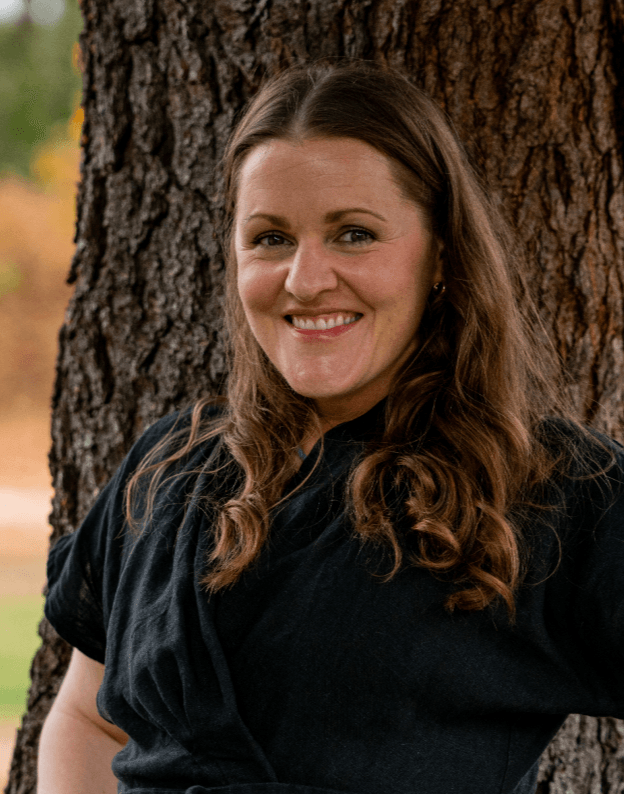
Today we’d like to introduce you to Natalie Mich.
Hi Natalie, so excited to have you with us today. What can you tell us about your story?
My path to becoming an acupuncturist and burnout educator wasn’t linear—it was shaped by both science and personal experience.
Before entering Chinese medicine, I earned a bachelor’s degree in Clinical Laboratory Science from the University of Wisconsin–Madison and worked for several years in hospital laboratories. While I appreciated the scientific side of the work, I felt a growing pull to be more directly involved in the healing process and work with patients one-on-one.
Around that time, I discovered acupuncture almost by accident. Something about it resonated deeply with me, and I had a strong sense it was the direction I was meant to pursue—even before I had ever received a treatment myself. That intuition led me to move from Wisconsin to Oregon to attend the Oregon College of Oriental Medicine in 2010.
I graduatedin 2013 and have been practicing acupuncture ever since. I founded Family Care Acupuncture in 2015, where I continue to treat patients full time. My clinical work focuses on conditions like chronic pain, migraines, anxiety, and allergies.
Over the years, working closely with patients and colleagues also made me increasingly aware of how widespread burnout has become—especially among healthcare professionals and caregivers. That realization led me to begin teaching and writing about burnout prevention and recovery alongside my clinical practice.
Today, I continue to see patients in the clinic while also speaking and writing about burnout and nervous system health. I’m currently writing a book called Burnout Balm: A Field Guide for Healing Burnout in Healers, Healthcare Workers, and Mental Health Providers, which draws on my experience as a clinician as well as insights from neuroscience and Traditional Chinese Medicine.
My goal is to help people who care deeply about their work stay healthy enough to keep doing it.
Would you say it’s been a smooth road, and if not what are some of the biggest challenges you’ve faced along the way?
It definitely hasn’t been a smooth road. Like many healthcare providers and small business owners, I’ve faced my share of challenges along the way.
Early in my career, I started a practice with a partner in 2013. That partnership ultimately ended in 2015, which was a difficult transition both personally and professionally. I had to rebuild and reimagine what I wanted my practice to look like moving forward.
A few years later, in 2018, I experienced significant burnout myself. That period forced me to take a much deeper look at stress, nervous system health, and what it actually takes to sustain a long-term career in healthcare. It became a turning point that eventually shaped the work I do today around burnout education and prevention.
I’ve also navigated significant personal health challenges. I’ve lived with chronic pain since a car accident in 2000, and more recently I was diagnosed with Mast Cell Activation Syndrome (MCAS) in 2025 after years of severe allergies and immune-related symptoms.
Because of that, I’m deeply committed to practicing what I recommend to my patients. Acupuncture is part of my own wellness plan, and I receive treatments weekly. Experiencing the medicine from both sides—patient and practitioner—has strengthened my belief in its value and shaped the way I care for the people who come to see me.
Like many clinicians, the path hasn’t been easy, but those experiences have deepened my empathy and strengthened my commitment to helping others find relief, resilience, and sustainable health.
Great, so let’s talk business. Can you tell our readers more about what you do and what you think sets you apart from others?
Family Care Acupuncture is a community-based clinic focused on helping people find lasting relief from complex and often chronic health concerns. I’ve been in practice since 2013 and founded Family Care Acupuncture in 2015. My clinical work focuses on conditions such as chronic pain, migraines, anxiety, allergies, digestive issues, and women’s health. Many of the patients who come to see me have already tried multiple approaches and are looking for a more comprehensive, whole-person way to heal.
What sets my work apart is the combination of perspectives I bring to the table. Before becoming an acupuncturist, I worked in hospital laboratories after earning a degree in Clinical Laboratory Science from the University of Wisconsin–Madison. That scientific background and Western Medical Training, combined with training in Traditional Chinese Medicine and 13 years of clinical experience, allows me to bridge Eastern and Western perspectives on health.
My personal health journey has also deeply informed the way I practice. I’ve lived with chronic pain since a car accident in 2000, and more recently I was diagnosed with Mast Cell Activation Syndrome (MCAS) after years of severe allergies and immune-related symptoms. Experiencing long-term health challenges myself has given me a deeper understanding of what many patients go through when they’re searching for answers. I also receive acupuncture weekly as part of my own wellness plan, so I truly practice what I recommend.
In addition to my clinical work, I’m known for my teaching about clinical burnout and nervous system health, particularly for healthcare providers and people in high-stress professions. After experiencing burnout myself in 2018, I began studying the patterns I was seeing both in my own life and in my patients. That work has evolved into speaking, teaching, and writing about burnout recovery, including my current book project, Burnout Balm: A Field Guide for Healing Burnout in Healers, Healthcare Workers, and Mental Health Providers.
What I’m most proud of brand-wise is creating a practice that is both clinically grounded and deeply compassionate. My goal is to help people not only feel better, but also understand their bodies and nervous systems in a way that gives them more agency in their health and healing.
What would you say have been one of the most important lessons you’ve learned?
One of the most important lessons I’ve learned is that healing and sustainability require honesty about our limits. For many years, I believed that if I just worked harder or pushed through fatigue, things would eventually balance out. But my own experiences with burnout and chronic health issues taught me that the body keeps score. Ignoring stress, pain, or exhaustion doesn’t make them disappear—it usually makes them louder.
That lesson changed the way I approach both my life and my work. I’ve learned that long-term health comes from supporting the nervous system, respecting the body’s signals, and building systems—personally and professionally—that are actually sustainable.
It also made me a better practitioner. Because I’ve experienced chronic pain, complex allergies, and burnout myself, I understand how frustrating it can be when you’re trying to find answers or relief. That perspective helps me meet patients where they are and focus not just on short-term symptom relief, but on helping people build resilience and capacity over time.
Ultimately, the lesson has been that caring for others only works if we learn how to care for ourselves as well.
Pricing:
- We are in network with most insurance.
Contact Info:
- Website: https://www.ocfamilyacu.com
- Facebook: https://www.facebook.com/ocfamilyacu
- Other: https://natbalm.substack.com/