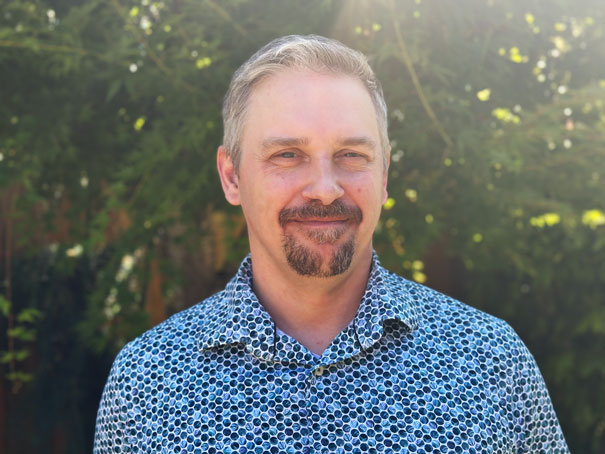



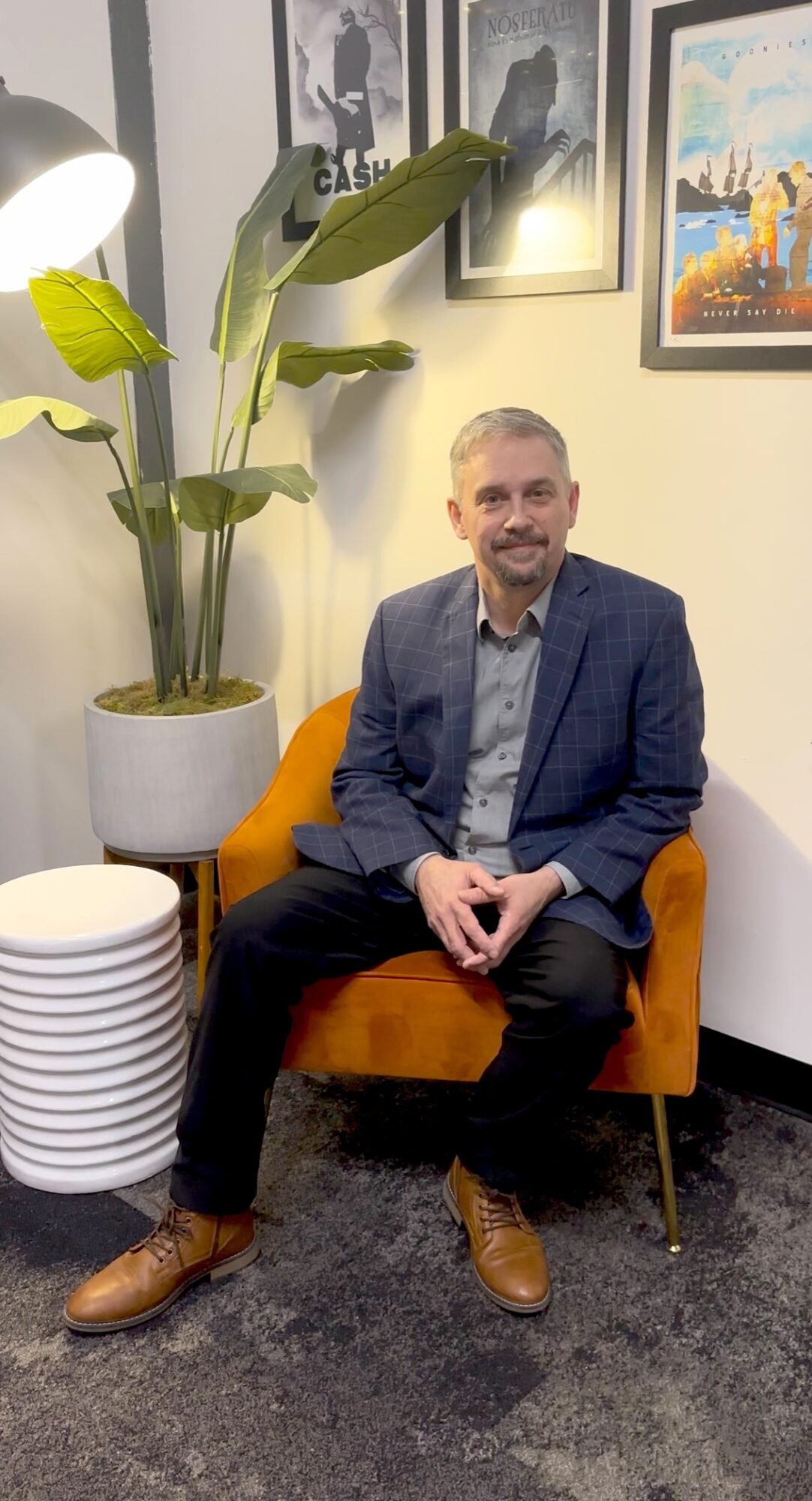
Today we’d like to introduce you to Dan Linn.
Hi Dan, thanks for sharing your story with us. To start, maybe you can tell our readers some of your backstory.
I was born in Portland, Oregon, into a poor working-class family with deep roots in Oregon history and the protest movements of the 1970s.
My grandmother, Roberta Beryl Linn, née Koopman, was born in Halfway, Oregon, after her grandparents settled there following the Oregon Trail. She was a force of nature. She was a mother of seven, a musician, deeply involved in her community, and the kind of person whose home became a refuge for other people. Over the years, she ran a group home for troubled teens, and more than 500 kids passed through her house. She was voted Oregon Mother of the Year, ran for the Oregon State House, and generally left an impression wherever she went.
My grandfather, Dan II, brought a different influence. He was incredibly technical and could fix almost anything. Years later, we discovered that he had been running sound for the Black Panther Party of Oregon. The FBI was watching our family in the 1970s, which led to one of my favorite family stories. My uncle John was around six years old when he was sent outside with a plate of cookies for the FBI agents sitting in the surveillance car.
Music ran through the entire family. My father was a musician, and all seven of Beryl’s children sang or played instruments. My father was talented, but like a lot of talented people, he never found much financial security. I watched him pour himself into work, including writing a training manual for a local cable company, only to eventually be laid off. Seeing that at a young age had a lasting impact on me. It taught me that talent alone is not enough and that creative people are often undervalued.
As a result, I grew up surrounded by a strange combination of working-class grit, music, technical competence, civic engagement, and a family mythology that made authority seem both powerful and slightly ridiculous.
As a kid, though, I did not feel particularly capable. I was awkward, socially behind my peers, and often failed to realize when people were making fun of me. When I moved from Catholic school to public school in third grade, I was academically ahead but socially out of step. Severe ADHD confused the faculty. I heard the phrase “special education” and, taking it literally, decided that special education sounded great and asked to be transferred. MY teacher agreed, probably glad for a break. At parent-teacher night, my parents were understandably confused when I proudly led them to my special education classroom. That teacher admitted she was not entirely sure why I was there either. After some testing, it became obvious that I did not need remedial help; I needed more challenge.
Within a month, I went from special education to the top of the class. I represented the school at Math Jam and in the spelling bee. The issue had never been intelligence. The issue was that nobody quite knew what to do with a kid who was bright, restless, literal-minded, socially awkward, and perpetually bored.
That pattern continued throughout school. I could do much of the work in my head, which often made teachers suspicious. Some did not believe me until I demonstrated it in front of the class. In math, I was either failing because I did not turn in homework or earning A’s because I aced every test. English was similar. If I found an assignment interesting, I excelled. If I did not, there was a good chance I never completed it.
I knew early on that I wanted a creative career, but I also knew I wanted financial stability. Watching my father’s experience convinced me that I needed to find a way for creativity and earning power to coexist. Graphic design seemed like the obvious bridge because it combined art, technology, and an actual career path.
Then one summer my uncle showed me Photoshop, and it completely changed how I thought about what was possible. Around the same time, I had an internship with Will Vinton Studios, the legendary Portland animation studio. Between that experience and Photoshop, I knew exactly where I wanted to go. I taught myself using the Adobe Classroom in a Book series and became very good very quickly. Eventually, I took private art classes that included Photoshop instruction, only to discover I knew more about the software than the instructors. At one point I told them, as politely as a teenager could, that I knew Photoshop better than they did and would like my money back. Instead, they offered me a job.
At the time, I was in my senior year of high school and needed additional credits to graduate. I ended up dropping out, earning an Honors GED, and starting work as a Photoshop instructor. Looking back, it was one of the first examples of a pattern that would repeat throughout my career. I rarely followed a conventional path, but I kept finding opportunities where skill, communication, and curiosity intersected.
That first teaching job did not last long. I was young and still figuring out how to function in the working world. A series of odd jobs followed, including waiting tables at Applebee’s. Then, when I was nineteen, my aunt and uncle offered me a job doing color correction. That was the point where my career really started to take shape.
At nineteen, I also became a father. My son arrived before I had everything figured out, which meant I had to grow up quickly. More than anything else, becoming a parent forced me to focus. I worked relentlessly because I had no choice. At various points I held a programming job during the day, tutored kids in computer science on weekends, waited tables at night, and freelanced whenever I could find time. I even used my bus commute to squeeze in more work. That mindset inspired the name of my first freelance company, One Man Army.
While working in design, I made an important discovery about myself. I was good at understanding design systems and reproducing styles, but I did not think of myself as a naturally original designer. What I was really good at was understanding how things worked. Fortunately, the web was arriving at exactly the right moment.
I treated Powell’s technical bookstore like my college education. I taught myself HTML, Perl, JavaScript, MySQL, PHP, and whatever else I could get my hands on. The same brain that frustrated school systems found a natural home in software development. The web rewarded curiosity, self-directed learning, experimentation, and the ability to translate between technical and non-technical people.
Along the way, I picked up the nickname “the geek who can speak” because I could explain complicated technical concepts in ways people understood. That skill ended up becoming one of the defining themes of my career.
Over the years I worked my way from agency development to enterprise systems, government technology, corporate technology, and eventually entrepreneurship. I served as Director of Web Development at Koopman Ostbo, worked on enterprise content management systems at the Bonneville Power Administration, managed Freightliner’s dealer intranet, and later joined Metal Toad as its sixth employee. During my time there, I helped grow the company to more than fifty people and eventually became Director of Development, working on projects for organizations including the Emmys and DC Comics.
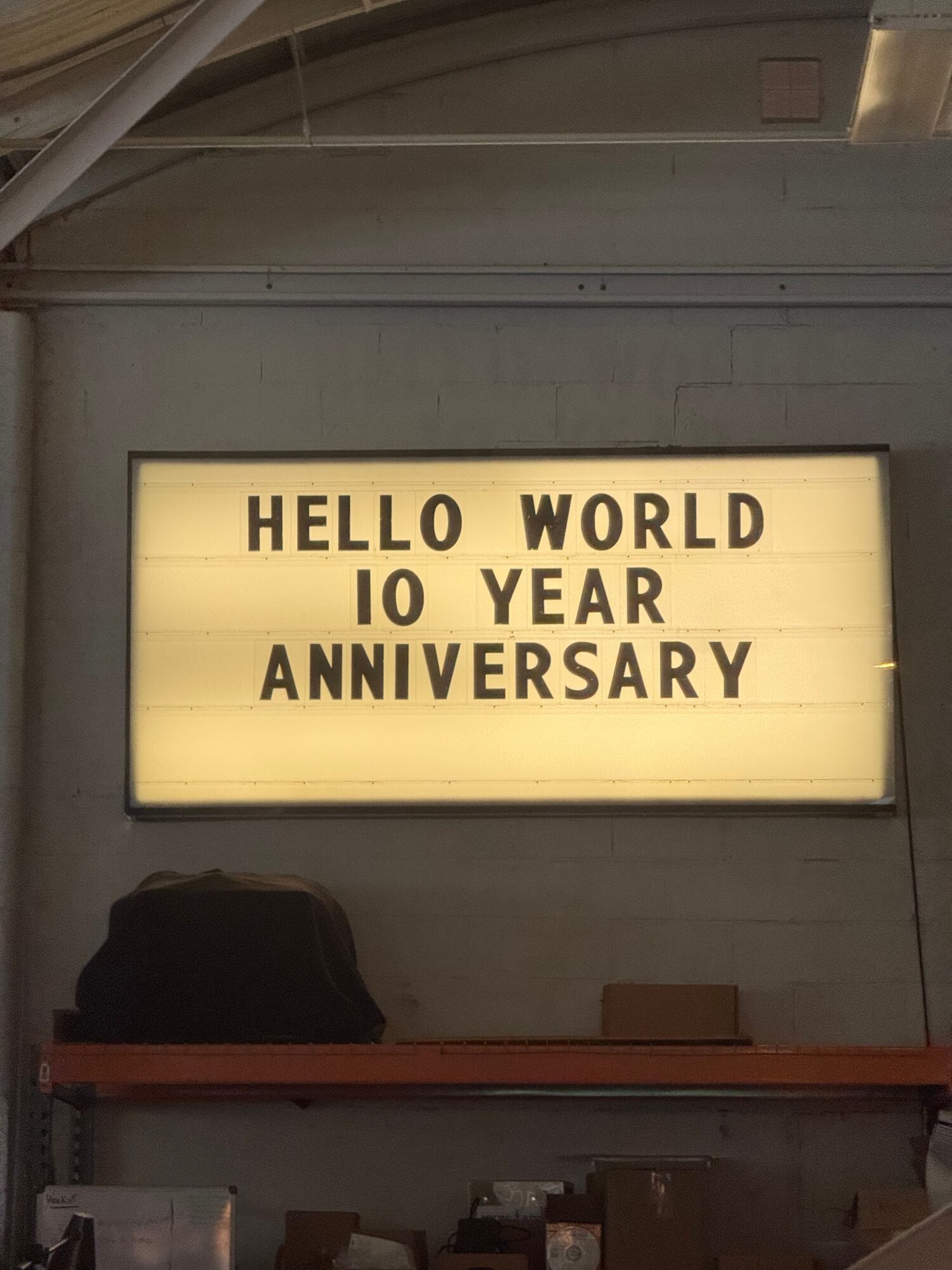
When my daughter was born and my wife had achieved her goal of earning a doctorate, I felt the timing was finally right to build something of my own. After five years at Metal Toad, I left to start Hello World.
Hello World was built around a simple idea that is deeply personal to me. Developers are the heart of a technology company and should be treated that way. I had spent my life watching talented people get overlooked, undervalued, or placed into systems that did not know how to help them succeed. I wanted to build a company that focused on developing people, not just maximizing sales.
Since then, our team has worked with organizations including Warner Bros., Nike, and Standard Insurance. I am proud of that work, but I am equally proud of Mentorship Saturdays, a program I ran for five years to help people enter or advance in software development. The community grew to more than 5,000 members and continues today. I have also served on nonprofit boards, most recently Bridges to Change.
When I look back, the through-line is pretty obvious. I came from a family that opened its home to hundreds of troubled kids, challenged authority, made music, fixed what was broken, and believed in showing up for people. I grew up misunderstood by some of the systems around me and eventually built a career around understanding systems better than they understood me. I watched talent get squandered and decided I wanted to build environments where talent could develop.
The path took me through art, teaching, software development, leadership, and entrepreneurship, but the theme has remained remarkably consistent. I enjoy solving problems, and I believe people have far more potential than they are often given credit for. Whether I am working with technology or with a person, I tend to see the same thing: a system that can do remarkable things when given the right conditions.
Would you say it’s been a smooth road, and if not what are some of the biggest challenges you’ve faced along the way?
No, it definitely has not been a smooth road. I came from a family that was rich in love, music, intelligence, and strong values, but not in money. That shaped a lot of my early life. I understood pretty young that if I wanted stability, I was going to have to build it myself.
School was also difficult for me. I had severe ADHD, which meant I often learned very differently than the system expected. I would read the material, understand it quickly, and then get bored. Once I was bored, I could become disruptive or disengaged. A lot of teachers did not know what to do with me. Some saw the potential, some saw the behavior, and some only saw the inconvenience. That created a lot of friction.
I also did not take the traditional school route. The web was moving faster than schools could keep up with. I learned from books, experimentation, technical bookstores, jobs, and by throwing myself at problems until I understood them. That path gave me a career, but it also meant I had to prove myself constantly without the usual credentials.
Becoming a father at nineteen changed everything. It meant I had to enter the workforce immediately and take responsibility before I really had the luxury of figuring myself out. I worked multiple jobs, freelanced, tutored, waited tables, and used every spare hour I could find to build a future. It was exhausting, but it also gave me focus.
Looking back, I think those struggles became part of the foundation. They taught me how to learn quickly, explain difficult ideas clearly, work hard when there was no safety net, and recognize talent in people who might not fit the standard mold.
We’ve been impressed with Hello World, but for folks who might not be as familiar, what can you share with them about what you do and what sets you apart from others?
Hello World is a software development and business technology company. We help organizations solve complicated technical problems, build new software, modernize existing systems, and maintain the applications their businesses depend on every day.
A lot of our work is with companies that have important software already in place but need a trusted team to help improve it, stabilize it, extend it, or rescue it from years of rushed decisions. We specialize in long-term technology partnerships, custom web applications, legacy system modernization, Laravel and PHP development, Drupal, WordPress, and business process automation. In plain English, people usually come to us when technology is getting in the way of their business and they need someone who can untangle the knot without making a bigger mess. We make order out of chaos.
What sets Hello World apart is that we are not interested in being flashy for the sake of it. We are practical, transparent, and relationship-driven. We believe clients deserve clear communication, honest options, and a team that cares about the long-term health of their business, not just the next invoice. Sometimes the best answer is a rebuild. Sometimes the best answer is a careful repair. Sometimes the best answer is telling a client not to spend money on something yet. We try to be the kind of partner who will tell the truth even when it is less convenient.
The thing I am most proud of is that Hello World reflects my own values: communication, adaptability, authenticity, and being relentless about solving the right problem. The company was built as a place where developers can do meaningful work and grow into stronger problem solvers, but also as a place where clients can feel understood. I have seen too many talented people wasted, too many businesses confused by technology, and too many projects suffer because no one was willing to slow down and explain what was actually happening.
At our best, Hello World brings technical skill and human clarity together. We can write the code, but we can also sit with a client, understand the business reality, and help them make a good decision. That combination matters.
What I would want readers to know is that Hello World is not just a vendor. We are a long-term partner for organizations that value thoughtful technology, clear communication, and sustainable solutions. We get paid to help people solve puzzles, and we take that seriously.
What’s next?
Looking ahead, I am focused on helping companies modernize in the face of AI. A lot of businesses know AI is going to affect them, but they are not sure what that actually means yet. Some are excited, some are nervous, and many are being sold magic tricks instead of practical solutions. I think Hello World has an opportunity to help companies approach this moment thoughtfully.
For us, modernization does not mean throwing away everything that already works, and it definitely does not mean throwing AI into every corner of the business just because it is available. AI can be incredibly useful, but it needs to be applied with judgment. Companies need to understand the real costs, risks, and dependencies before they build critical workflows around it. I also think there is a real possibility that pricing models around AI will change significantly over time, and companies that become overly dependent without understanding their exposure could find themselves in a difficult position.
The real work is helping businesses look honestly at their systems, workflows, data, and processes, then figuring out where technology can remove friction, create clarity, and make people more effective. AI may be part of that, but it is not the whole story. Businesses still need good architecture, clean data, clear processes, and people who understand the difference between a useful tool and a shiny distraction.
I am especially interested in helping companies with older systems prepare for what is coming. Many organizations have years of business logic trapped in legacy software, spreadsheets, manual processes, or institutional knowledge that only a few people understand. That creates risk, but it also creates opportunity. With the right strategy, those companies can modernize without losing the wisdom built into their existing systems.
What I am looking forward to is building Hello World into the kind of partner companies that can trust during that transition. We make order out of chaos, and I think that is going to matter more than ever. The future is not just about adopting new tools. It is about helping people make good decisions in a world where the tools are changing very quickly.
Pricing:
- Consulting – $350/hr
- Development – $230-$300/hr
- Projects range from $2000 to $1 million+
Contact Info:
- Website: https://helloworlddevs.com
- LinkedIn: https://www.linkedin.com/in/danlinn