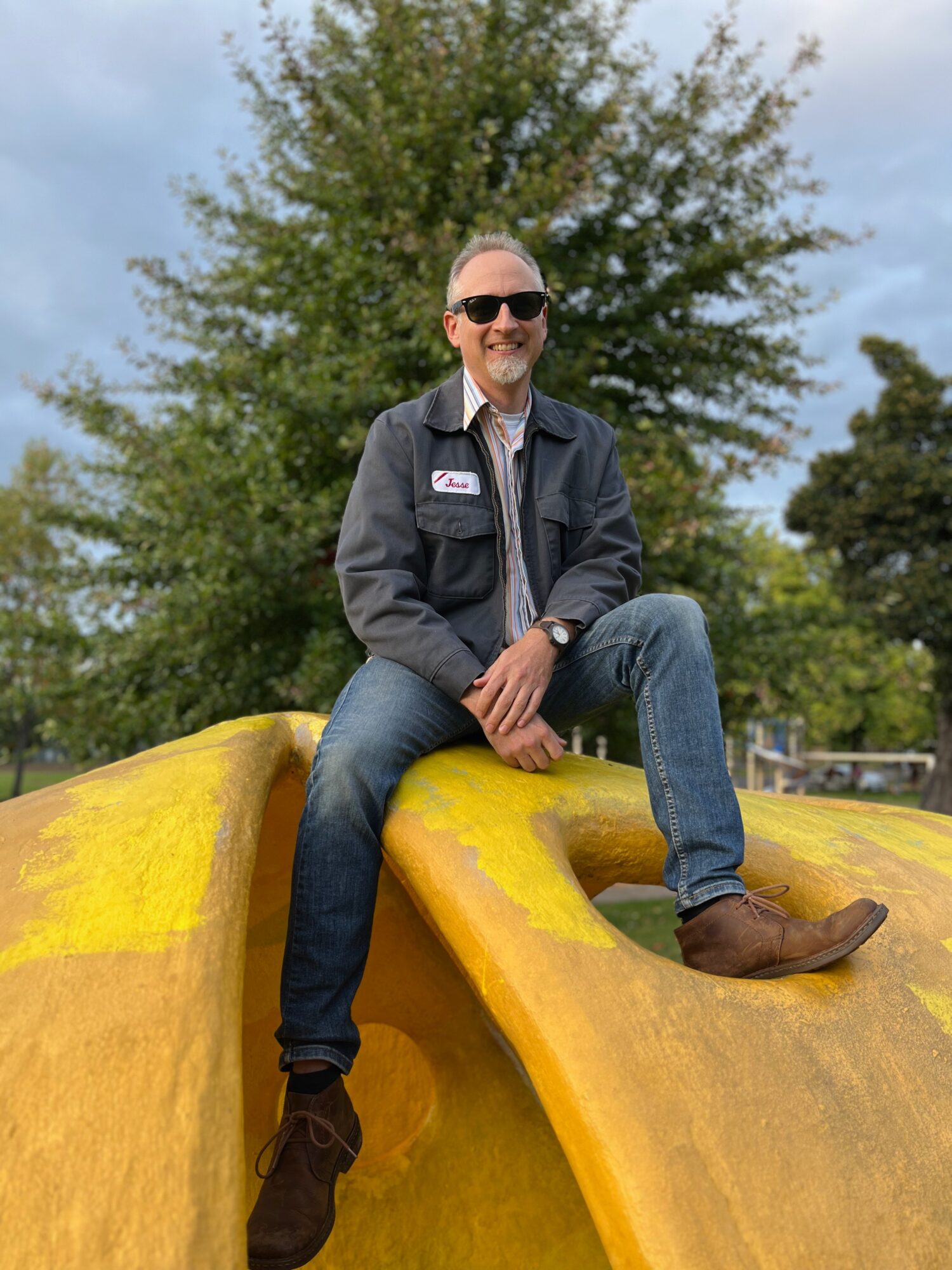




Today we’d like to introduce you to Jesse Springer.
Alright, so thank you so much for sharing your story and insight with our readers. To kick things off, can you tell us a bit about how you got started?
Your Story
Can you briefly walk us through your story – how you started and how you got to where you are today. You can include as little or as much detail as you’d like.
For as long as I can remember, I have always been someone who liked to draw. For most of my pre-adulthood, that consisted of drawing funny pictures for my friends to try and make them laugh. Consequently the margins of my school papers and notebooks are littered with random doodles– mostly weird and funny faces, although sometimes words written in ornate lettering styles. I never had a clue that this proclivity would bear any relation to a meaningful career or remuneration (and one could still argue that), but it was something that I very much enjoyed doing, so I kept at it, all the way through college.
When it came time for me to choose a major, as a sophomore at Swarthmore College (near Philadelphia), I landed on psychology. I had taken a few classes in that department, it seemed interesting, and there were plausible career paths that existed with such a degree. For some unknown reason, I never took a studio art class until my last semester senior year when a friend proposed taking an art class at the University of Pennsylvania, just a half hour’s drive in his beat up Delta 88. We took the class, which involved still life and figure drawing in a variety of media. It was really fun, but I still made no connection between that and gainful employment. On one of the drives home, we talked about what kind of careers were available to people who liked to draw. We talked about architecture, which seemed to hold some promise, and then my friend said the words “commercial art.” I had never really heard that term before, but it was the mid-century label for a field that is now called “graphic design.” Could it be? Could there be a career that was at least in some small way obliquely related to an interest in (and dare I say, some facility for) visual creativity?
It was too late to change my major, so, in the spring of 1990, I collected my BA in Psychology from a prestigious liberal arts college, and followed my future wife to Eugene, Oregon, where she was entering a PhD program in Neuroscience at the University of Oregon. When we arrived, I really had nothing but an intention of becoming a graphic designer. I soon found out about two-year Associates degree program at Lane Community College, and set my sights on readying a portfolio to apply for that.
Meanwhile, I struggled to find gainful employment. My high-falutin’ east coast bachelor’s degree didn’t amount to a hill of beans as an entry-level applicant to any job, whether it be at a graphic design firm or a laundromat. I met with the head of LCC graphic program who graciously steered me in the direction of a temporary job opportunity at the Eugene/Springfield Yellow Pages (remember those?). I had to demonstrate my ability with PageMaker (via a multiple choice test??) and take a typing test (oof), but somehow I got the job. It turned out to be a great opportunity to learn how to use computer design tools (which were brand new back then) while on the job. My main responsibility was to create “spec” display ads that the salespeople could bring in to potential clients. The job only lasted a few months, but it was just enough experience (and gave me a few pieces for my portfolio) to get the ball rolling.
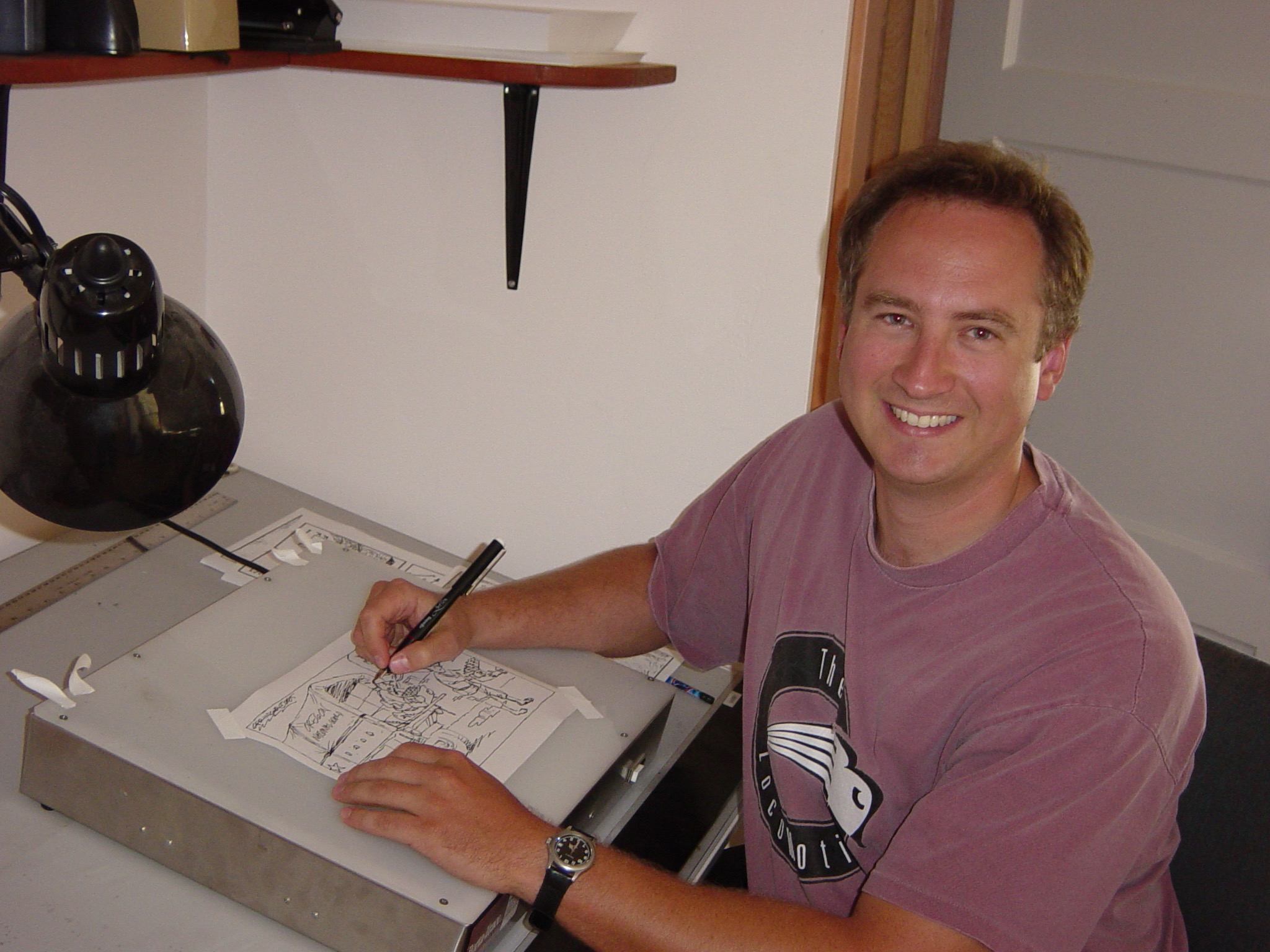
Between the fall of 1990 and 1995, I completed the LCC program and got enough freelance work and short-term jobs to give me the skills, confidence, and roster of potential clients to start my own graphic design business, Springer Design and Illustration. The vast majority of my work was strictly graphic design, but occasionally, there would be an opportunity to put my drawing talents to use. One lesson I was learning, though, was to separate my desire to express my personal creativity from my graphic design work. Whenever I would invest my own artistic expression into a graphic design job, I would be crushed if the client didn’t like it. Plus, inserting my own artistic agenda was usually not the best solution for the graphic communication objective at hand. I learned that, although graphic design is a pretty fun job (“not pushing rocks up a hill,” as I like to say), unless you are some sort of celebrity designer, it is not the place to satisfy your personal creative urges.
Consequently, right at the same time when I started my business in 1995, I was also noodling around with drawing editorial cartoons. When we first moved to Eugene, I had become an avid reader of the daily newspaper (the Register-Guard), which at that time was a very high quality paper. I educated myself about local and state-wide issues, and learned that I had strong opinions about them. Also, for the first time, I was seeing the marvelous editorial cartoons on the opinion pages, and started to wonder whether that was something I could also do. In the fall of 1994, there were a number of local issues that grabbed my interest, and so I drew a few cartoons and submitted them to a local alternative-alternative paper, which published them. Delighted to see my work in print, I kept on drawing cartoons and submitting the to papers even higher up the food chain.
My business kept chugging along, and I started to produce an editorial cartoon at the rate of about one per week. I found a few different small local papers (mostly the Eugene Comic News) that would print them, probably for about $10 each. I regularly submitted my cartoons to the R-G, but the opinion page editor there was my personal brick wall. I finally broke through with a total of three cartoons in 1997 and 1998, but it wasn’t until 1999, when he retired and a new guy took over, that my cartoons started appearing in the R-G on a semi-regular basis. In 2000, I started selling separate cartoons to the Eugene Weekly, as well as illustrating some of their covers. The R-G and EW were competitors, so they didn’t want to run the same cartoons.
In those very early years of editorial cartooning, I also drew a strip cartoon called “Emerald City” for the Eugene Weekly. This was a semi-autobiographical strip exploring what it was like in my first years in Eugene, struggling to find meaning work as a creative person and make ends meet. It ran weekly for a few years, and I submitted my best strips to a handful of the syndicates, but I never got more than a nibble, so I eventually gave it up.
All of these early cartoons were on local or state-wide issues. After 9/11, however, I couldn’t NOT occasionally draw cartoons about that seismic event, and everything that followed. I found that the local papers were not as interested in my takes on national issues. They already subscribed to syndicates who distributed Pulitzer Prize winning editorial cartoonists for a fraction of the cost I was charging (still in the $10-$25 range). So, I learned my lesson, and kept it mostly local– that was what the papers wanted. I also started to submit my cartoons to papers around the state whenever my cartoon was of state-wide relevance. Gradually, starting in 2001, a handful of papers around the state began to run my work, semi-regularly.
Around this time, I had dreams of advancing to the next level– to become one of those nationally syndicated cartoonists. In the mid-late 20th Century, there were hundreds of editorial cartoonists working on staff at daily newspapers around the country. These were the cartoonists who distributed their work through syndicates to thousands more papers. This is what I wanted to do when I grew up: be an editorial cartoonist. All of these years cartooning about local and state-wide issues was my training ground for the big time. Unfortunately, the internet had other ideas. As news aggregation sites became more prevalent and more popular, people realized they could get their news for free, and started cancelling their newspaper subscriptions. Websites like Craigslist completely obviated the need for classified advertising, which was a huge source of revenue for newspapers. I wanted to get on board, right as the ship was sinking. In 2008, I joined the Association of American Editorial Cartoonists and went to their annual meeting in Seattle. I got to see and meet some of the Editorial Cartoon rock stars that I had been idolizing for all of these years. I was so excited to meet these people and maybe even join their ranks! What I found was a group of extremely cranky cartoonists who spent most of the convention bemoaning how many of their friends and colleagues had been laid off recently, and how many more jobs were at risk. By that time, the number of on-staff cartoonists had shrunk to under 100, and it would be under 50, by the end of the decade.
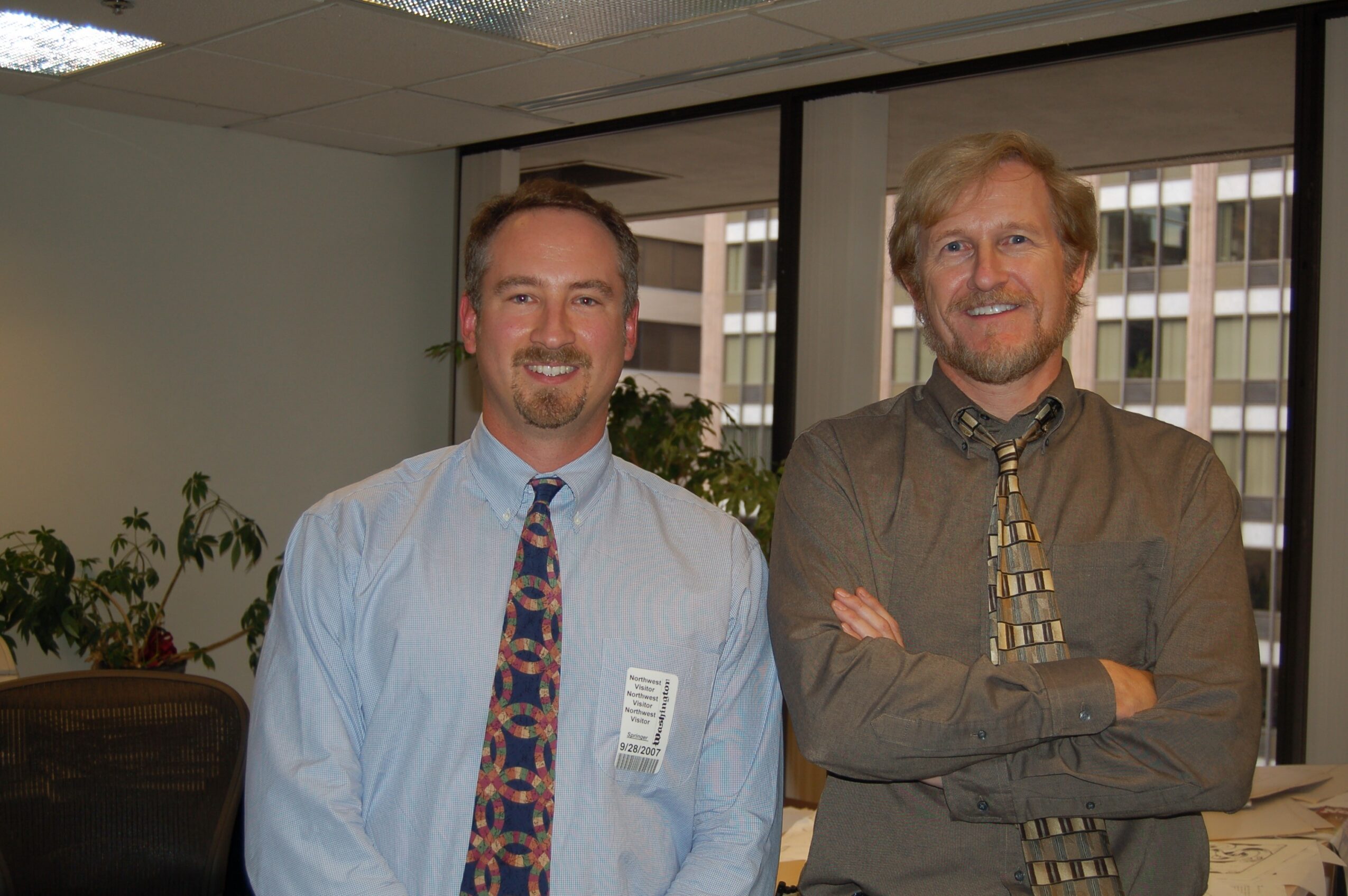
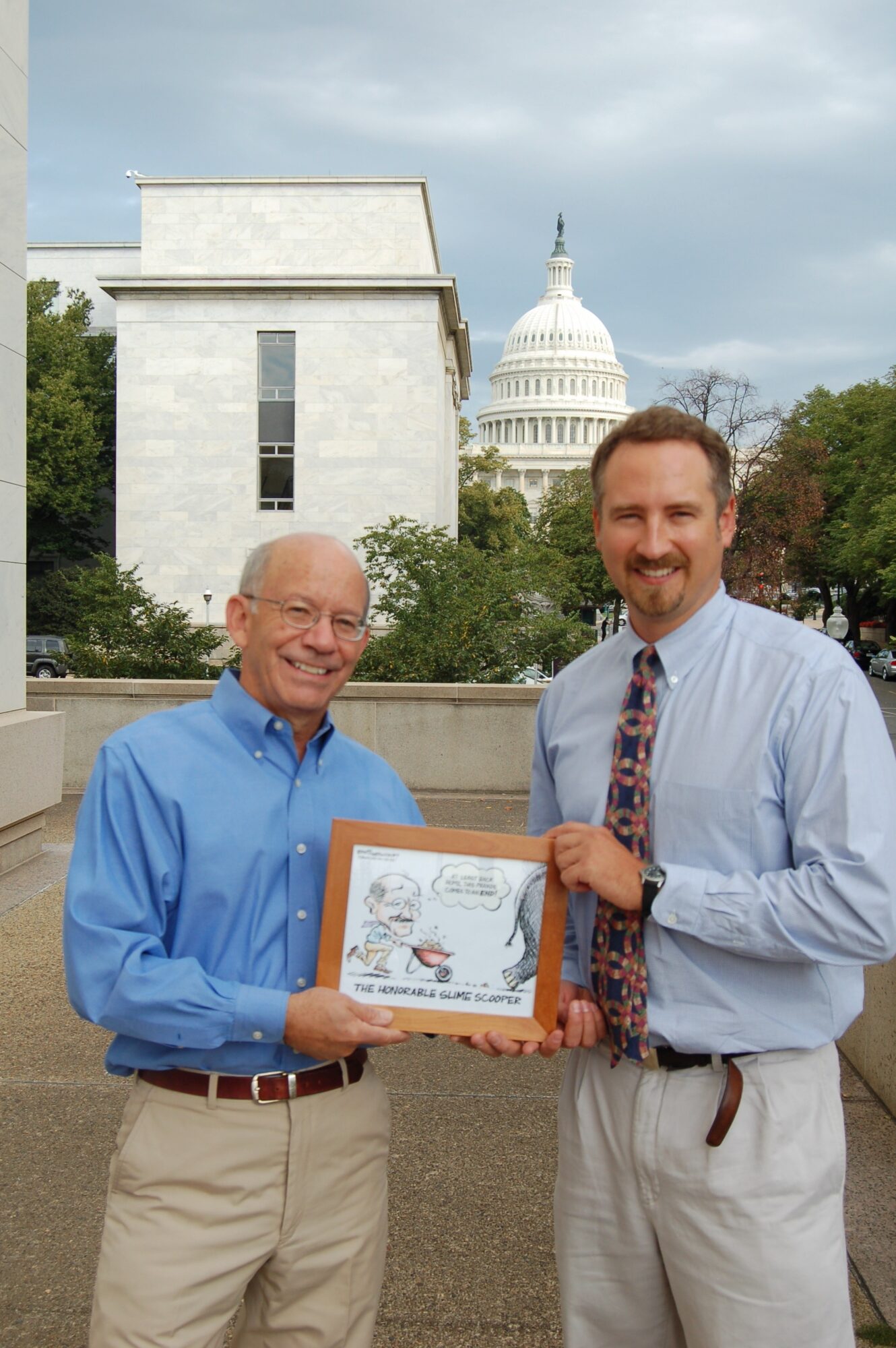
So, statistically speaking, I had a better chance of playing in the NBA than becoming a full-time editorial cartoonist. I decided that my strategy to maximize my potential exposure/earning was to focus only on state-wide issues and try to get as many clients around the state as possible. I made that transition around 2007. That same year, I won a cartoon contest sponsored by the Union of Concerned Scientists. The grand prize was a trip to Washington, D.C. and lunch with one of my all-time heroes, Tom Toles, the editorial cartoonist at the Washington Post. It was great to meet him and, in a last gasp effort, I handed him an envelope of my best work and asked if he might send them up the line and put in a good word. He said, “That’s a big ask,” and nothing ever came of it. In addition to meeting Mr. Toles, one of the thrills of that experience was to exchange emails with Garry Trudeau, who had been one of the judges of the contest.
People often commended me for “making a difference” by drawing and publishing editorial cartoons. I appreciated that comment, and a part of me wanted to believe and was motivated by that, but deep down, I’m afraid that probably wasn’t true. I had a theory that because they contained a political message couched in a humorous twist, an editorial could somehow sneak past a person’s bias and actually get them to consider an idea they may have otherwise dismissed. Given what we have learned in recent years about the tenacity with which people cling to their world view in the face of astounding facts to the contrary, I am guessing that I didn’t sway a single person’s opinion. The main benefit my cartoons had was to give aid and comfort to people who already agreed with me. People would often say, “That is such a great cartoon” about cartoons that I thought were very mediocre. Of course, I very much appreciated the compliment, but what they were really saying was, “I really agree with the political point you made.”
My business and once-a-week cartooning co-existed fairly well. Being self-employed gave me the flexibility to basically spend the better part of one day per week on an editorial cartoon. At its very height, I was probably selling to enough papers that the 5-6 hours I spent every Thursday on my cartoon roughly earned me the same hourly rate I was earning as a graphic designer. But, for the most part, I used to say that my graphic day job “supported my cartoon habit.” The other person that supported my cartoon habit was my wife Julie who, as a school teacher, earned a regular paycheck and got our whole family health insurance benefits. She’s the real hero of this story.
All of this chugged along until February, 2022 when I hung up my cartooning pen. For one thing, I had grown weary of the stress of the weekly deadline. Don’t get me wrong– a deadline can be a beautiful thing. It helped me be very productive for 26 years, during which I produced about 1,000 cartoons. But it began to get old, and I wasn’t sure how many different ways I could draw a cartoon about some of Oregon’s recurring issues. The last nail in the coffin was that I was losing client papers who were being bought up and controlled by large corporate entities who saw little reason to be paying someone $10 per week for some scribbles on paper. I got an email from some Vice President of Customer Experience in Nashville who informed me that the paper in Salem, Oregon– the seat of the legislature, and the focus of maybe 50% of my cartoons– was no longer going to be needing my services. Talk about a sinking ship– less than a year after I stopped drawing cartoons, the Register-Guard– long my flagship client– stopped having an editorial page altogether. It was time to get out.
Just prior to that, however, in 2021, I published a collection of my Oregon-themed cartoons, called Only in Oregon. I was going to do it in 2020 as a 25-year retrospective, but Covid hit and the timing didn’t seem right. In addition to a printed version with 250+ of my best cartoons, I made a digital version with over 600 cartoons, most of which are in color. I am very proud of my body of work, and it was nice to get that printed and sell over 700 copies. I also made a narrated slideshow of some of the highlights, which is pretty fun to watch. https://www.springerdesign.biz/books
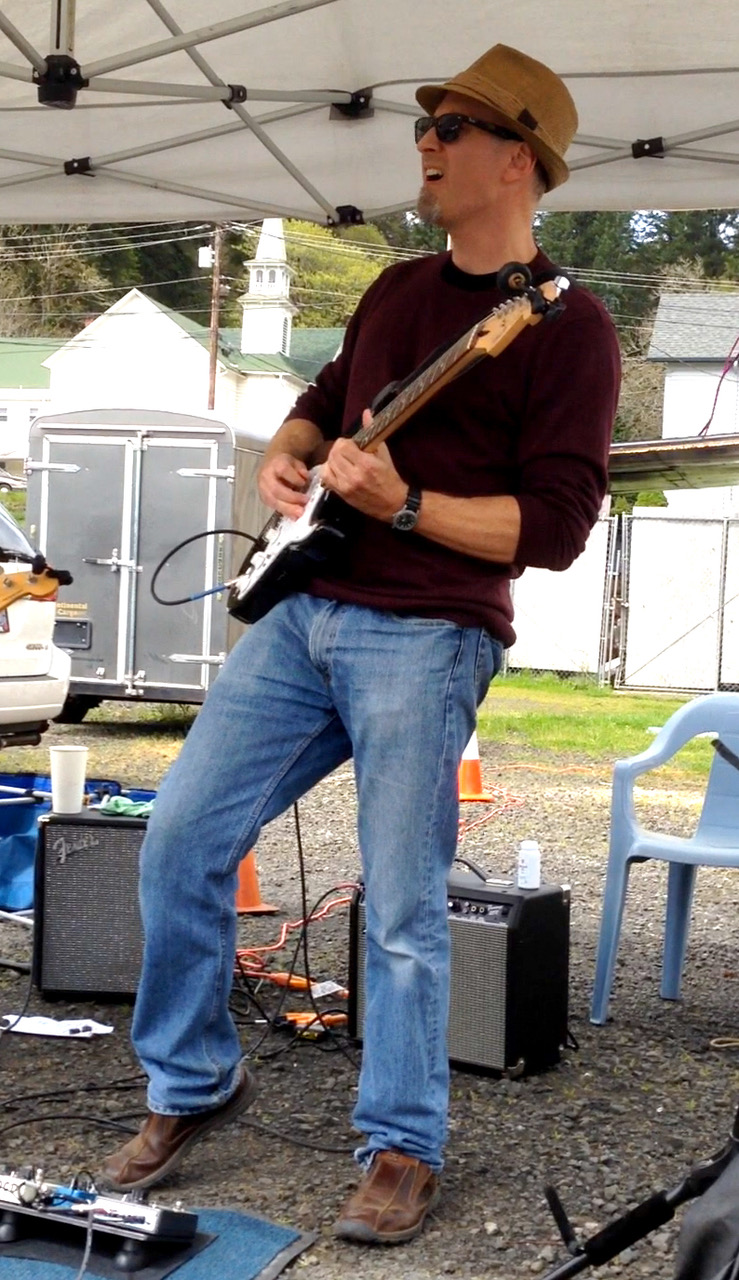
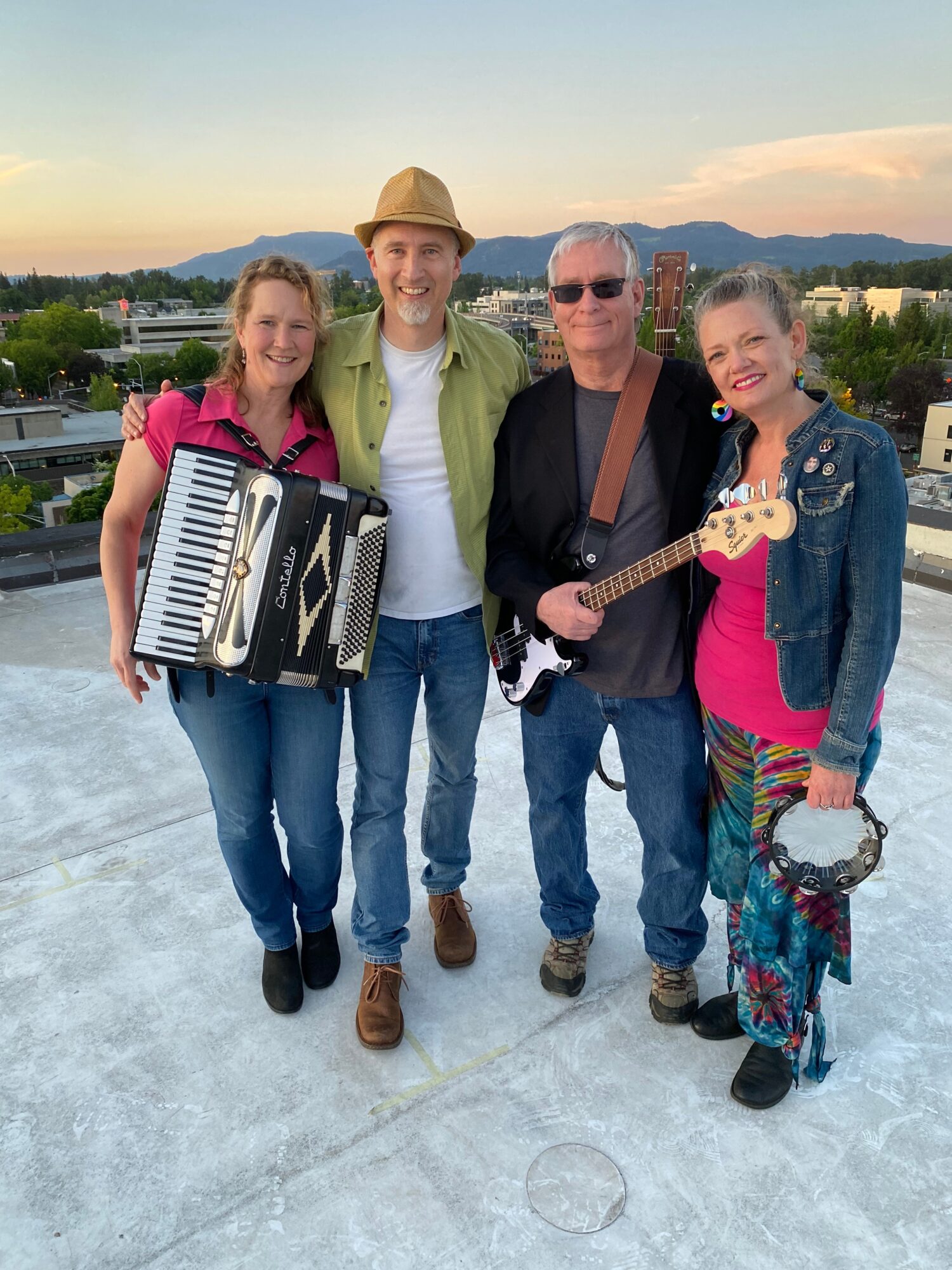
Meanwhile, in 2020, I started a band called Daydream Derby https://www.springerdesign.biz/daydream-derby . By the time my cartooning came to a halt, this became my primary creative outlet, and continues to be! I still have my day job as a graphic designer, and you can find me online at https://www.springerdesign.biz/
Can you talk to us a bit about the challenges and lessons you’ve learned along the way. Looking back would you say it’s been easy or smooth in retrospect?
Of course it has not been a smooth road. In addition to the things I have already mentioned, I would say that rejection and fear of failure are probably two of the biggest obstacles. I’m not going to sit here and say that “I succeeded because I always believed in myself” because I ultimately did not achieve my goal of making my living as a cartoonist. Having said that, there were many moments of self-doubt along the way, and I did the best I could to overcome that.
Appreciate you sharing that. What should we know about Springer Design & Illustration?
What’s interesting about being a self-employed graphic designer in Eugene, Oregon for over 30 years is that I don’t specialize in anything– instead, I do a little bit of everything. I’m sure there are some rock star graphic designers who are known for a particular style and people seek them out because of that. I do have a design aesthetic that tends towards bold and simple, but my philosophy is to try to best understand my client and their needs and adapt my approach to best align with that. Sure, I like to do wacky cartoons, but not every graphic design problem is best solved with a wacky cartoon. Perhaps this goes back to my interest in psychology– I really enjoy learning about people’s businesses, the products and services they provide, and how their target audience could best relate to those goods and services. I put myself in the mind of a potential customer and think, what would most draw me in? The first step in that process is good communication and understanding between me and the client. Because I am a sole proprietor, there are no extra layers between me and the client, so I can go right from a meeting to the drawing board without missing a beat. When I am working on a graphic design project, I want to get out of the way, and let the client’s products and services drive the approach.
Where we are in life is often partly because of others. Who/what else deserves credit for how your story turned out?
First and foremost, I want to thank my wife Julie, for not only bringing in the regular salary and health insurance but also being very supportive of my aspirations as a designer, cartoonist, and musician.
The director of the graphic design program at LCC in the early 1990’s was Thomas Rubick. From the first job lead at the Yellow Pages, to teacher, to mentor, to friend, he meant so much to me, and I miss him.
Another graphic design partner/mentor has been George Lawrence. He and I worked together for the majority of my design career and he taught me a lot about design, client service, and life in general.
My cartoon mentor was Don Kahle, who became the editor of the Comic News, but more than that, he was an editor and sounding board in my earlier cartooning days. I owe an incredible amount of my development as a cartoonist to him.
Another friend and mentor in the cartoon realm has been Jan Eliot, the creator of the syndicated comic strip Stone Soup. Her example of someone who made it as a cartoonist was an inspiration, and she was very generous with her time and friendship.
As far as music goes, I consider my greatest ability is to bring talented people together. My bandmates Dana Abel, Nickie Lawless, and John Heller are all incredibly talented musicians, great friends, and it is a privilege to make music with them.
Contact Info:
- Website: https://www.springerdesign.biz/
- Instagram: https://www.instagram.com/daydream.derby.band/
- Facebook: https://www.facebook.com/daydreamderbyband/
- Youtube: https://www.youtube.com/playlist?list=PL5rbfr76-gRp9UQgOAkiTuWN7P5z2RlaZ
- Other: https://www.springerdesign.biz/books