


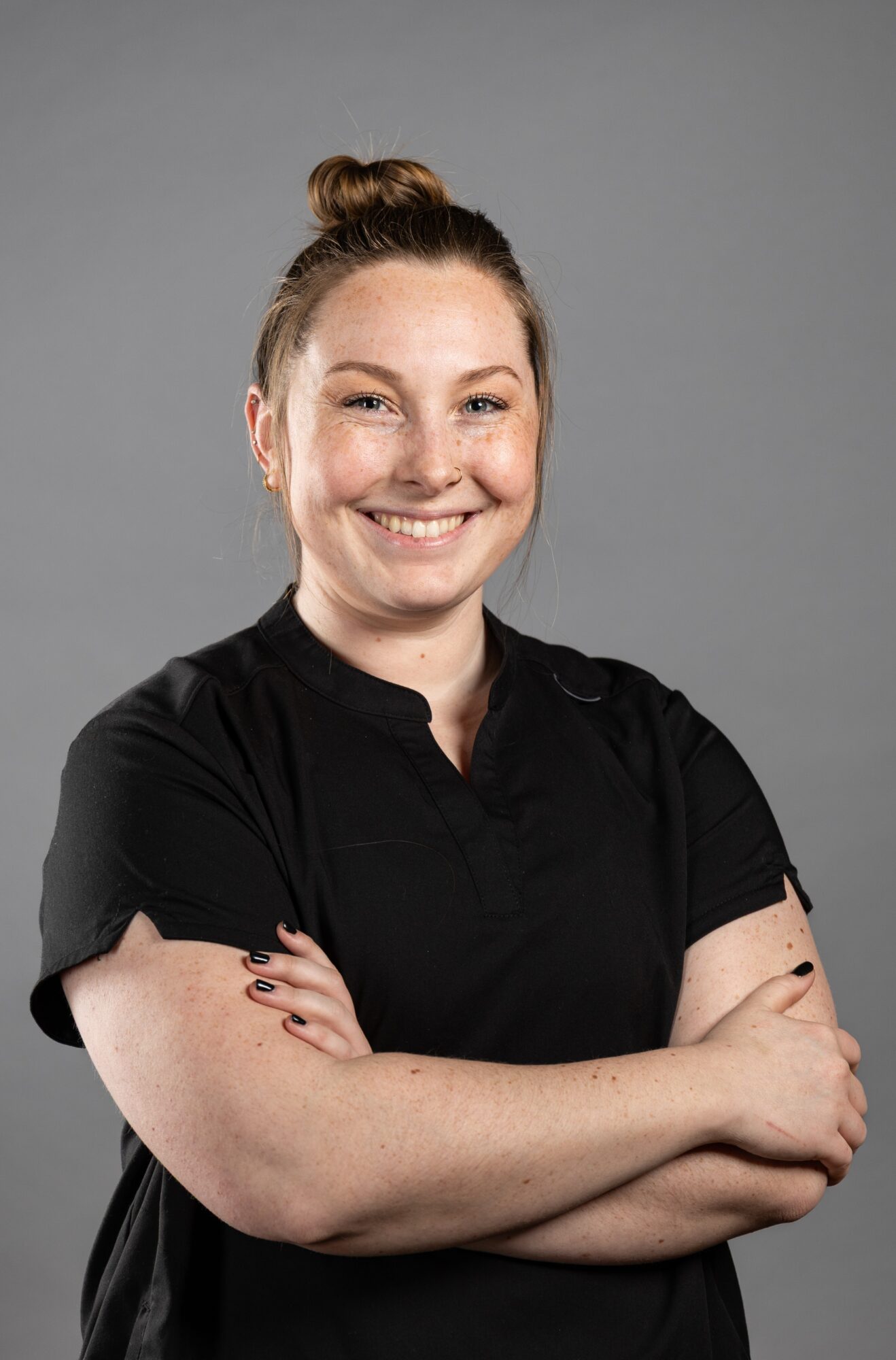
Today we’d like to introduce you to Emily Sproul.
Hi Emily, thanks for joining us today. We’d love for you to start by introducing yourself.
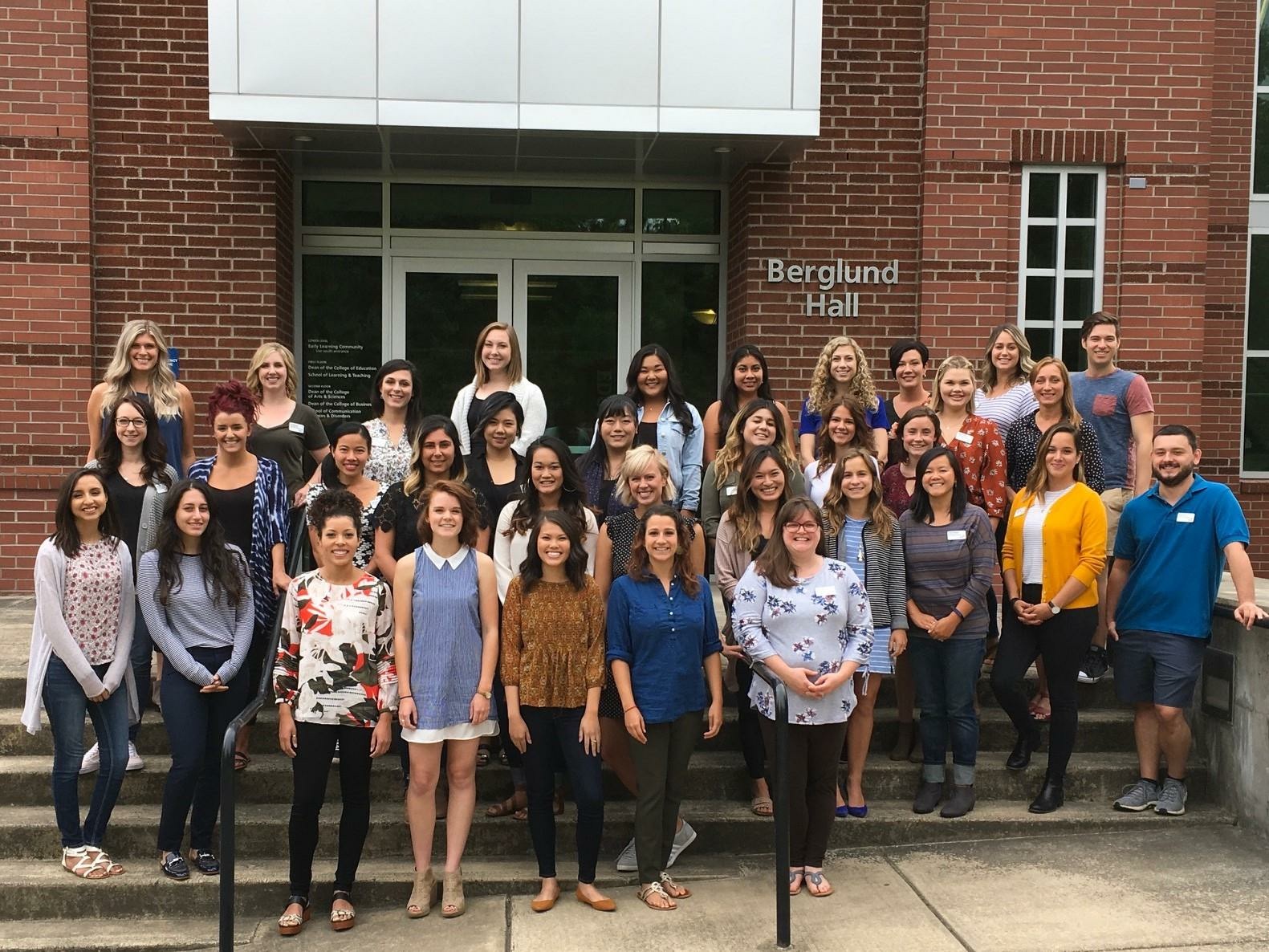
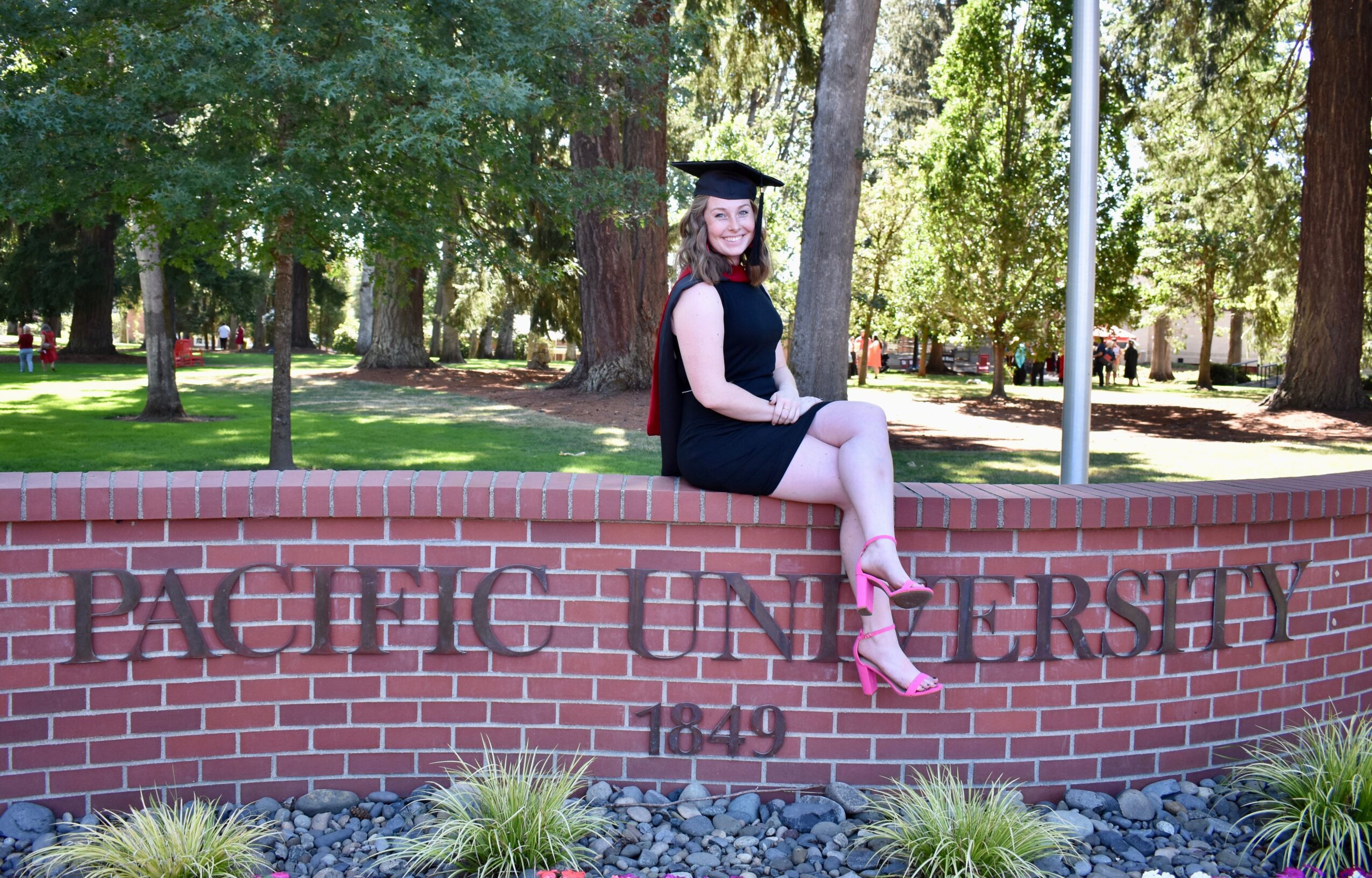
I found the field of speech therapy (SLP, speech-language pathology) when I was in high school. I was a senior, and as is typical of high school seniors, I was being bombarded with questions about what my plans were after high school. College was a definite, I wanted to be close to home, and I knew I wanted to continue to compete in sports, specifically track and field as a javelin thrower. The one thing I hadn’t settled on was what was I going to study. One day I was talking with a staff member about it, and she handed me a huge book filled with every possible area of study you can imagine. As a joke, I opened the book at random and pointed to a random page. My finger landed on “speech-language pathology”, and I laughed. The staff member told me she lived near a college that had that area of study. It was small, had a track team, and she encouraged me to check it out. I went home and stated researching Pacific University. After a few hours of looking at photos, researching the speech therapy program, and looking at their track team, I knew Pacific was the place for me.
Going into college, I was set on working as a pediatric SLP in the NICU with premature babies. My brother Isaac was a twin who was born months premature. His twin sister, Isabella, did not survive prematurity. Isaac fought for months before being able to come home from the hospital. When he came home, he had a feeding tube, and eventually progressed to bottle feeding. I was intrigued by the process, and looking back was the spark that ignited my interest in working with pediatrics. Everything seemed like it was going according to plan. My grades were good, I was doing well in track, and I knew what I wanted to do when I graduated from college. I applied to Pacific’s Masters of Speech-Language Pathology program in the fall of my senior year. Little did I know that my life would be turned upside down that spring.
I sustained an ankle injury during a track practice in early February. It did not resolve, and I ended up being unable to compete in the spring. Not only that, but shortly after, I received a notice that I was waitlisted for the Pacific SLP program. I was devastated. My senior season was gone, and now the chances of me getting into Pacific to work towards my dream career were slim. I did the only thing I could do, continue to work and find a solution. It was a few months later that I got an unexpected call saying that I was accepted into the SLP program at Pacific. That opened the door for me to redshirt my senior year of track and come back in 2019. I remember sitting in the orientation for graduate school in August of 2018 thinking about how close I was to getting my dream career as a NICU SLP. And then I took my swallowing disorders (dysphagia) class.
We had a portion of our dysphagia class that focused on pediatrics, and I was eager to dive in. To start, they passed around neonatal diapers to contextualize the size of premature infants. I held the smallest diaper in the palm of my hand, and burst into tears. I was taken back to the emotions of watching my younger brother and his twin sister in the NICU. After several days I came to the realization that the world of NICU SLP was not for me. That fall I was placed in a school for my practicum. I hoped that shifting from NICU to schools would satisfy my desire to work with children. Unfortunately, it was not the right fit. It wasn’t until the summer of 2019 that I started to find my new path. Pacific had a diagnostic clinic that I was able to participate in. We provided free evaluation services and wrote reports to help with continuing care outside of the clinic. To supplement our hours, we also were placed in a memory care facility. After the first week of that placement, I knew I’d found my place.
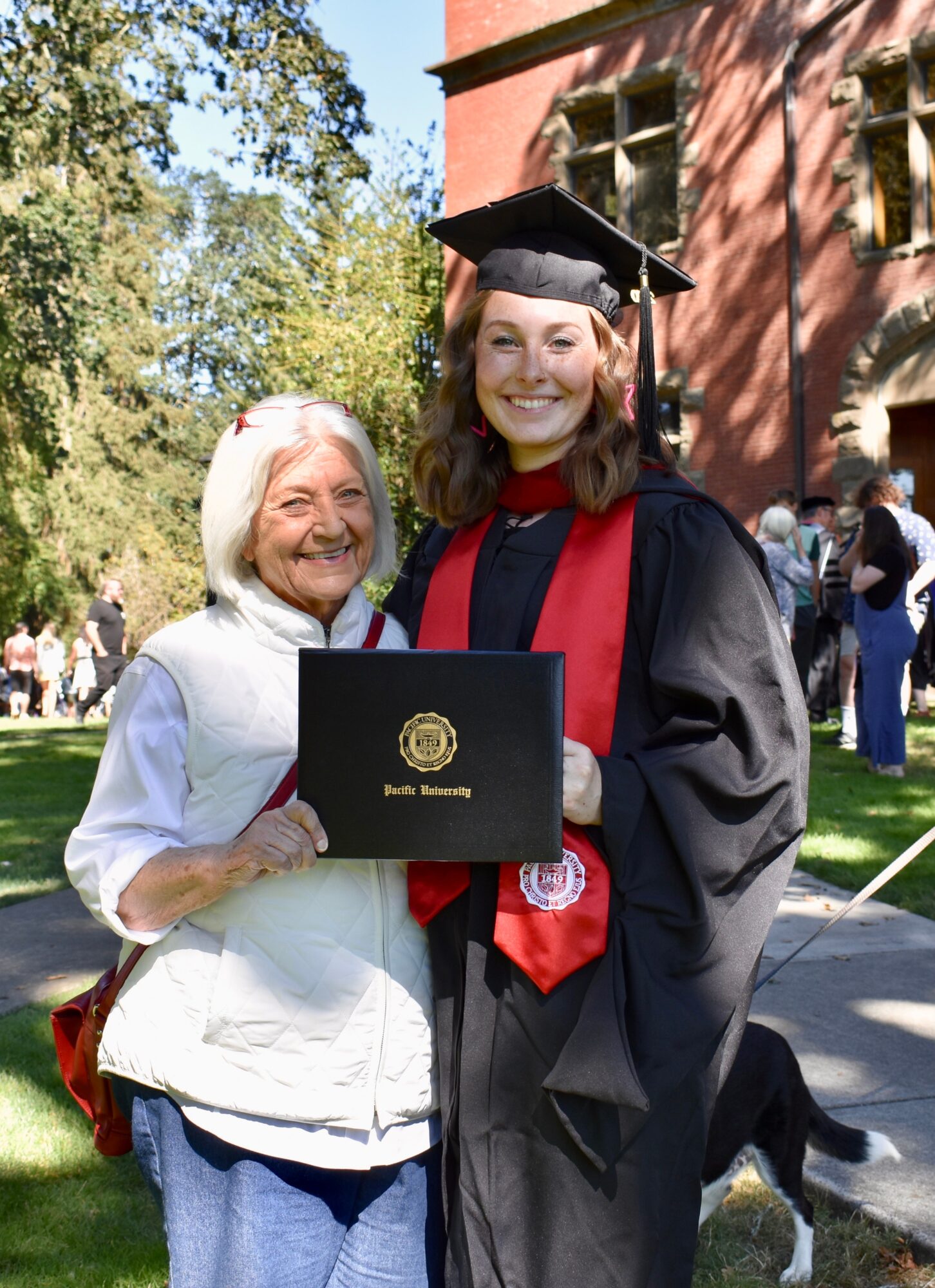
I grew up in adult retirement settings, independent living, assisted living, and memory care facilities. My father works in that industry, so we were always going to buildings as a kid, and I am very familiar with those settings. Walking back into that setting as a young adult with the skills and knowledge to actually help felt like something clicking into place. My final placement of my graduate program was a home health setting in Washington County, OR. I adored my time in this setting, though it was cut short due to the COVID pandemic. Everyone was pulled out of their settings and were thrust into virtual care, which focused primarily on pediatrics. I finished with my MS in Speech-Language Pathology that summer, and immediately moved to Maui, HI to work in an elementary school. The following year I was offered a medical and school hybrid job in Eastern Washington. It turned out to be 99% schools and 1% hospital work. I moved back to the Washington County area in the fall of 2022 and was determined to get back to the things that made me happy: track and memory care.
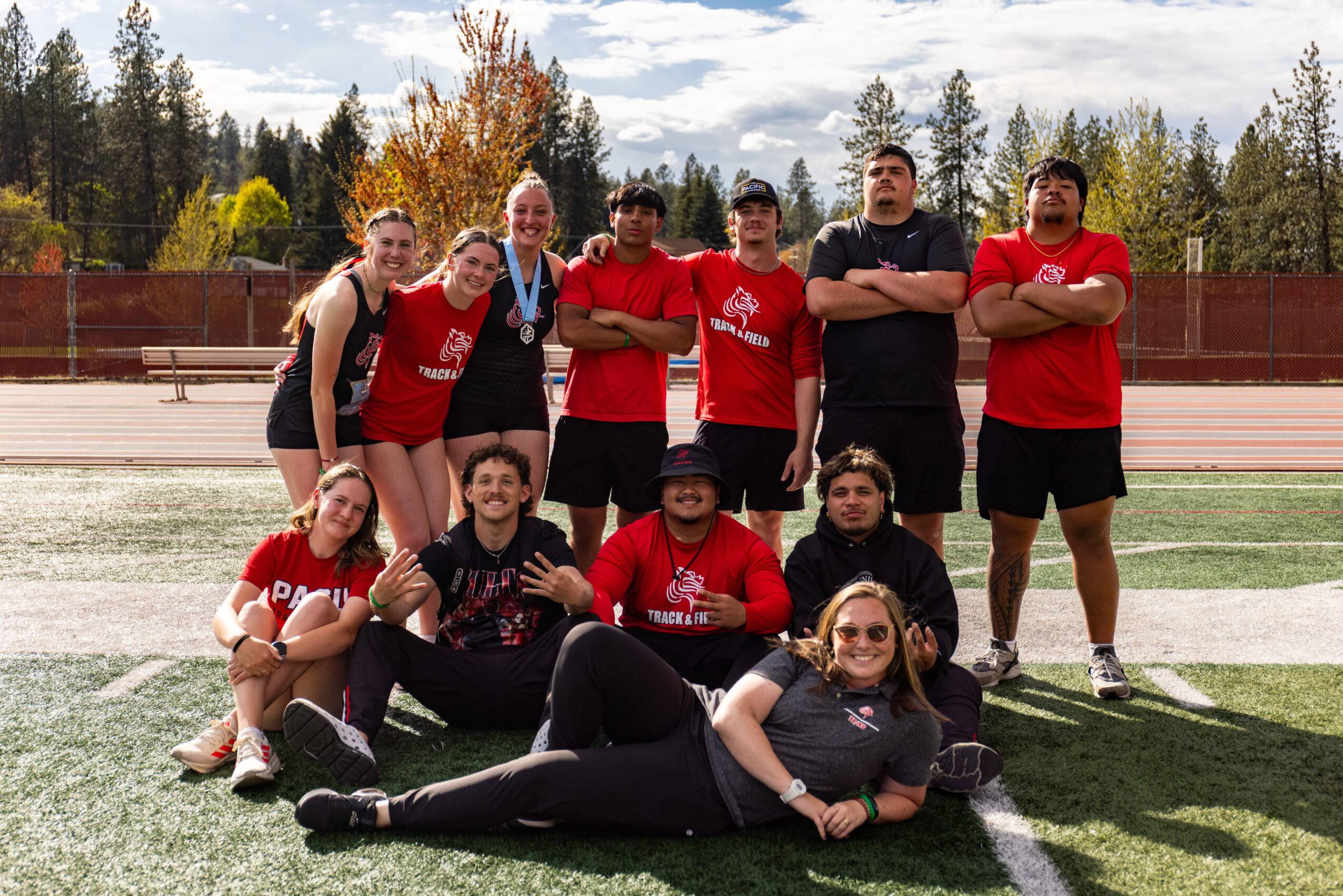
I was offered an assistant coaching position at Pacific University, coaching the throwing events (all of ’em!), and I eagerly accepted. Though I did not have coaching experience at the collegiate level, I was a somewhat-recent college athlete, and had just come off of coaching middle school track and volunteering with high school track in Eastern Washington. I felt like it would be a welcome challenge. In my SLP career, I found myself in a skilled nursing facility (SNF). A SNF (“sniff”) is a care facility where patients go after being discharged from the hospital if they are unable to return to home, but no longer need the higher level of care from the hospital. It was a learning experience, to say the least. I grew as a professional, but also as a person. The world of SNF therapy is challenging and ever-changing. I was floated to different buildings, changing companies when they would lose contracts, and trying to keep my head above water with productivity standards, patient needs, and little support from the buildings I worked in. Nearly every year I would have to switch buildings or rehab companies and have to start over to figure out the system and how to maximize my time and resources for patients. I found myself emotionally exhausted and frustrated. It felt like I was yelling into a void to get basic care needs met for patients. The only thing that kept me coming back every day was the patients, especially my long term care folks, whose home was the SNF. A large portion of that population has cognitive impairment and specifically, dementia. I adored these patients. Though they didn’t remember my name, they remembered me. Smiles crept across their faces when they saw me walking through the building. They would say, “That’s my teacher,” “That’s the best social worker money can buy,” and “That’s my doctor, she is so wonderful.” It didn’t matter to me that they didn’t remember exactly who I was. What mattered to me was they seemed to remember that I was a positive presence in their life. I loved watching their eyes light up each time we would look at photos of their younger years. They were so grateful for everything I did for them, from making memory books to retrieving a cup of coffee, they were profusely thankful. Though there were some tougher cases, I enjoyed each one, both the good and the bad, and felt honored to bring a little bit of light to these patients’ lives.
One day I got a call that I was put on leave, and subsequently removed from the building. I was never given any reason or feedback, the company I worked for was also not given a reason, just the request to remove me. The company I worked for attempted to find me another building to work at, but there were little to no leads. My options were limited, either work in a school setting and give up the coaching job I have, or start my own company. After discussion with my family and close friends, I decided to go for it. ElderConnect was created in January 2026 as a home health company for older adults. I started ElderConnect as a way to provide speech therapy services to the older adults in Washington County in a way that is individualized, effective, functional, and maintains dignity and autonomy. As we age, we start to lose things: our hearing, our ability to drive, our homes, and our autonomy. In skilled nursing, I watched many many patients struggle with the idea that they would be unable to return to their homes because they were not safe or they didn’t have a caregiver to provide the needed support. Research shows that therapy outcomes improve in familiar settings, especially with patients who have memory impairment. Combine that with the need for people to live in their homes longer due to financial issues and caregiving limitations, and you’re looking at a really challenging situation. One goal in starting my own company was to bridge that gap for older adults. I want to give back to a generation that has given so much, and that has led me to where I am today.
I’m sure it wasn’t obstacle-free, but would you say the journey has been fairly smooth so far?
It has been a learning experience! Starting a business is outside of my area of expertise, but thankfully I have wonderful supports and resources helping me figure things out. The biggest areas of challenge are getting credentialed with insurance companies, and finding patients. Nothing is easy, especially when you’re learning as you go, but it’s a great opportunity for growth and learning!
Can you tell our readers more about what you do and what you think sets you apart from others?
I have two careers: SLP and track & field coach.
As a track & field coach I specialize in the throwing events (shot put, discus, javelin, hammer), and I continue to train for and throw javelin.
As a speech-language pathologist, I am a geriatric specialist with additional specialties in dementia care, Parkinson’s Disease, dysphagia (swallowing disorder), and end-of-life care. I am creative, competent, and empathetic. Many families have told me how much they appreciate my support and therapeutic intervention for their family members. I am most proud of my work with patients who have dementia. There is so much misunderstanding when it comes to the disease and how it manifests and presents itself. It can feel very hopeless at times. When I come into a case with a patient with dementia, my goal is not only to help them, but also to support and educate the family for overall improved QOL. This takes a lot of patience, empathy, and ability to look outside of the box. Pacific University taught me to look at the entire patient, not just the diagnosis or symptoms. This has shaped how I care for my patients.
One story I am very proud of is from working in a SNF a year or so ago. I had a patient, let’s call him Tim, who had vascular dementia and was practically nonverbal. I was told he was grumpy, wouldn’t talk, barely engaged with care staff, and was very confused. When I assessed Tim, he was very quiet, confused, and appeared very stressed. The first few days he was in the facility, he laid in bed, barely ate, and was not improving. I made it my mission to get Tim out of bed. He often declined when asked, without reason. One day I walked in and saw a potted plant sitting on Tim’s nightstand (which was against the wall behind his head, where he could not see it.) It was wilted, and I mentioned it to Tim. When I showed him the plant, he stuck his finger in the soil and told me I needed to water it, that’s why it was wilted. I tried to keep calm, but that was the most Tim had spoken to me or really anyone else since getting to the building. Harnessing my SLP training, I used the interaction to gain Tim’s interest. Feigning ignorance, I asked Tim if he would be willing to come help me with this plant, since I had a “black thumb” and have yet to keep a plant alive longer than a few weeks. Tim laughed when I said that. A huge, belly laugh, with a smile spread from ear to ear. He agreed to come with me and water the plant. That was one of the first times Tim had left his room since his arrival. I spoke with my supervisor after his session that day and told her of the progress. She approved us getting soil, pots, and other gardening supplies for me to use in therapy with him. Tim became a new person. He would smile, chat, and engage with others while watering plants, filling up soil, and pruning leaves. Eventually he started to wheel himself to the therapy room to come view the plants himself. I was astonished how finding a hobby changed this man’s whole demeanor and facilitated improved therapy progress. He continued to participate well and improve until he was discharged with his family.
What was your favorite childhood memory?
When I was little, probably around 11yrs old, we went to church during the winter with my dad, and as we pulled in, we saw a pack of little black puppies. One of the puppies had gotten it’s leg stuck between two small tree branches, and the other puppies were bustling around it. We got the one puppy unstuck, and I begged my dad to let us take them home. He agreed and we packed nine lil pups into the car, set them up at home, and went back to church. I had a nagging feeling that we had missed a puppy. I begged and begged my dad to go back and look, and when he finally agreed, we did in fact find one puppy that had fallen down the embankment and broken his leg. I got to cuddle him for the rest of the church service before taking him home to be reunited with his siblings. I remember having so much fun taking care of them as we slowly found homes for each one.
Pricing:
- currently working on credentialing with insurance companies, private pay/self pay only at this time
Contact Info:
- Website: https://ElderConnect.health
- Facebook: https://www.facebook.com/profile.php?id=61587161887162
- LinkedIn: https://www.linkedin.com/company/elderconnect-therapy-services
- Other: https://www.linkedin.com/in/emily-sproul/ ; emily.sproul@elderconnect.health