


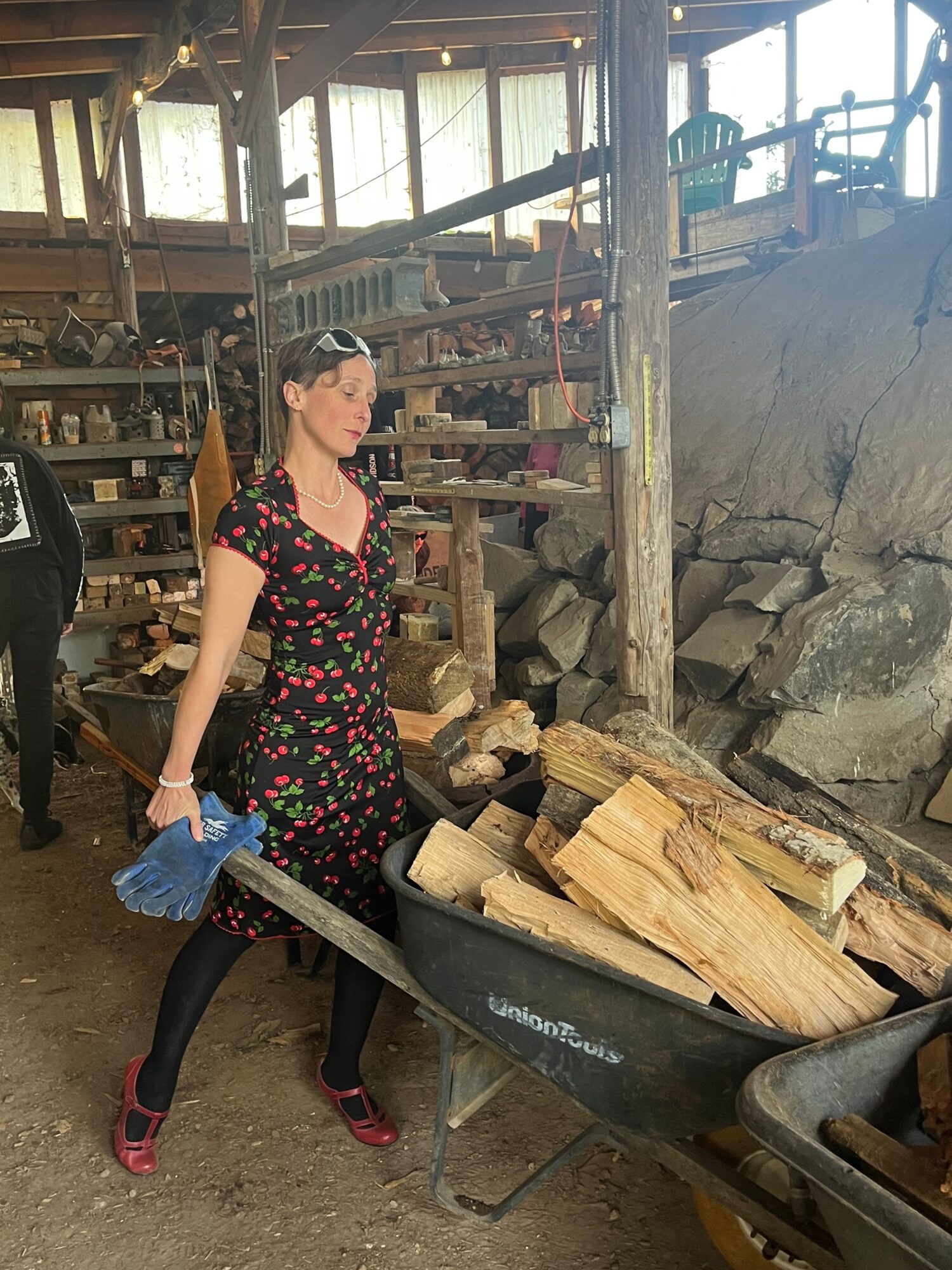
Today we’d like to introduce you to Mandy Stigant.
Hi Mandy, it’s an honor to have you on the platform. Thanks for taking the time to share your story with us – to start maybe you can share some of your backstory with our readers?
I’m a reformed theater kid. I earned my BA in Drama at University of Dallas in 2002. During my senior year I realized I didn’t want to go on to a career in professional theater, which had been my dream since I was 12. As realizations go, it was pretty de-railing, and I felt rather lost for a while. Coincidentally, during my last semester of my senior year I took my first ceramics class and got completely hooked. For the next four years I worked full time and took night classes in ceramics, and in 2006 I started the graduate program at UD, earning my MA. In 2008 I transferred to Utah State, and finished my MFA in Ceramics in 2011. From there I moved out here to Portland. Shortly after moving I was hired as a Lab Tech for the PCC Sylvania Ceramics Department, where I still work full time today. I also spent 12 years as a member at Blackfish Gallery, the oldest artist-owned co-op gallery in the West.
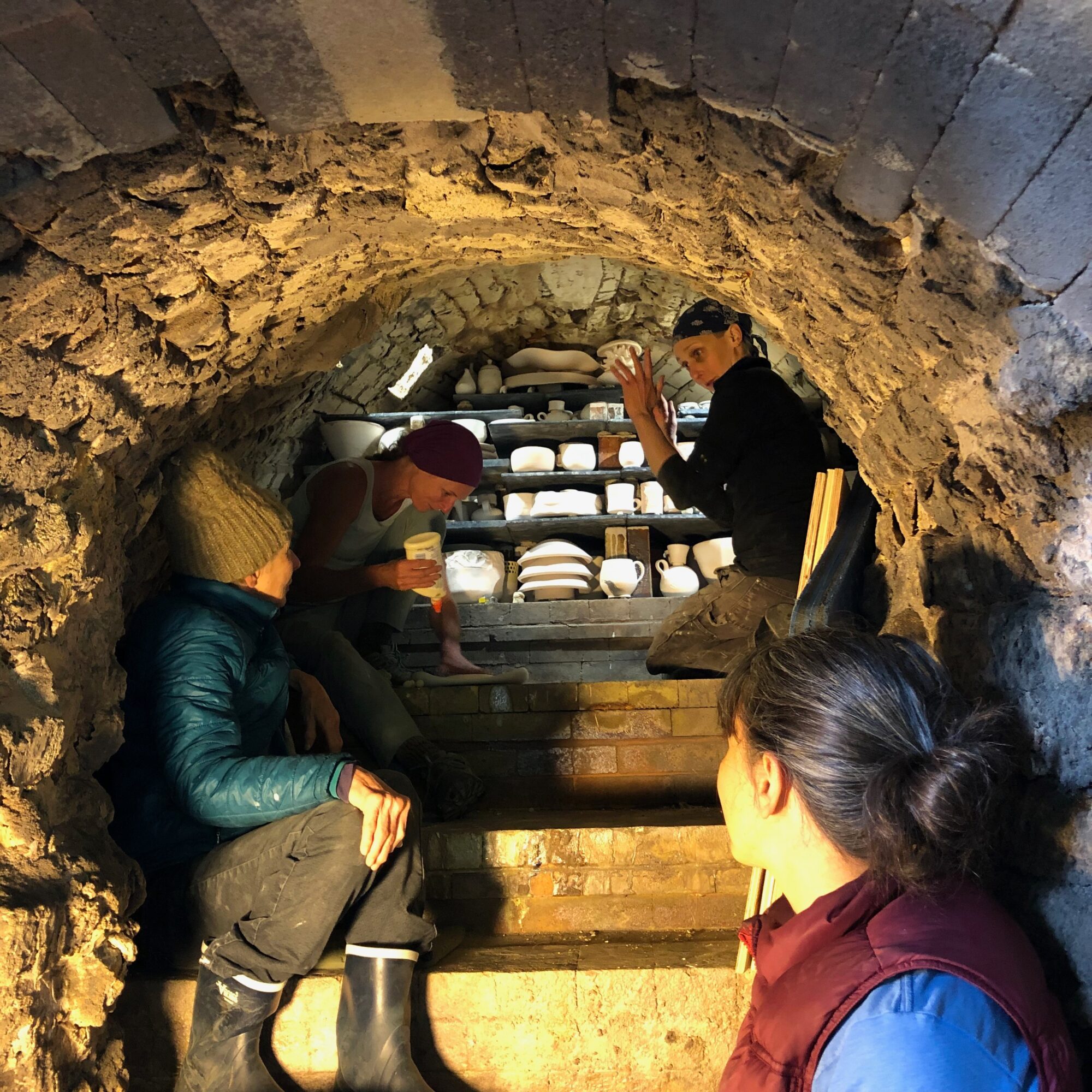
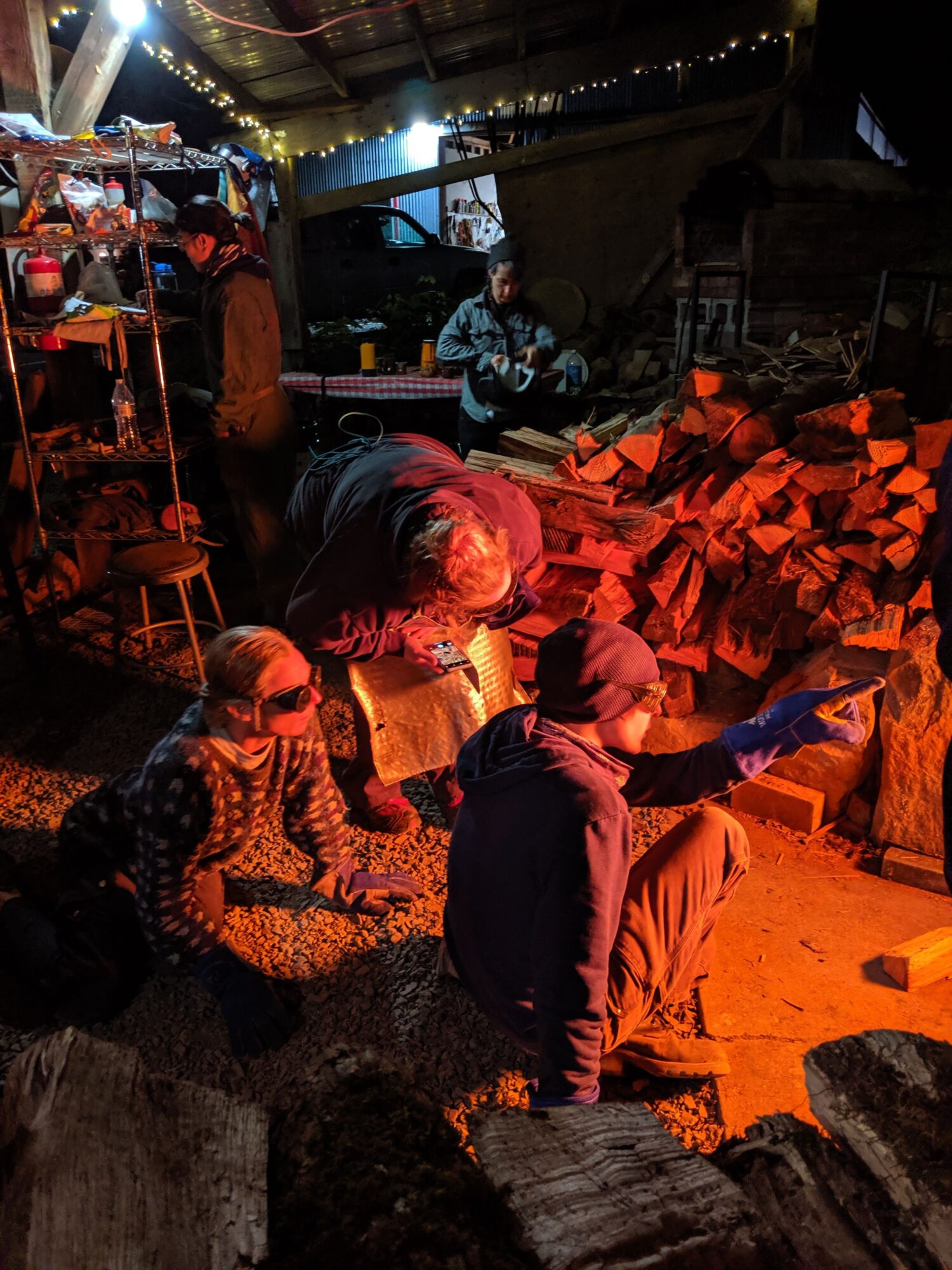
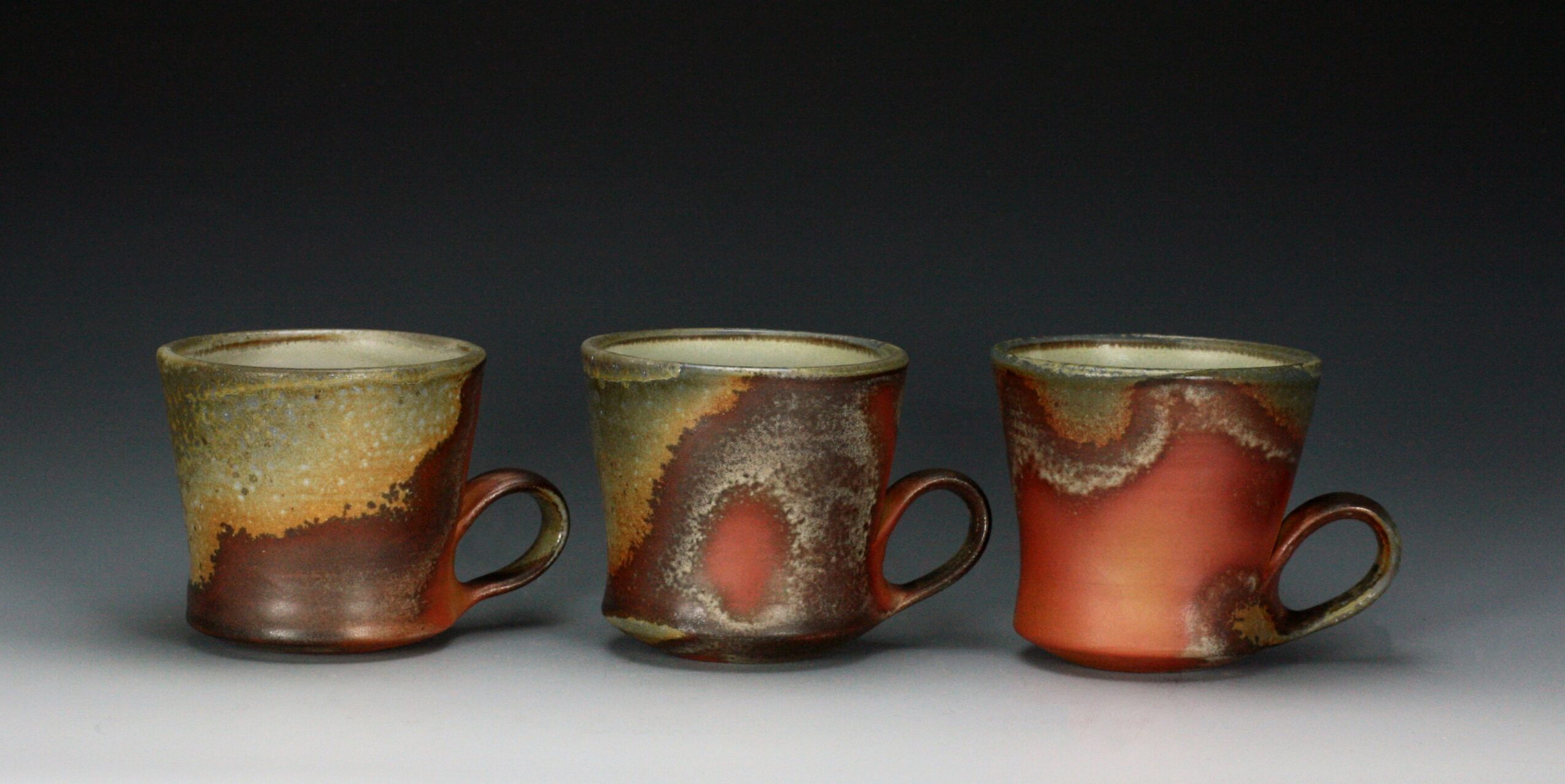
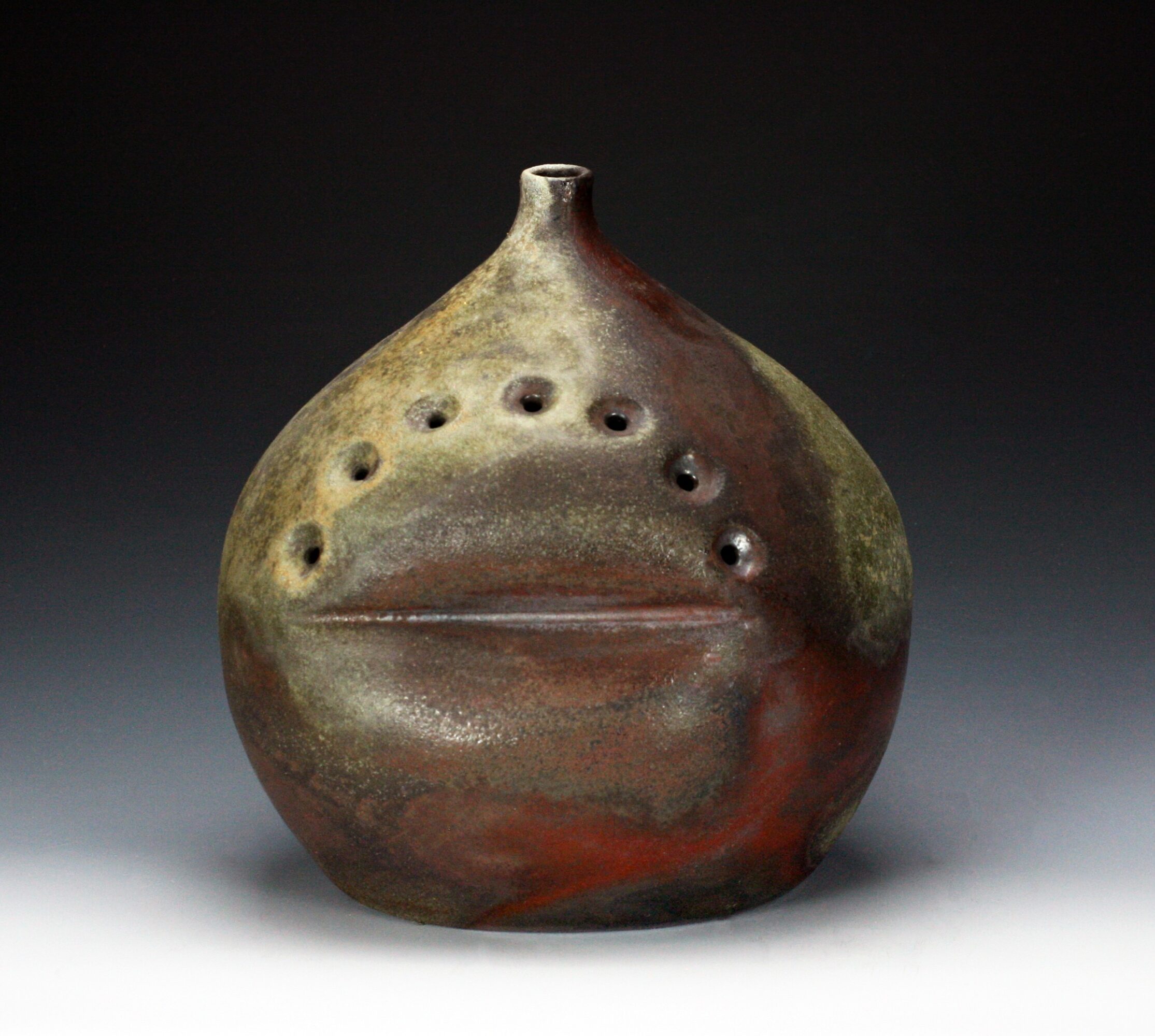
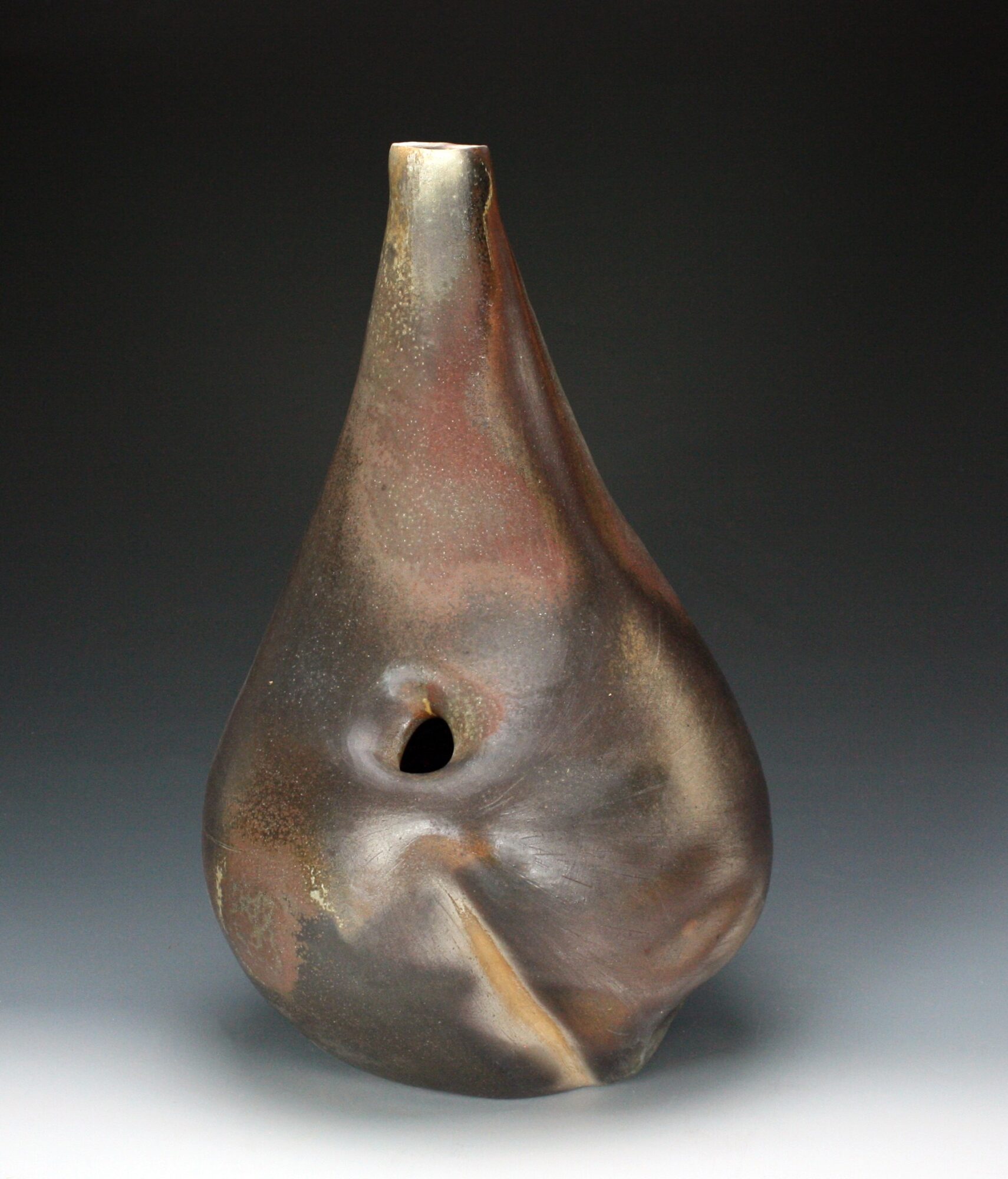
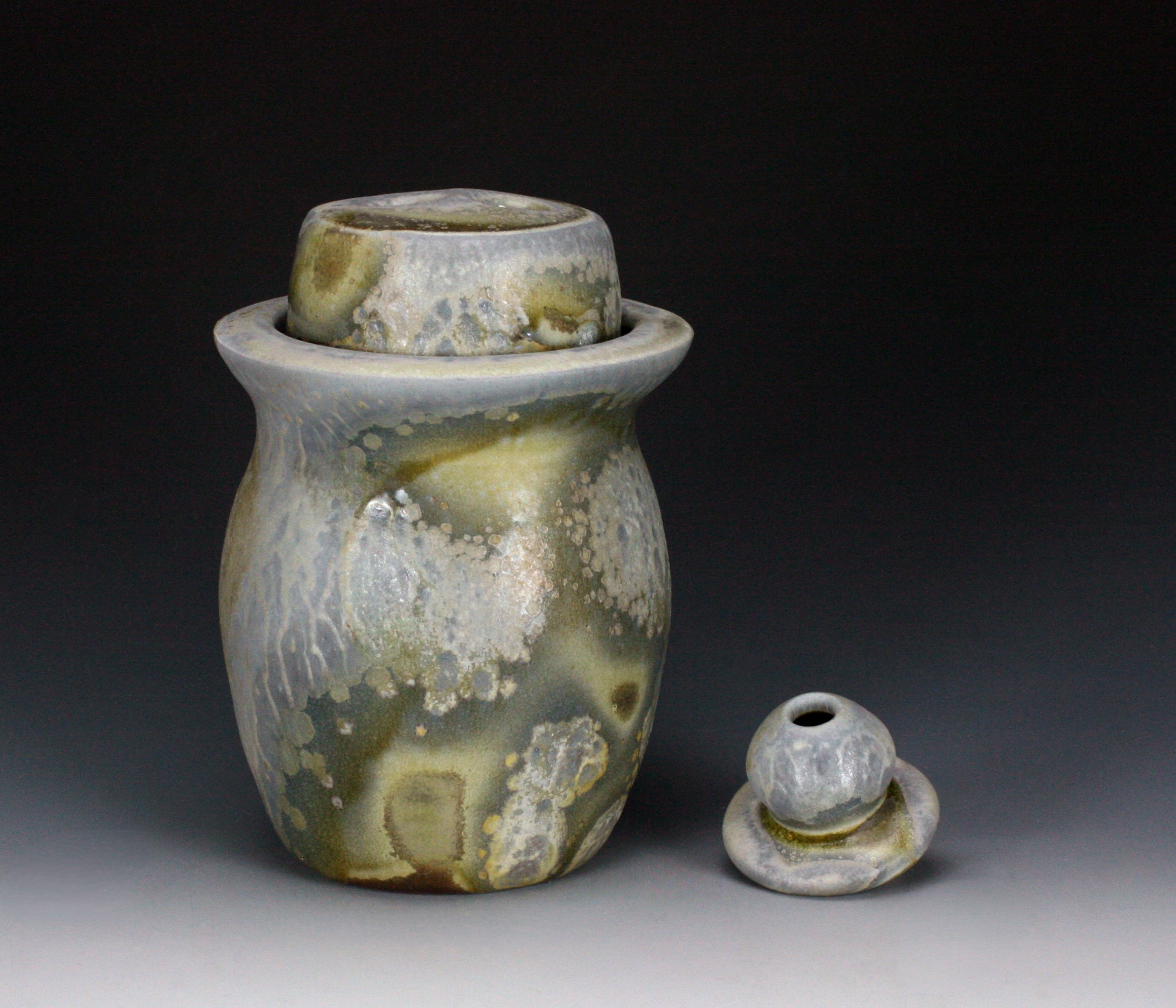
After moving to Portland I became heavily involved in wood firing and the wood firing community, and continue to wood fire most of my work. I’ve fired at Pleasant Hill Pottery, East Creek Art, Mt Hood Community College, Cathouse Clay, and at PCC Sylvania.
I suppose I should mention the limited-series podcast I produced a few years ago with several wood fire colleagues. It’s called “Heat Work,” and it’s about wood firing and wood fire culture. We published 8 episodes.
My not-clay life involves a lot of D&D – oh, a second podcast I participated in is called “Carrots and Suffering,” where we recorded and published two campaigns that we played. My life is also board games, writing, reading, time with friends and my lover, and consuming more geek media than is likely good for me. Also I have chickens and a cat.
Would you say it’s been a smooth road, and if not what are some of the biggest challenges you’ve faced along the way?
Getting hooked on ceramics was easy! The learning curves along the way have been fairly bumpy, like learning curves often are. I didn’t have the academic foundations in art that a lot of my compatriots had, like drawing and design. I had a lot of catching up I had to do, and which I’ve slowly but surely worked on during my entire ceramics career. Art history and design I caught up on before and during grad school, but developing my drawing skills came much later, during the Pandemic. It was a solid handicap all along the way until then, not being able to draw well, and I didn’t appreciate that lack for what it was until I started to make up for it in earnest.
Financially, grad school and the years immediately following were hard. My tuition was taken care of via scholarships and TA’s, but I had to borrow my living expenses, and I had an unusually long grad school stint of 5 years. There were some serendipitous twists of fate: I had just started at Utah State when the 2008 crash happened, and it turned out that the next few years were an ideal time for being a student and not trying to get a job. The upside of my grad school years were that I learned a lot about how to pare down my life and manage to live on as little money as possible. It is a humbling and very insightful experience to understand how to live and function without a significant income.
When I moved to Portland, so many ducks seemed to just line up for me, and I felt very lucky. I was hired for my job, I joined Blackfish, and I found a studio to work in via a work/trade mentorship situation with Careen Stoll, who was also an alumn of USU’s grad program. The communities of friends and colleagues here have been such a life bolster in so many ways, and I am very happy to have come here to put down my roots.
Regarding more recent struggles and bumpy roads in this here life: about a year ago we lost, suddenly, one of my grad school mentors, John Neely. It’s hard to explain how many lives he touched and helped shaped with his guidance, and the legacy of impact he has had on the ceramics field, both from his direct influence and via his mentoring so many current working artists. I’ve thought about him so much over the past year, often when I think of something I’d like to show him or ask him. At his memorial, one of his close friends and colleagues described how John strongly treated Community as a pedagogical strategy. I think about that A Lot.
Can you tell our readers more about what you do and what you think sets you apart from others?
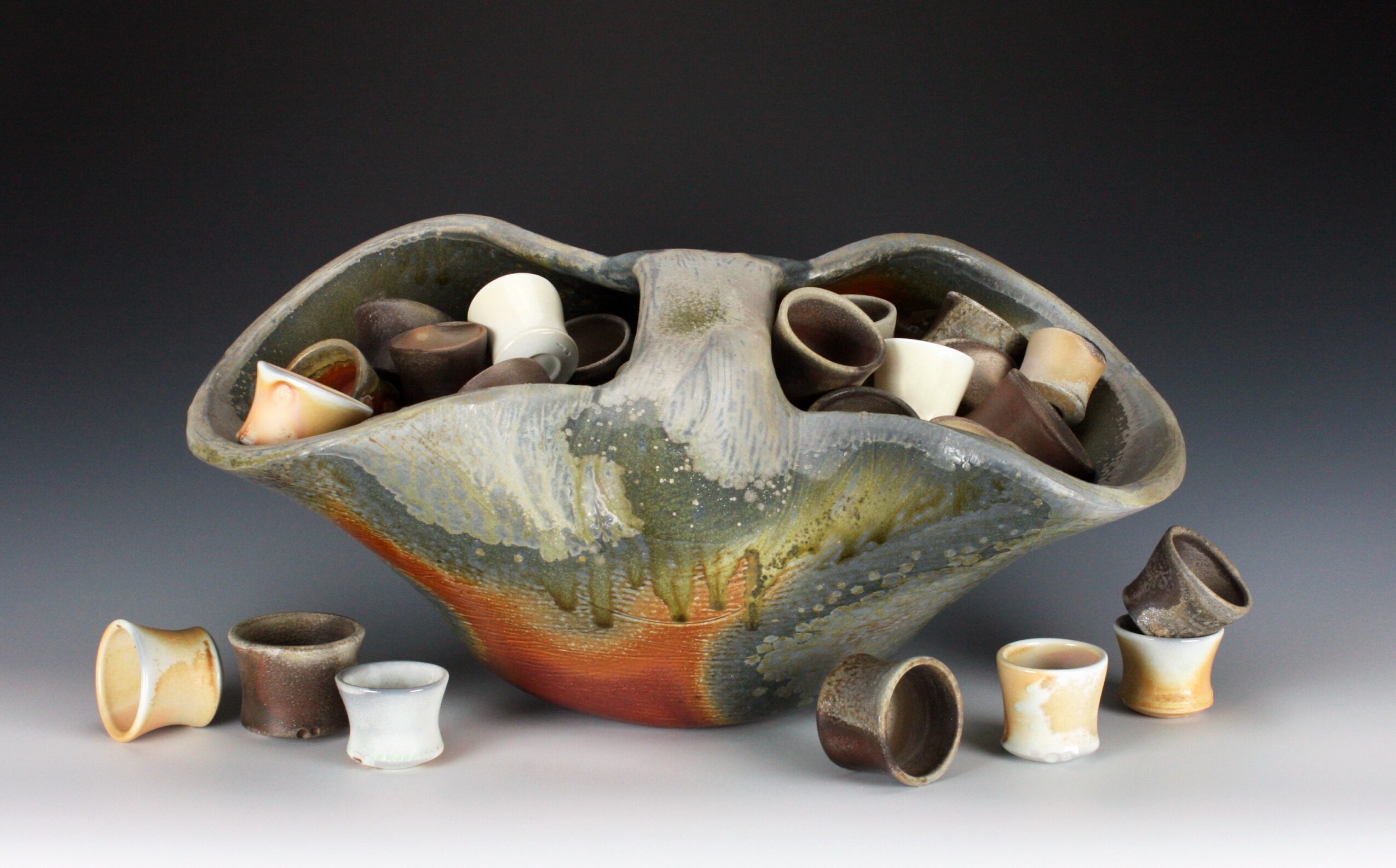
After moving to Portland, I started focusing on making utilitarian pottery. This was a big shift from my grad school years, where I was making fairly large scale sculptural work. Utilitarian pottery was an area where I felt I hadn’t developed my artistic voice at all, and so I dove in and started hammering that out. It took several years to find my real footing with it, and it has been steadily developing ever since.
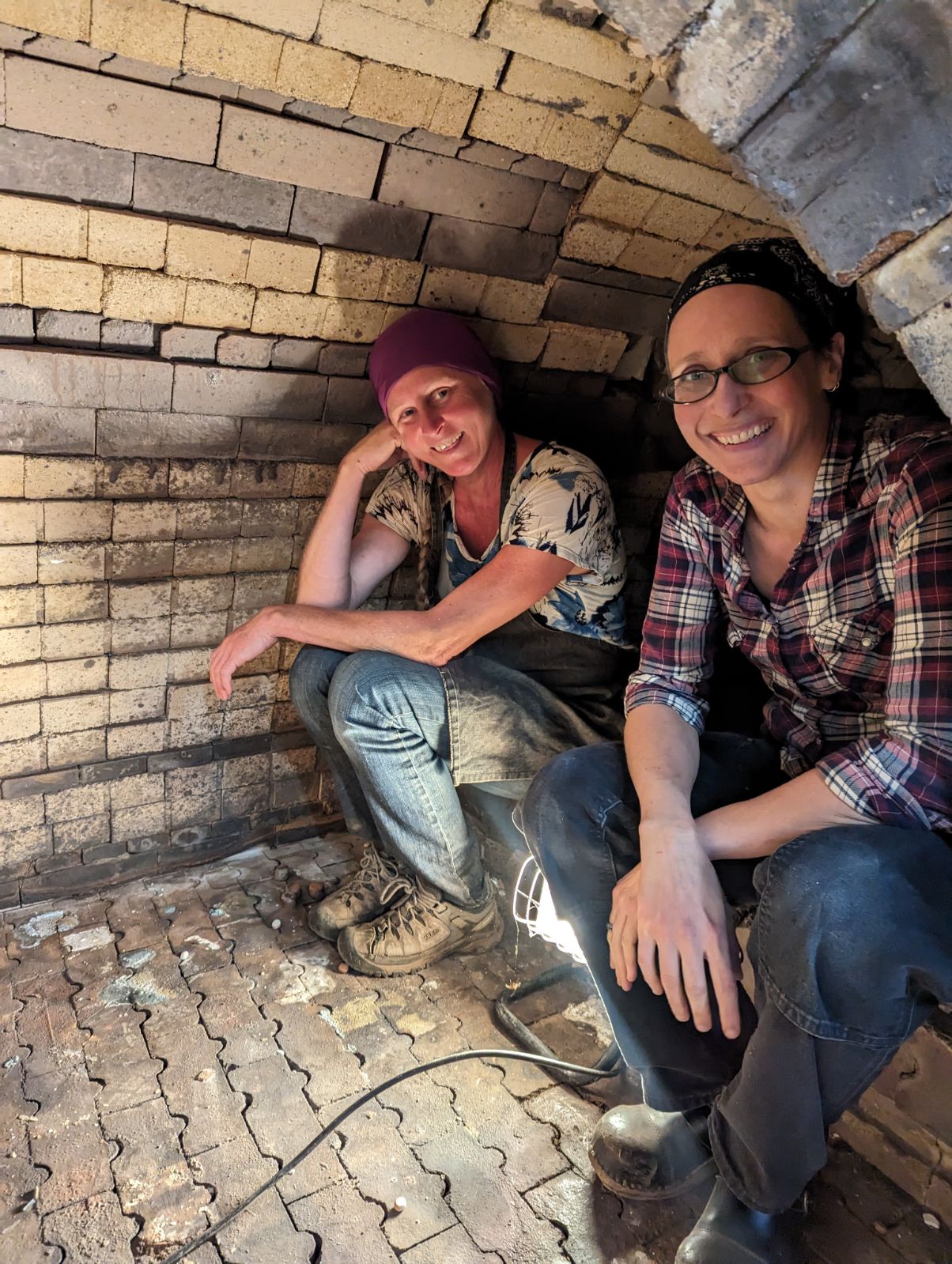
Working in Careen’s studio at Cathouse Clay was also where I started to learn in earnest about wood firing, and I started to meet and work with many of the wood fire artists in the region. Now, 15 years later, I’ve led countless shifts on kilns, and also co-led firings. In 2019 Careen and I co-led an all-female crew out at East Creek, an event we called Firing While Female, and had a truly fulfilling and rewarding experience with that specialized, focused demographic for a crew. In October 2025 we held a similar-minded event, though smaller in scale, at Pleasant Hill Pottery, that we called Firing While Fierce. That crew consisted of cis and trans women, trans men, gender-fluid and non-binary artists. Our interest with these targeted demographics was with creating a space, in a largely cis male-dominated field, for many of the underrepresented gender demographics to have their space, time, and experience to teach, learn, and fire the kilns on their own terms, with others in similar situations and mindsets.
I think what I’m most proud of is the community of wood fire artists, and the things I’ve done to be part of it and try to make it better. On a personal level, I’m proud of coming to Portland and deliberately setting about tackling, specifically, the areas I felt like I was most deficient in, in terms of my ceramical career. I still am tackling, and learning, in so many ways, but it has been very gratifying over the last 15 years to overcome the speed bumps of fear, anxiety and worries of inadequacy and to get my hands dirty by operating very far outside of my comfort zone.
What sets me apart from others might be my determination (or stubbornness, depending on who you’re talking to). I’ve always had a very solid work ethic, which I learned from my parents and from various mentors growing up. I started to understand I was autistic in my late 30’s, and confirmed it at age 41. The trip about being undiagnosed as a kid is you still have to get through your life as best you can, with the better and worse coping mechanisms you formulate for yourself along the way. What that looked like for me was a high intelligence with a slow processing speed, which many people, including me, mistook for low intelligence for a long time. On a practical level, what this meant for me was I had to work very, very hard, at school, in theater, in my hobbies, and that work ethic has stayed with me, sometimes to a fault, my whole life. I feel the most alive when I’m problem-solving and employing creative thinking processes, and I’ve honed that into a major strength in my adult life.
Are there any apps, books, podcasts, blogs or other resources you think our readers should check out?
Ohhhh boy. Let the record show that you asked. In no particular order:
“The Unknown Craftsman,” by Soetsu Yanagi was an invaluable read I was handed early in my ceramics career by my first ceramics mentor, Dan Hammett. It’s such a beautiful book.
“Zen and the Art of Motorcycle Maintenance,” by Robert Pirsig. This is a bit dated now, and also I recognize now that it is a very privileged white male-centric take, but that doesn’t preclude it for having valuable life lessons.
“Into Thin Air,” by Jon Krakauer. Apropos of nothing pragmatic, but it’s one of the most thrilling books I’ve ever read in my life. I sacrificed two very precious days in the studio during grad school reading it because I couldn’t put it down, and I tripped on it for weeks afterwards.
“Winter’s Tale,” by Mark Helprin. This is the novel that made me fall in love with the English Language. Like, I didn’t know English could DO that.
“Jitterbug Perfume,” by Tom Robbins. Most of Tom Robbins is worth picking up. He helped me continue my torrid love affair with English. English can also do THAT.
The entire “Discworld” series by Terry Pratchett. But don’t start at the beginning (ha). Start with either “Guards! Guards!” or “Witches Abroad.”
“The Arcanum, The Extraordinary True Story,” by Janet Gleeson. The unexpectedly wild story of the history and development of European Porcelain.
“That Hideous Strength,” by CS Lewis. I read this when I was young and still religious, so take or leave this suggestion, but I still think it’s such a powerfully written book.
“The Last Temptation of Christ,” by Nikos Kazantzakis. Man, I’m telling you, the best way to get everyone to read a book is to ban it.
“Lord of the Rings,” by Tolkien. I don’t know how not to include this as a general life influence. I’ll tack on “The Silmarillion” for good measure. I accidentally re-read it a few years ago, and it’s just fantastic.
“The Odyssey,” by Homer, translated by Fitzgerald. The translation is EVERYTHING. I’ve read two other translations, and Fitzgerald is head and shoulders the best. His “Iliad” is also quite good. I’ll admit I haven’t yet read the recent translation by Emily Wilson, but I plan to.
“The File on H,” by Ismail Kadare. A short novel with many many delightful layers.
I also read entirely too much Sci Fi and Fantasy, but I’ll spare you my geekery over all of that. Well, okay. “The Expanse” series is worth every page. I feel like each book should come with a gallon of popcorn, and I don’t even like popcorn.
Pricing:
- Artists need to be paid what they’re worth
- Most of us take at least a little bit of a hit trying to keep our work accessible to the non-wealthy
- Wood firing is expensive
- Labor isn’t a non-issue. Labor isn’t free.
Contact Info:
- Website: https://mandystigantceramics.com
- Instagram: @mandystigantceramics
- Other: https://www.etsy.com/shop/MandyStigantCeramics?ref=seller-platform-mcnav