


Today we’d like to introduce you to SORA Shodo.
Hi SORA, so excited to have you on the platform. So before we get into questions about your work-life, maybe you can bring our readers up to speed on your story and how you got to where you are today?
How I started, and how I got to where I am today
I was born in Usuki, Oita, Japan, in 1977, the youngest of four children. My father had
beautiful handwriting — he used sumi ink to write Noshi, the traditional notes attached to gifts
— and I grew up surrounded by the smell of ink and the sight of a brush moving across paper.
As a child, though, calligraphy was just a school subject to me.
What I really dreamed of was flying — becoming a flight attendant, seeing the world, meeting
people from other countries.
At 15, I went to the U.S. as an exchange student to strengthen my English. It was one of the
hardest experiences of my life — I faced racism, moved between host families, and cried
almost every day for months before I finally found steady ground. It broke me down, but it also
made me strong in a way I didn’t understand yet.
I went back to Japan more determined than ever, moved to Tokyo at 19, and in 1999 I finally
became an ANA international flight attendant — my childhood dream, realized. Around that
same time I met my husband, an American studying in Japan. We married, moved to
Portland, and I had three children. But in the U.S., none of the status I’d built in Japan meant
anything here — I ended up working at Starbucks, and it humbled me in ways I wasn’t ready
for.
In 2011, we moved back to my hometown for three years while my husband renovated a
100-year-old house there. Life was radically inconvenient by modern standards — no
windows, just wooden shutters, no gas at first, an outdoor bath, no air conditioning, an
outhouse — while we raised three kids and he worked on the renovation. Even though we
later divorced, I’m genuinely grateful to him for that chapter. He taught me something I still
carry: that even if everything else in the world disappeared, as long as we have water and
nature, human beings can find a way to live. That knowledge — that deep, quiet wisdom —
has stayed with me ever since.
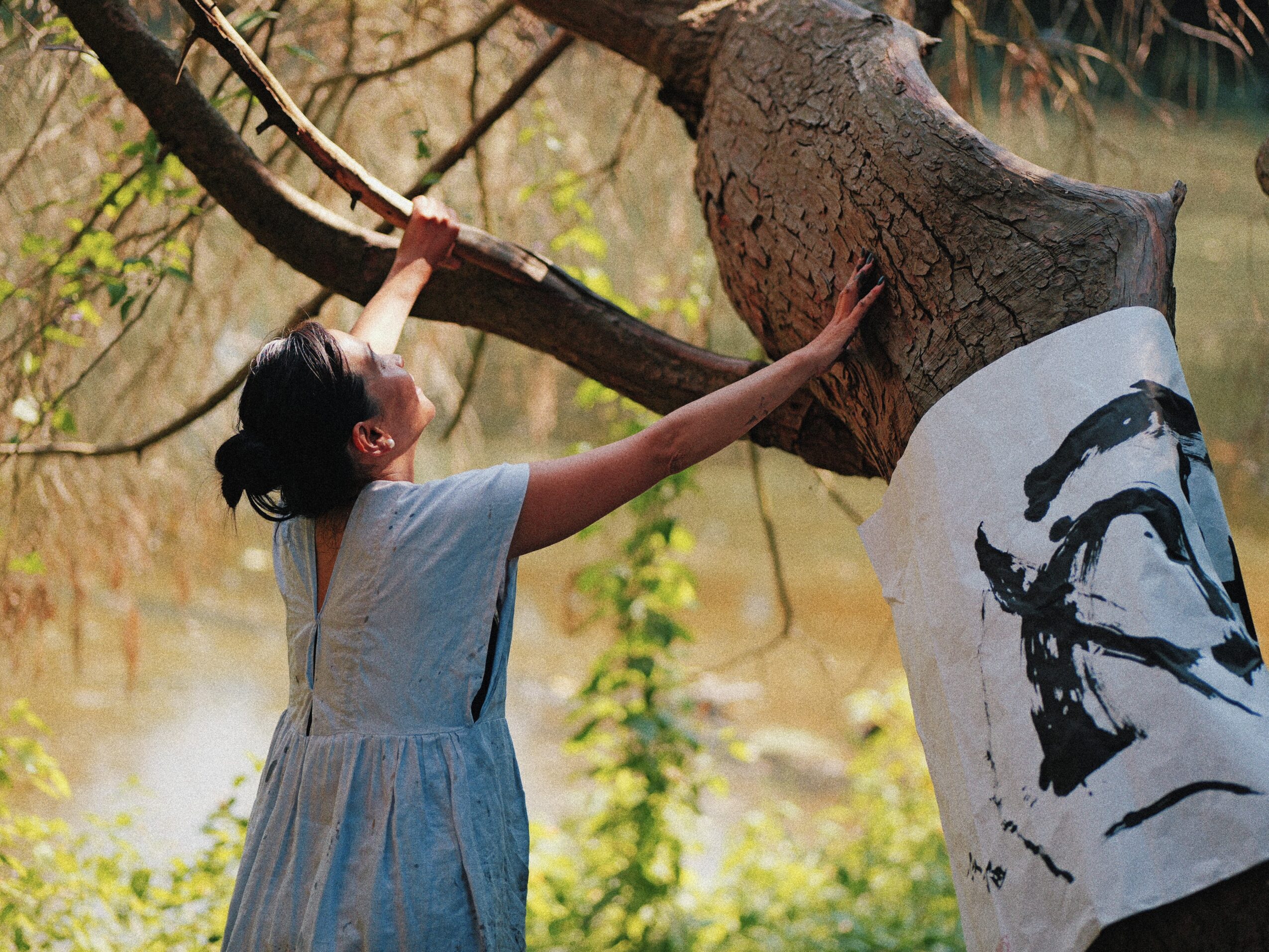
Today I still camp in the wild landscapes of the Pacific Northwest and bathe in rivers, and that
connection to nature has become one of the roots of my art.
During that time in Japan, I also worked as a TV director and reporter, covering temples,
national treasures, and the people and history of Oita. I found myself documenting the depth
of Japan’s land, the relationship between nature and the divine, the layers of history beneath
everyday life. I felt, for the first time, how fortunate I was to be born in this country. I didn’t
know it yet, but everything I was learning in that period — history, land, spirit — would become
the foundation of the artist I’d become in America.
When we returned to Oregon in 2014, something in me felt unfinished. Then I saw a kanji
piece hanging on a friend’s wall, and it brought everything back — my father, the brush, the
ink. I found my teacher, Sekko Daigo, and at 40 she gave me the name SORA — meaning
universe, or sky. It reminded me that I could still fly, just not on an airplane — with a brush,
ink, and my soul instead.
My first public live performance was at my children’s elementary school. Since 2017, I’ve built
a performance art practice around shodo across the country — something almost no one had
done before in this form.
I believe everything is connected. Japan gave me history and roots. America gave me the
open, vast land where I could finally build something entirely my own — art I couldn’t have
made if I’d stayed in Japan. My work today is created from the blessings of nature itself — an
intuitive art born from the universe, which is what my name, SORA, means. It’s something you
have to feel live to really understand — there’s a strange, powerful force in the performance
itself that doesn’t translate through a photo or a screen.
This year has also been one of the hardest of my life. All three of my kids are now in college,
and last year I went through a divorce — something I never imagined, watching my family
scatter in ways I hadn’t planned for. There’s a phrase I hold onto: to walk your path fully,
sometimes you have to let go of the ties that hold you back. I’ve cried a lot. But I’ve come to
believe that everything — the tears, the failures, the darkness — happens inside us first. You
polish yourself through it, fail again, and slowly, the light comes back.
As an artist, I’m out in the world now, but I still haven’t reached a place where this fully
supports me. That’s not really why I create, though. Every piece I make is an offering — to
history, to humanity, to the earth, to the universe itself — made with a prayer that this world
becomes even a little more peaceful.
I believe homelessness, crime, the suffering we see around us — none of it exists in isolation.
It’s something we’ve all created together, and it’s something we’re all responsible for. That
belief is part of why I create: I want my performances to be a space where people can quiet
the noise of the world for a moment and actually listen — not to me, but to their own inner
voice, their own soul.
That’s the kind of performance I’m trying to build. My healing comes from returning to nature:
the weeds growing wild without trying to impress anyone, the trees, the rivers, the mountains.
I fall down when I need to fall down, and I get back up. We’re all meant to exist together, not to
compete.
I’ve invested almost everything I have into this work so far, often without the budget
performances like mine really need. I’m looking for people who resonate with what SORA is
doing and want to help build this with me — because I believe, with the right support, this kind
of performance could travel to communities across the country and bring people genuine
energy, hope, and connection through something as simple as ink on paper.
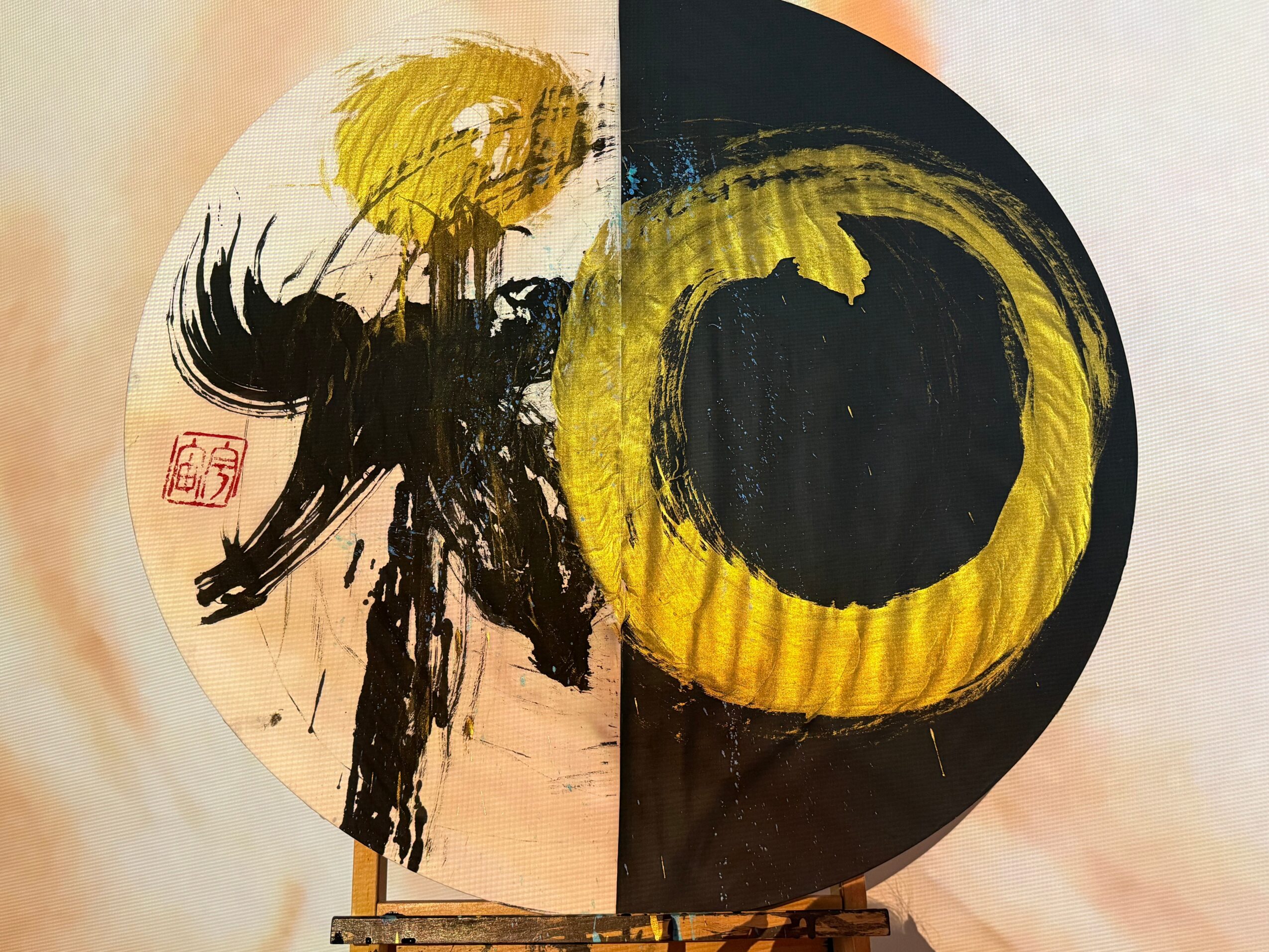
My hope is that when someone touches SORA’s art, in ink or in gold, they awaken even
slightly to their own essence — and that their life, even a little, becomes brighter and more
joyful. We are all born the same way: as an egg, as a baby. Only our circumstances shape
different lives from there. But underneath, our essence is the same — and if my work can help
even one person remember that, I believe that message already exists somewhere within the
universe itself.
I still believe dreams come true. I just don’t think I’m meant to get there alone.
We all face challenges, but looking back would you describe it as a relatively smooth road?
No, it hasn’t been smooth at all — but I think every struggle taught me something I couldn’t have learned otherwise.
The first real break came when I was 15, as an exchange student in the U.S. I faced racism and cultural rejection, was moved between host families, and cried almost every day for months before I finally found steady ground. It broke me down completely at the time, but looking back, it was the first thing that made me strong.
Years later, after I’d built a whole identity and status as an international flight attendant in Japan, I moved to Portland with my husband and found that none of it meant anything here. Most of the jobs I looked into required degrees I didn’t have, so I found work at Starbucks. It ended up being a deeply humbling period — not because of the job itself, but because I realized the status I’d built in one country meant nothing in another, and I had to rebuild my sense of self from scratch.
Then came four years in a 100-year-old house in my hometown with no windows, no gas at first, an outdoor bath, no air conditioning, and an outhouse — raising three young kids while my husband renovated it board by board. It was physically hard, but it taught me something I still carry: that as long as you have water and nature, you can survive almost anything.
Raising three kids in a foreign country was its own kind of hard. We spoke Japanese at home, and my English wasn’t fluent while they were growing up. Sometimes I’d be in a conversation and not fully understand what was happening around me — I’d just nod, listen, and keep going. Looking back, I think that endurance and observation actually came from my exchange student days at 15 — that experience had already taught me how to sit inside not-understanding and keep going. My own family was far away in Japan, so I leaned on my ex-husband’s family here, and I’m grateful they were there for us.
My ex-husband and I actually started our own businesses around the same time I started SORA. We both needed support in that season, but we were each so focused on building our own careers that we couldn’t fully understand for each other. I understand now — starting something new, you really can’t do it alone. I feel for him, looking back. But I learned a lot about myself through it.
Budget is a constant struggle. Shodo materials aren’t cheap — they’re made by hand, by nature, shipped from Japan. Every time I pay for shipping through FedEx, UPS, DHL, the postal service, I remind myself that it’s an investment — not just in my materials, but in the whole web of people and effort that gets them to me. That’s part of how I think about my artist journey now.
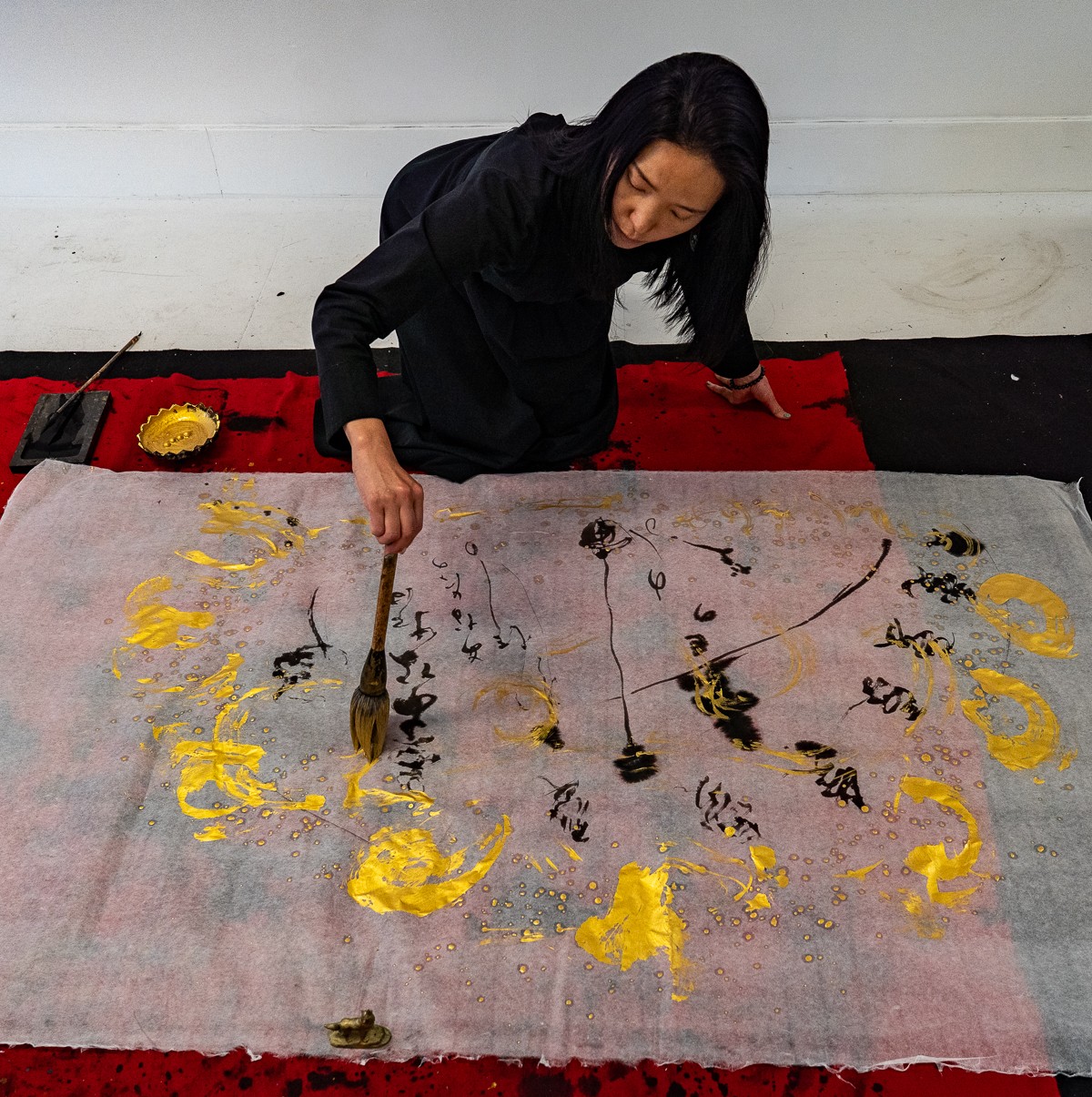
Touring has its own physical toll. I’ve driven myself to Las Vegas, to Idaho, to perform — my canvases are huge, so sometimes the budget just isn’t there for anything but doing it myself. Flying to Europe, I always go over the weight limit — sumi ink and bulrush paper are heavy. But that’s how big my passion is.
As an artist, the struggle has been constant and ongoing. I’ve invested almost everything I have into this work — performances, materials, travel — without the budget this kind of art really needs. I’m not a marketer, I’m an artist, and for a long time I didn’t understand how much that gap would cost me financially. I’m still, honestly, in that struggle now.
And this past year brought something I never saw coming: my divorce, and watching my family — the three kids I raised through all of this — scatter in ways I hadn’t planned for. That one is still raw. There’s a phrase I hold onto: to walk your path fully, sometimes you have to let go of the ties that hold you back. I’ve cried a lot through this. But I’ve come to believe every hard thing happens inside you first — you fail, you polish yourself through it, and slowly the light comes back.
None of it has been smooth. But I don’t think I’d trade any of it — it’s all in the ink now.
Thanks for sharing that. So, maybe next you can tell us a bit more about your work?
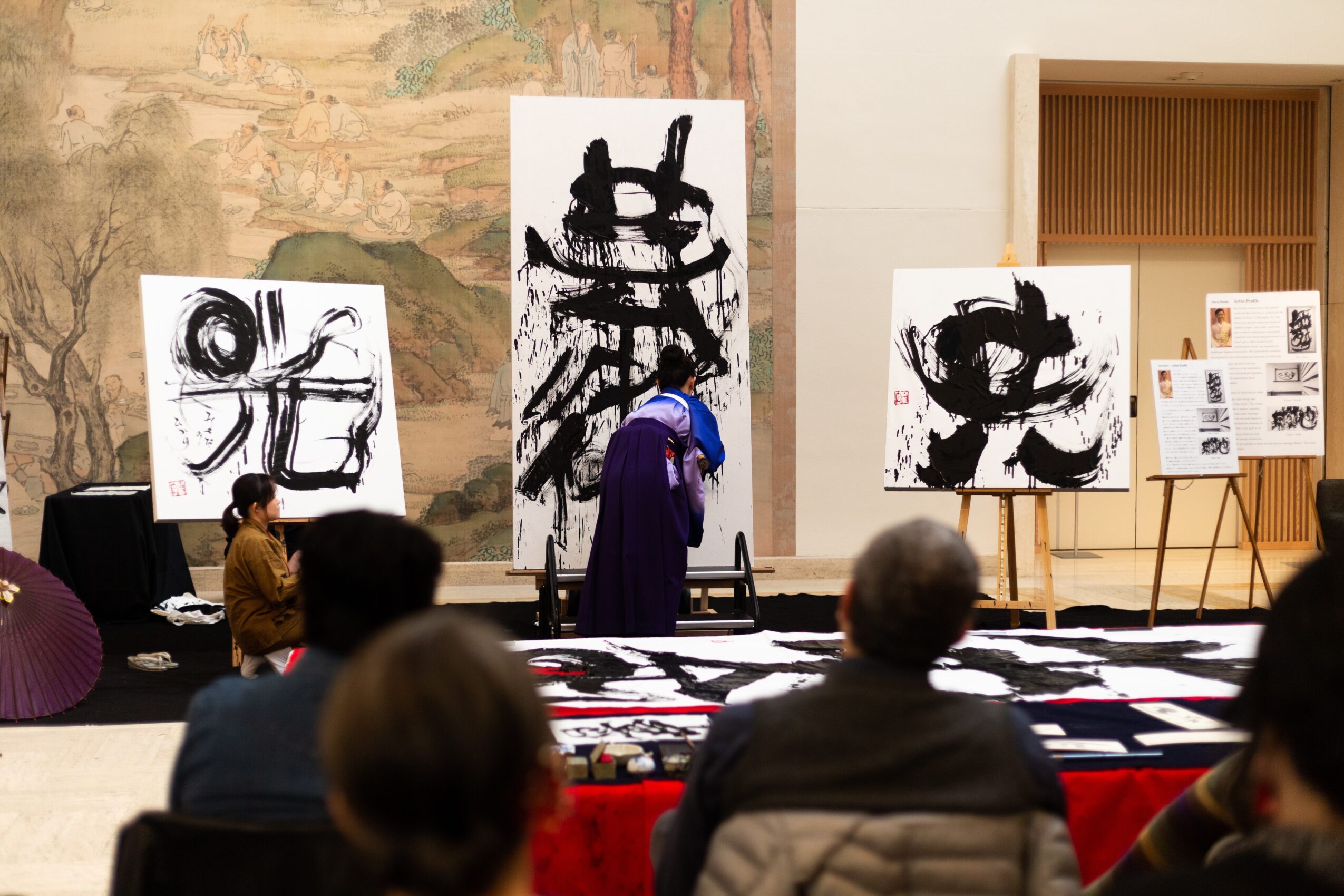
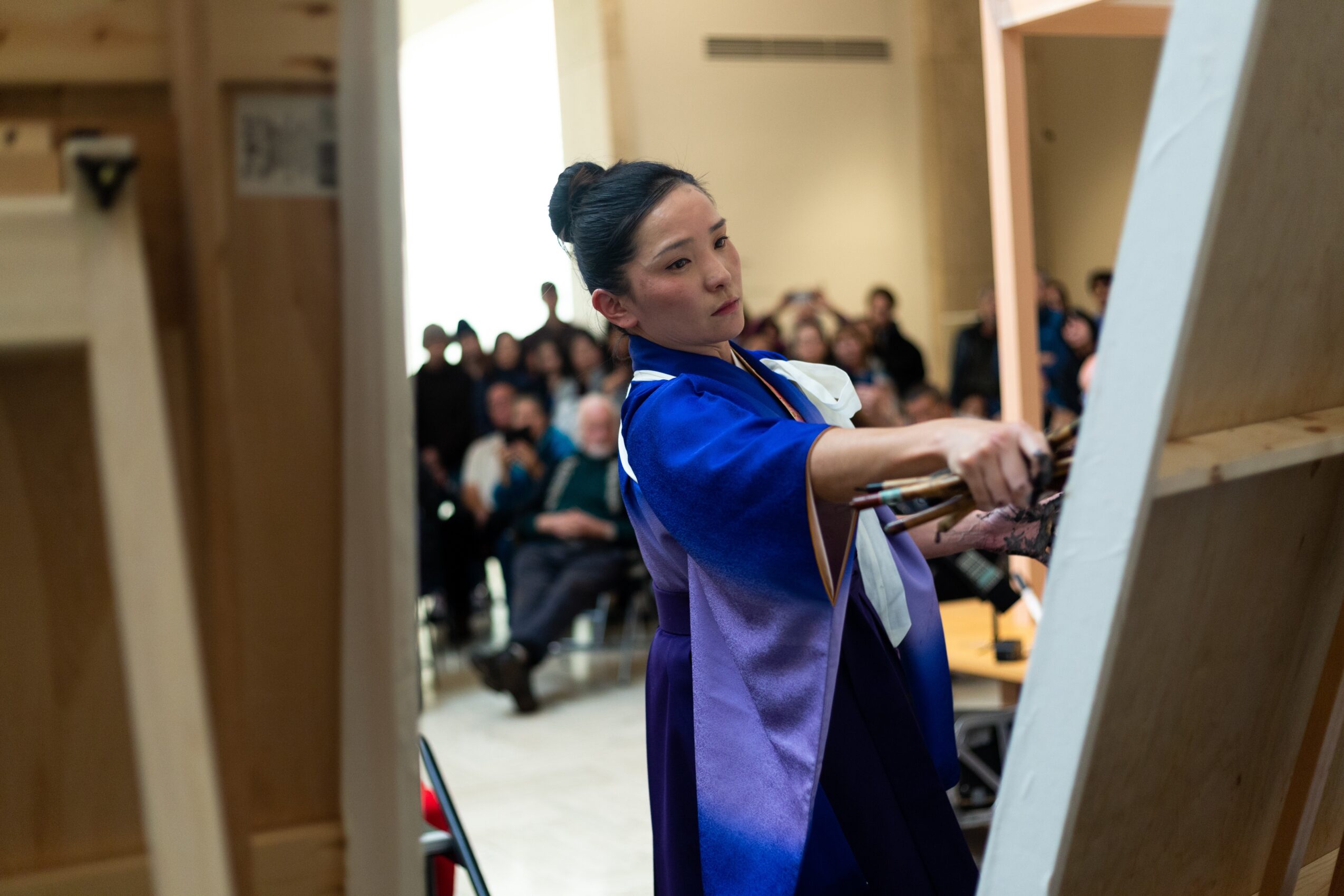
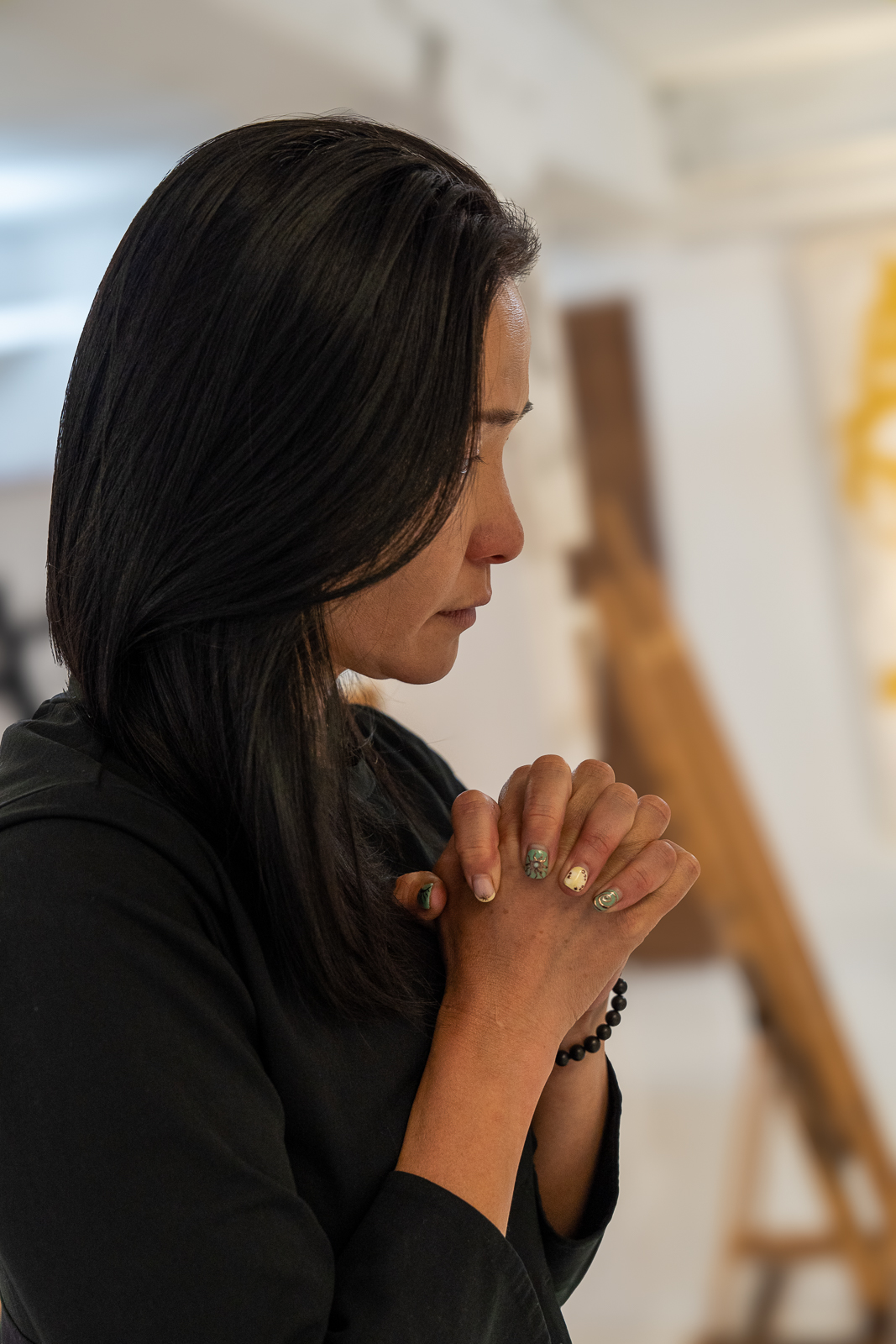
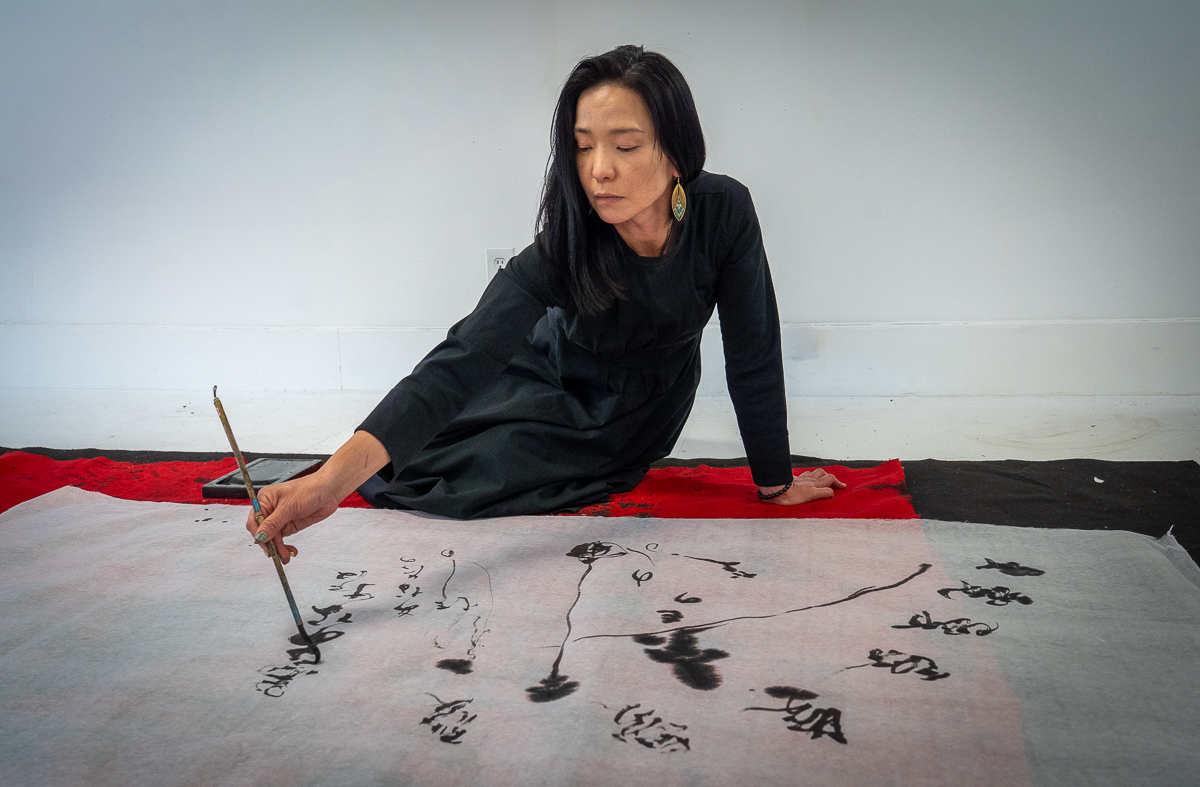
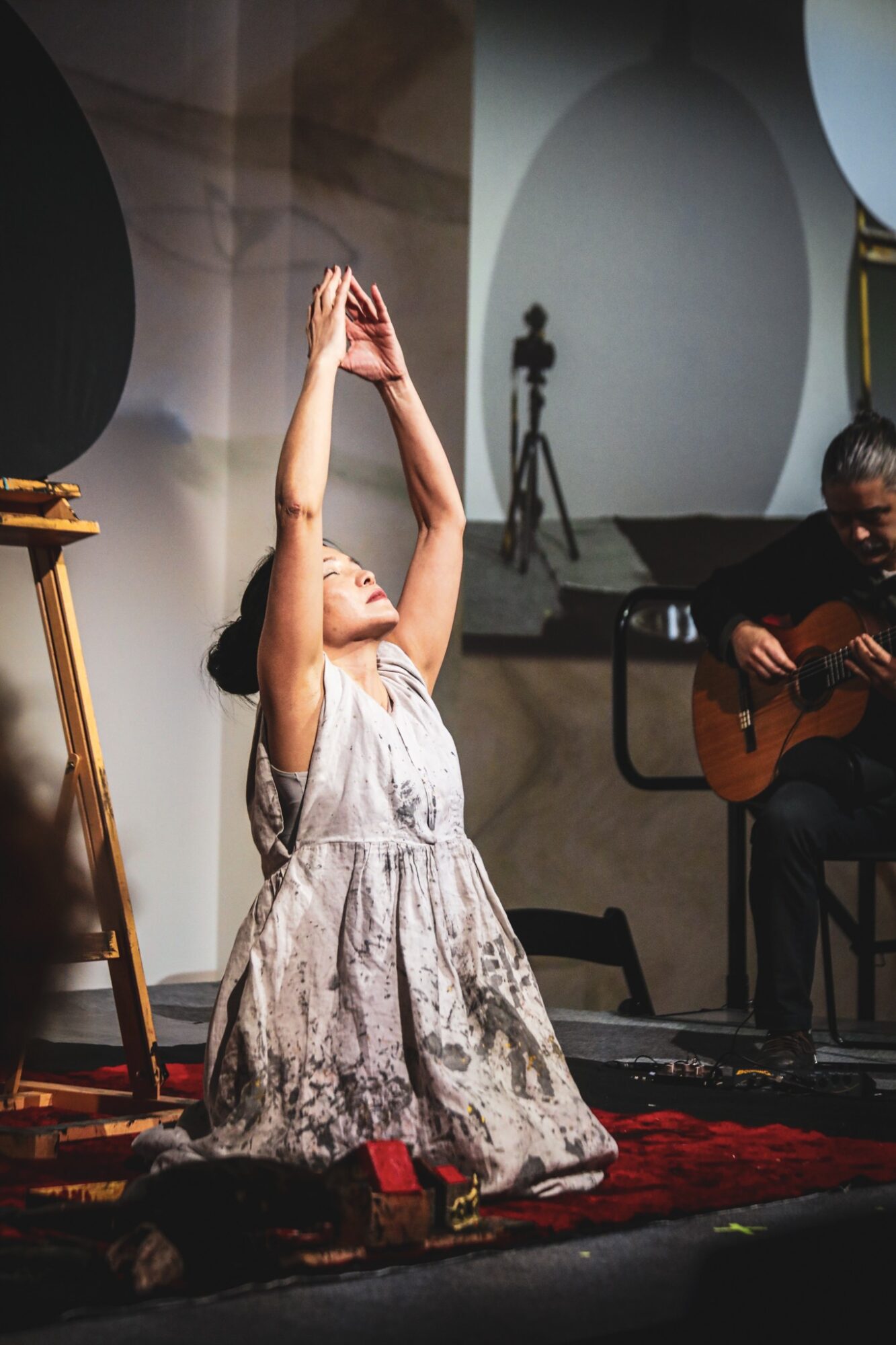
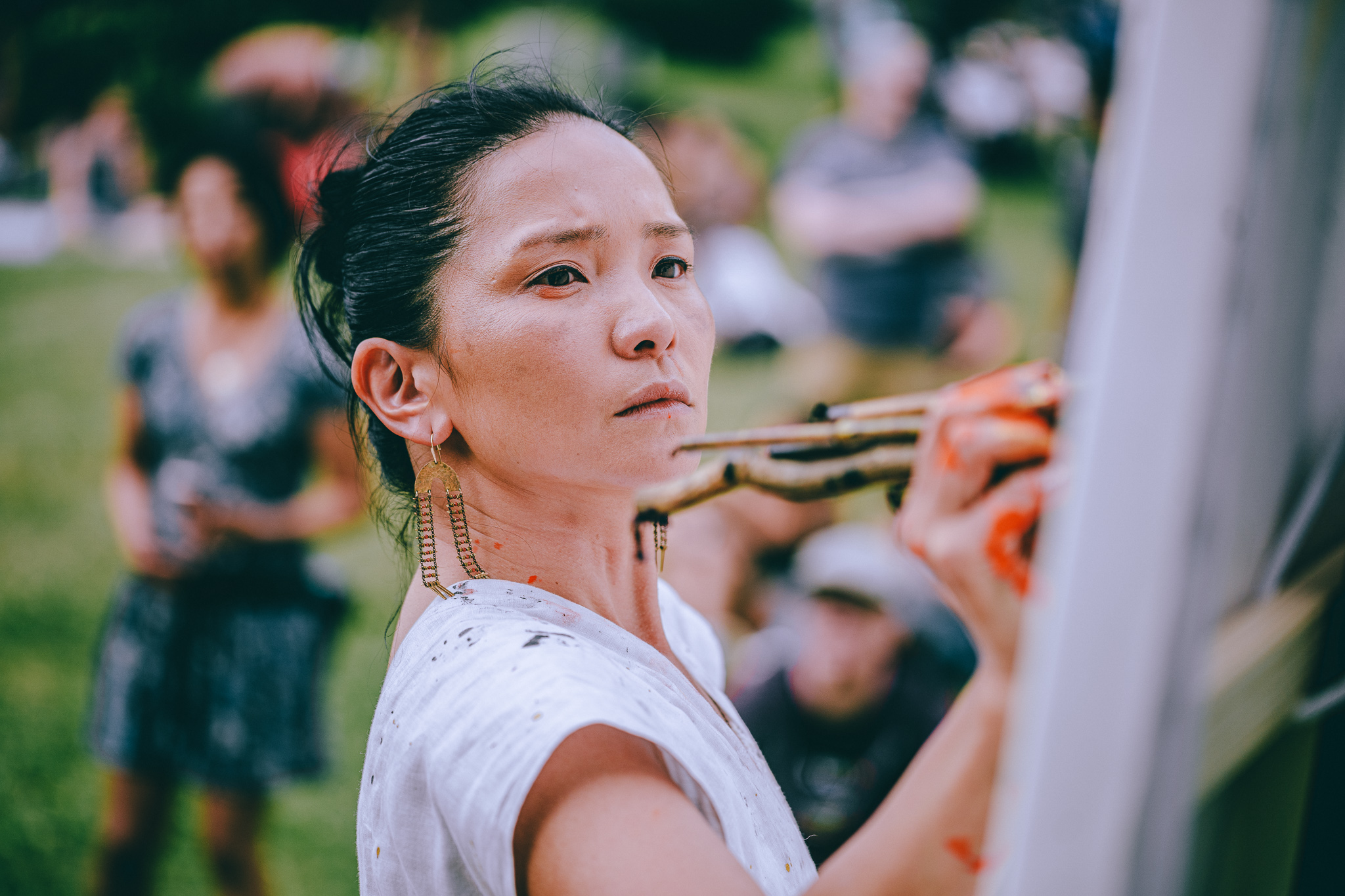
I’m a sumi ink calligraphy and live performance artist working under the name SORA Shodo. I trained under shodo masters in both Japan and the United States, and I create large-scale kanji pieces live — in front of an audience, often with music — channeling the energy of the room in the moment rather than planning the piece in advance. Before every performance, I meditate to clear my mind so I can feel what the audience needs, and then I write it.
What sets me apart is that I adapt to the situation. In a quiet setting — a Japanese garden, for example — I can present classical shodo the way any traditional calligrapher would, rooted in the fundamentals. I’m still learning classical shodo from my master, and that path has no end — Do practice is a lifelong learning process, just like life itself. But when I perform live, I don’t follow traditional shodo the way it’s usually taught. I mix cultures, break rules, and treat the brush as a way to speak directly from the soul rather than from technique alone. My work centers on returning to nature, on mu (無, emptiness), on breath, and on the ancient pictographic roots of kanji — I want people to feel the character, not just read it. I’ve had the honor of performing at the Portland Art Museum 3 times, in 2018–2019 and OPB featured my work on Oregon Art Beat.
I’m probably most known for combining calligraphy with live performance in a way that isn’t really practiced in the U.S. — most people here know karate, judo, ikebana, or tea ceremony, but shodo as a live performance art form is still new here. I’ve built that from the ground up, performing everywhere from community festivals to sake breweries to theatre collaborations, sometimes even mixing unconventional materials like sake into the ink as an offering.
I’ve also competed in the Mainichi Shodo Exhibition and the Sogen National Calligraphy Competition, winning multiple Excellence Awards, and I now serve as a judge in those same competitions. I built and taught a calligraphy student community here in Oregon for three years before passing that teaching lineage on to a fellow teacher so I could focus fully on performance.
What I’m most proud of isn’t a single piece or award — it’s that I built something in America that didn’t exist before me, using a name and a path my own teacher gave me. Every piece I create is an offering: to history, to nature, to the people watching, and to the hope that this world becomes a little more peaceful, one stroke at a time.
What has been the most important lesson you’ve learned along your journey?
That everything you’re struggling with starts inside you first — not out in the world.
I used to think competition, conflict, even the pain I was going through, came from other people or bad circumstances. But I’ve learned that isn’t true. If I’m at odds with someone, it’s usually because I haven’t understood myself yet, or because I’m still weak in some way I haven’t faced. The real work is always inward — understanding yourself, knowing yourself, polishing yourself, even while crying through it. You fail, you learn, you get a little more clear, and slowly, the light comes back. Peace with the world starts with peace inside yourself.
The second lesson took me much longer to accept: you can’t build something new completely alone. When I started SORA, I was so focused on building my own path that I didn’t realize how much I needed other people — and it cost me relationships I valued, including my marriage. I understand now that starting something new requires community, not just willpower. I’m still learning to ask for help, but I know now that it isn’t weakness — it’s actually part of the path.
And underneath both of those: as long as you have water, nature, and your own hands, you can survive almost anything.
I learned that living in an old house with no real modern comforts, raising three kids, not knowing if the renovation or the next month would work out.
Everything else , status, money, comfort can disappear.
What’s left is what’s real.
Pricing:
- Pricing varies by project — please reach out directly to discuss
Contact Info:
- Website: https://www.sorashodo.com/
- Instagram: https://www.instagram.com/sora_shodo/
- Facebook: http://facebook.com/SoraShoDo
- LinkedIn: source:%20LinkedIn
- Youtube: https://youtu.be/Pw92i4Htlkw?feature=shared
- Other: https://shop.sorashodo.com/?_su_rec=Ebbr9WOTfLQ3f6jgej038pq8gWKVz8_7Av7emMstl04uAPqxIuIx51sC_IBSL2AlO-yNrRxQyzDccSX9cx66cE8XiExULIDji5HToWaRWH2uifiROa03OM-9qHAprc_AdvmXE-TVLpkcTTwt_xta-8FbzYCB2n4xVVTTJowHwcuSaMeLYR_oxiR2lCkKH-IphJ6mk0GROcmsXYp22ocK704YXlJl2cIKJCJWa-gp2ozEBEvqoXolsFYftSa58iIGCUQuJkWUIi2Oe4aYrdfVONxAtS2d&_su_rec_id=75523061-ceef-46ec-830b-3367d69f76a6-1785361312