


Today we’d like to introduce you to Jenelle Woodlief.
Hi Jenelle, can you start by introducing yourself? We’d love to learn more about how you got to where you are today?
My professional story actually began far outside the world of massage and bodywork.
I started my career in academia and health policy. I did my doctoral work in Social Policy and Management at Brandeis University and went on to work in health policy research. I was deeply interested in how systems affect people’s health and well-being and in the possibility of creating meaningful change through research and policy.
But eventually, my own body started talking to me.
I was spending my days sitting at a computer, researching and writing about how to improve people’s lives, while increasingly feeling that I wasn’t meant to spend the rest of my life behind a screen. I wanted my work to have a more immediate, tangible impact on people’s everyday lives. I wanted to work directly with people, and I wanted work that allowed me to use more than just my intellect.
That realization eventually led me to massage therapy.
What started as a major career change became a completely different way of understanding the human body—and, in many ways, a continuation of the same questions that had always interested me. I was still fascinated by systems. I had simply moved from studying large social and healthcare systems to studying the extraordinarily complex system of the human body.
Over the years, I studied Thai massage, structural bodywork, abdominal work, somatic practices, and nervous system-informed approaches. Each discipline gave me another way of seeing and working with the body. Eventually, though, I realized that what interested me most wasn’t collecting more techniques. It was understanding how all of those pieces fit together and how to decide what a particular person needed in a particular moment.
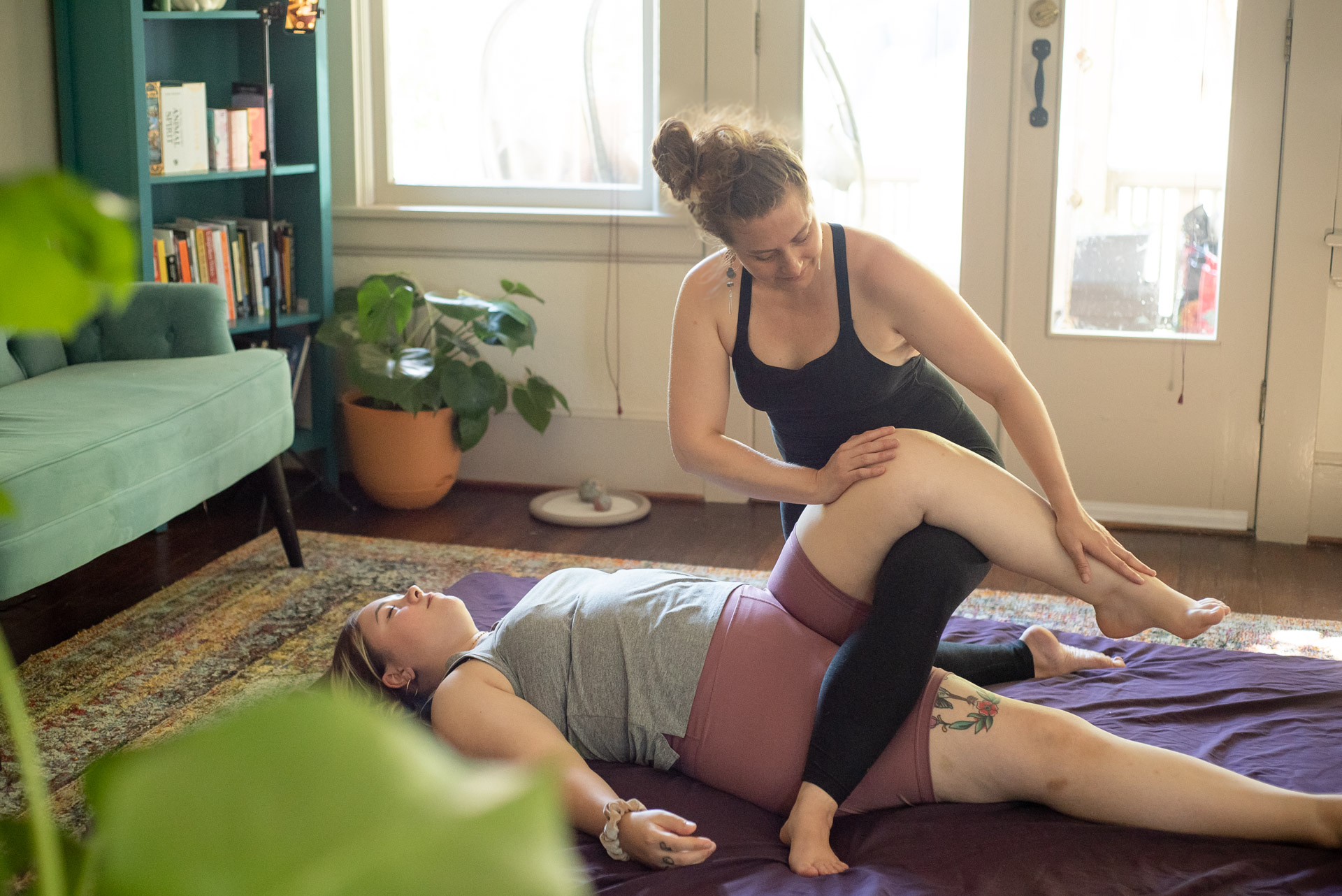
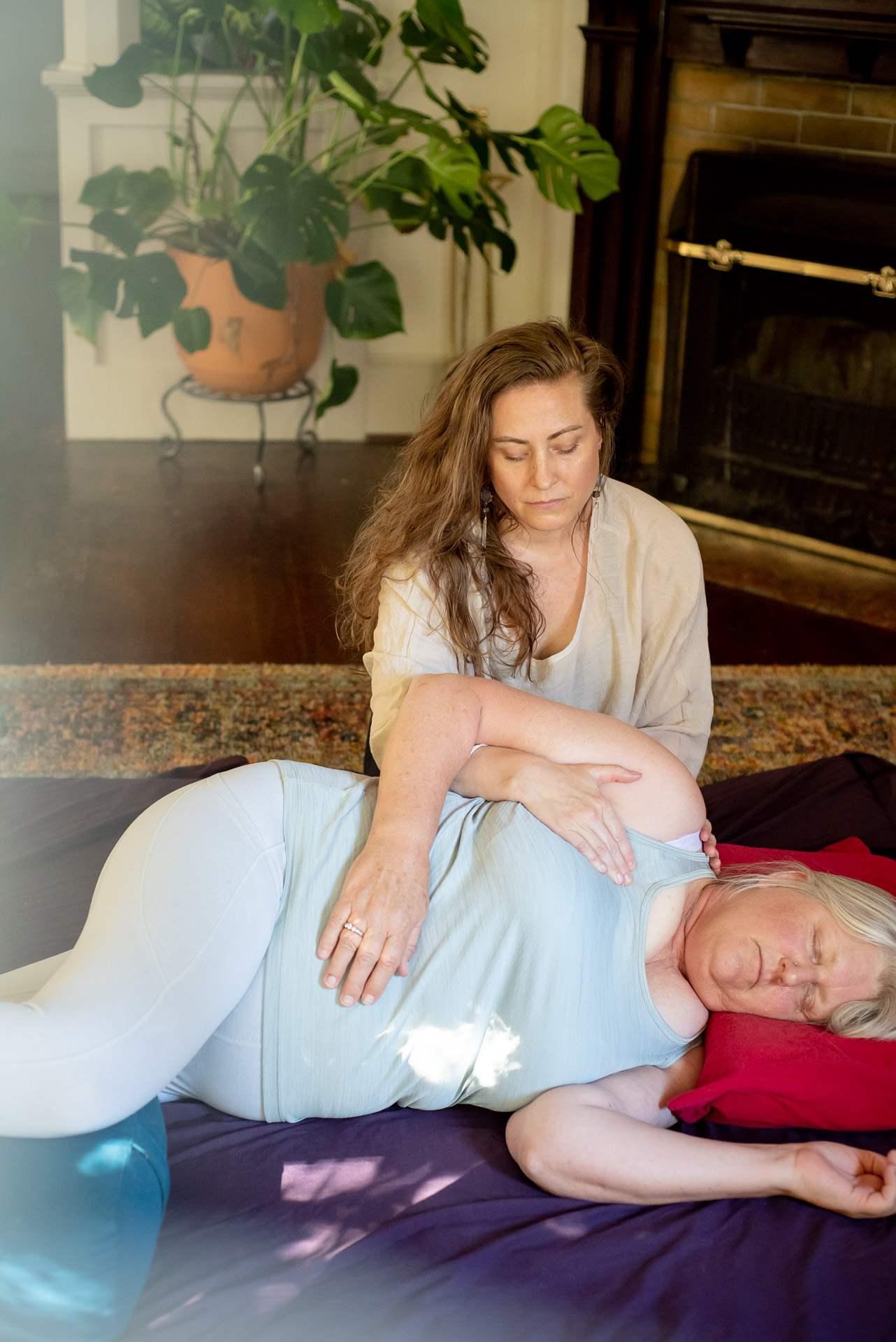
My private practice gradually became much more whole-body and movement-based. I began working primarily on a thick mat, using passive movement, rocking, traction, compression, stretching, structural work, and careful observation. I became fascinated by the relationships I could see and feel throughout the body—how breathing, movement, muscle tone, posture, and the nervous system all interact, and how working somewhere other than where a person experiences pain can sometimes create meaningful change.
That curiosity became the foundation of the way I practice today.
As my private practice grew, I also took on another challenge: becoming the owner of a second business, Blue Tiger Massage in Beaverton. Blue Tiger has allowed me to build and support a team of massage therapists with different backgrounds, strengths, and approaches to therapeutic bodywork. Owning two businesses has also given me a much broader perspective on the massage profession—both as a practitioner and as someone thinking about how we support therapists in building sustainable, meaningful careers.
Now I find myself entering another chapter: teaching.
I’ve realized that one of the most valuable things I’ve developed over the years isn’t necessarily a new technique. It’s a methodology for how I approach the body and make treatment decisions. I observe before I treat. I look for relationships and patterns rather than immediately chasing a symptom. I use touch and passive movement as part of my assessment. I make a treatment decision, observe how the body responds, and continually reassess from there.
I’m now beginning to turn that approach into a training program for other massage therapists and bodyworkers. My goal isn’t to teach practitioners to practice exactly like I do. I want to help them become more curious, confident, and intentional—to develop a framework for deciding what to do and why, rather than simply accumulating more techniques.
In some ways, I feel like I’ve come full circle. I began my career studying systems and trying to understand how change happens. I’m still doing that. The scale has just changed. Instead of studying systems from behind a computer, I now get to explore them through people, bodies, businesses, and the practitioners I hope to teach.
And maybe the biggest lesson in my own story has been the one my body tried to teach me all those years ago: **pay attention. There’s often a tremendous amount of information available when we’re willing to listen.**
I’m sure it wasn’t obstacle-free, but would you say the journey has been fairly smooth so far?
Not even close! Accepting that I needed to leave my doctoral program and completely change careers made for a pretty bumpy ride. I had invested years of my life in academia and had built an identity around the path I thought I was supposed to follow. Walking away from that meant letting go of something I had worked incredibly hard for without knowing exactly what would come next.
But taking that leap has paid off in ways I couldn’t have anticipated. I am deeply fulfilled by the work I do now. I get to see the impact of my work in people’s everyday lives, often right in front of me, which was something I had been craving in my previous career.
Building a career in bodywork hasn’t been easy either. Being a massage therapist means balancing the physical demands of the work with the realities of running a business. I’ve had to learn how to market myself, manage finances, build a client base, create boundaries, and figure out how to make a hands-on profession sustainable over the long term. Later, taking on a second business and becoming the owner of Blue Tiger Massage brought an entirely new set of challenges—suddenly I wasn’t only responsible for my own practice, but for supporting a team and building a healthy business around them.
There have also been plenty of moments of questioning myself. As my work has evolved and I’ve begun thinking about teaching other practitioners, I’ve had to wrestle with the question of whether what I’ve learned through years of practice is something I’m qualified to teach. I’ve had to remind myself that I don’t need to have all the answers. What I can offer is the perspective and methodology I’ve developed through years of studying, practicing, observing, and continually asking better questions.
If anything, the bumps have been part of the story. Leaving academia taught me that a path can look successful from the outside and still not be the right one for you. Building my practices has taught me to trust curiosity, take calculated risks, and be willing to change direction when something no longer fits.
I wouldn’t describe my path as smooth, but I would absolutely describe it as worth it.
We’ve been impressed with Jenelle Woodlief, Transformational Bodywork; and Blue Tiger Massage, but for folks who might not be as familiar, what can you share with them about what you do and what sets you apart from others?
I actually own two massage and bodywork businesses, and while they share some common values, they have very different identities.
Jenelle Woodlief, LMT — My Private Practice
My private practice in Southwest Portland/Tigard is where I do my most specialized work. I primarily work with people experiencing chronic or complex pain, persistent patterns of tension or restriction, and people who have tried more traditional approaches but still feel like something is being missed.
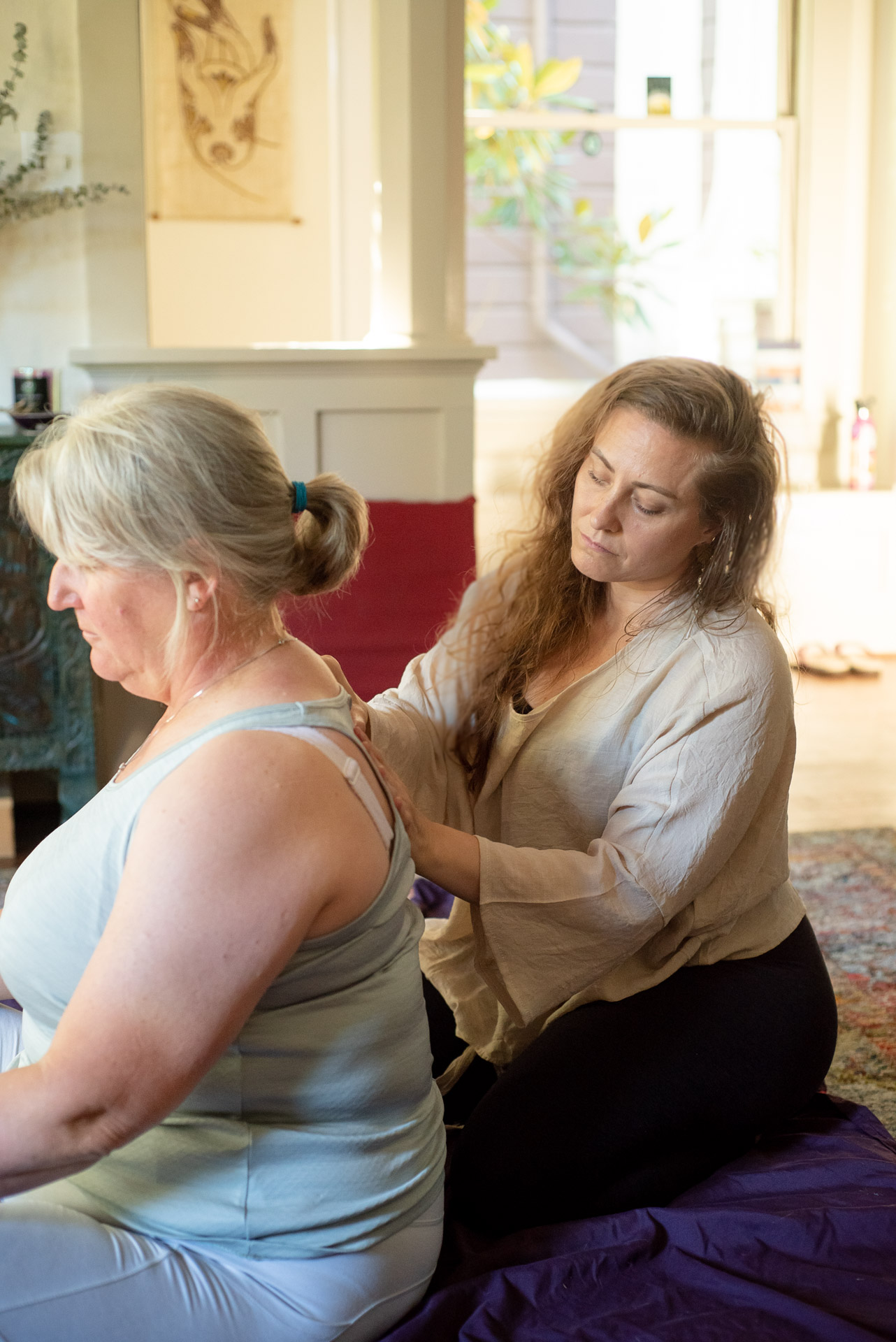
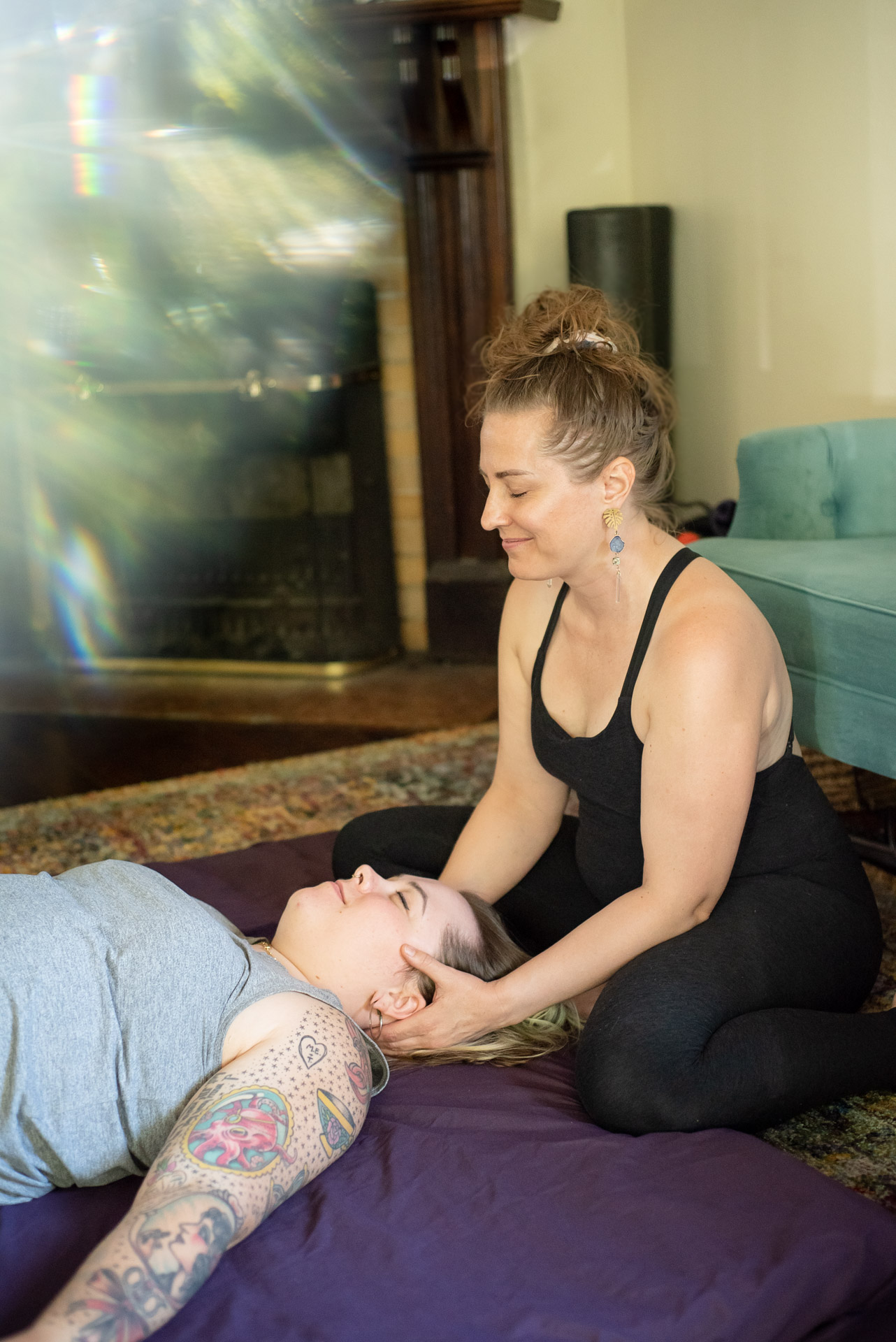
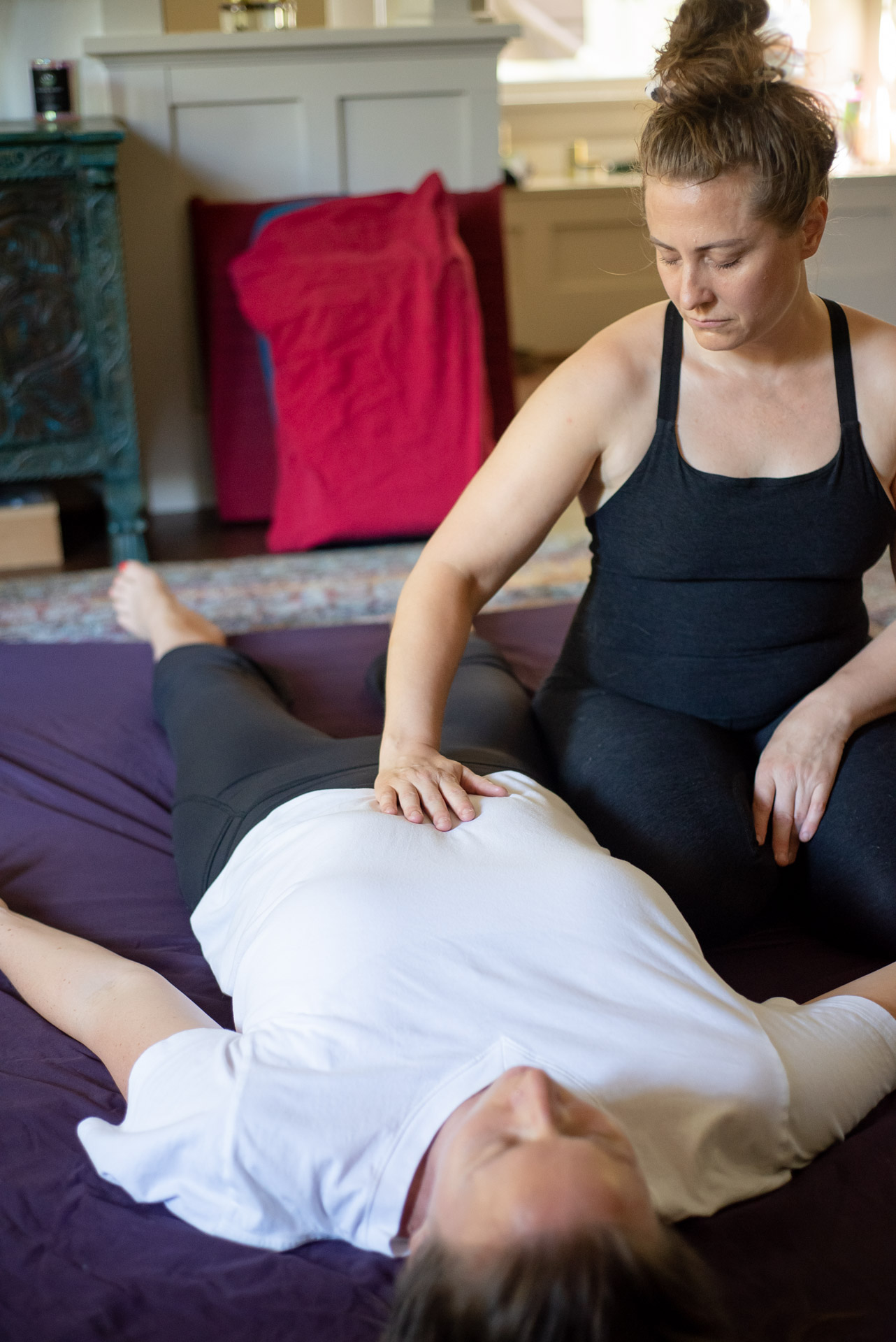
My work looks a little different from what most people picture when they think of massage. Clients remain clothed, and I work with them on a thick mat on the floor. My approach has been deeply influenced by Thai massage and structural bodywork, and incorporates passive movement, rocking, compression, traction, stretching, abdominal work, and nervous system-informed care.
What really distinguishes my practice, though, isn’t any individual technique. It’s how I decide what to do.
I spend a lot of time observing. I’m interested in how someone walks into the room, how they breathe, how movement travels through their body, where movement seems easy and where it requires more effort, and what changes when I introduce touch or gentle movement.
Rather than automatically beginning where someone hurts, I’m looking for relationships across the whole body and asking where I might be able to create the greatest influence. Treatment then becomes an ongoing process of observing, intervening, and reassessing rather than following a predetermined sequence.
That approach has gradually developed into a bodywork methodology that I’m now beginning to formalize and teach to other massage therapists. I’m particularly excited about this next phase of my private practice because it allows me to take what I’ve learned through years of working one-on-one with clients and begin contributing to the profession on a larger scale.
I’m proud that I’ve built a practice where people often come because they’re looking for something different—especially when their body doesn’t seem to fit neatly into a simple explanation or protocol.
Blue Tiger Massage — Beaverton
Blue Tiger Massage is my second business and has a very different purpose.
Blue Tiger is a therapeutic massage clinic in Beaverton built around the idea that there shouldn’t be only one “right” way to receive effective bodywork.
We have a team of talented massage therapists with different specialties and styles, including therapeutic and deep tissue massage, Swedish massage, myofascial work, Ashiatsu, craniosacral therapy, lymphatic work, prenatal massage, and other approaches.
Rather than trying to make every therapist practice the same way, I want Blue Tiger to be a place where practitioners can bring their individual strengths to the work and clients can find a therapist whose approach genuinely fits them.
We work with people for many different reasons—from chronic pain and injury recovery to stress relief and simply needing an hour where someone else is taking care of them. We also work with clients receiving massage as part of motor vehicle accident and other injury-related care.
What I’m most proud of with Blue Tiger is the team and the kind of clinic we’re building together. I want both clients and therapists to feel respected as individuals. Massage is an incredibly personal service, and the relationship between practitioner and client matters.
In some ways, the two businesses represent two sides of what I’m trying to contribute to this profession.
My private practice is my laboratory. It’s where I continue exploring, refining my clinical reasoning, and developing the methodology I hope to teach.
Blue Tiger is about community and access. It’s about building a strong team of practitioners and creating a place where more people can experience thoughtful, individualized therapeutic massage.
Both come back to the same belief that has shaped my entire career: people are complex, bodies are complex, and good care begins with paying attention to the individual in front of you.
Alright, so to wrap up, is there anything else you’d like to share with us?
One thing I’ve learned through all of this is how important it is to pay attention when something in your life is asking to change.
Years ago, my own body was telling me that sitting behind a computer and pursuing the career I had planned wasn’t working for me. Listening to that meant walking away from something I had invested years in and stepping into a future I couldn’t clearly see yet. It was scary, but it ultimately led me to work that feels deeply meaningful.
Interestingly, listening is now at the center of what I do. As a bodyworker, I’m constantly paying attention—to movement, breathing, subtle changes under my hands, and what a client’s body is communicating. As a business owner, I’ve had to learn to pay attention when something needs to evolve there, too.
I think we sometimes become so committed to where we thought we were going that we stop noticing where life is actually leading us.
I’m entering another one of those periods of change now as I begin teaching and developing a training methodology for other bodyworkers. I don’t know exactly where it will lead yet, and I’m becoming increasingly comfortable with that.
If there’s anything I’d want readers to take from my story, it’s that changing direction doesn’t mean the years you spent on the previous path were wasted. I use what I learned as a researcher every day—the curiosity, critical thinking, willingness to question assumptions, and desire to understand complex systems. None of it was wasted. It just became part of something I couldn’t have envisioned at the time.
And I’m really excited to see what it becomes next.
Contact Info:
- Website: https://www.jenellewoodlief.com
- Instagram: https://www.instagram.com/jenelle.woodlief/
- Facebook: https://www.facebook.com/woodliefpower
- LinkedIn: https://www.linkedin.com/in/jenelle-woodlief/
- Youtube: https://www.youtube.com/@jenellewoodlief