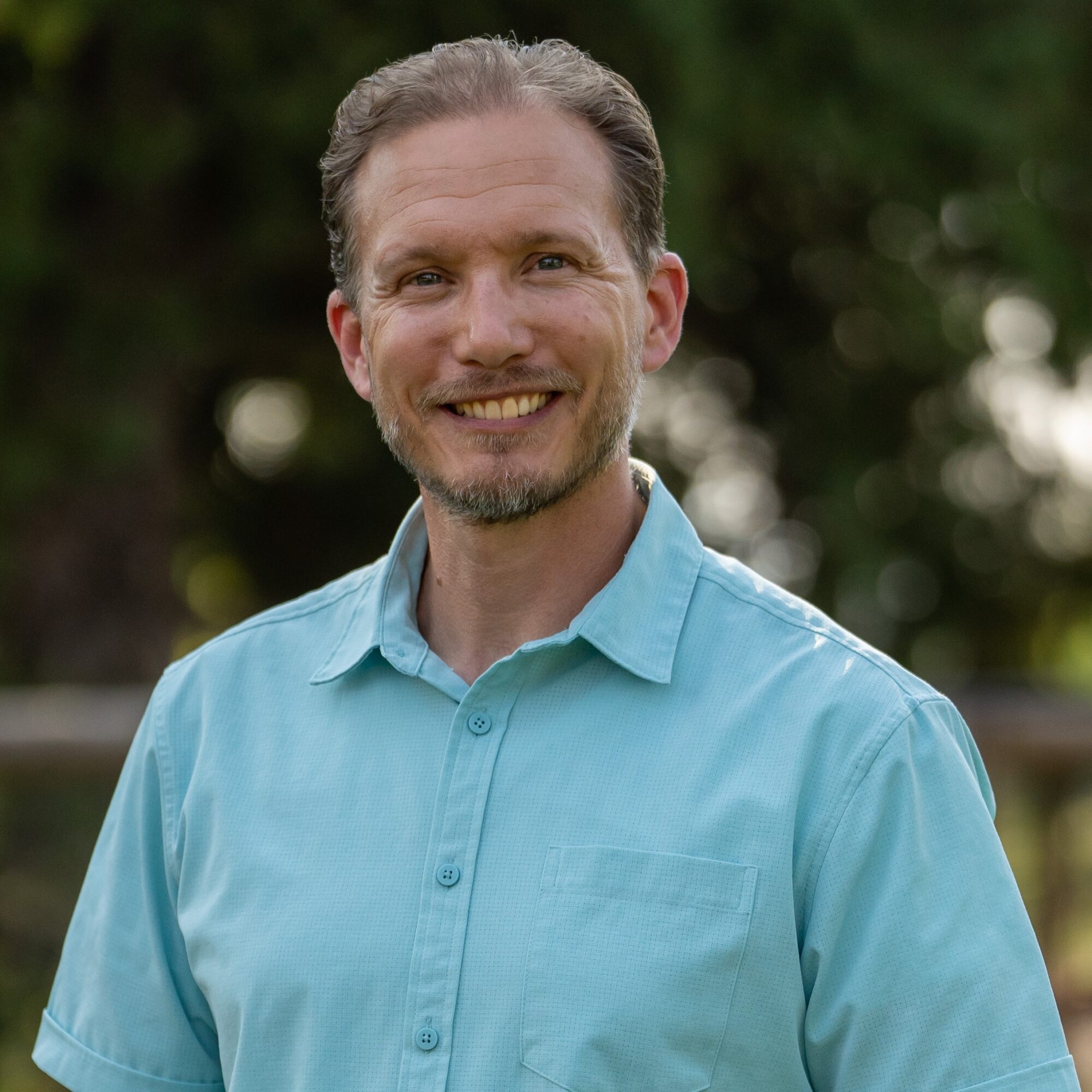



Today we’d like to introduce you to Jeremy Brady.
Hi Jeremy, so excited to have you with us today. What can you tell us about your story?
I grew up in southern Oregon, but my path to PT wasn’t direct. I graduated with dual B.S. degrees in Computer Science and Geoscience from Trinity University in San Antonio, then spent about ten years in educational publishing. Along the way I was also busy (unintentionally) injuring myself: in the mountains, on the soccer pitch, pole vaulting, dancing, and racing long-distance triathlons. Going through physical therapy as a patient, experiencing both excellent and poor therapy, and getting curious about my own spine and lower extremity injuries, is really what pulled me toward the field. I went back to school at Texas State in 2010 for my Doctor of Physical Therapy degree, and during clinical rotations I found the McKenzie Method (Mechanical Diagnosis and Therapy), which matched how I wanted to think about treating people: empowering them to treat themselves.
I moved back to the Rogue Valley in 2016 and worked in a traditional clinic. PT2U itself started almost by accident in 2018, with a simple question from a parent: could I come work with her son right after his race? That one house call reminded me how much I loved having unhurried time to actually diagnose and educate someone, and being on-site let me see him in his real functional environment rather than a clinic room. For a few years it stayed a cash-pay side hustle alongside my clinic job.
The real turning point came in 2023, when I had the chance to hike the John Muir Trail with my father, wife, and sister. I had been working as a solo PT at a brick-and-mortar clinic that focused primarily on chiropractic and massage therapy when we won lottery tickets to hike the JMT from Yosemite: the golden ticket. It was likely a once-in-a-lifetime trip that wasn’t going to come around again, and taking a full month away from the clinic meant something had to give. That meant a choice: keep working, or give notice to take the month-long trip with my family and figure out what came next. That decision is what finally pushed me to leave the brick-and-mortar clinic and turn PT2U into a full-time, insurance-based mobile practice. I’d always considered running my own clinic, but hadn’t taken that leap. I’d grown up helping my parents run their custom drapery and window covering business, so running a business myself never felt intimidating, but figuring out everything specific to running a healthcare business was its own adventure.
Three years in, PT2U is now one of southern Oregon’s leading mobile outpatient PT clinics, based on patient reviews. I have Amanda, a PTA and certified personal trainer with a focus in women’s health and pelvic floor rehab, on the team. I’m slowly expanding the practice to better serve our valley while also focusing on independent patient education and business development programs to help other therapists figure out how to start their own mobile or independent practices.
Alright, so let’s dig a little deeper into the story – has it been an easy path overall and if not, what were the challenges you’ve had to overcome?
Not entirely, no. Building the client base from scratch was the first hurdle. I had a bit of an advantage there – my wife is a Nurse Practitioner, and she’d walk her patients through brick-and-mortar versus mobile PT. For those that chose mobile and found out it was her husband’s clinic, they were even more thrilled about it (a real testament to her excellence as a practitioner as well).
On the operations side, I had to switch documentation systems about seven months in the first one just wasn’t user-friendly and was eating way too much of my time. That was a real lesson in not sticking with a tool out of sunk cost, and I’m really glad I figured that one out before it would have been more of a headache to switch.
One thing that has genuinely been a godsend: I hired a third-party biller, Kat, someone I’ve known for years who runs her own business. I learned from watching my parents run theirs that offloading work that doesn’t need to be done by me is critical, so I could stay focused on patients. Kat’s told me more than once that I make her life easy – I’m the kind of doctor who wants to know the billing rules and guidelines inside and out, even though I’m not the one implementing them day to day.
The harder thing to solve for has been the lack of coworkers. There’s no one to bounce an idea off of in real time. There are forums and professional groups, but it’s not the same as turning to the person at the next desk. And there are definitely days when a clinic would be easier. I put over 18,000 miles on my car last year averaging only 17-18 visits a week. But the flexibility and the small breaks between clients more than make up for it.
I also learned the hard way that home health and outpatient PT can’t overlap for a patient – mixing those up means a complete loss of revenue on those visits. That one stung, but it’s the kind of mistake you only make once.
Alright, so let’s switch gears a bit and talk business. What should we know?
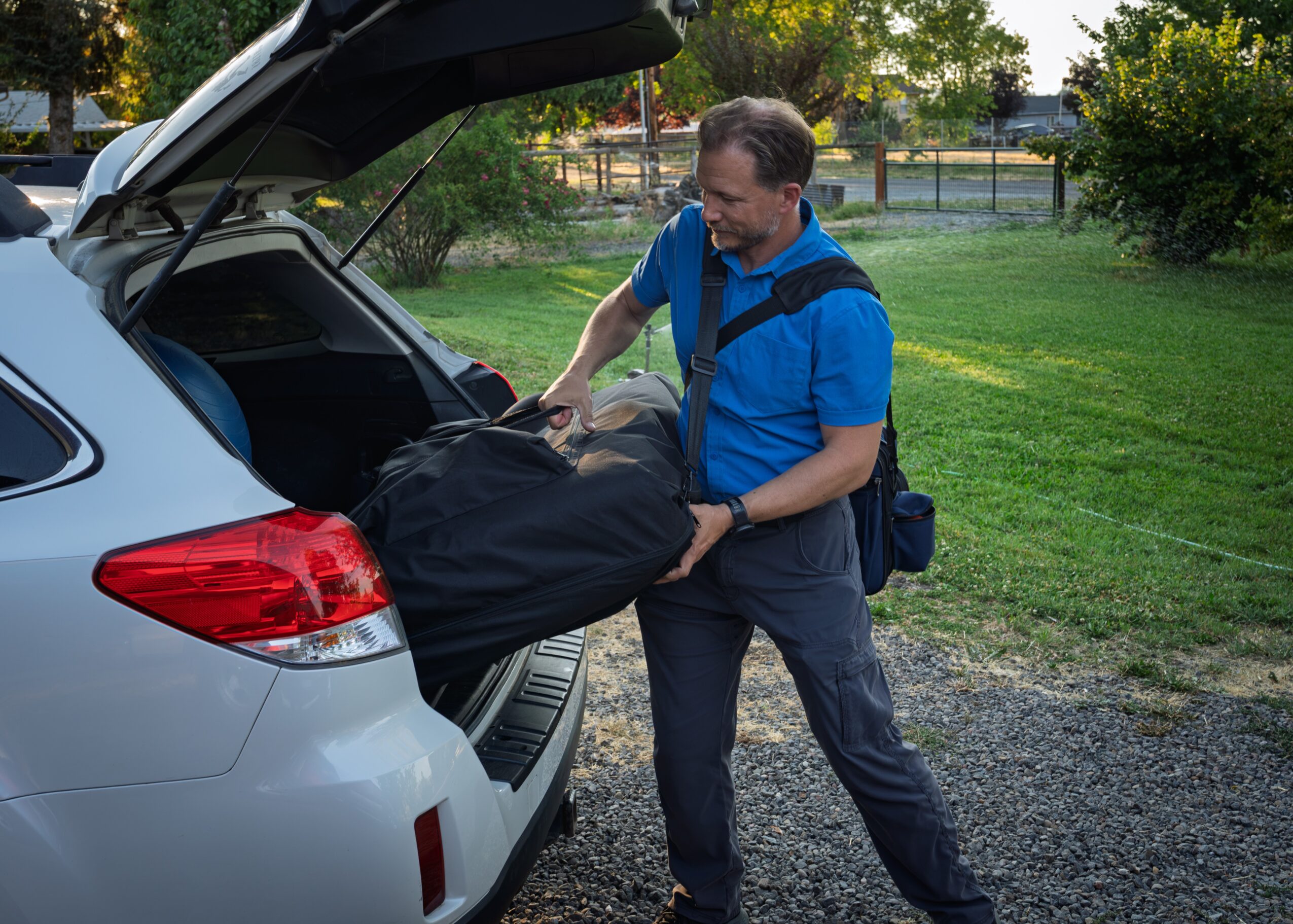
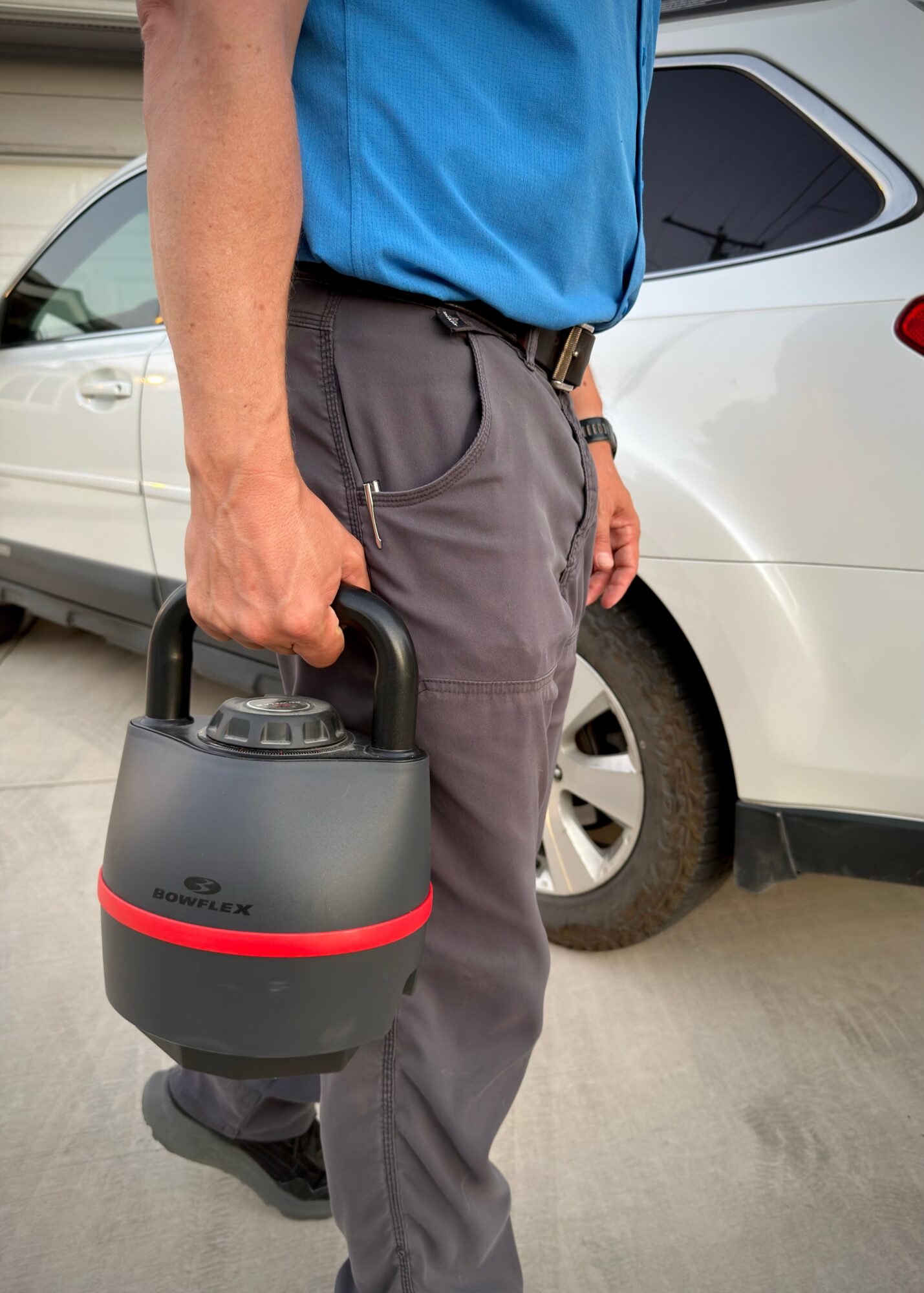
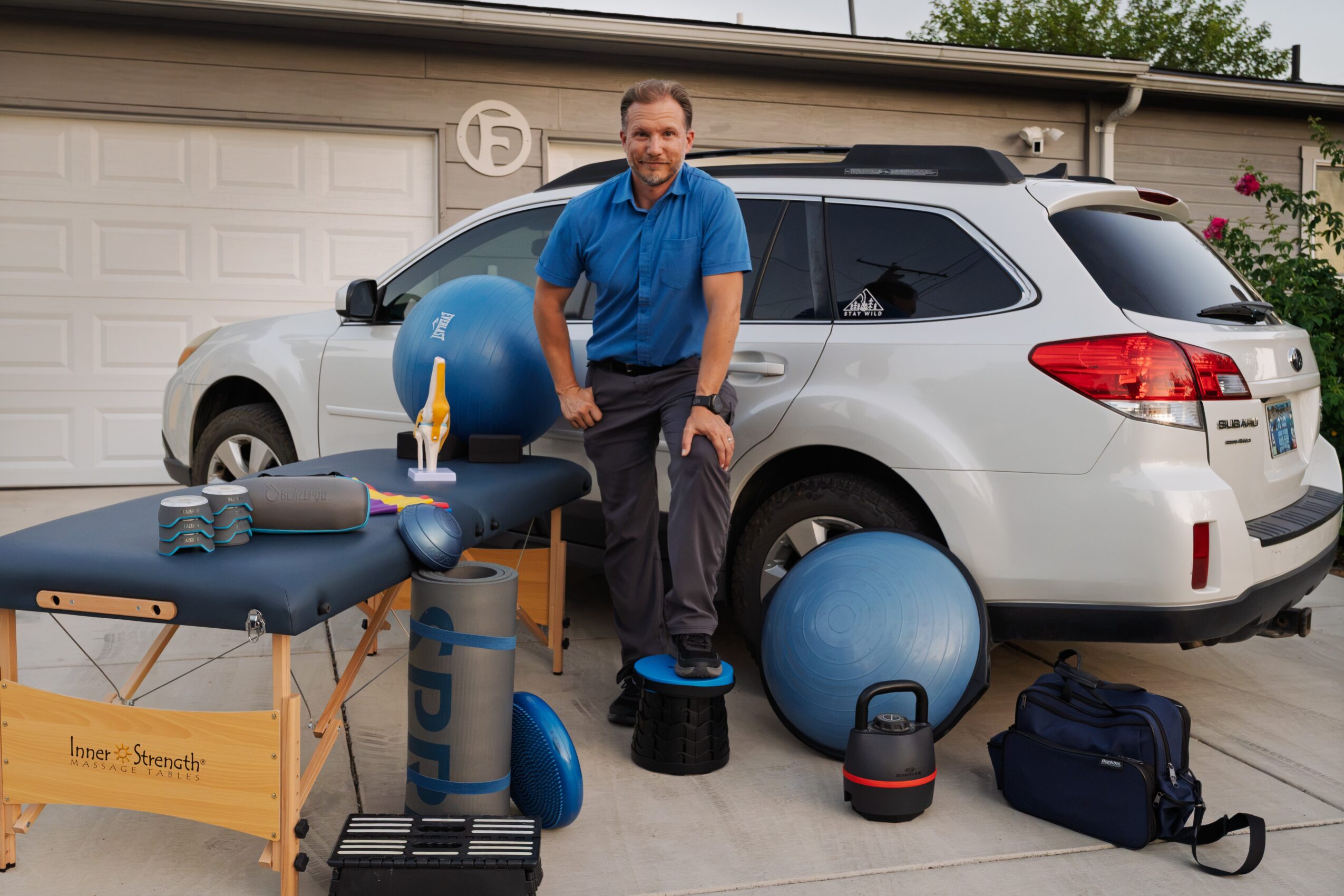
PT2U is southern Oregon’s oldest 100% mobile outpatient physical therapy clinic. I started it in 2018 and it’s been insurance-based and my full-time job since 2023. We bring the clinic to the patient: all the equipment, the one-on-one time, the same clinical standard you’d get in a brick-and-mortar practice, just without the drive or the waiting room. We serve Medford, Ashland, Talent, Phoenix, Eagle Point, Central Point, and Jacksonville, and we accept Medicare, Regence/BCBS, Moda, and PacificSource, in addition to other insurances out of network, so this isn’t a cash-pay boutique service – it’s accessible, insurance-based care.
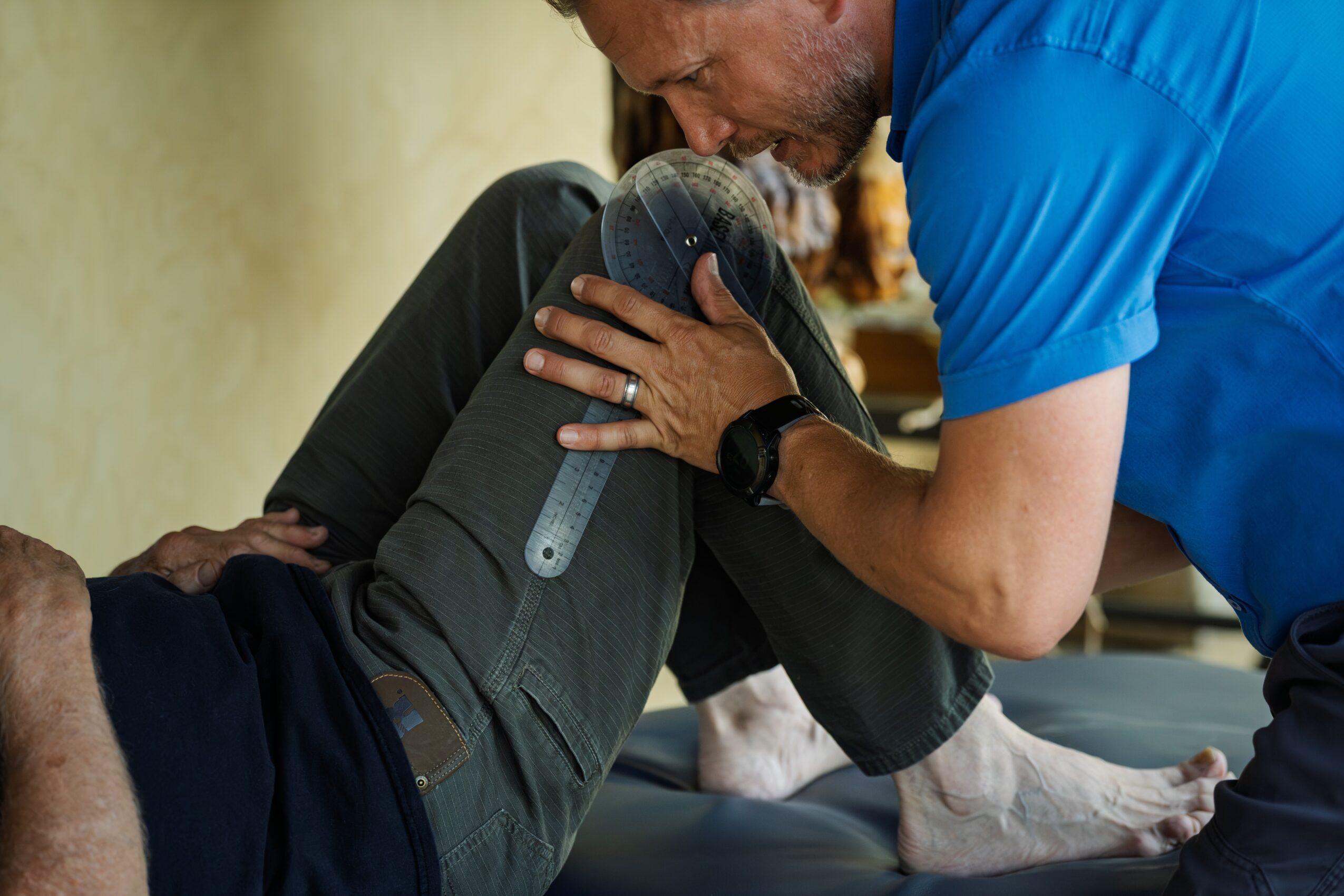
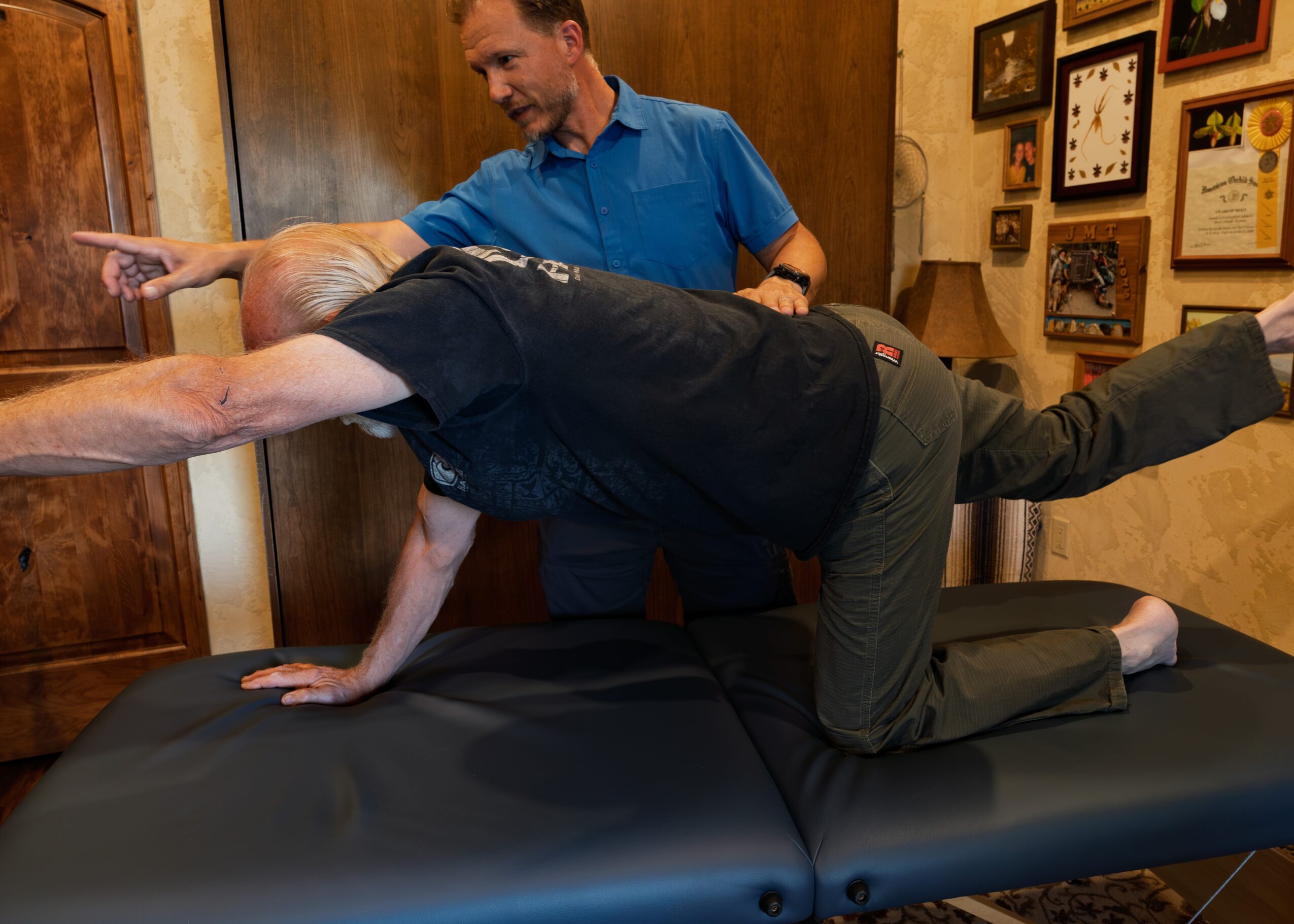
What we specialize in is Mechanical Diagnosis and Therapy, also known as the McKenzie Method – a philosophy I found during my clinical rotations that’s shaped how I evaluate and treat ever since. I’m also manual therapy trained through the Evidence in Motion framework, and I’m not a McKenzie purist – every patient is unique, and figuring out the right blend of treatment styles for them is the most successful path forward. I also specialize in sport-based rehab and return-to-sport training, and my caseload has ranged from people just starting an active lifestyle to Olympic athletes. With the addition of Amanda to the team, we’ve also expanded into pelvic health specialty care and higher-level personal training.
What sets us apart, honestly, comes down to structure: because we’re mobile, we can’t run the back-to-back scheduling of a traditional clinic. That forces one-on-one treatment and gives me the time and clarity to actually troubleshoot a problem instead of just managing it. Patients also get evaluated in their real environment – their stairs, their bed, their yard – which surfaces functional and safety issues a clinic room never would. I also use RTM, remote therapeutic monitoring, to stay in touch with patients between visits through custom surveys. It means fewer in-person visits (and fewer co-pays), lets me see a greater breadth of patients, and for anyone post-op it keeps me updated on how they’re doing day-by-day.
What I’m most proud of, brand-wise, is that PT2U has stayed true to a simple mission the whole way through: high-quality, individualized care focused on empowering a person’s independence, not creating dependence on us. I’m known for strong patient education – giving people the tools to self-treat, or to recognize when they actually need to come back in. I’ve found that connecting with someone in their own home, in their actual life and struggles, builds a trust in the process that’s hard to replicate in a traditional clinic – and that connection matters more for lasting results than being the most book-smart PT in the room. It’s the kind of trust that turns into a relationship well beyond that one injury, for whatever comes up down the road.
What I want readers to know is that mobile PT isn’t home health, and it isn’t a luxury service – it’s the same outpatient standard of care, delivered somewhere more convenient, and covered by the same insurance that would cover a clinic visit. Having just passed three years as a full-time business, the next step for PT2U is focusing on community education – bringing that same accessible, high-quality home-based care to people who can’t make it to appointments or who live outside a reasonable service area.
If we knew you growing up, how would we have described you?
I was a curious, tinkering kid – I grew up on a farm and wanted to know how everything worked. I excelled across the board in school, but math and physics were always my strongest suits. I was also an incredibly quiet, shy kid – excessively so.
Growing up poor, most of our fun was outdoors – camping, hiking, backpacking, rafting – because it was accessible and cheap in this part of the country. We had a big garden on the farm and raised our own animals, so self-sufficiency was baked in early, and that same pull toward the outdoors led me into Scouting, where I made Eagle. I’ve played soccer most of my life, and got into cross-country, relays, and hurdles in high school, carrying both into college – where I also picked up pole vault. After college I transitioned into triathlons, which built naturally on the mountain biking and swimming I’d already grown up doing.
I’m a self-professed nerd – sci-fi, fantasy, tabletop games, and I was an avid online gamer before I shifted my focus elsewhere. The last ten years I’ve been an avid geocacher, and I work to support and build that community here in southern Oregon.
The dancing is probably the least expected part of my story. I started senior year of high school for a PE credit, kept going in undergrad because of a cute girl, and discovered I was actually good at it – it became a primary focus of my life for the next 20 years. At the end of college I taught adult community education classes in country/western and ballroom dance for San Antonio ISD, and I was one of the principal dancers at Gruene Hall with Lyle Lovett and Asleep at the Wheel for the IMAX film “Our Country.” I also helped grow the Balboa dance community in Austin while I was there. Between the scouting, the teaching, and two decades of dance, I learned to be an extroverted introvert, and I genuinely love teaching – which, looking back, probably explains a lot about why I ended up in a career built around educating patients as much as treating them.
Contact Info:
- Website: https://www.pt2u.life
- Facebook: https://www.facebook.com/drjeremybrady/