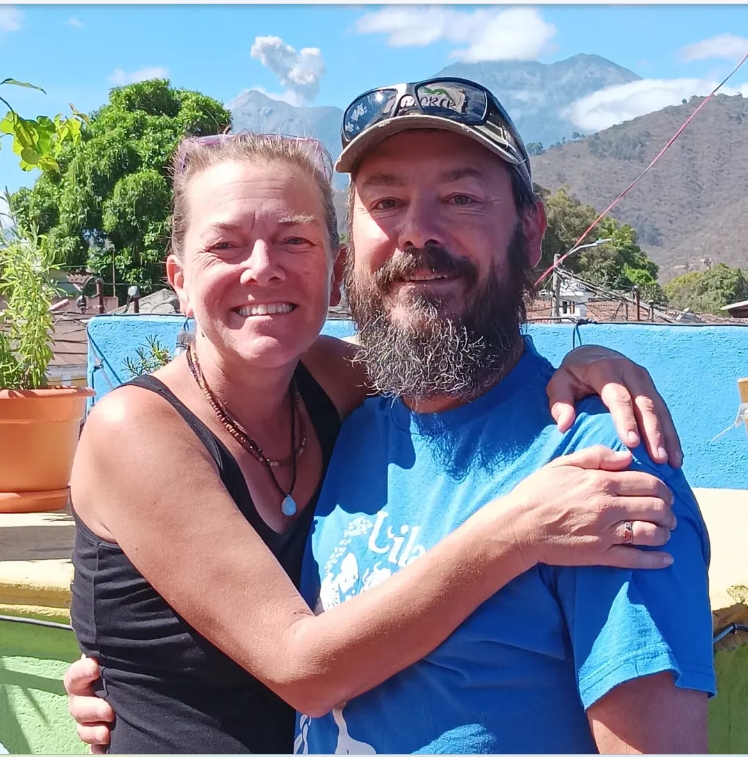



Today we’d like to introduce you to Janel Lajoie.
Hi Janel, we’d love for you to start by introducing yourself.
I was married for nearly 20 years, and for 16 of those years I ran an independent auto parts store. We had four boys, whom I homeschooled, and at one point they were all under the age of ten. It was a busy, noisy, fun life—until the 2008 housing crisis changed everything.
My marriage ended—not because of the housing crisis—and we nearly lost our house. Suddenly I was looking at four children and wondering how the hell I was going to support them. I hadn’t gone to college. I couldn’t even check the “some college” box on an application. So I went to community college.
I applied for scholarships because I knew there was no way I could afford to do this on my own. I figured out which friends and family members could watch my kids so I could attend classes, and I got through my prerequisites. Then I met Brian.
That was a pretty spectacular turning point.
We both came into our relationship carrying a lot of debt from our previous marriages, so we did what we seemed to do best: we worked our asses off together. We paid it all off. Every bit of it.
I transferred to Southern Oregon University and kept applying for scholarships because I was absolutely determined that I was not going into debt for a college education at 40. I became a Ford Family Foundation Scholar and a McNair Scholar and earned my bachelor’s degree in Environmental Studies. I was the first person in my family to earn a college degree.
Then I applied to eight graduate programs and got into all eight—including Yale. We chose Oregon State University, so Brian, the four boys and I moved to Corvallis. I worked as a teaching assistant in Dendrology and eventually earned my Master of Science in Forestry.
When we eventually sold our house in Southern Oregon, we didn’t immediately go out and buy another one. We put the money in the bank and left it there for three years while I focused on grad school and Brian searched for the right house.
During that time, Brian and I became contractors. We built a log cabin for a guy in Wren, and eventually Brian found our little 792 square foot tear-down house in Philomath. We spent six weeks making it livable, and when it was finally ready, we moved in with three teenagers and a 100-plus-pound dog.
When we bought the house, we wrote a check for it. We didn’t have a mortgage. We didn’t owe anybody anything.
Nobody handed us anything. We had spent years working, saving, paying off debt and making choices that gave us some freedom. That freedom turned out to be one of the most important things we’d ever built together.
Then came 2020.
The pandemic had just started. We were new to Philomath, and we wanted to get to know our community. Someone had started a new farmers market, and Philomath didn’t even have a grocery store, so Brian and I decided to become vendors. We had absolutely no idea what we were going to sell. We just wanted to help make sure the market didn’t fail.
That little market started with five booths and very little traffic. In 2021, the market hired me as its manager. One of the first things I did was figure out how we could accept SNAP. The next year we added Double Up Food Bucks and other food-access programs. With a ridiculous amount of effort, the market kept growing.
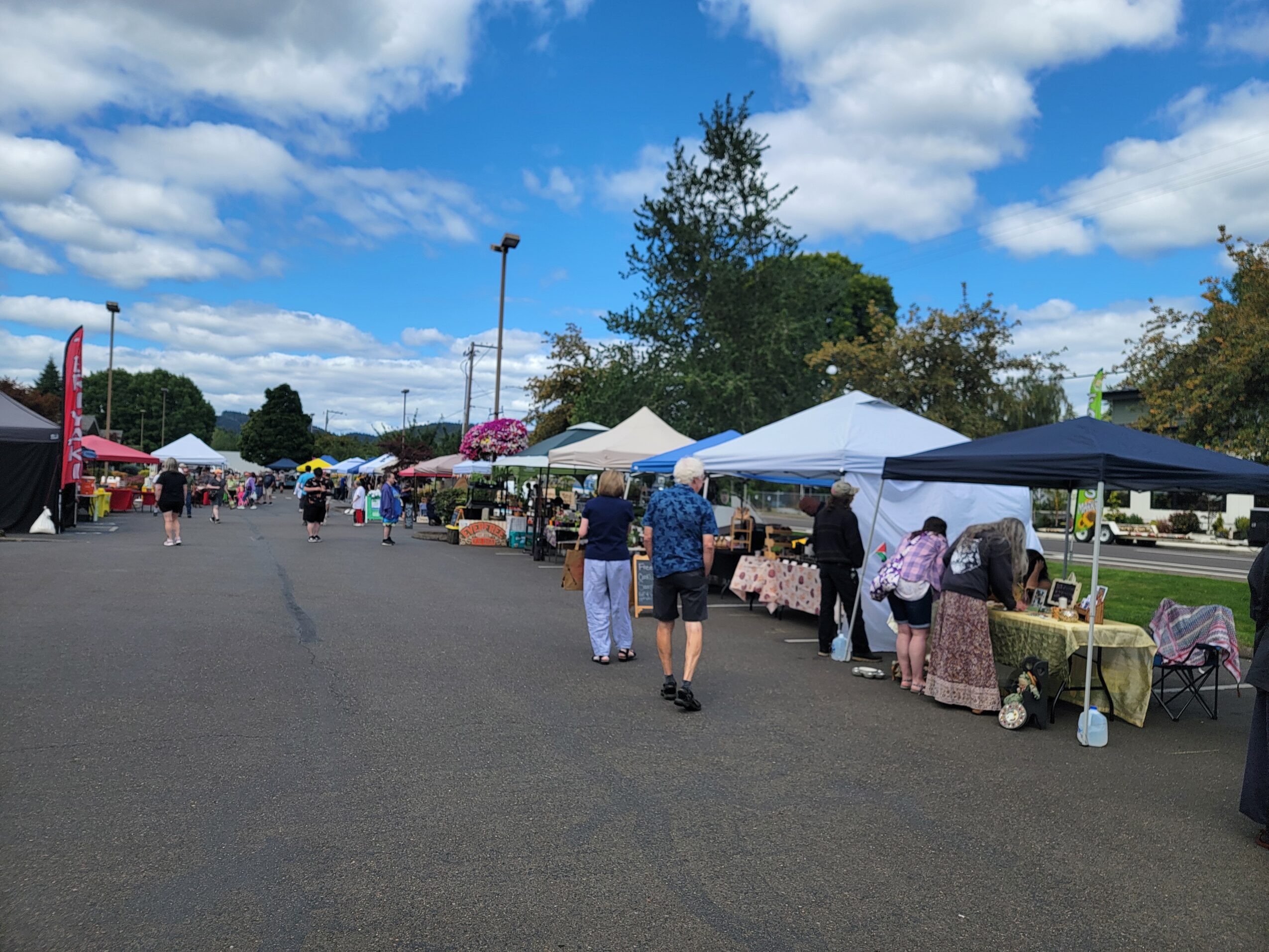
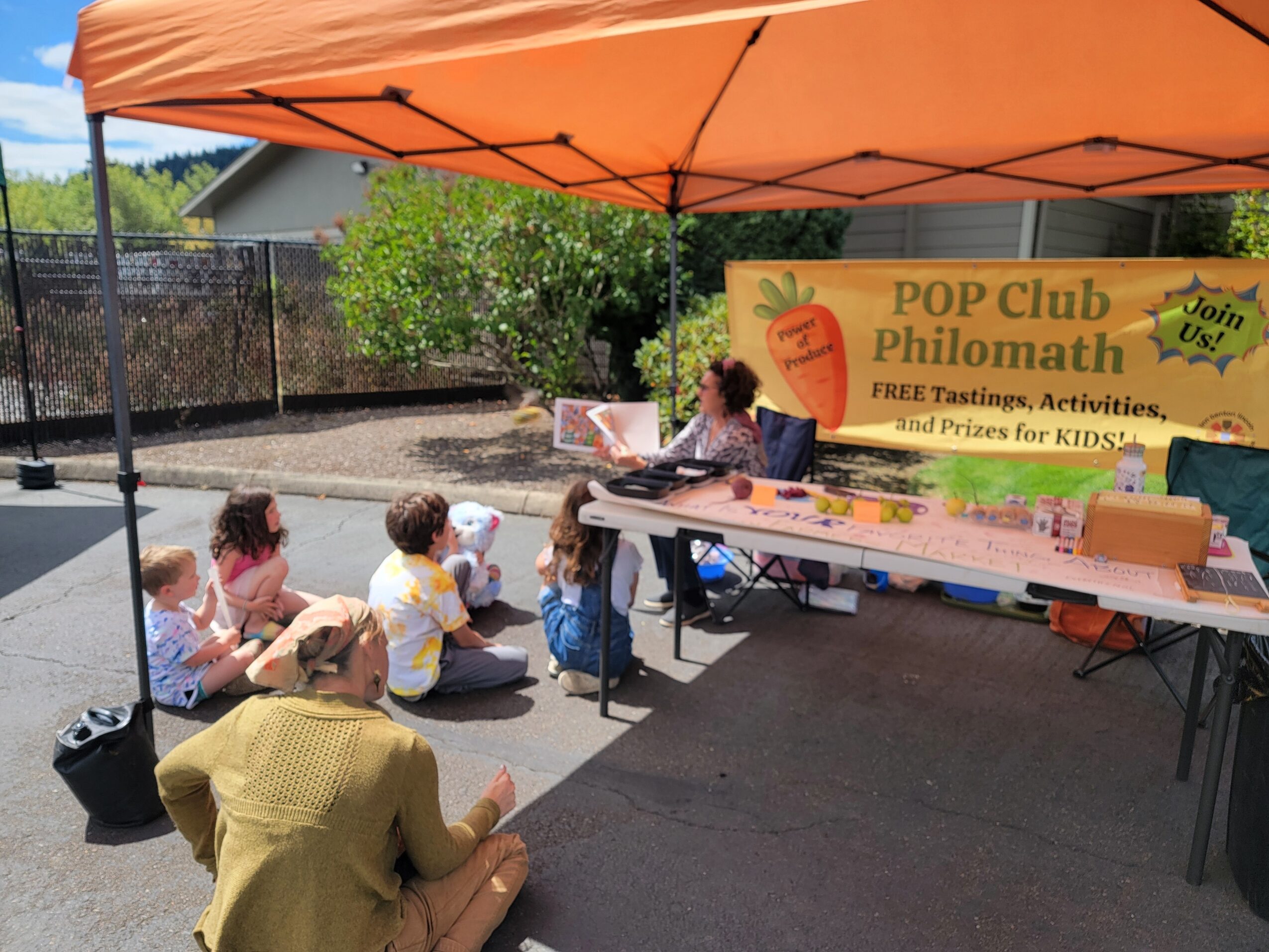
Today we have 40 vendor spaces filled and roughly 1,000 people coming through the market each week. We have live music, kids’ programs, SNAP and Double Up Food Bucks, free organic produce, and the Power of Produce Kids’ Club, where kids can taste fruits and vegetables and get a token to spend on whatever fruit or vegetable they want.
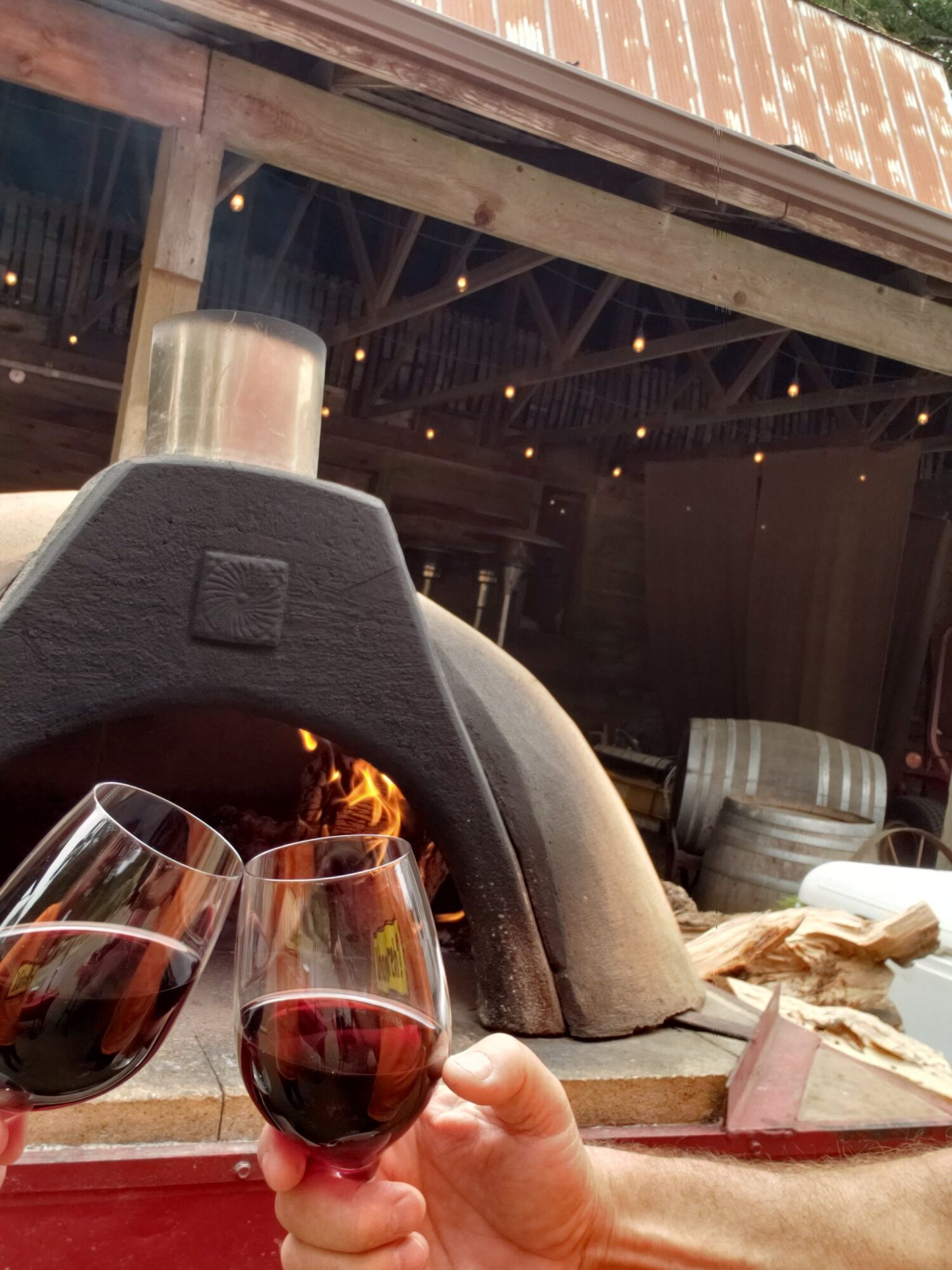
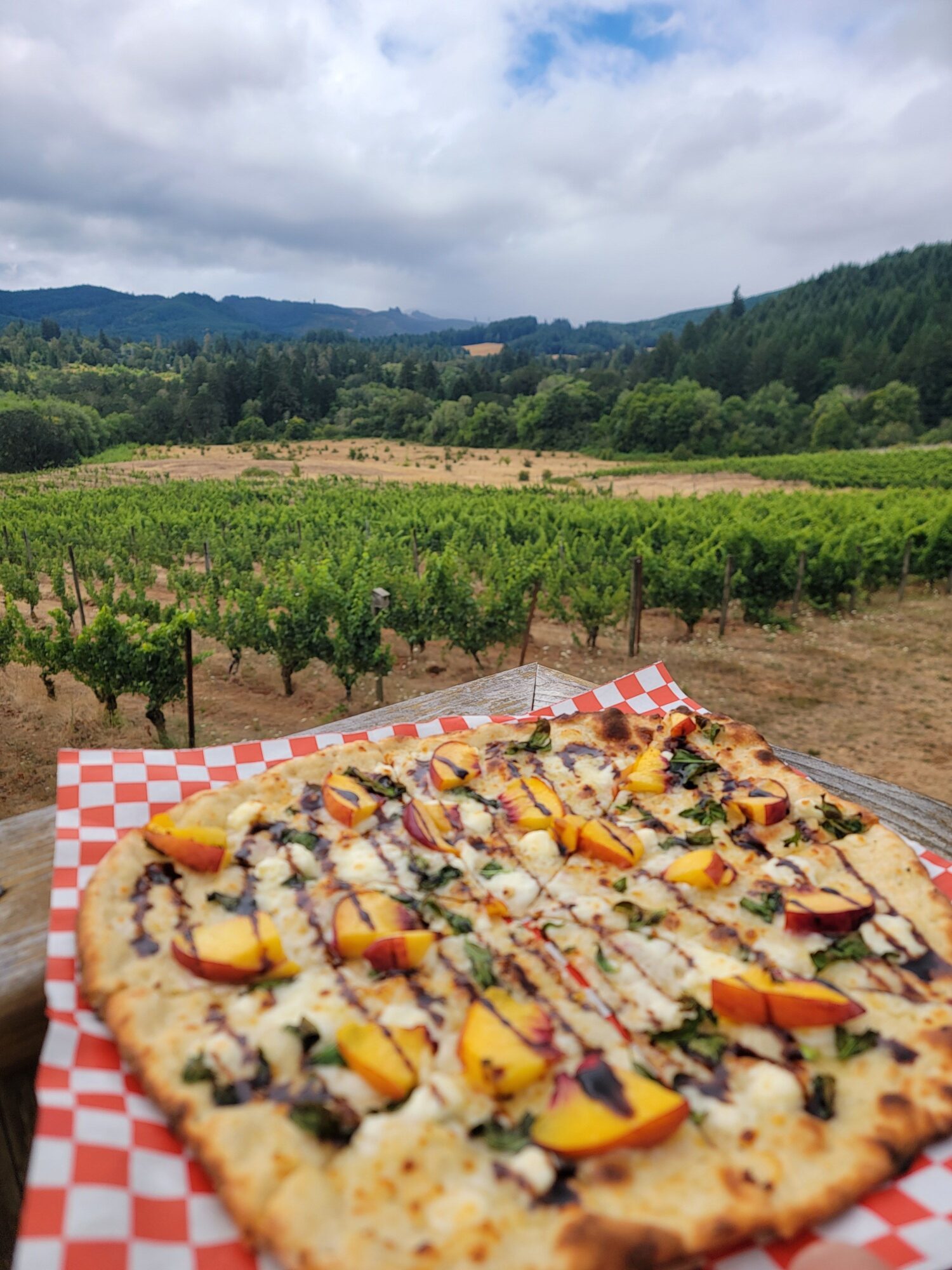
Along the way, Brian and I built a mud oven. That became Mud Oven Pizza. It’s just the two of us, and we take it to community events throughout the year. We’ve been able to use it to give thousands of dollars back to local organizations.
We work our asses off from May through October. But the funny thing about rebuilding your life is that eventually, the life you built starts becoming something you never could have imagined.
After the pandemic, our teenagers were pretty tired of being locked up with us. They scattered. A year later, our beloved dog died. Suddenly Brian and I realized we could travel.
And that’s where I think our story really begins.
One Sunday, we were at the farmers market with the guy who had helped us build our mud oven. Brian and I were busy making pizza, and there was a couple talking behind us. We weren’t really listening, but every once in a while a word floated through the pizza-making chaos: “mud oven,” “when I was a child,” “cooking,” “island.”
I finally turned around and said, “Wait. Did you say island? I like islands.”
The couple were Lisa and Manderson – Manderson was born on the island of Roatán, and that is where they live. We had always wanted to go to Roatán since Brian’s mom had told us about it, but I told Lisa tickets were too expensive. She laughed and said, “Nobody’s even heard of Roatán.” Then she said, “If you ever get tickets, you can stay with us.”
We exchanged information. A few days later, I looked up plane tickets and discovered they were dramatically cheaper than they had been ten years earlier. So I emailed Lisa and asked if we could come. She said yes. I asked how long we could stay, and she said, “As long as you want.”
So we bought the tickets.
We stayed in her daughter’s house, helped on their farm, worked at their farmers market and lived there for three months. The following winter, we went back. We worked a little less and explored a lot more.
Then, the next summer, while we were back in Philomath, I saw that Lisa had posted some property for sale on Roatán. I thought she’d forgotten a zero in the price, so I messaged her. She said the price was right. I said, “Let’s go to lunch.”
We bought 0.16 acres on Roatán.
That winter, we went back and built a 296-square-foot casita on stilts. It wasn’t exactly turnkey, but it was a start.
The next winter we found the cheapest plane tickets we could, flew to Guatemala City and spent a month traveling around Guatemala on chicken buses, staying in hostels and figuring things out as we went. Then we made our way back to Roatán and lived in our little casita.
There was no electricity and no running water. Brian carried five-gallon buckets of water so we could do dishes and laundry. He built benches, counters, tables and whatever else we needed—all with a hand saw because we didn’t have power.
We loved it.
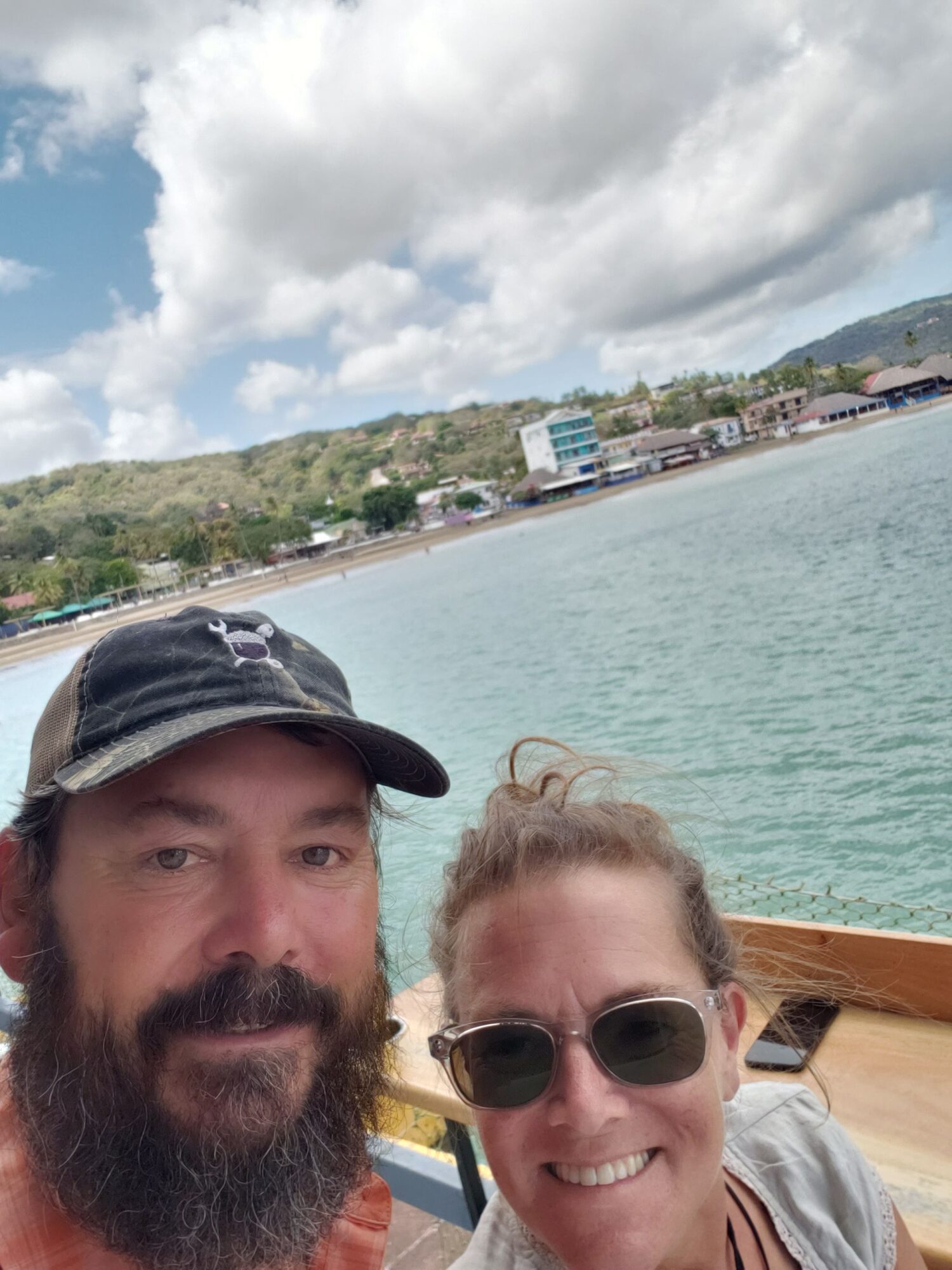
Last winter we did it again. We traveled through Mexico, then spent a month traveling around Nicaragua as cheaply as we could—nine-hour chicken bus rides, rice and beans, fresh-market vegetables, backpacks, lots of walking and cooking for ourselves. It was rad!
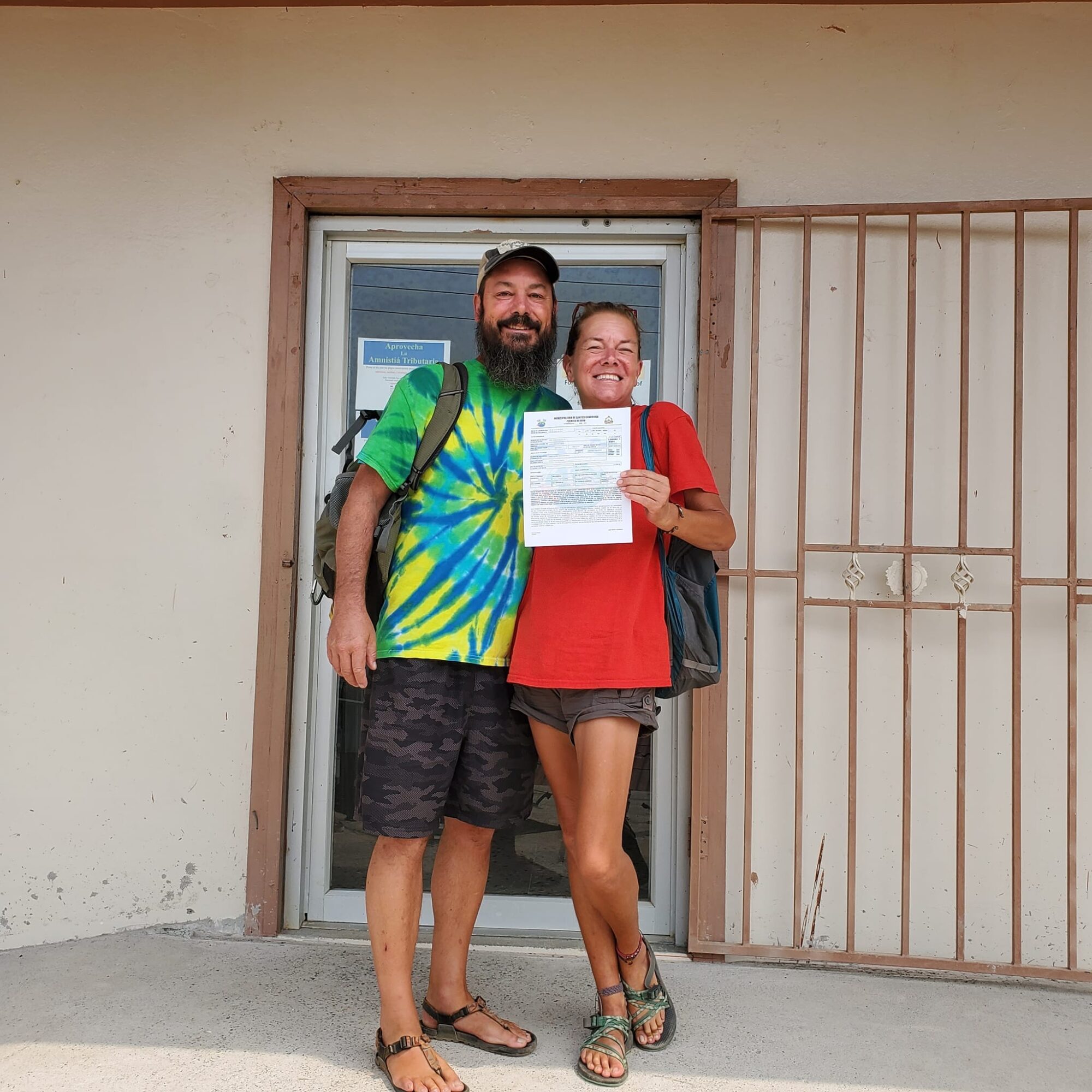
We walked across the border into Costa Rica to get our 90-day C4 stamp, eventually made our way back to Roatán, and settled into our little casita again.
And that’s the strange thing about the life we have now. The woman who once worried that she couldn’t even check “some college” on a job application now has a master’s degree. The family that nearly lost its house now has a home in Philomath and a little house on a Caribbean island. The woman who was terrified about how she was going to support four children now operates a farmers market that brings a thousand people together every week.
And the two of us who started out simply trying to keep a little farmers market from failing ended up building a community around it.
None of this happened because I figured it all out by myself. It happened because I kept taking the next step, saying yes, seizing opportunities, taking chances—and because Brian was beside me.
We’ve built houses together. We’ve raised kids together. We’ve built businesses together. We’ve built a farmers market community together. We’ve built a mud oven with our own hands (and a lot of help). We’ve built a tiny casita on an island.
We’ve built a life.
And now we’re excited to see what we’re going to build next.
We all face challenges, but looking back would you describe it as a relatively smooth road?
Absolutely not. There have been plenty of bumps, and the farmers market in particular was a much harder thing to build than people probably realize.
A farmers market has a classic chicken-and-egg problem: vendors don’t want to come if there aren’t shoppers, and shoppers don’t want to come if there aren’t enough vendors. When we started, we had five booths and very little traffic. It takes a lot of work to convince vendors to take a chance on a market that isn’t busy yet, and then you have to convince shoppers to come to a market that doesn’t have very many vendors.
For the last seven years, I have talked, talked, TALKED to everybody I could about the Philomath Farmers’ Market. I talk about it everywhere I go. I invite people. I tell people why it matters. I try to get people excited about it. I have spent an enormous amount of time simply telling people, “Come to the market. Come see what we’re doing.”
And then there was pizza.
Brian and I had built the mud oven as a community project, and at some point I thought, *Well, what if we actually put pizza in the market?* My thinking was pretty simple: if people come to the market because they want pizza, maybe they’ll stick around and shop. And if people come to the market to shop, maybe they’ll buy pizza.
It was another way to give people a reason to show up.
None of this happened quickly. There were years when we wondered if we were ever going to get the market to where we wanted it to be. We had to build relationships with vendors, build trust with shoppers, keep showing up, keep promoting it and keep finding ways to make the market feel like somewhere people actually wanted to spend part of their Sunday.
And honestly, that’s probably been the biggest lesson for me: sometimes you just have to keep talking about something, keep showing up and keep trying things until people finally believe in it too.
Today, when I look out and see 40 vendor spaces filled and roughly 1,000 people coming through the market each week, I remember how we started with a few card tables, thrilled to make our booth fee in sales each week.
It was not smooth.
It was a lot of work.
But it was worth it.
Great, so let’s talk business. Can you tell our readers more about what you do and what you think sets you apart from others?
Bountiful Backyard is a 501(c)(3) nonprofit with three programs: the Philomath Farmers’ Market, Mud Oven Pizza and the Power of Produce Kids’ Club. On the surface, they look like three very different things. To us, they’re really three different ways of doing the same thing: building community around food.
The Philomath Farmers’ Market is the heart of it. We’re a small, rural market that has grown from five vendors and very little traffic into a weekly community gathering with 40 vendor spaces and roughly 1,000 shoppers. We’re not just a place to buy vegetables. We want people to come to the market to see their neighbors, listen to music, let their kids run around, meet local farmers and makers, and feel like they belong here.
Food access is a huge part of that. We accept SNAP and Double Up Food Bucks, and we work to make sure that the market is a place where people with different incomes can actually participate.
The Power of Produce Kids’ Club is one of the things I’m particularly proud of. Kids get to taste fruits and vegetables at the market and then receive a $2 token to spend on produce of their choice. It’s a really simple idea, but it gets kids involved in food in a way that isn’t a lecture. They get to taste something, decide what they like and then go buy it themselves.
And then there’s Mud Oven Pizza.
Brian and I built the mud oven as a community project, and eventually realized that pizza could be another way to bring people into the market and give something back to the community. We take the oven to community events throughout the year, and the proceeds support local organizations and causes. It’s still just the two of us making the pizza, and there’s something pretty special about that. It’s a tiny operation with a very big connection to the community.
What sets Bountiful Backyard apart, I think, is that we’re not interested in simply operating programs. We’re interested in figuring out what our community needs and then finding a way to make it happen.
Sometimes that’s a farmers market. Sometimes it’s helping a kid discover that they actually like a radish. Sometimes it’s making pizza to raise money for a local organization. Sometimes it’s figuring out how to make fresh food accessible to someone who otherwise couldn’t afford it.
Everything we do comes back to food, community and connection.
What I’m most proud of is that none of this was created from the top down. The organization has grown because people in our community have shown up for it—farmers, vendors, shoppers, volunteers, kids, families, local businesses and organizations. Brian and I may have helped build some of the pieces, but the community is what makes them work.
I think that’s what I want people to know about Bountiful Backyard: we’re not trying to be the biggest or fanciest anything. We’re trying to make our little corner of the world better, one market, one pizza and one kid tasting a vegetable at a time.
How do you think about luck?
A huge role. Both good luck and bad luck.
I’ve had some really hard things happen in my life, but I’ve also been incredibly lucky. I was lucky to meet Brian. I was lucky to get the scholarships that allowed me to go to college. I was lucky to get into graduate school. And I was ridiculously lucky that a couple happened to be talking about an island behind me while I was making pizza at the farmers market.
But I also think you have to be paying attention.
A lot of the “lucky” things that have happened to us came because we were willing to say yes. We didn’t know exactly what we were doing. We just saw an opportunity and thought, *Well, why the hell not?*
That’s probably how I look at luck now. Sometimes something wonderful drops into your lap. Sometimes something awful does. You don’t get to choose which one shows up.
You do get to decide what you do with it.
I think I’ve gotten pretty good at making something out of whatever lands in front of me.
Contact Info:
- Website: https://philomathfarmersmarket.org/
- Instagram: https://www.instagram.com/philomathfarmersmarket/
- Facebook: https://www.facebook.com/philomathfarmersmarket