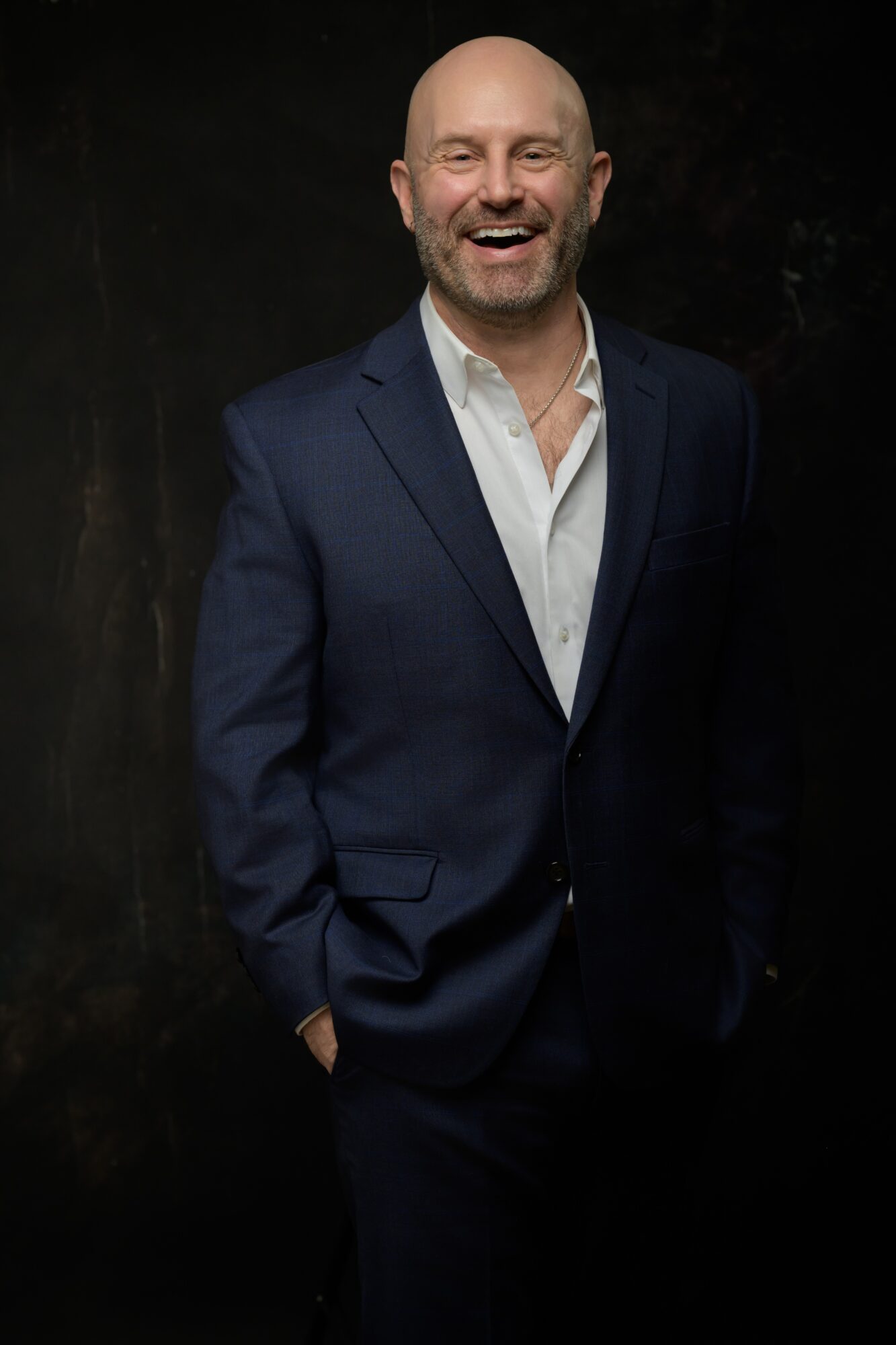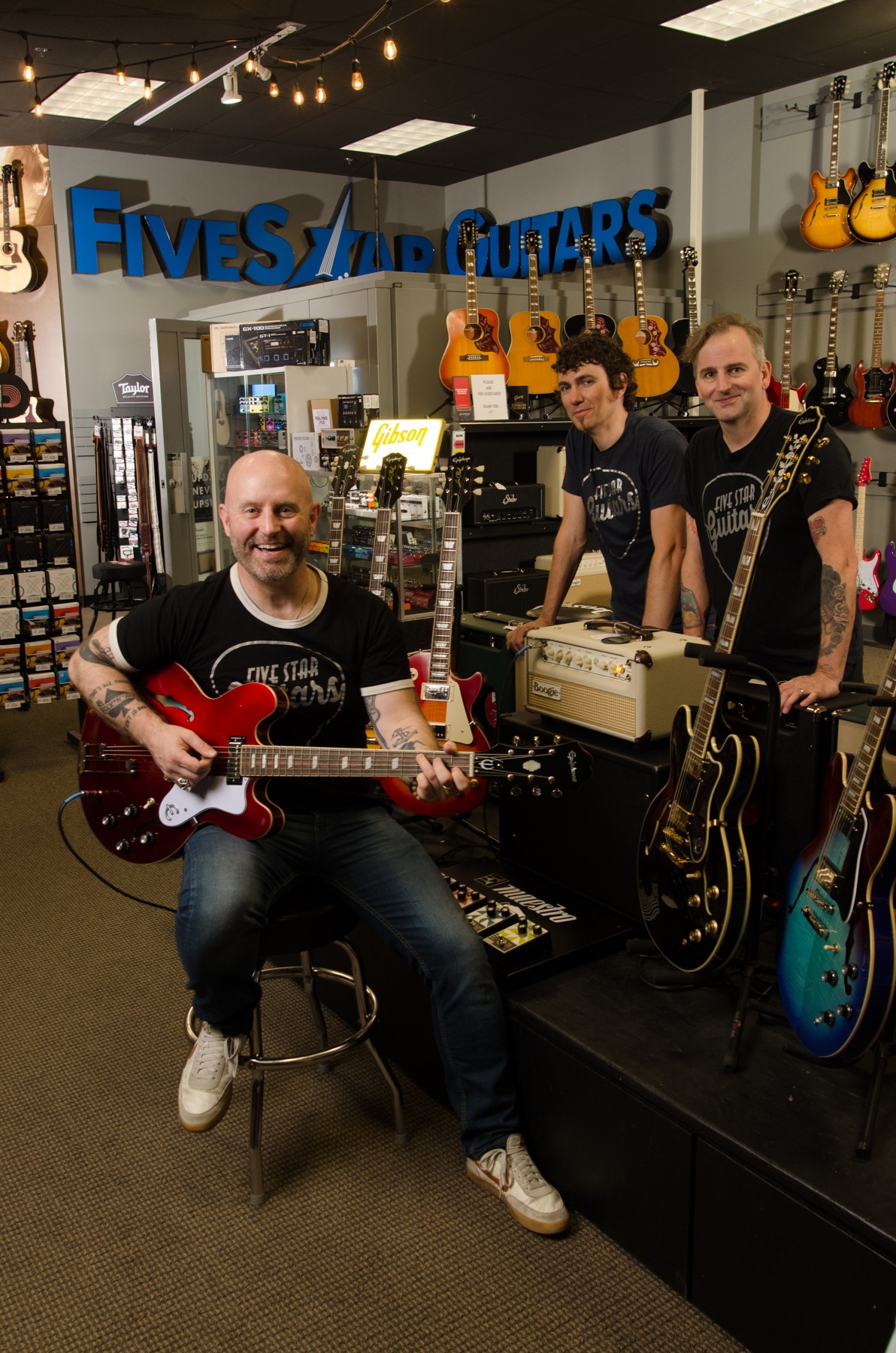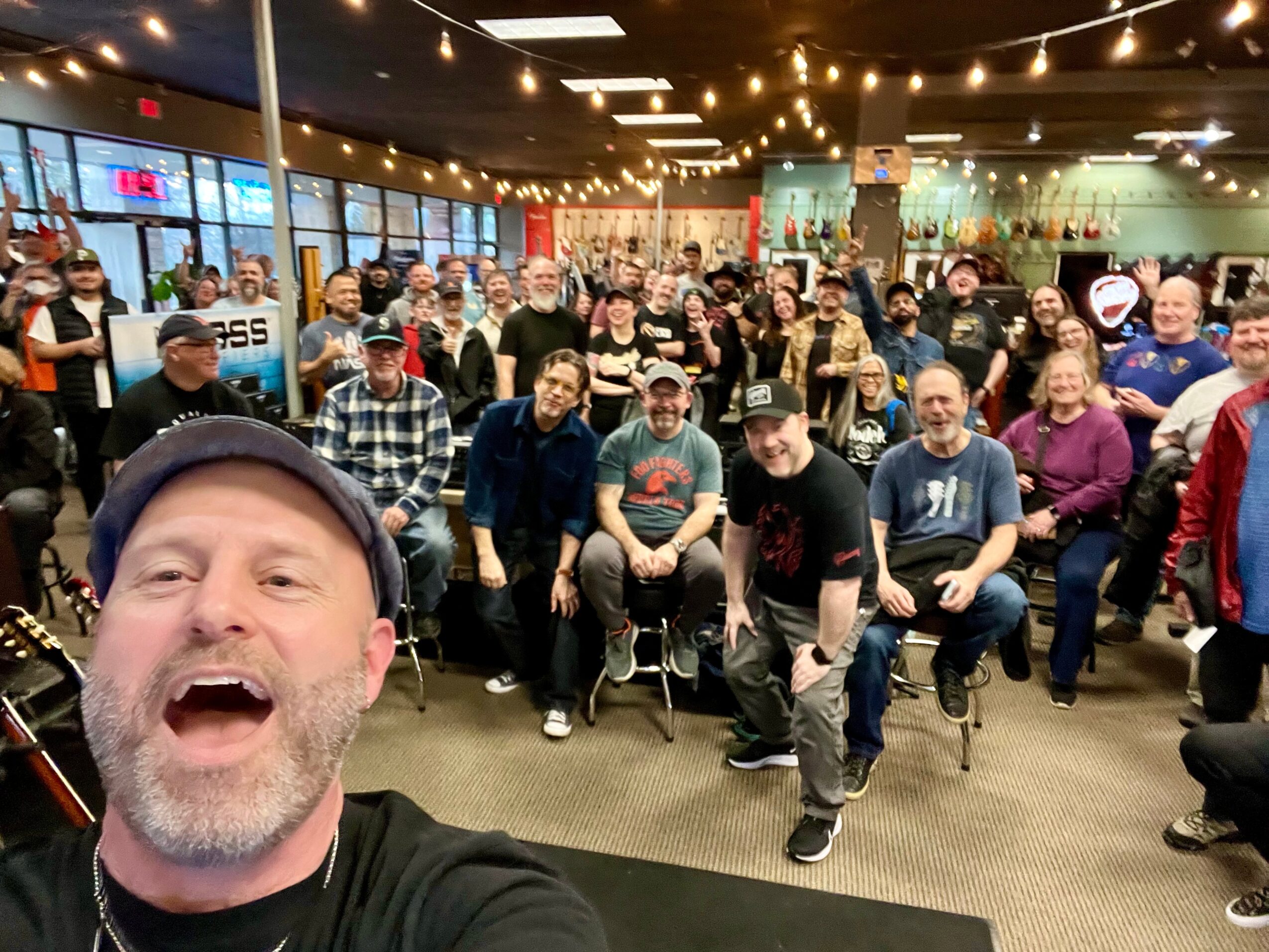



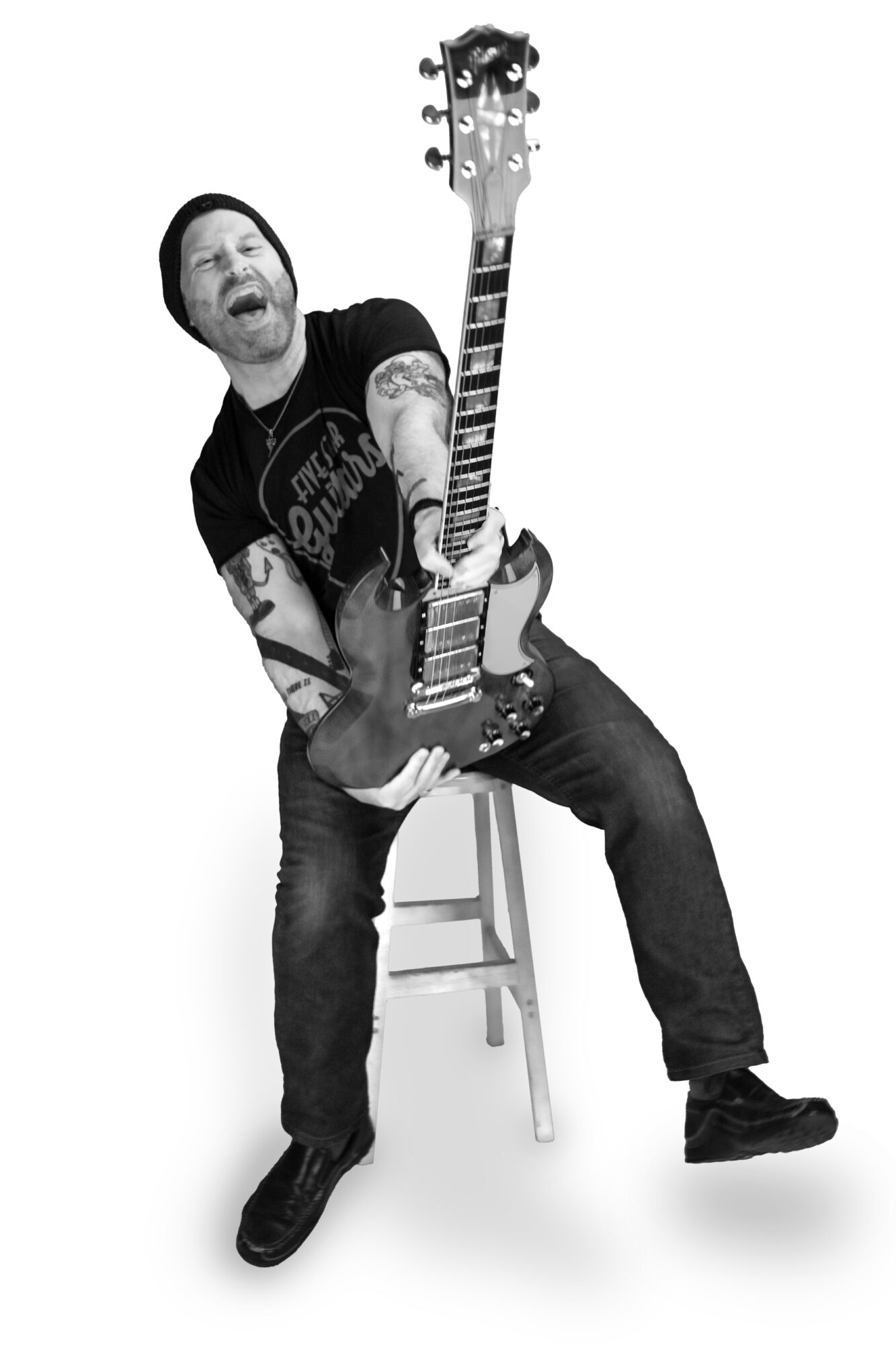
Today we’d like to introduce you to Geoff Metts.
Geoff, we appreciate you taking the time to share your story with us today. Where does your story begin?
Music has been the through line for most of my life. I’m a guitarist, bass player, singer and songwriter, and long before I thought of myself as a business owner, I thought of myself as a musician. But business was always there too, and looking back, the intersection of those two worlds has really defined my career.
I graduated from the University of Idaho’s College of Business while also studying music at the Lionel Hampton School of Music. At the time, I’m not sure I fully appreciated how much those two areas of study would eventually come together. I loved playing, writing and performing, but I was also fascinated by how organizations work, how you build something sustainable, and how good ideas become viable businesses.
Even as a working musician and teacher, I found myself applying what I had learned in business school. I approached my band not only as a creative endeavor, but as a small business. There were gigs to book, relationships to build, promotion to do, money to manage and decisions to make. The same was true of teaching. I loved helping people become better musicians, but I also learned how to build and maintain a roster of students, communicate value and create an experience that kept people engaged.
Then I found Five Star Guitars.
The store was founded in 1998, and I was one of the early employees. Five Star showed me that there was actually a career path where all of these things I loved could coexist: business, music, education and music gear. I didn’t have to choose between being a musician and being a businessperson. In fact, understanding both worlds could be an advantage.
Over time, my role grew. I became more involved in the business side of the company and started learning about retail, marketing, vendor relationships, operations and all the things that happen behind the scenes of a small business. I also discovered how much I enjoyed building relationships with the people who make the instruments and gear we use. I could talk about guitars, amplifiers and recording equipment all day, but I was equally interested in the businesses, craftspeople and personalities behind them.
In retrospect, running my band, building my teaching business, studying business and music, and working my way through different roles at Five Star were all preparing me for something I didn’t necessarily know I was preparing for: owning the company.
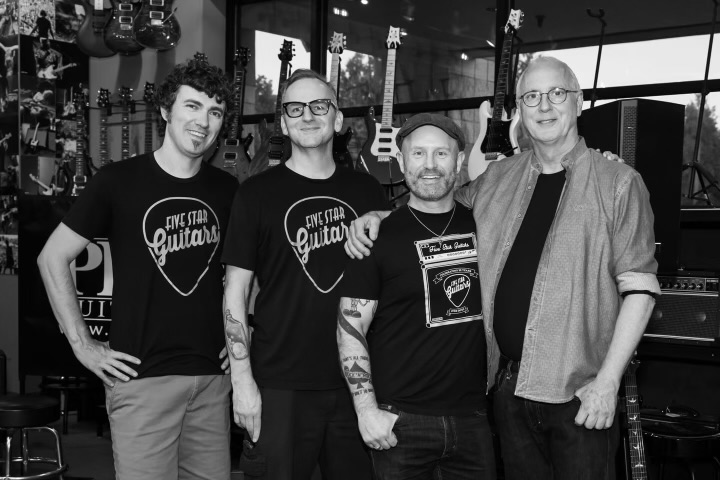
In 2011, the founder of Five Star gave my partners, Jeremie Murfin and Johnpaul “Jeep” Simonet, and me the opportunity to buy the business. We had each been there for roughly a decade by then, so we knew the store inside and out. What we didn’t necessarily know was whether three musicians buying a guitar store was a brilliant idea or a spectacularly bad one.
We did our homework. We worked with the Small Business Development Center at Portland Community College, studied the numbers, built a business plan and eventually decided to take the leap. In 2012, we became the owners of Five Star Guitars.
From the beginning, our goal wasn’t simply to sell more guitars. We wanted to preserve the sense of community that had made the store special to us while building a business that could grow and adapt. We expanded our online business, repair department and lesson program, developed deeper relationships with manufacturers, invested in our staff and looked constantly for ways to make Five Star a better experience for both customers and employees.
There’s a surprising amount of overlap between being in a good band and running a good business. You have to listen to each other, know your role, leave room for other people to shine and occasionally figure out what to do when somebody hits the wrong chord. You also learn pretty quickly that talent alone isn’t enough. You have to show up, do the work, communicate, adapt and find people whose strengths complement your own.
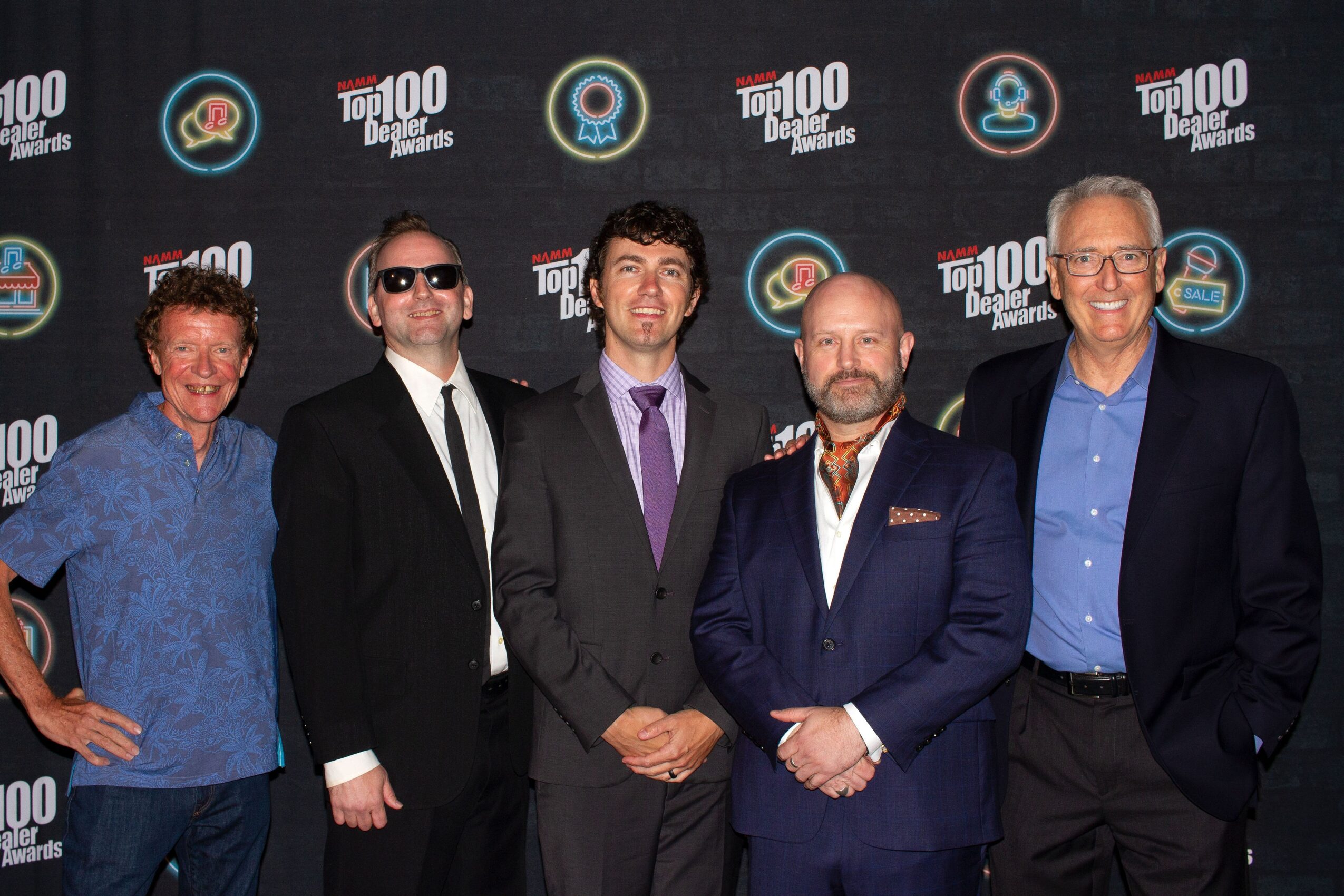
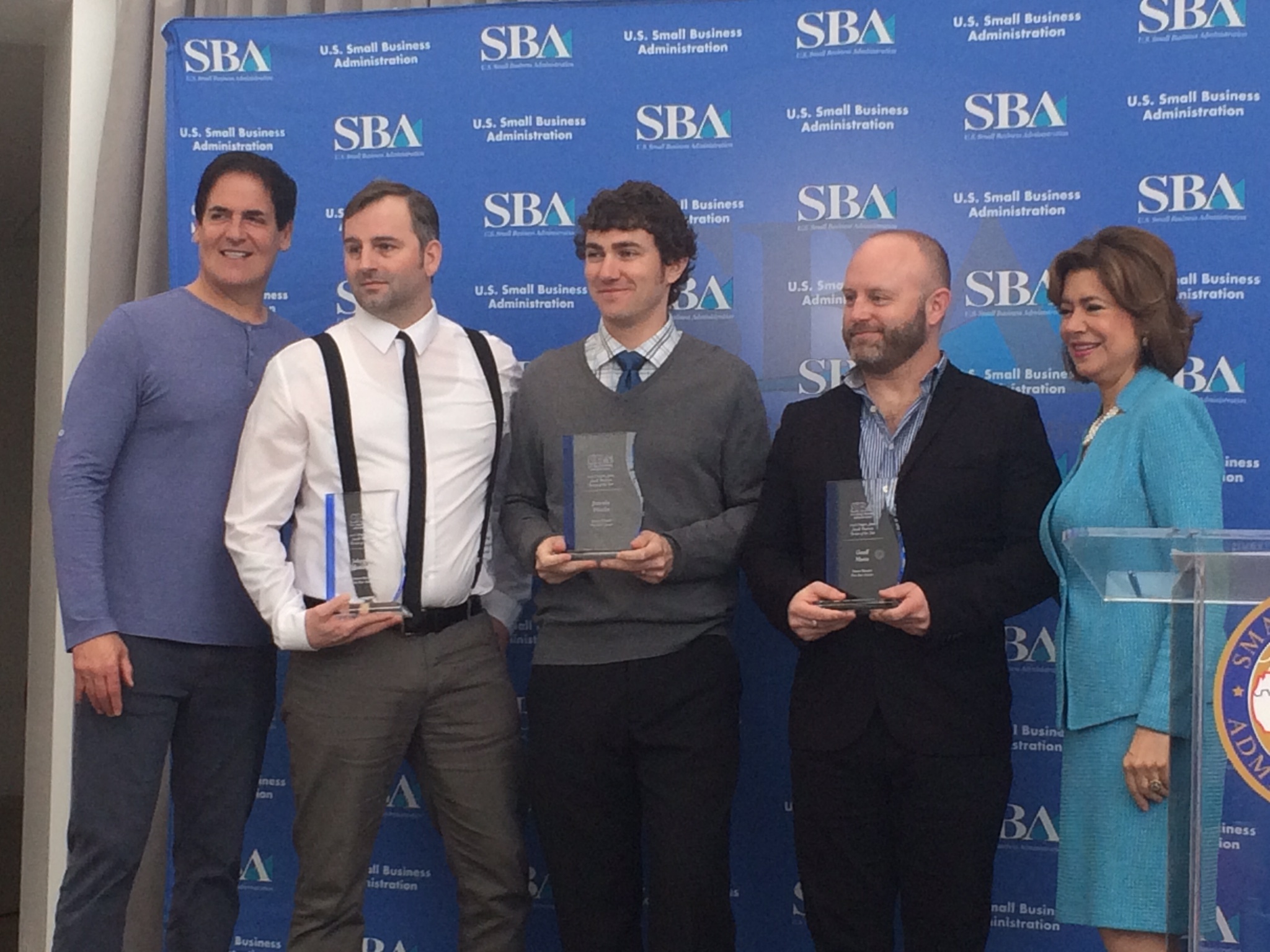
In 2016, my partners and I were named Oregon Small Business Persons of the Year by the U.S. Small Business Administration. A few years later, Five Star Guitars was named NAMM’s 2020 Dealer of the Year, the highest recognition in the music retail industry. Those awards mean a great deal to me, but mostly because they recognize the work of an extraordinary group of people and validate the idea that an independent local business can compete at a very high level without losing its personality or its connection to the community.
That community piece has become increasingly important to me.
I started as an educator, and that has never really left me. Over the years I’ve had opportunities to advocate for music education, work with students and teachers, support professional and aspiring musicians, and help create an environment at Five Star where people can grow. I believe strongly that access to music changes lives, and that independent music stores can play an important role in making that happen.
I’ve also learned that a guitar store can be much more than a place where transactions happen. It can be a place where a kid takes a first lesson, someone buys the guitar they’ve wanted for 20 years, a working musician gets an instrument repaired before a gig, employees build careers, teachers change lives, and people who might have very little else in common find themselves talking for an hour because they both love music.
That’s the part of this I’m probably proudest of.
Today, I still wear a lot of hats. I’m a business owner and leader, but I’m also still a musician, songwriter and educator. I get to work with some of the biggest manufacturers in the music industry, alongside incredibly talented craftspeople, musicians, teachers and employees, and I’m constantly learning from them.
Owning a small business has taught me that there really isn’t a finish line. The market changes. Technology changes. Customers change. Your team changes. You change. The job is to keep learning and adapting without losing sight of why you started in the first place.
For me, that still comes back to music and people.
When I look back at studying business while studying music, playing in bands, teaching lessons and eventually finding my way to Five Star Guitars, the path makes much more sense in retrospect than it did while I was living it. I was learning how to combine the things I cared about into a career I probably couldn’t have described when I started.
If we can run a successful business, create good jobs, help musicians make more music, support music education and make our little corner of the world a more interesting place in the process, that feels like a pretty worthwhile way to spend a career.
Can you talk to us a bit about the challenges and lessons you’ve learned along the way. Looking back would you say it’s been easy or smooth in retrospect?
Definitely not, although I’m not sure a smooth road would have taught me nearly as much.
One of the biggest challenges has simply been learning how to run an independent business in an industry that is constantly changing. When I started at Five Star Guitars, the way people discovered, researched and bought musical instruments was very different. Over the years we’ve had to navigate the rise of e-commerce, changing consumer habits, increasing competition from large national retailers, consolidation within the music industry, economic downturns, supply-chain problems and rapidly changing technology.
You can’t survive those changes by saying, “This is how we’ve always done it.” At the same time, you don’t want to chase every new trend and lose the things that made you special in the first place. Finding that balance has been one of the central challenges of running Five Star.
There was also a big personal transition for me from being an employee and musician to becoming an owner and leader. When you own the business, the decisions hit differently. You’re responsible not just for yourself, but for employees and their families, teachers, customers, vendors and a business that people depend on. You learn pretty quickly that leadership isn’t about having all the answers. A lot of the time it’s about being willing to make the best decision you can with incomplete information, own the outcome, learn from it and keep moving.
And I’ve made plenty of mistakes along the way. We all have. Some ideas worked beautifully, some didn’t, and occasionally the lesson was more expensive than I would have preferred. One thing owning a business will do is cure you of the idea that being wrong is something to be embarrassed about. If you’re paying attention, being wrong can be incredibly educational.
Of course, COVID was a challenge on an entirely different scale. Like so many small businesses, we suddenly had to figure out how to protect our employees, serve our customers and keep the company alive when many of the assumptions we had built the business around changed almost overnight.
What was remarkable was seeing our team adapt. We leaned into our online capabilities, changed how we communicated with customers, solved problems as they came and kept finding ways to serve musicians. It reinforced something I had believed for a long time: resilience isn’t just about having a good plan. It comes from having good people who trust each other and are willing to improvise when the plan stops working.
Maybe that’s the musician in me, but I think there’s a lesson there. Playing music teaches you that something is eventually going to go wrong. A string breaks. Someone misses a cue. The monitor mix is terrible. The important thing isn’t pretending mistakes won’t happen. It’s learning how to listen, adjust and keep the song going.
Some of the hardest challenges have also involved people. As a business grows, you learn that caring about people and leading them well aren’t always the same thing. Sometimes leadership means having difficult conversations, making unpopular decisions, setting clearer expectations or recognizing that something that worked at one stage of the company won’t work at the next. I’ve had to become much more comfortable with those conversations over the years.
The other struggle is one I think a lot of small-business owners understand: it can be difficult to know where the business ends and you begin. When you care deeply about what you’ve built, it’s easy to carry it around with you all the time. I’ve had to learn that being a good owner doesn’t mean personally solving every problem. It means building a strong organization, trusting talented people, and knowing when to get out of their way.
Through all of it, I’ve tried to hold onto the things that shouldn’t change. Treat people well. Keep learning. Admit when you’re wrong. Surround yourself with people who are better than you at things. Take care of your community. And remember why you’re doing it.
Five Star Guitars is a much different company today than it was when I first walked through the door, and I’m a much different person and leader. I think both are better because the road wasn’t smooth.
In music, tension is part of what makes the resolution meaningful. I think business, and life, work much the same way.
Appreciate you sharing that. What should we know about Five Star Guitars?
Five Star Guitars is an independent, locally owned music store in Beaverton, Oregon, but I think of us as much more than a place that sells guitars.
At the simplest level, we specialize in guitars, basses, amplifiers, effects, recording gear and all the things musicians need to make music. We work with many of the biggest names in the industry as well as smaller boutique builders, and we serve everyone from someone buying their first guitar to professional musicians who know exactly what they’re looking for.
But the gear is really just the beginning.
What sets Five Star apart is the depth of experience under one roof. Our team includes working musicians, educators, luthiers, repair technicians and people who have spent their careers immersed in musical instruments and equipment. We don’t just know specifications from a website. We use this stuff. We play it, record with it, repair it, teach with it and gig with it. That makes for a very different conversation with a customer.
Our philosophy has always been that our job isn’t to sell you the most expensive guitar we can. It’s to help you find the right tool for what you’re trying to accomplish. Sometimes that’s a dream guitar. Sometimes it’s a first guitar. Sometimes it’s repairing the instrument you already own or figuring out why your pedalboard is making that horrible noise five minutes before you have to leave for a gig.
Our repair department is a huge part of who we are. We have professional luthiers on staff and invested in a Plek Station, an extraordinarily precise computer-controlled system for analyzing and optimizing guitar fretwork and playability. We were the first shop in Oregon to bring that technology to musicians here. Combining that level of technology with the judgment and experience of a skilled luthier allows us to do some pretty remarkable things with an instrument.
That expertise also led us to develop our Five Star Certified Pre-Owned program. Used guitars and basses can be a bit of a gamble, especially when you’re buying online. We wanted to remove as much of that uncertainty as possible. Our Certified Pre-Owned instruments are carefully selected, inspected, cleaned, optimized and set up by our luthiers, including a full Plek setup. The idea is simple: buying a used instrument shouldn’t mean lowering your expectations.
Education is another major part of Five Star. I still work at the store as a guitar teacher, so that part of the business is especially meaningful to me. We have an incredible group of instructors helping people become musicians and helping musicians become better musicians. There’s something pretty special about seeing someone come in for their first lesson and then watching music become part of their life.
We also have a significant online business. That allows a local independent store in Oregon to serve musicians all over the country while still approaching those customers the way we would someone standing in front of us. We work hard to make the experience personal because there should still be a human being on the other end who actually knows what they’re talking about.
If there is one idea behind the Five Star brand, it’s probably Community, Experience and Growth.
Community means we believe a great music store should contribute to the musical ecosystem around it. Experience means both having genuine expertise and creating an experience where people feel comfortable asking questions, exploring and getting excited about music. Growth means helping our customers, employees, teachers and business continue getting better.
I’m particularly proud that we’ve been able to grow and earn national recognition without sanding off the edges that make us an independent music store.
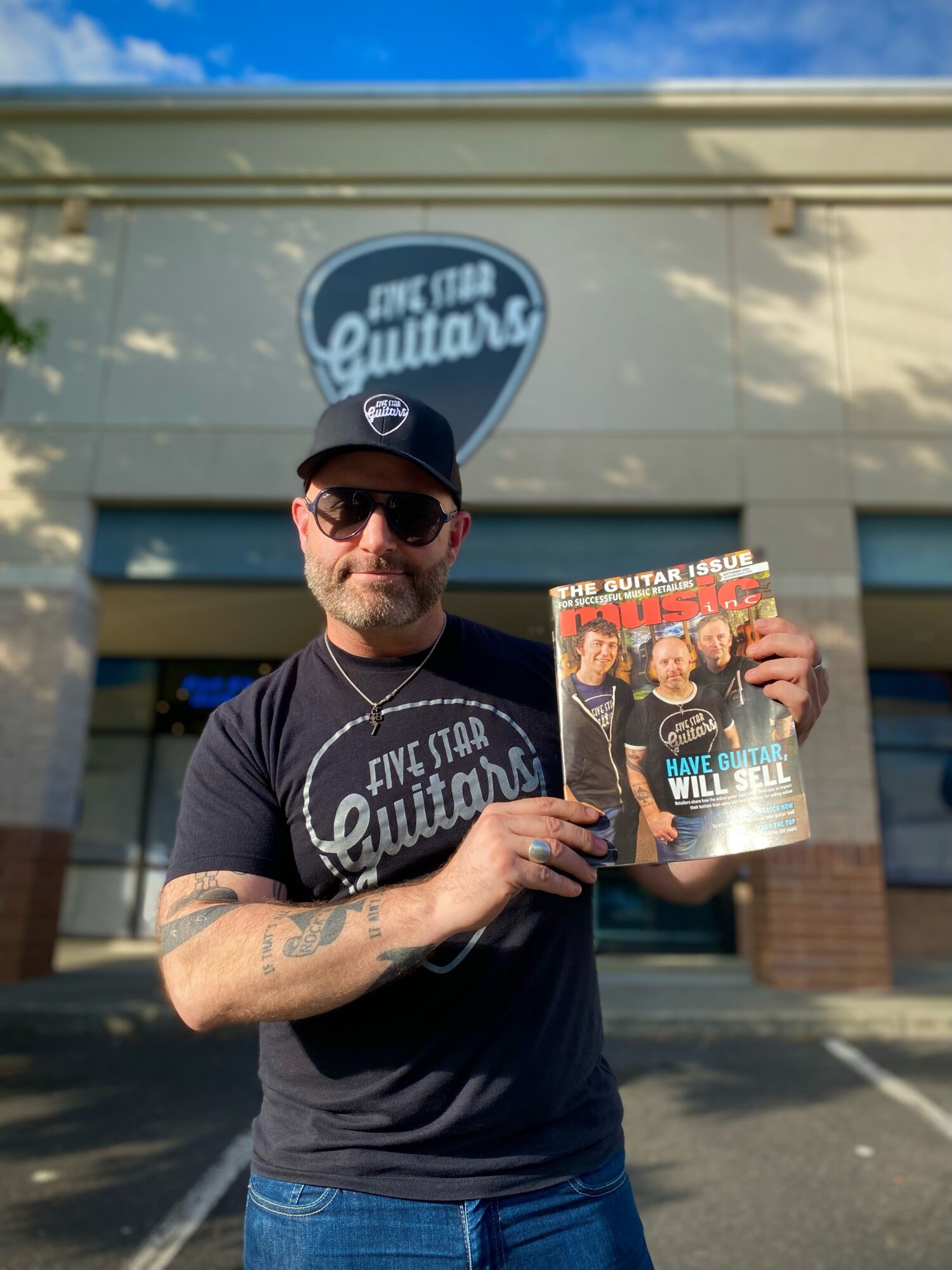
In 2020, Five Star Guitars was named NAMM Dealer of the Year, which is the highest honor in music retail. I’m enormously proud of that recognition, but I’m even more proud of what it represents. You don’t build a great reputation in this business with a clever slogan. You build it one interaction at a time, over years, with people who have a choice about where to spend their money and decide to come back to you.
And that’s ultimately what I want people to know about Five Star Guitars.
Yes, we have some really cool guitars. You can absolutely come in and geek out with us about vintage-style pickups, tube amps, fretwork, pedals or why you clearly need one more guitar.
But what we’re really trying to build is a place where music happens.
It’s where someone buys their first instrument. Where a songwriter finds the guitar that inspires the next song. Where a touring musician gets an instrument ready for the road. Where a kid discovers they can make music. Where a teacher builds a career. Where an employee turns a passion for gear into a profession. And where musicians can walk through the door and know they’re among people who understand why any of this matters.
We sell musical instruments, but what we’re really in the business of supporting is musicians.
That distinction has guided Five Star for a long time, and it’s probably the thing I’m most proud of.
We’d be interested to hear your thoughts on luck and what role, if any, you feel it’s played for you?
Luck has absolutely played a role in my life and career. I think anyone who says otherwise probably isn’t being completely honest with themselves.
I’ve been incredibly fortunate to meet the right people at the right times. Finding Five Star Guitars was lucky. I was a musician with a business degree, teaching guitar and trying to figure out how those different pieces of my life might fit together. I happened to find a place where music, education, business and my fascination with music gear all intersected. At the time, it was a job. Looking back, it was the beginning of a career I couldn’t have planned.
I was also lucky to work alongside people who became friends, partners and mentors. Eventually, my partners and I were given the opportunity to buy the company. That opportunity could easily never have happened. The timing had to be right, the relationships had to be there, and someone had to trust us enough to hand over something they had spent years building.
But I also believe there’s a relationship between luck and preparation.
When the opportunity to buy Five Star came along, I had a business education, years of experience inside the company, a background in teaching, experience running my band like a small business, and a decade of relationships within the music community. None of those things guaranteed an opportunity would come along, but they helped me recognize it and gave me the confidence to say yes when it did.
I’ve had bad luck too. Every business owner has. Economic downturns, unexpected personnel changes, products that don’t sell the way you thought they would, supply-chain disruptions, a global pandemic. Sometimes you can make a thoughtful decision for all the right reasons and circumstances still go against you.
That has taught me not to confuse a good outcome with a good decision, or a bad outcome with a bad one. You make the best decision you can with the information you have, then pay attention to what happens and adjust.
Music has probably shaped the way I think about this too. You can prepare, rehearse and have great players, and something unexpected will still happen at the gig. Sometimes the unexpected thing ruins the plan. Sometimes it becomes the best moment of the night. The skill is learning to recognize which one you’re dealing with and respond accordingly.
The older I get, the more I think good luck often arrives disguised as a person. A teacher who takes you seriously. Someone who gives you a job. A customer who tells a friend about you. A manufacturer who takes a chance on your store. An employee who brings something to the business you couldn’t have created yourself. A partner who sees a problem differently than you do.
I’ve had a lot of those people in my life.
So yes, I’ve worked hard, taken risks and made plenty of sacrifices, and I’m proud of what we’ve built. But I would never pretend I did it alone or that every outcome was simply the result of some brilliant plan.
I’ve been lucky.
The responsibility, I think, is to recognize that luck when it shows up, do something worthwhile with it, and whenever possible, become part of somebody else’s good luck.
Contact Info:
- Website: https://fivestarguitars.com
- Instagram: https://instagram.com/fivestarguitars
- Facebook: https://facebook.com/FiveStarGuitars
- LinkedIn: https://www.linkedin.com/in/geoff-metts-bb9864b
- Youtube: https://www.youtube.com/channel/UCv7LBaWrRDFCNFBPRGvj9Yg
- Yelp: https://www.yelp.com/biz/five-star-guitars-beaverton-3
- Other: https://www.mettsryancollins.com