


Today we’d like to introduce you to Jams Markovics.
Hi Jams, can you start by introducing yourself? We’d love to learn more about how you got to where you are today?
This is my second career, and not likely my last, to be honest. My mother is a clinical psychologist and my father is a physicist – both with Ph.D.s in their respective fields. I grew up knowing that path, but not really knowing how I could be an artist or musician, which everyone thought I would be. I came out as a lesbian when I was 17 years old, which made me panic about my plans to have biological children with the person I would fall in love with and marry (hopefully). But I also understood that there had been a lot of scientific breakthroughs in medicine, so I wondered if there was a theoretically sound way that two women could have biological babies together considering that each egg has half of the genome in it just like each sperm. So I went on a mission to find out how this might work, or, if not, why it couldn’t work.
I found out in my sophomore year that a lab in England had done some experiments in mice to discover that combining two eggs or the DNA of two sperm implanted into an egg emptied of its DNA did not live beyond a short period of gestation in utero. They discovered that the differences between the gynogenetic or androgenetic embryos that died were complementary – the gynogenetic (DNA from two eggs) embryos lived a little longer than the androgenetic (DNA from two sperm) embryos. The gynogenetic embryos were very large while their extraembryonic tissue (the trophoblast that develops into the placenta) was very small, while the androgenetic embryos and extraembryonic tissues were the opposite, Doing molecular analyses, they discovered the genes that were responsible for these effects were either expressed 2x as much as usual or not at all, and they discovered that it was due to a specific epigenetic phenomenon that they coined “parental imprinting”, which is not the same as “imprinting” in psychology, although I can understand the analogy of the two phenomena. In any case, after I discovered this, I realized that it would be a lot of work and research to overcome this challenge. Although I considered following this path – and there was even a lab at the University of Pittsburgh where I applied for graduate school that was studying it, but due to the fact that the lab moved out of the department where I applied and everyone said that the lab was a toxic environment, I chose to follow a different line of research that also interested me that involved epigenetics – cancer. I also decided that I didn’t want to have an experimental baby, so I probably would never have a bioloigcal baby with the woman I imagined being in love with and marrying.
At the same time that I was getting interested in DNA and epigenetics, I was still very interested in the brain. I had always been interested in the brain as I had always been curious about where thoughts came from and consciousness, although I didn’t always have the words to describe my interest. When I went to college in the 1990s, brain science (and neuroscience in general) was still very rudimentary. The field was still had a very gross and not detailed understanding of how the brain worked, mostly based on human accidents, tumors, or infarcts that cut of large sections of the brain to understand what they did. I always knew that thoughts were probably not located in specific spot in the brain, like a thought being localized to a structure. However, I wanted to know details of how it works – how do we construct who we are and what we think and do in double fist-sized organ in our skulls? Due to this lack of ability to understand the brain at a detailed level as well as the fact that my college (Vassar college) didn’t have a neuroscience department added to the fact that molecular biology was very popular at the time and genomes were being sequenced (like the Human Genome Project as well as the mouse genome, etc.), and my interest in understanding human reproduction, I decided to major in biology.
After college, I eventually ended up in graduate school and earned my doctorate in molecular, cell, developmental, and biochemical biology from the University of Pittsburgh. Then I moved across the country to San Francisco where I held two different postdoctoral positions studying epigenetics in breast cancer then in lung disease (COPD). I then held a third postdoctoral position which was in industry at a biopharmacuetical company studying blood cancers. When that contract ended, however, I was not excited about continuing in science since academia was no longer a viable option due to never having received my own grant funding and I did not feel like industry was a good fit, I decided to take some time to figure out what else I might want to do. This is when my family was going through some challenges, so I moved to my parents’ home in Portland, OR, and learned about neurofeedback from my mother who is a clinical psychologist.
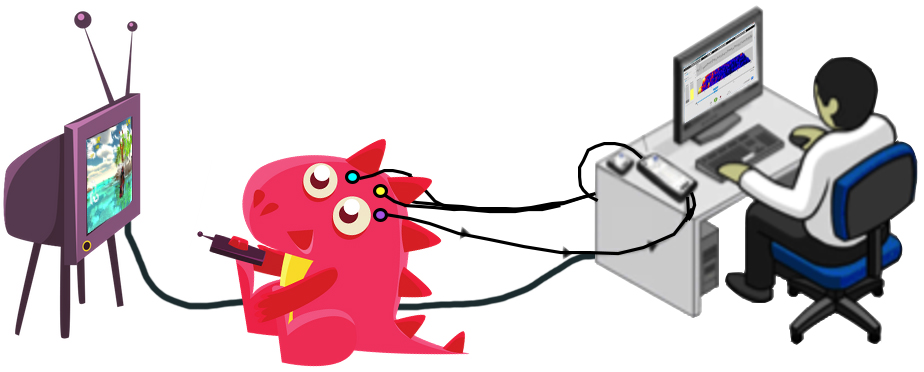
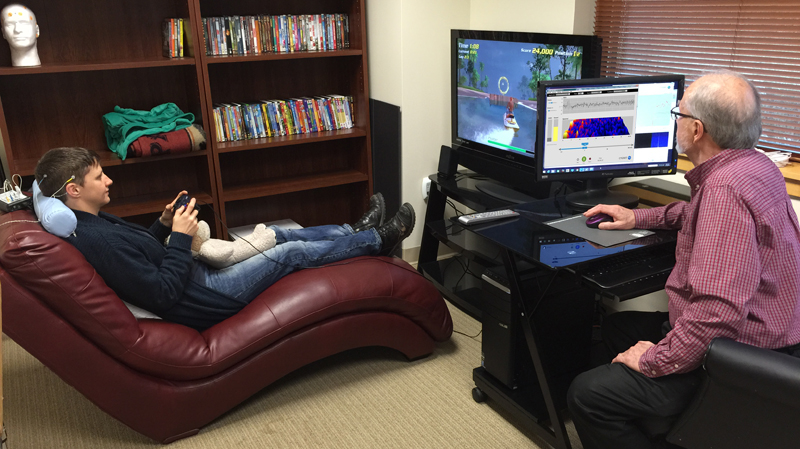
My mother learned about neurofeedback from a presentation by Matt Fleishman at an Oregon Psychology Association conference in 2010. She was impressed by his results in improving ADHD symptoms in children through neurofeedback – things that talk therapy alone could never do. After that presentation, she decided to learn how to provide neurofeedback to her clients and she had my father, who had been a physicist working for Xerox for over 25 years before retiring in 2009. When I moved to Portland in 2014, my father was planning to take some time off so he asked if I wanted to learn how to do neurofeedback so I could help fill in for him while he takes time off. This is how I ended up getting into neurofeedback and starting my business, Rose City Therapeutics, which was initially the three of us – my mother as the clinical director, under whose license my father and I worked as neurofeedback technicians. When the pandemic hit, however, my father had to retire completely due to health concerns, so that left me as the solo neurofeedback practitioner. After I graduated from a second graduate program – this time in mental health counseling – and after I finished my associate hours, I earned my own license so I no longer have to work under my mother’s license, and so now it’s just me in the business, although I still work closely with my mother as we share an office suite and still share many clients.
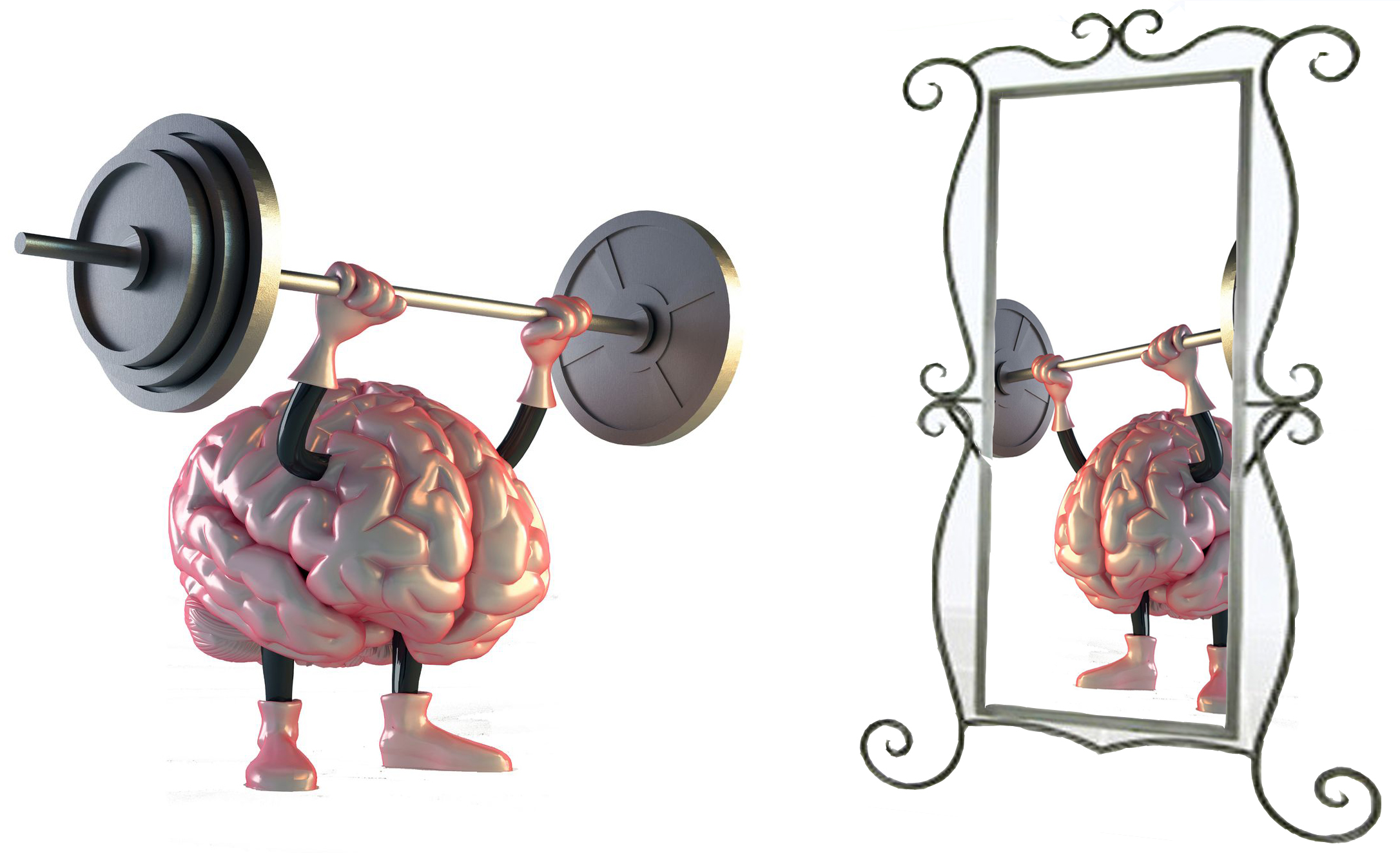
I call myself a neurocounselor since neurofeedback falls within the scope of practice of a neurocounselor, and neurocounseling is a relatively new theoretical framework for counseling that conceptualizes mental health challenges as challenges in brain function and health, using neuroscience-based therapeutic interventions to treat these. challenges. There is still a lot of talk therapy involved in neurocounseling as a form of “top-down processing”, but I also do a lot of other techniques like neurofeedback, cognitive brain training exercises, balance training, etc., somatic or “bottom-up processing”, as well as a lot of neuropsychoeducation about clients’ brains (often derived from their brain maps).
Would you say it’s been a smooth road, and if not what are some of the biggest challenges you’ve faced along the way?
It’s hard to know what all I might have missed out on due to who I am as a genderqueer person, but I know that I missed out on opportunities, There were a few explicit discriminatory actions against me, such as when a supervisor called me an “f-ing dyke” and then I was fired from that job as a youth emergency shelter counselor that I had for a few months after college when I lived in Pittsburgh. I was also rejected for a position at Teach for America that I applied for when I was a senior at Vassar College (with good grades) that I’m pretty sure I would’ve gotten had I not written about how important it would be for the students to have an out lesbian as their teacher. I also may have lost out on an opportunity to have a music internship with a producer who produced albums for Lou Reed had I been more willing to talk about my sex life (it was all this man seemed interested in talking about when I met him). Some of the challenges were due to being queer while other challenges were due to not being a cis man. But the real challenges I had were around focus. I have too many interests, and that is a problem in the economic system in which we live, although it’s definitely changing.
We’ve been impressed with Rose City Therapeutics, but for folks who might not be as familiar, what can you share with them about what you do and what sets you apart from others?
Rose City Therapeutics started as a family-owned and operated neurofeedback clinic, but has since evolved into a neurocounseling solo private practice. Neurocounseling is a relatively new theoretical framework of mental health counseling that uses neuroscience and brain health to conceptualize and treat mental health disorders (I prefer to call them “mental health challenges” to destigmatize them and to help people de-attach to them as identities). I’ve always worked close with my mom, Dr. Carol Markovics, who has expertise working with children and adults with autism, ADHD, and other neurodevelopmental challenges, so I began my career working with them, as well, and have become somewhat of a specialist, myself. In addition, as a trans-masculine, genderqueer person, myself, I love working with other transgender and gender non-conforming folks and others in the LGBTQIA community, of which I have been a part for the last 32 years (I came out as a lesbian when I was 17 years old).
With the expanding field of neurofeedback and counseling, it’s hard to know exactly what sets me and my brand apart, but I hear that people choose me because they believe in my expertise/knowledge/intelligence. Some people choose me as a therapist because of being trans and neurodiverse, myself (although I do not have an official neurodevelopmental diagnosis, I recognize overlapping neurodivergent thinking in myself that many neurodiverse people can identify with). I would like to differentiate myself as someone who can help people of all ages to develop better brain health habits, including gaining more agency in their lives and empowering them to continue to excavate their authentic selves and to find and express their light (which is what fills them with love and joy) throughout their lives.
I am currently in the process of developing an online platform of courses and community of both professionals and lay people who want to improve their brain health and develop the power of their consciousness to reach their greatest potential. I also intend to do some research on brain function in people with mental health challenges as well as the clear connection with physical health such as chronic pain and autonomic dysregulation.
Alright so before we go can you talk to us a bit about how people can work with you, collaborate with you or support you?
I would love support in any of these endeavors: 1) peer support for neurocounseling (neurofeedback and counseling); 2) research (need help finding funding and research colleagues, particularly those who are associated with research institutions); 3) psychiatrists and neurologists who are interested in neurofeedback and quantitative EEG [QEEG] brain mapping and event-related potentials [ERPs]; 4) anyone who is interested in anything that I have described that I do and has ideas of what they would like to do with me that I have not explicitly outlined here.
Pricing:
- $145/neurofeedback and/or counseling session
- $600/brain map
Contact Info:
- Website: https://rosecitytherapeutics.com
- Facebook: https://www.facebook.com/RoseCityTherapeutics
- LinkedIn: https://www.linkedin.com/in/jams-markovics-ph-d/
- Youtube: https://www.youtube.com/@rosecitytherapeutics9073
- Yelp: https://yelp.com/biz/rose-city-therapeutics-portland