


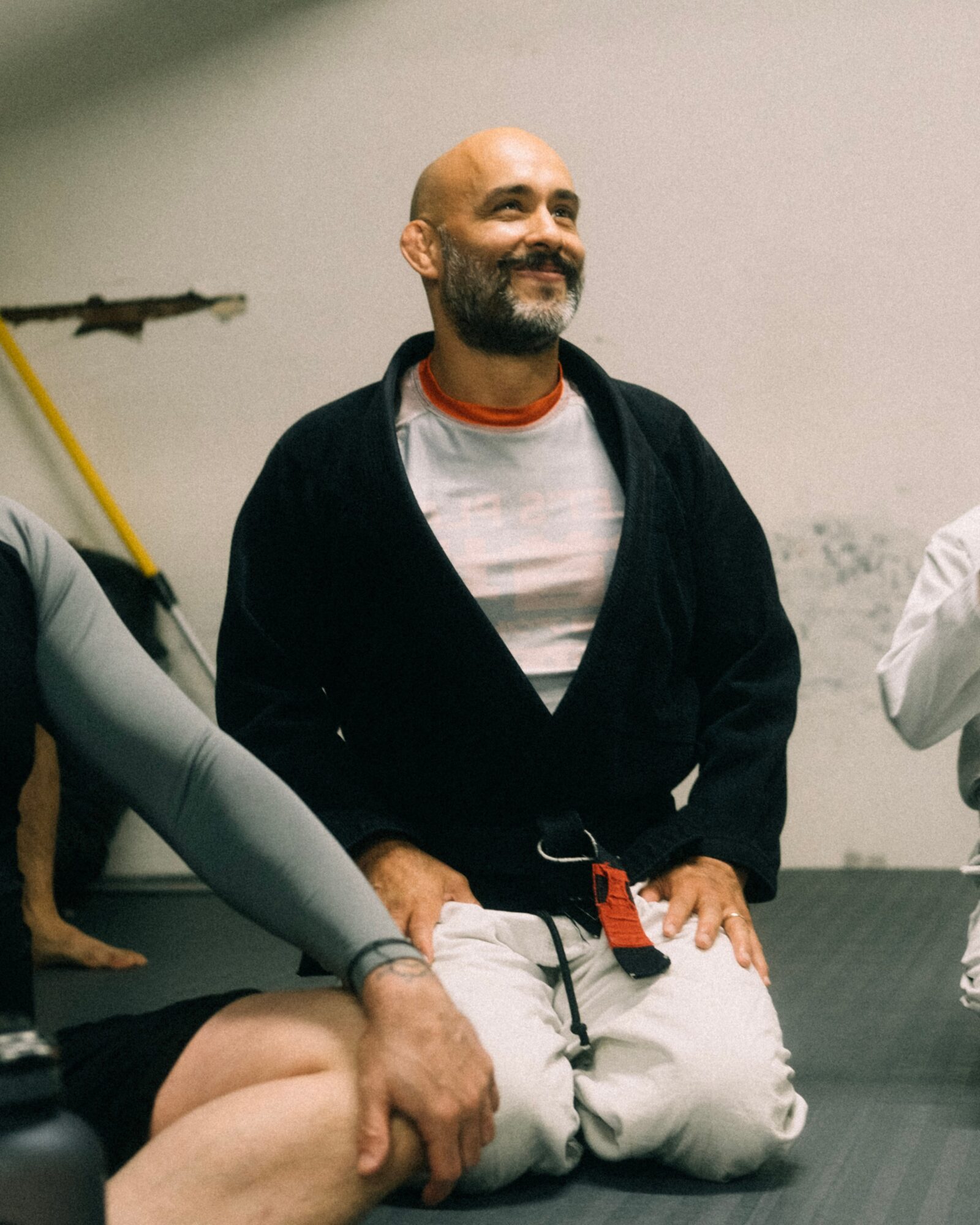
Today we’d like to introduce you to Aaron Milam.
Hi Aaron, please kick things off for us with an introduction to yourself and your story.
The Ladder I’m Still Standing On
Before jiu jitsu became my work, I was a student of philosophy and intended to go into academia. I earned a bachelor’s and a master’s degree in philosophy, and somewhere along the way the goal changed, though I never really stopped studying. Jiu jitsu became a way for me to explore some of those philosophical questions I found important, about self and value, about growth and understanding.
I should say at the start that I may be telling this story backwards. It is easy to look at a long stretch of life and find a thread that wasn’t visible while you were living it. Please take what follows as my best attempt to make sense of things, rather than as a finished account.
Where I Came From
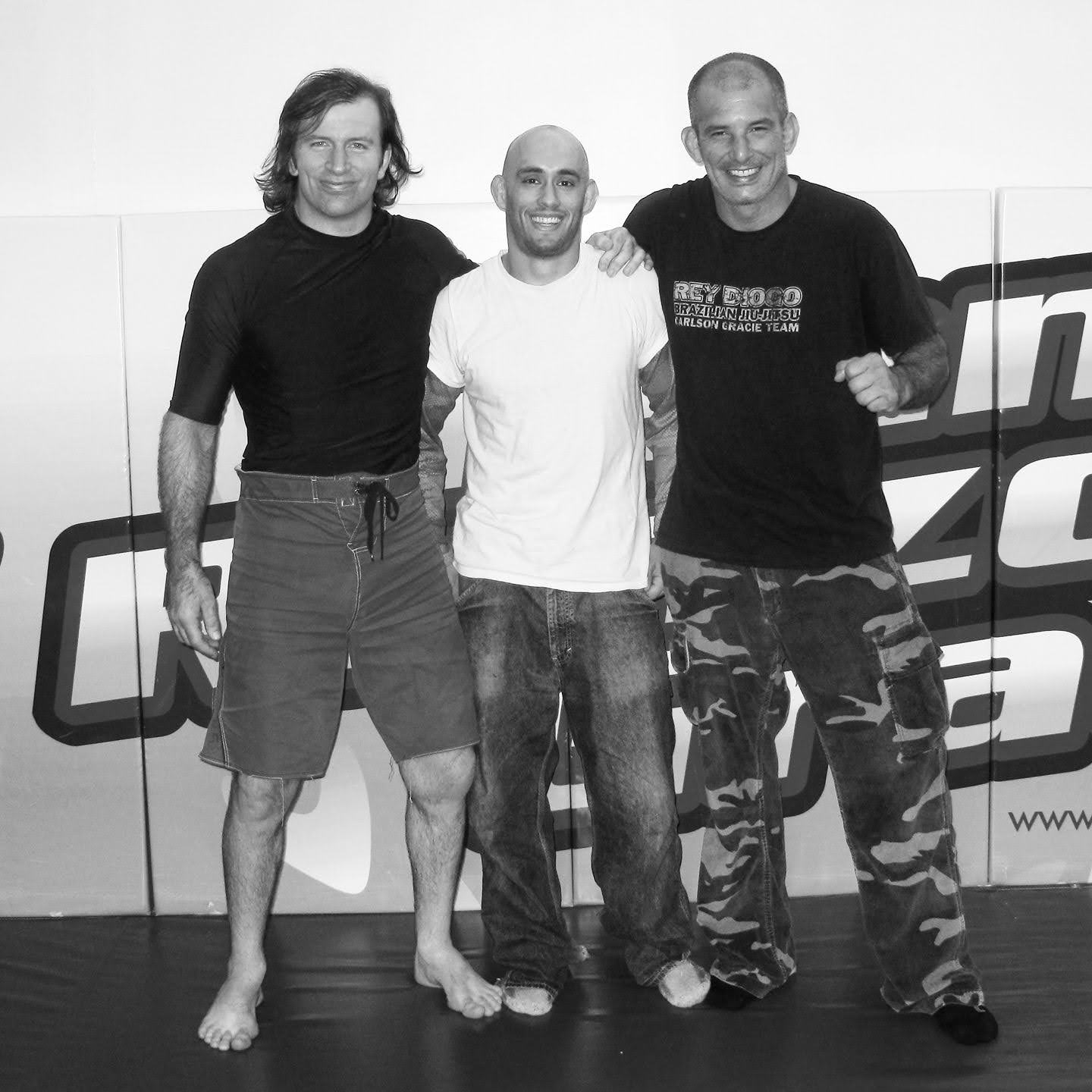
I grew up in martial arts: judo, kendo, kung fu, boxing, and kickboxing. Twenty-six years ago, in Los Angeles, I started jiu jitsu under Rey Diogo on the Carlson Gracie team. Rey gave me my purple belt.
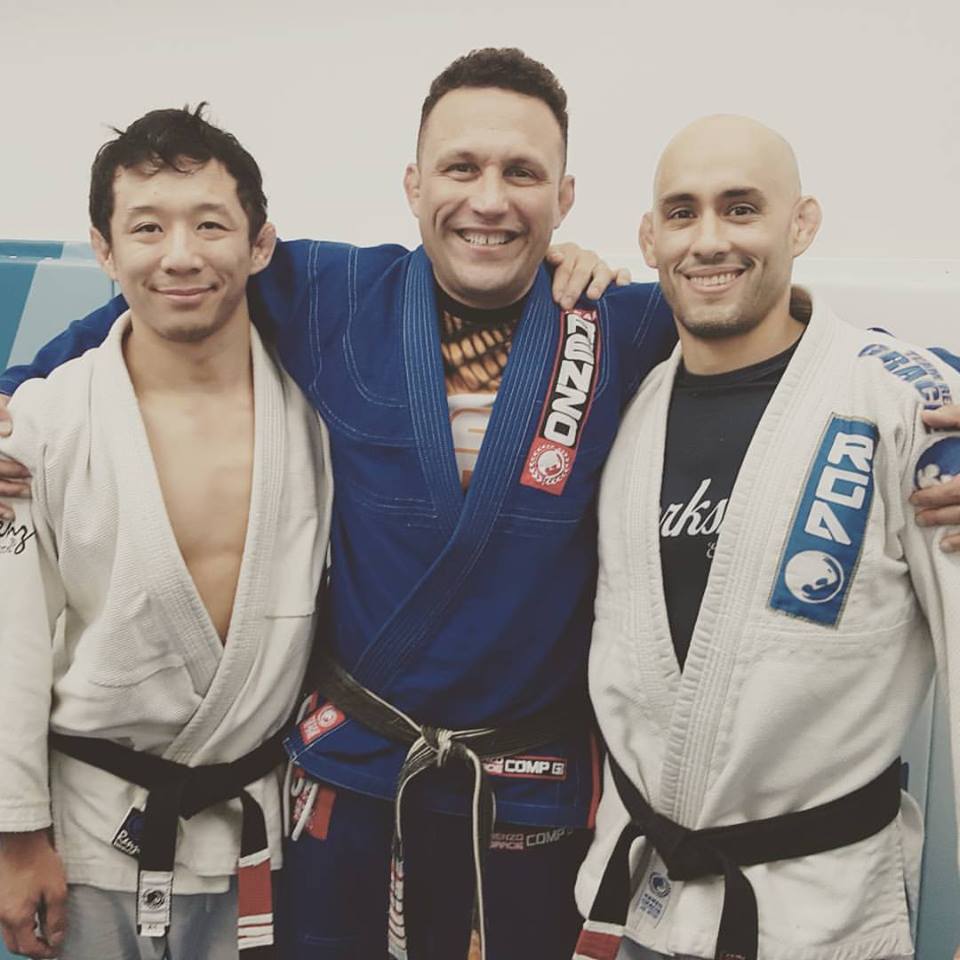
I then took a year away from training to work on sailboats on the East Coast. After that, I was accepted to study philosophy at Stony Brook University and moved to New York. I began training with John Danaher at Renzo Gracie Academy and, after about a year, left Stony Brook to train full time. John awarded me my black belt in 2008.
Living in New York, from 2005 to 2013, I made my living teaching jiu jitsu at a school Workshop Jiu Jitsu. In 2013, after my son was born, I moved to Portland and opened a school here under the Renzo Gracie name, out of respect for my teammates and the years I had trained there, with Workshop Jiu Jitsu as a co-brand.
Over the years I taught, competed internationally in Judo and Jiu Jitsu, and, with varying degrees of success, continued trying to work out what this practice was for.
What the Mats Gave Me
Jiu jitsu can give you a lot: health, purpose, intellectual stimulation, accomplishment in sport, community, experiences of creativity and beauty.
Over the years there were moments in training when that gap between intending something and doing that thing seemed to close, maybe even vanish. Many people might call it a flow state, but all the literature I have read on it doesn’t quite capture the experience of these moments or satisfy my curiosity about them. I can’t explain it very well, but those moments stand out as some of the most valuable parts of the practice, as rare and ephemeral transformative experiences that continue to drive me to understand them. They are the few pearls that this whole practice has been for, a few glimpses at a mode of being beyond our normal patterns of experience.
These things gave me new philosophical questions, arived at through my body, with no real path to answer them.
I have long thought of the movement and decision-making in jiu jitsu as primarily an aesthetic practice. A long practice is an invitation to pay attention, to your movements, your grips, your intentions, and to the reactions you receive. Over time, you learn to perceive more broadly. Your senses grow, your ability to experience and make judgments changes. You learn to appreciate different types of beauty than you could perceive before your practice. And through this, you learn a different type of authenticity.
I’ve also learned to distrust the feeling of having understood something. Vivid experience can persuade us that we know more than we actually do. I want to hold those experiences loosely.
Beauty from a Machine
Although I chose to pursue philosophy, I was also a student of computer science and kept it as a hobby throughout the years. I returned to the subject after reading an account of the famous 2016 Go match between Lee Sedol and AlphaGo.
One moment in particular stayed with me. AlphaGo’s move 37 was so strange that professional players initially assumed it was a mistake. Fan Hui, a Go champion who had himself lost to AlphaGo several months earlier, eventually described the move as “beautiful”.
I wanted to experience and understand that.
My interest in CS was mostly in game development, particularly in game AI. I had never considered that the state machines and behavior trees that I played with could produce something that evoked the kind of experience that Fan Hui described, that something could emerge from a system in a way that is not just unexpected, but to be considered a source of beauty precisely because of its non-human origin.
I returned to formal study and eventually completed a master’s degree in computer science. To me, this felt like just another angle of trying to understand another facet of the same problem: what does it mean to encounter something emergent, something that moves you before you can explain exactly why? What can we learn from these experiences, and how can we live our lives to experience them more frequently.
A Dead End, and a Year Away
A few years ago, jiu jitsu stopped feeling valuable to me. I felt I had reached a dead end.
The injuries that come with age and years of training made the old way harder to sustain, and the culture of the sport had developed in ways I couldn’t follow. I would rather say what I’m for than what I’m against. Jiu jitsu can be a sport and nothing more, but that seemed like a shallower thing than what had originally drawn me to it, and a shallower thing than what I am trying to get from it.
So I put it down.
For a little more than a year, I taught computer science and robotics at a local high school. It was a good break, and it changed the way I think about teaching.
Learning to program and learning jiu jitsu have a similar shape. There is vocabulary and syntax at first, followed by a creative stage of trial and error. There is a process of overcoming ego and perfectionism as you learn that mistakes are an important part of the process and have to become normalized.
What surprised me was how different the experience felt because nothing about programming was somatic. That difference made me think harder about the different ways people learn and about what a teacher can actually do to help. I think this was also the main catalyst that brought me back to the mats, for better or worse, so many of my insights and goals are somatic. Though working in computer science was rewarding and interesting, this tack did not feel like it would get me closer to understanding those moments and to that greater thing that I had seen as the proper goal of practice.
An Old Image
Ludwig Wittgenstein ended his first book with an image: the reader who has understood it must throw away the ladder after climbing it.
Decades later, he wrote a very different book that rejected much of the first. In the preface, he says that his new thoughts could only be seen properly against the background of his old way of thinking. He did not treat his earlier work simply as a mistake to be erased. It was the ground from which he could see differently.
That gives me some peace about my own changes. The years of drilling and competing may have been my ladder. I would like to be able to say that without disowning the person who climbed it.
I should also say where the comparison fails though. As I understand it, Wittgenstein’s path went from rigor toward silence about what cannot be said, and then back toward ordinary practice and the public life of language. Mine has gone from doing toward something inward and then back toward doing.
His later work was also suspicious of the idea that we have private inner states that only we can know. I’m not sure my own experiences survive that suspicion. I know they changed me, and for now I am content to make the smaller claim: they changed the way I move and the way I pay attention. They have expanded my senses of perception, and opened up new horizons of beauty and value.
There’s a saying that first the mountains are mountains, then they are not, and then they are again. This is a horrible paraphrase from Dogen.
Returning to the mats, I can’t tell which stage I’m in, but the journey feels similar.
Coming Back
I’m returning to teaching full time and restarting the practice I put down.
I’ve come to believe in doing fewer things more deeply. I want to give students a small working set of movements, enough that they can begin solving real problems in their first weeks rather than spending months memorizing a catalogue of fun and fancy things, or endlessly chasing the meta.
I’ll present my own style as one answer among many and encourage students to find theirs.
I’m also trying not to make those memorable experiences the goal. I suspect that chasing them gets in the way, and I’m not sure I’ll succeed at resisting the temptation.
I’m trying not to be in a hurry.
Thanks – so what else should our readers know about your work and what you’re currently focused on?
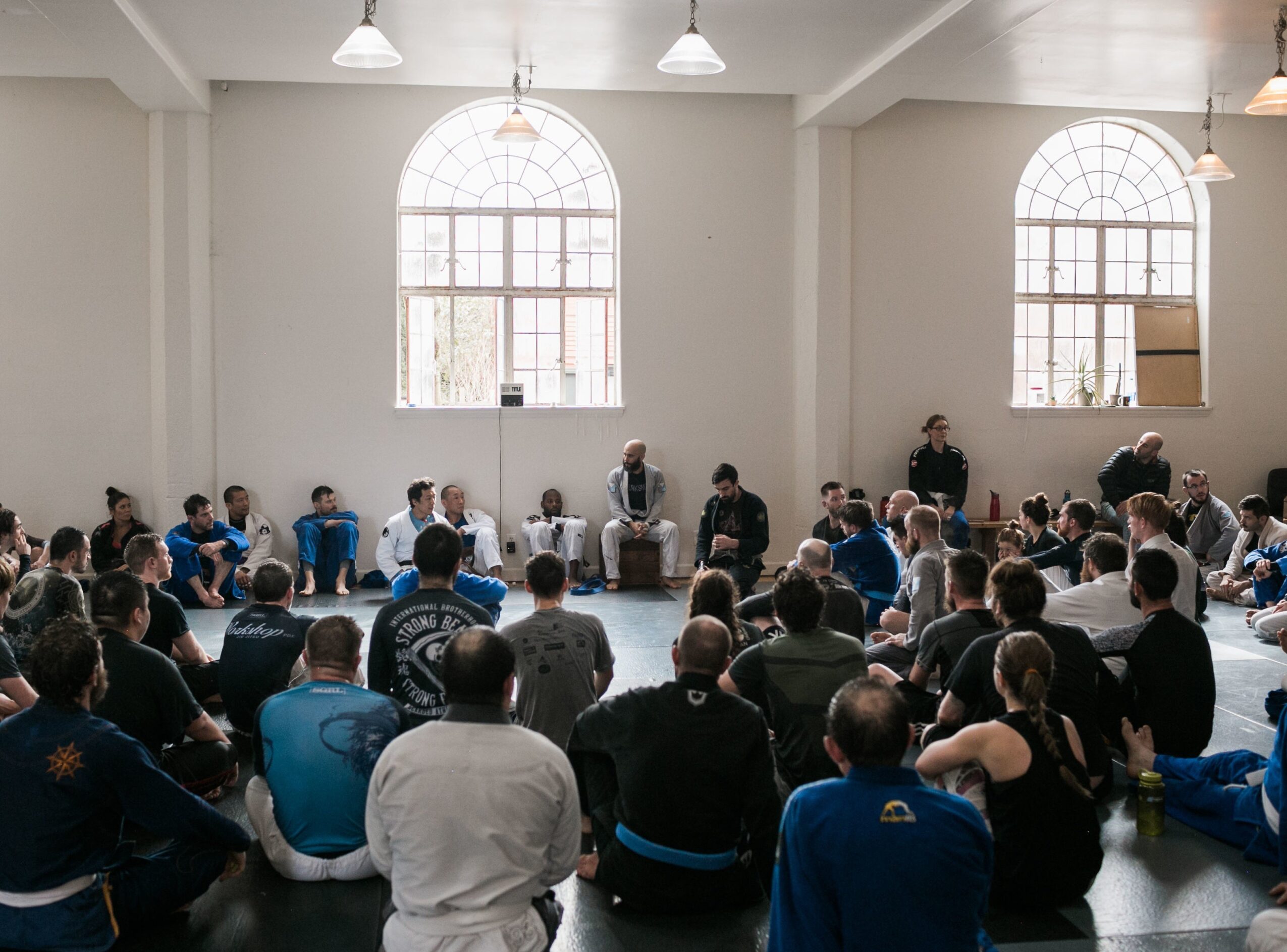
My professional life has largely been spent teaching jiu jitsu. I have been training for twenty-six years and teaching for more than twenty, first in New York and, since 2013, in Portland. I run a Brazilian jiu jitsu academy, where I teach adults and children and spend most of my time thinking about how people learn, how skills develop, and what makes a practice worth sustaining over a lifetime.
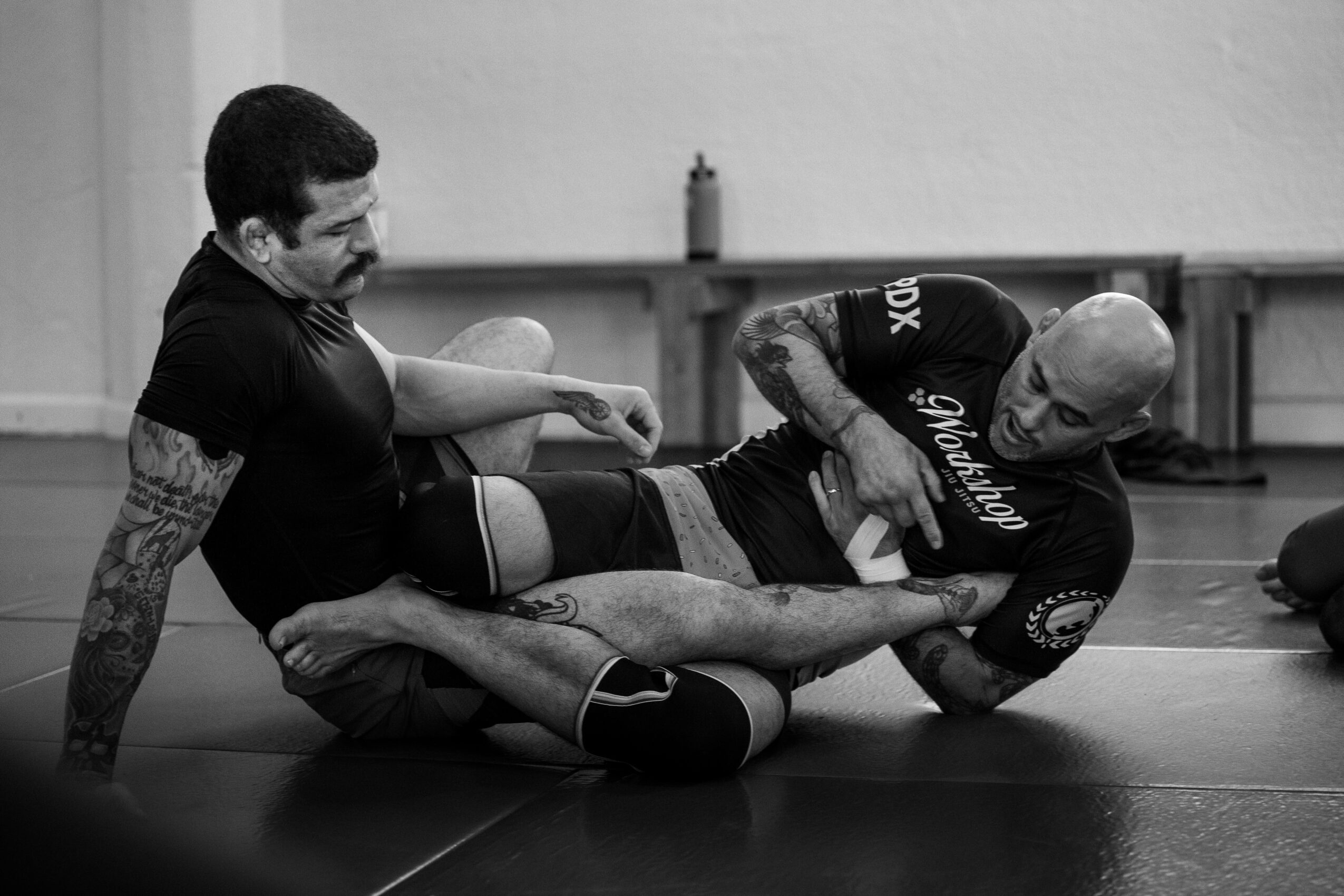
I don’t think of my work primarily as teaching techniques. Jiu jitsu has an enormous vocabulary, and it is easy for instruction to become a matter of accumulating more and more information. I’m increasingly interested in the opposite: giving people a small set of useful ideas and movements and letting them learn how to solve problems with them. The goal isn’t to reproduce my,or anybody else’s movements exactly. It is to develop enough understanding that students can eventually make the practice their own.
That comes partly from my own experience. I have spent years training with people with very different approaches, competing, teaching, making mistakes, getting injured, changing how I move, and eventually questioning some of the assumptions I had built my teaching around. I think that experience has made me less interested in presenting jiu jitsu as objectively correct and more interested in it as a craft that a person develops over time, and as a mirror for a person to explore themselves.
What I’m most proud of is probably not any particular competition result or rank. It is the number of people I’ve had the opportunity to teach and the fact that some of them have stayed with the practice for years and developed truly beautiful and authentic jiu jitsu. There is something meaningful about watching a person begin with no idea what they’re doing, gradually become capable, and eventually develop a way of moving and thinking that is recognizably their own.
I also think my background outside jiu jitsu has shaped my teaching. All of those things I have done and studied have brought me back to fairly simple ideas about practice as a way of paying attention. My job is to create the conditions for that attention, to give people enough structure to begin, enough difficulty to make the work meaningful, and enough freedom that something personal can eventually emerge from it.
That is what I’m trying to build now.
If we knew you growing up, how would we have described you?
I was probably a somewhat restless and curious kid. I was interested in a lot of things, but I had trouble staying interested in things that felt too prescribed. I wanted to know how things worked, and I was usually more interested in figuring something out for myself than in being told the answer.
A lot of my early interests were pretty ordinary for a kid of my generation, although I took them fairly seriously. I watched a lot of kung fu movies, read science fiction and fantasy, played video games, and spent a lot of time watching anime. I wanted to be a ninja, or even better to be like Goku and have some kind of superhuman ability. I was fascinated by the idea that a person could develop abilities that seemed impossible, and that there might be some hidden depth to what a human being could do.
I got into some trouble growing up, though nothing particularly serious. I didn’t take school especially seriously, either. I was much more engaged by things I had chosen for myself, and it wasn’t until I got to college that I really became a serious student.
Sports were part of my life, I played soccer, but martial arts were always the bigger thing. I tried judo, kendo, kung fu, boxing, kickboxing, and eventually jiu jitsu. I was a natural athlete and generally pretty good at physical things, so martial arts gave me something school didn’t: a structure that I found meaningful. There were standards, discipline, consequences, and a clear relationship between the work you put in and what you became capable of doing. You could see yourself changing.
I think that mattered to me more than I understood at the time. Martial arts gave my restlessness somewhere to go. There was always something difficult to work on, and because I was good at it, I also got the experience of discovering that effort could turn into competence. You could start out unable to do something and, through enough practice, make it part of yourself.
I always enjoyed reading. Science fiction and fantasy gave me a way to think about different kinds of worlds and different possibilities for being human. As I got older, that curiosity gradually became more philosophical. I became interested not just in imagined possibilities but in questions about what is real, what it means to understand something, what makes a life meaningful, and how much of what we think we know can actually be trusted. I eventually came to appreciate philosophy as a discipline for staying with those questions rather than rushing toward an answer. It’s an easy way to constantly be running thought experiments in your head.
I think I was more comfortable with a difficult problem than with a simple answer. That is probably still true of me. I have a tendency to keep asking questions after everyone else has decided the question has been settled, which is probably a useful trait in some circumstances and a good way to make more problems for yourself in others. When I look back now, the continuity is easier to see than it was at the time. I really feel like I’ve just always been doing the same thing.
Contact Info:
- Website: https://www.renzogracieportland.com/
- Instagram: https://www.instagram.com/rgapdx/