



Today we’d like to introduce you to Aidan Jenkins.
Hi Aidan, we’d love for you to start by introducing yourself.
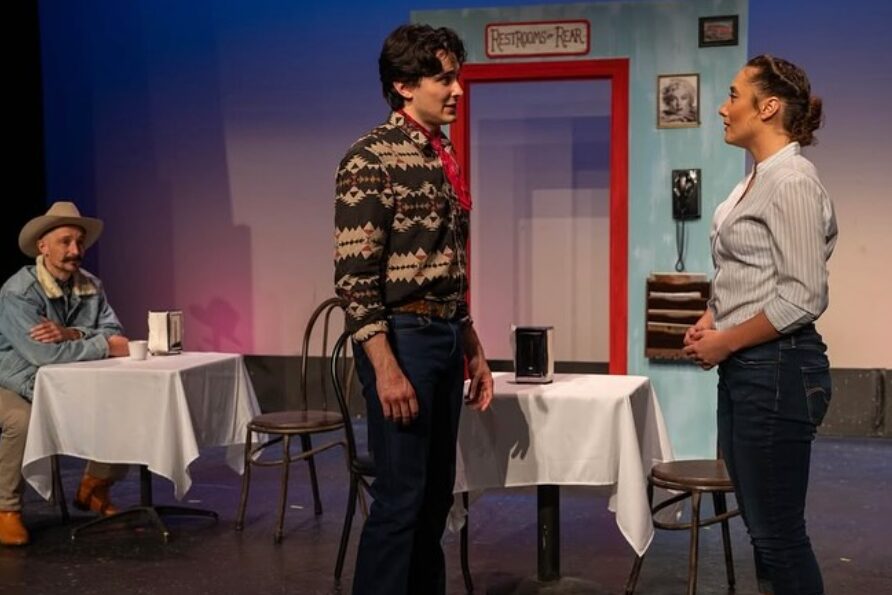
I fell in love with performing during my fifth-grade play about colonization, where I played Sir Francis Drake. I thought the script could use some touch-ups, so I ended up rewriting my lines to make them funnier. I made my parents buy all these crazy costume pieces and did my best British accent. It was the first time I felt like I could do something that other people liked. I continued to do theatre in my teenage years and decided I wanted to make performing a career. A director I grew up working with recommended I attend Southern Oregon University’s theatre program. I have fallen in love with Ashland while living here: the atmosphere, the culture, the artistic world. And despite ongoing financial struggles within the institution, I managed to graduate with an incredible education at Southern Oregon University. Since then, I have been working steadily in local theatres. I recently had the opportunity to perform in a production of Miss Marple: Murder At The Vicarage at the Oregon Cabaret Theatre, with one of my undergraduate peers, Julia Gibbs, and two of my professors: Jackie Apodaca and Barret O’Brien. I’m grateful for the community I’ve found and the opportunities I’ve had, and I’m very excited to move forward in my career by moving to New York City next year.
We all face challenges, but looking back would you describe it as a relatively smooth road?
Acting is never a smooth road. It is a profession overloaded with talent, underloaded with opportunities, and most actors will never make a living solely through their performing career. The industry is somewhat impossible. It’s paradoxical. You are told that you need to move to the most expensive cities in the world for a chance to maybe make a modest living, and that is not a guarantee. So throughout my time with this art form, I have felt doubtful, pessimistic, and grieving the fact that what I am inherently good at is not very valuable to a capitalist society. But, like any career, a little bit of delusion is needed. You have to believe that you are good enough to make a career out of this to have any chance at it. And the love of the game itself has to be what motivates you, not the traditional markers of success.
As you know, we’re big fans of you and your work. For our readers who might not be as familiar what can you tell them about what you do?
I believe in my ability to hold characters close to me. I have always had an intense imagination, and it comes with a level of empathy that, when I can harness it, allows me to find at least one relevant trait in any character that I deeply relate to. Characters display exaggerated aspects of ourselves. They often have very universal needs that anyone can understand on some level. As an actor, it is my job to portray those needs in story to give people a cathartic experience so they may leave the theatre with a new perspective, or perhaps just having processed something that moves them. I like to think that I have the skill of absorbing into my characters and vice versa. My goal with any production is for people not to recognize me as Aidan when I’m doing my thing.
Are there any important lessons you’ve learned that you can share with us?
I had a voice and speech class that I struggled in during college. One day, the professor stopped me in the middle of the lesson to say, “You have to care about this.” At the time, I froze up and could not continue. I was angry. I thought I was angry with her for giving up on me, but I was angry with myself. For the first time, I was confronted with this barrier to my emotions that I didn’t know I had. This professor made me realize that I blocked who I really was for the sake of being likable and palatable. That little suggestion ended up being one of the most important things I’ve heard in my education, and I decided to care and care and care ever since.
Contact Info:
- Instagram: @aidanjkins