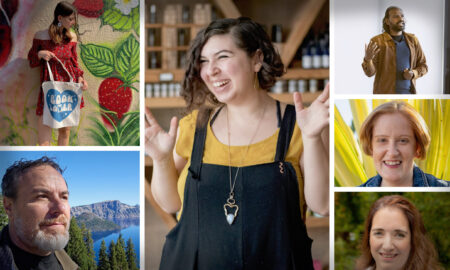




Today we’d like to introduce you to Jess DuBose.
Hi Jess, we’re thrilled to have a chance to learn your story today. So, before we get into specifics, maybe you can briefly walk us through how you got to where you are today?
I took a very winding path to becoming an ADHD coach.
One of the earliest threads started in 2008, when I was studying music education in college. I walked into an education class one day and everything was unusually distracting. Someone was vacuuming in the hallway. People kept sneezing loudly, getting up, throwing things away. Lights were turning on and off. An Aflac duck kept randomly yelling, “AFLAC!” And meanwhile, my professor was moving faster and faster through his slides.
Eventually, I threw my pen down because I could not learn and truly had no idea what was happening.
Then my professor stopped the class and explained that we’d just participated in a simulation of ADHD. He said something that completely reframed my understanding: people with ADHD “..it’s not that they can’t pay attention; It’s that they pay attention to EVERYTHING.”
It was 2008, and nearly everything I’d heard about ADHD up until then was some version of “can’t sit still and can’t pay attention.” I became fascinated by how differently our brains could experience the exact same world.
So I started asking questions.
Over the years, I somehow collected ADHDers everywhere I went—friends, roommates, coworkers, and eventually the person I married. (We’re no longer married, but we’re still friends.) I also worked in leadership at a summer camp where I was surrounded by neurodivergent people and received incredible training around personality, psychology, group dynamics, and how differently people function.
Without realizing it, I spent years learning about ADHD simply by being curious and by being in relationship with people whose brains worked differently than mine.
Meanwhile, my own career was anything but linear.
I graduated with a degree in music education and promptly decided I didn’t want to work in the school system. I spent several years in full-time college ministry, then worked for an electrical distribution company doing everything from data and reporting to selling light fixtures. I waitressed. I taught English in South Korea. I drove for Lyft. I worked at a hotel. I managed pools and aquatics programs.
I spent a lot of those years trying to figure out where I belonged.
Coaching finally entered the picture in 2018. I’d considered becoming a therapist—people had been telling me since high school that I should—but I wasn’t particularly interested in going back to school. Then a friend started telling me about what she was learning through the Hendricks Institute. I kept thinking, “Who are these people? They’re talking about the same shit I talk about.”
I discovered they had a coaching certification beginning a few months later in Ojai, California. I had absolutely no idea how I was going to make it happen. I just knew I needed to.
I started Coaching with Jess later that year.
What I didn’t know was who I was going to coach.
That answer arrived somewhat accidentally after I moved to Oregon in 2020. I was living with two people with ADHD, and they kept asking me, “Jess, when are you going to do your workshop on ADHD?”
My response was essentially, “Why would I do that? I don’t have ADHD.”
I had massive imposter syndrome around the idea. Eventually, a nurse friend gave me the reframe I needed: “Jess, I don’t need to have broken my arm to know how to help you with yours.”
So in 2021, after moving to Portland, I finally held my first ADHD workshop. I brought in a panel of ADHDers because it was important to me that lived experience was represented alongside what I had learned.
This was also before the current explosion of adult ADHD awareness and ADHD coaching. I was definitely becoming more entrepreneurial by then, and I could see there was something meaningful here, but I don’t think I understood yet how much the conversation around adult ADHD was about to expand.
And somewhere in the process of preparing for that workshop, I realized just how much I knew.
More importantly, I watched people have those moments I love most: “Oh, that’s why I do that!” “Oh, that makes sense.” “Oh, maybe I’m not failing at being a person.”
Looking back now, one of the things I find most interesting is that I had been noticing patterns, asking questions, and learning about ADHD for more than a decade before I ever thought to call myself an ADHD coach. I could see something happening before I fully understood what I was seeing.
That was when all the seemingly unrelated pieces of my life started making sense together—the teacher, the coach, the relentlessly curious person who had spent years asking ADHDers questions, and my own journey of learning to trust and accept myself.
Today, my work has grown well beyond helping people “get things done.” I coach adults with ADHD to understand how their brains work, experiment with ways of navigating life that work for them, and build a deeper relationship with themselves rooted in curiosity rather than judgment.
It took me a pretty meandering route to get here.
Turns out, I was gathering puzzle pieces long before I knew what I was building.
Would you say it’s been a smooth road, and if not what are some of the biggest challenges you’ve faced along the way?
Definitely not. But I also don’t think a smooth road is how life works.
I have a tattoo on my right shoulder that says, “Nothing is permanent. Everything will be.” I got it after my divorce, and it represents one of the hardest and most important lessons I’ve had to learn.
My parents went through an incredibly contentious divorce when I was 12. So when I eventually got married, I was adamant that divorce was not in our vocabulary. I thought if I could create enough permanence in my relationships, my finances, my faith, my career—then I could create safety.
For a long time, I approached my spirituality similarly. I followed the rules. I didn’t have sex before marriage. I didn’t get drunk. I didn’t do drugs. I got good grades. I worked hard. Somewhere underneath all of that was an equation I didn’t even realize I was living by: If I do everything right, I’ll be safe.
And then a whole lot of it fell apart anyway.
My marriage ended. My relationship with religion fundamentally changed. My career took more turns than I could count. Money was a struggle for much of my life despite working incredibly hard and trying to be responsible. When I became an entrepreneur, I invested in my business believing it would begin paying for itself much faster than it did. Eventually, I filed for bankruptcy.
I don’t have shame around that. I didn’t know what I didn’t know. And I know a lot more now.
What all of those experiences began dismantling was my belief that I could create safety by controlling the circumstances of my life.
Through my coaching training, I learned about the relationship between safety, approval, and control. When we don’t feel safe or approved of, we often reach for control. Looking back, I could see that pattern everywhere in my own life. I had spent years looking outside myself for enough safety and approval and trying to control the outcome when I couldn’t find it.
But none of us gets to know how everything is going to turn out.
That’s what my tattoo means. “Nothing is permanent” is fairly straightforward. But people sometimes hear “Everything will be” and ask, “Everything will be what?”
Nothing. It will just be.
It isn’t “everything will be okay.” Maybe it will be wonderful. Maybe it will be painful. Maybe I’ll know exactly what to do, and maybe I’ll have absolutely no idea. Relationships will change. Circumstances will change. I will change. Everything gets to exist as it is.
Over time, I’ve learned to create more safety within myself and build a deep sense of self-trust. That doesn’t mean I always feel safe or that I always trust myself. I still get scared. I still feel insecure. I still have moments when I desperately want to know the “right” answer.
The difference is that underneath all of that, I know: I’ve got me.
And when I lose connection to that, I know how to come back to myself.
Interestingly, that has become one of the biggest through-lines between my own life and the work I do with ADHDers. I may not have ADHD, but I know intimately what it’s like to search outside yourself for the right answer, the right system, the right rules, or the thing that will finally make you feel safe and successful.
A huge part of my work now is helping people build something different. We experiment. We get curious. We learn what works and what doesn’t without making those outcomes mean something about our worth. And underneath all of it, we build the kind of relationship with ourselves that can hold us even when life doesn’t go according to plan.
Thanks – so what else should our readers know about Jess DuBose | ADHD Coach?
I coach adults with ADHD, and while people often come to me because they want help getting things done, the work goes much deeper than productivity.
A huge part of my work is helping ADHDers learn to love and accept their ADHD as part of who they are. When we decide certain aspects of ourselves are unacceptable, we start trying to hide them away or overcome them. But we can’t actually fracture ourselves that way. Instead, we can learn to understand ourselves, work with our brains, and build enough self-trust that we aren’t constantly looking outside ourselves for the “right” way to function.
That inner work happens alongside very practical outer work. Sometimes we need to explore the emotions, shame, fear, or resistance underneath something. Other times, you need a loving kick in the ass: get your calendar out, break the project into microsteps, and figure out how we’re actually going to make this happen. Often, we do both.
The environment I create is an important part of that work. Many ADHDers have spent years monitoring themselves—trying not to talk too much, be too scattered, get something wrong, disappoint someone, or otherwise be “too much.” I want people to experience what it’s like to be in a space where they don’t have to do that. We get curious without judgment, and over time, they learn to offer that same curiosity to themselves.
My signature coaching offer is called The Front Porch because that name captures how I want coaching to feel. A front porch is a place where you can just be. You can laugh, cry, talk about almost anything, or work through something difficult. Ultimately, we’re sitting side by side, looking at whatever is in front of you together, getting curious about it, and finding ways to make it easier to navigate. You don’t have to do all of it by yourself.
I also offer more intensive coaching for ADHD entrepreneurs, individual sessions, community and group programs, workshops, trainings, and speaking. Across all of it, the goal is ultimately freedom: helping people understand and trust themselves enough to build lives that work with who they are rather than constantly trying to become someone else.
So maybe we end on discussing what matters most to you and why?
What matters most to me is freedom—the freedom to be fully alive.
I want to live a deeply fulfilling, meaningful life where I love myself, experience enormous joy, play often, create things that excite me, make a lot of money, use my voice, and have a massive ripple effect on the people I encounter.
For a long time, I had ideas about what I was supposed to want and how much space I was allowed to take up. Some of that came from growing up in the church, where I internalized messages about humility that sometimes looked a lot more like making myself smaller. Part of freedom for me has been allowing myself to want what I actually want without immediately judging or minimizing it.
But being fully alive also means being available for the whole human experience. I don’t want a version of spirituality or personal growth that requires me to bypass grief, fear, anger, disappointment, or uncertainty in pursuit of always feeling “good.” I want the highs and the lows. I want to experience my life as it is.
And I want my life to have an impact. I want my voice to be heard. I want the things I create and the way I move through the world to ripple outward in ways I may never fully know or be able to control. I hope some of those ripples help people understand themselves differently, trust themselves more deeply, experience an aha moment, or give themselves permission to live with a little more freedom too.
Ultimately, I want to take up the amount of space my life asks me to take up—and be fully present for all of it.
Pricing:
- I believe in transparent pricing. Current pricing for all available coaching offers and services is listed on my website at jessdubose.com.
Contact Info:
- Website: https://jessdubose.com
- Instagram: https://www.instagram.com/coachingwithjess/
- Facebook: https://www.facebook.com/jessica.marie.dubose
- LinkedIn: https://www.linkedin.com/in/coachingwithjess/
- Youtube: https://www.youtube.com/@jessdubose
- Other: https://www.tiktok.com/@coachingwithjess
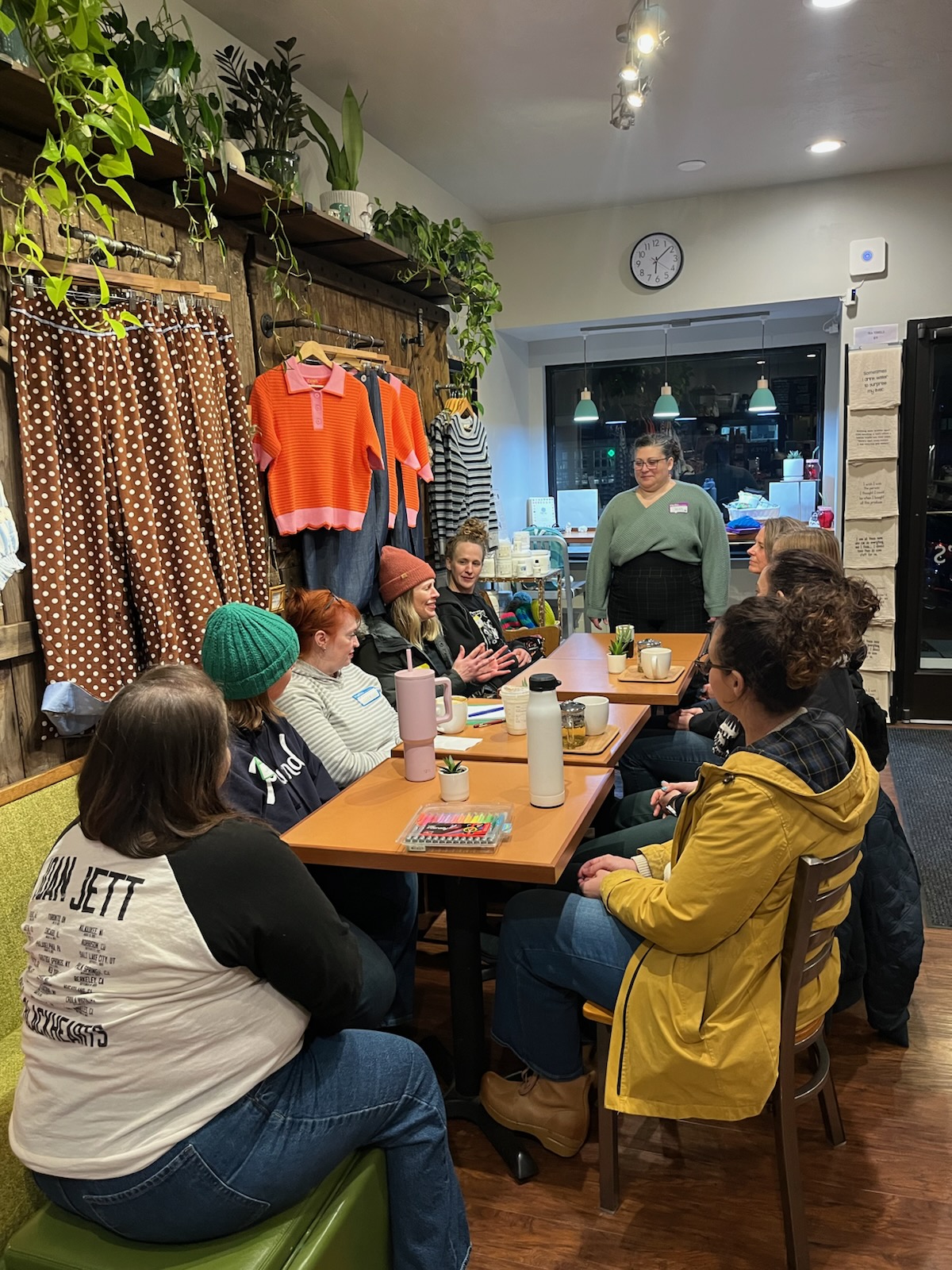
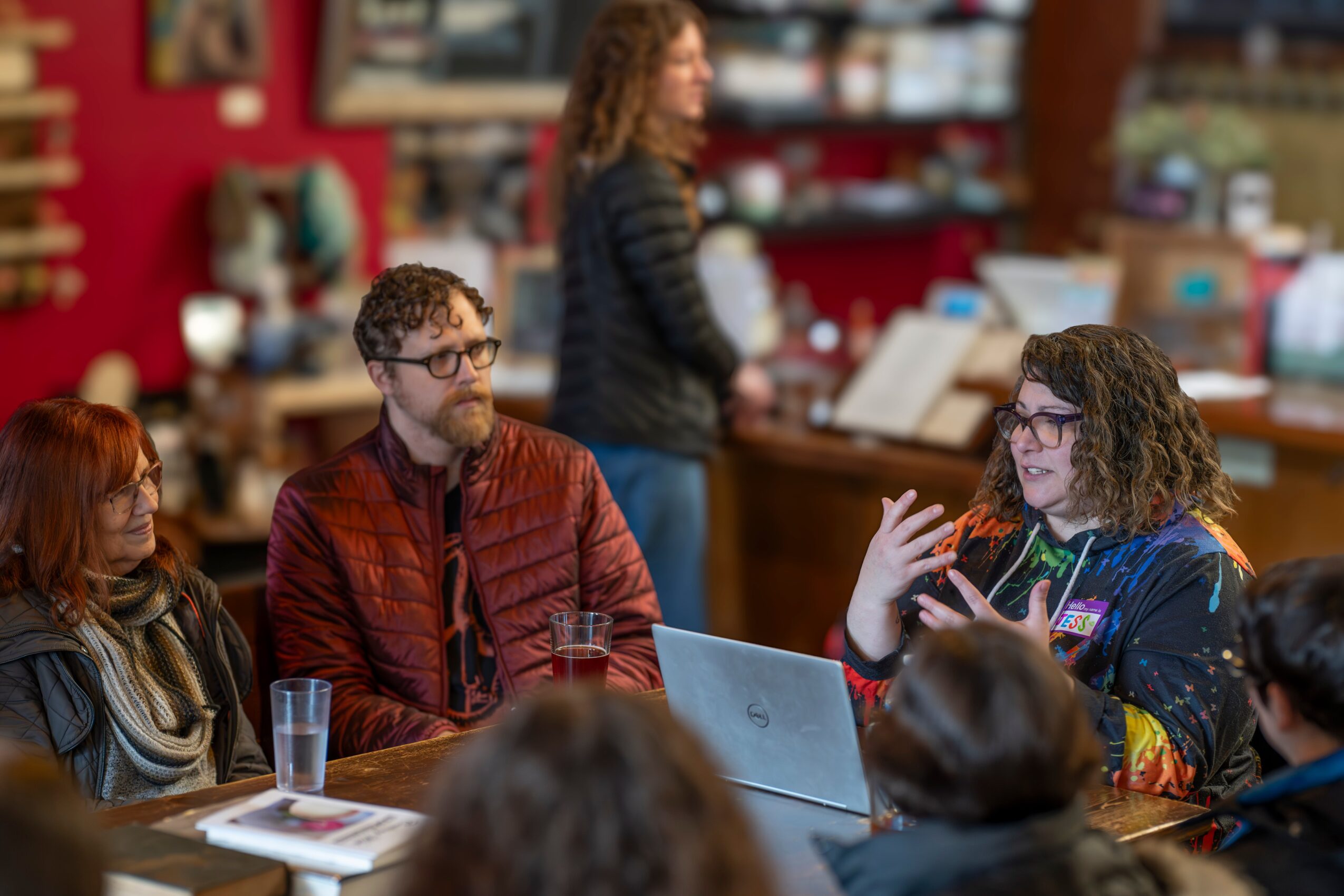


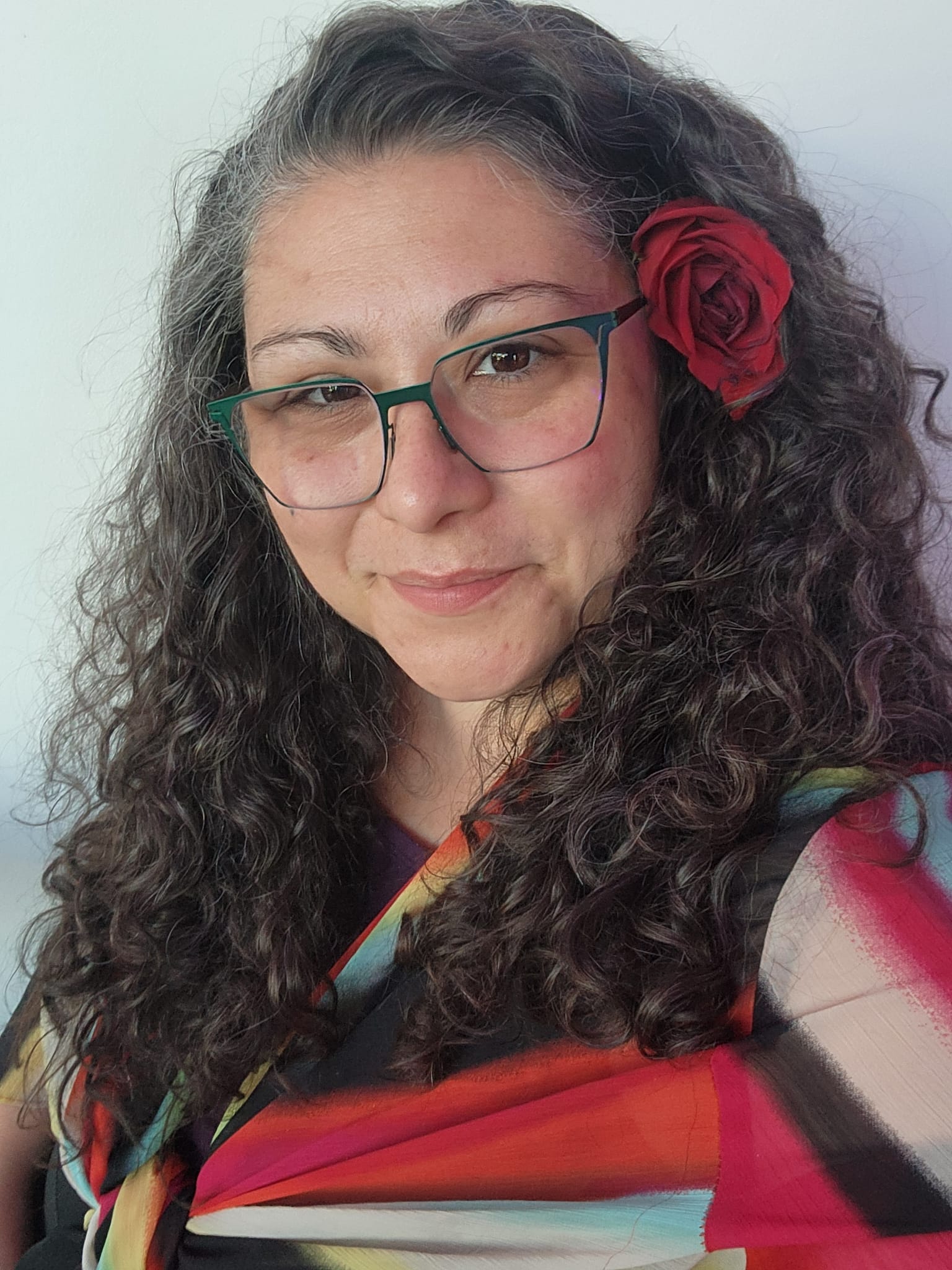
Image Credits
Wiley Image LLC – Image of Jess jumping up and down
Mary Diana – The Front Porch Logo Design
Lexi Lambert – Book Cover of “I Don’t Hate My Ex-Husband”