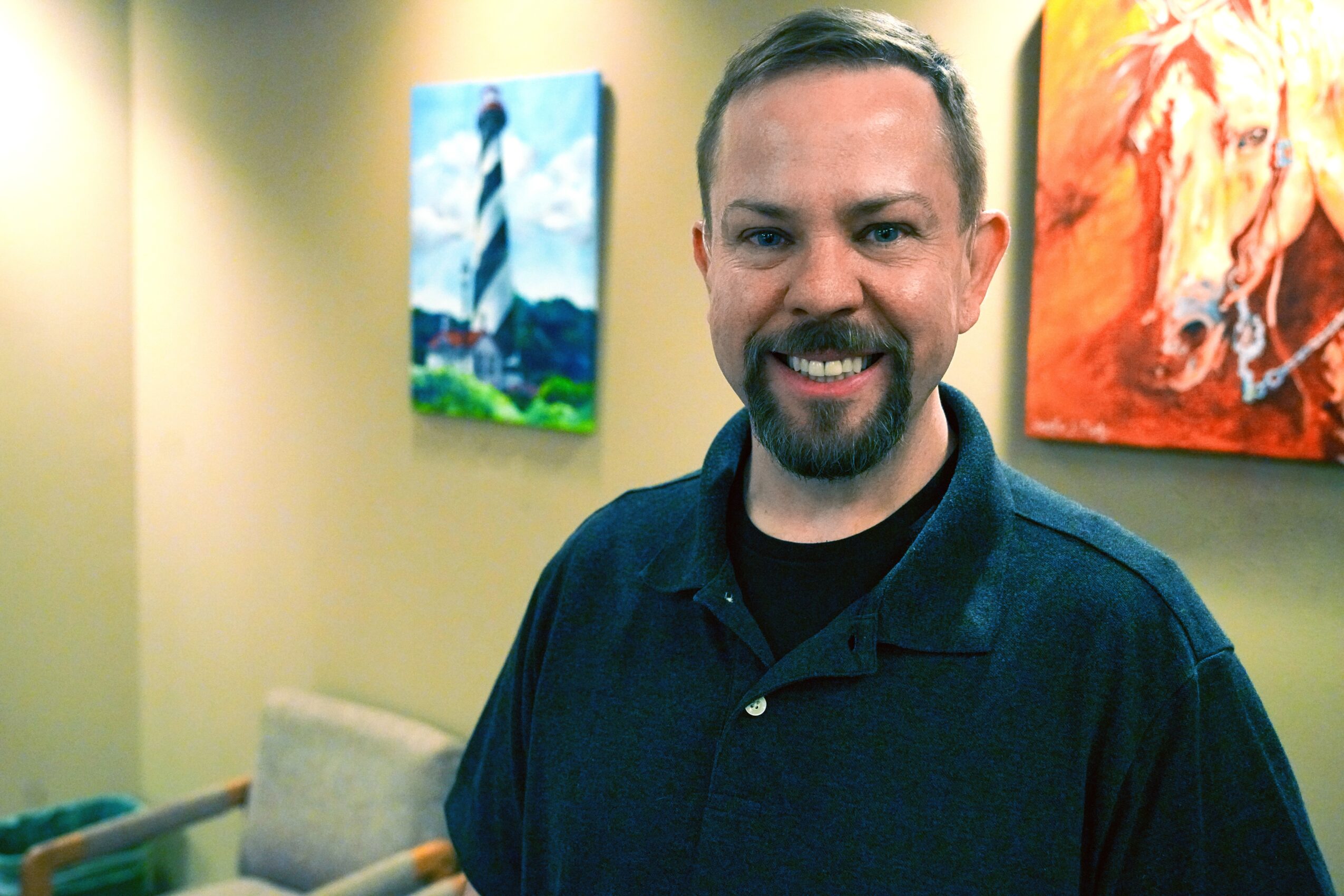



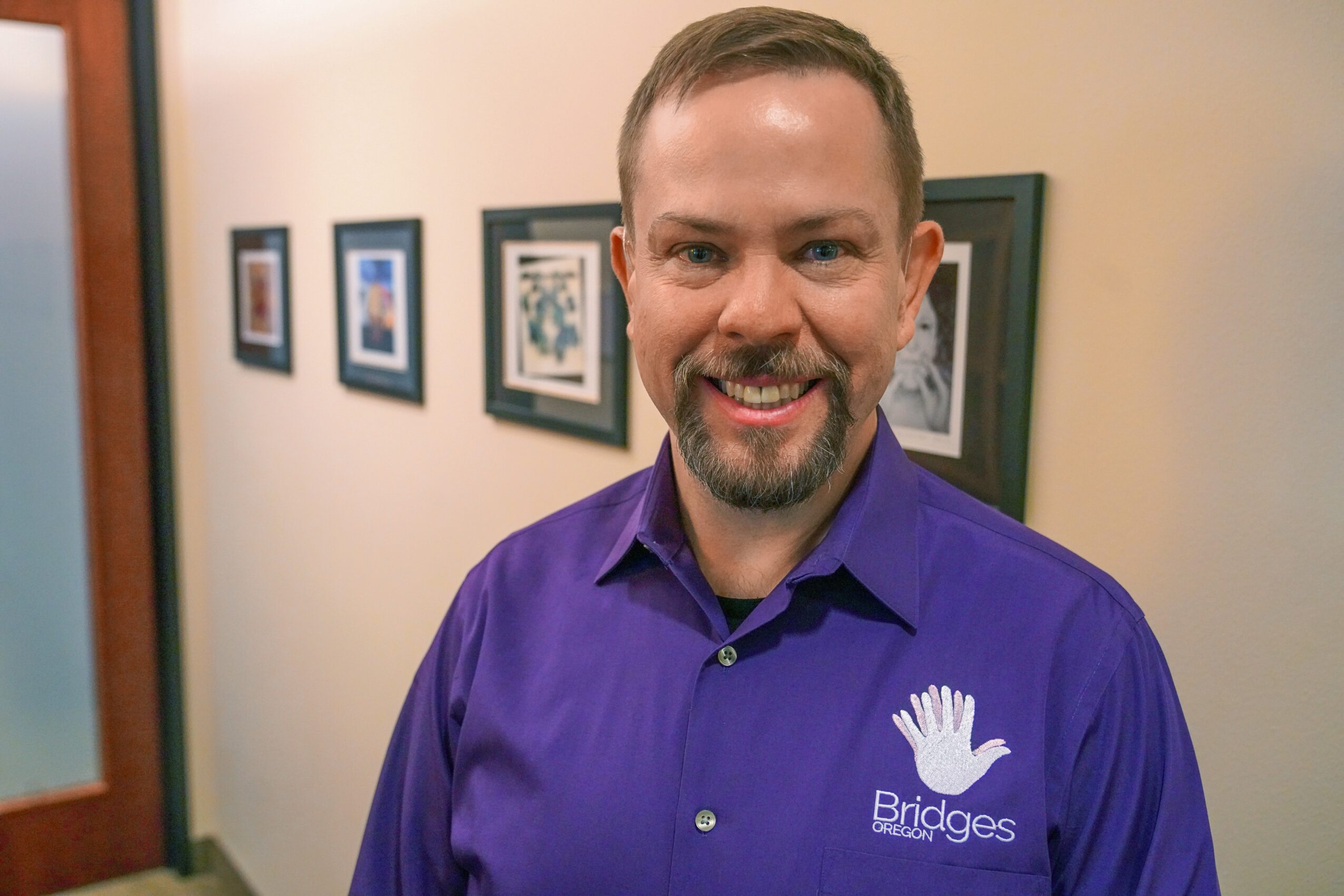
Today we’d like to introduce you to Chad A. Ludwig, MSW, ADAC, CDI.
Alright, so thank you so much for sharing your story and insight with our readers. To kick things off, can you tell us a bit about how you got started?
Source: https://bridgesoregon.org/about/
Before the establishment of Bridges Oregon, many members of the Deaf, DeafBlind, and Hard of Hearing communities faced systemic barriers to accessing essential resources such as legal advocacy, mental health services, and victim support. The lack of culturally competent services left individuals feeling isolated, misunderstood, and unrepresented.
During his tenure as President of the Oregon Association of the Deaf (OAD) from 2013 to 2017, Chad A. Ludwig traveled across the state, meeting individuals from diverse backgrounds within the Deaf community. A common message resonated everywhere he went: “We want services!” He took this to heart, dedicating himself to legislative advocacy and policy reform.
In 2014, Chad began laying the groundwork for systemic change, forming an advisory committee within the Oregon Department of Human Services (ODHS). Over the years, the Deaf, DeafBlind, and Hard of Hearing communities continued to advocate for legislative support, pushing for funding to establish much-needed services. Despite repeated legislative efforts in 2007, 2009, 2015, 2017(#1), 2017(#2), 2019, 2021(#1), and 2021(#2), progress remained slow. In 2015, Oregon legislators allocated funding for a community-based needs assessment, conducted by Western Oregon University and published in December 2016. The findings reinforced what the community already knew: comprehensive services were essential. However, when proposed legislation to address these needs failed in 2017, it became clear that a dedicated nonprofit organization was necessary.
Recognizing the urgency of the situation, Chad founded Bridges Oregon to ensure that the voices of Deaf, DeafBlind, Hard of Hearing, Late-Deafened, and individuals with hearing loss were heard and their needs addressed. Through dedicated advocacy, outreach, and education, Bridges Oregon became the first and only nonprofit of its kind in the state, committed to fostering equality and justice in areas that directly impact these communities.
The journey to establishing Bridges Oregon was not without its challenges. Chad invested immense effort, passion, and personal sacrifice to bring the organization to life. His dedication has been instrumental in shaping the agency into a vital resource for the community. His unwavering leadership, legislative advocacy, and ability to foster relationships with key stakeholders have driven meaningful change.
As Bridges Oregon continues to grow, the organization remains steadfast in its mission to advance accessibility, advocacy, and opportunity. The work is far from over, but the impact is undeniable. Through collective efforts, the Deaf, DeafBlind, and Hard of Hearing communities in Oregon will continue to thrive with pride, authenticity, and an unwavering commitment to equality for all.
Would you say it’s been a smooth road, and if not what are some of the biggest challenges you’ve faced along the way?
Building Bridges Oregon has definitely not been a completely smooth road, but I believe that’s true for most organizations that are trying to create systemic change.
One of the earliest challenges was simply building awareness and understanding of the needs within the Deaf, DeafBlind, and Hard of Hearing communities. Many systems were not designed with language access or cultural access in mind, so a lot of the work has involved educating partners, advocating for equitable policies, and helping people understand why communication access is essential rather than optional.
Another challenge has been sustainable funding. Like many nonprofit organizations, we rely on a combination of grants, contracts, and donations. At times that means navigating uncertainty while still trying to build programs that our community can depend on long-term. Balancing mission, growth, and financial stability is something we constantly work on.
There have also been moments where we’ve had to build infrastructure from the ground up — developing programs, policies, partnerships, and services that didn’t previously exist in Oregon for our communities. That can be slow and sometimes frustrating work, but it’s also incredibly rewarding to see those efforts begin to make a real impact.
At the same time, the challenges have also been what shaped Bridges Oregon into what it is today. They have pushed us to stay community-centered, collaborative, and focused on long-term solutions rather than quick fixes.
Seeing Deaf, DeafBlind, and Hard of Hearing individuals gain better access to information, employment, services, and community connection reminds me why the journey — even with its obstacles — has been worth it.
As you know, we’re big fans of you and your work. For our readers who might not be as familiar what can you tell them about what you do?
My work sits at the intersection of community advocacy, systems change, and building sustainable services for Deaf, DeafBlind, and Hard of Hearing communities. I specialize in identifying gaps in access—whether in healthcare, employment, emergency preparedness, or public services—and then working collaboratively with community members and institutions to create solutions that actually work.
I founded Bridges Oregon in 2017 with the vision of creating a statewide organization that centers the lived experiences of Deaf, DeafBlind, and Hard of Hearing people. Since then, we’ve grown from a small startup effort into a nonprofit that serves communities across Oregon through programs focused on access services, advocacy, employment support, and information equity.
Throughout my career, I’ve worn many hats—social worker, Deaf interpreter, educator, trainer, and nonprofit leader. My background in social work and Deaf community advocacy has helped me approach challenges not just from a service perspective, but from a systems perspective, looking at how policies, institutions, and communication barriers affect people’s lives.
What I’m most proud of is helping build infrastructure that didn’t previously exist in Oregon for our community. Too often, Deaf, DeafBlind, and Hard of Hearing individuals are left navigating systems that were never designed with them in mind. Through Bridges Oregon and other collaborations, we’ve been able to create programs, partnerships, and policy conversations that improve communication access and opportunities for people across the state.
I’m also proud of the role I’ve been able to play as a connector and mobilizer within the community. Much of the work I do involves bringing together community members, government agencies, and service providers to move from conversation into action.
What sets me apart is probably a combination of lived experience and cross-sector leadership. As a Deaf professional who has worked in advocacy, public health, interpreting, and nonprofit leadership for more than two decades, I understand both the community realities and the institutional systems that need to change. That perspective helps me bridge those worlds and focus on practical solutions that improve access and equity.
At the end of the day, the work is about ensuring that Deaf, DeafBlind, and Hard of Hearing people in Oregon have the same access to information, opportunity, and participation as anyone else—and that’s what continues to drive me.
Is there anything else you’d like to share with our readers?
Upcoming with our very first strategic plan draft — https://bridgesoregon.org/community-invitation-help-shape-bridges-oregons-2026-2029-strategic-plan/
One thing I would share is that accessibility and language access are not niche issues — they affect millions of people and shape whether individuals can fully participate in society. When Deaf, DeafBlind, Hard of Hearing, and Late-Deafened people have equitable access to information, communication, and opportunity, entire communities benefit.
At Bridges Oregon, we are entering an exciting new chapter. Our upcoming strategic plan focuses on strengthening the organization so we can responsibly expand our impact across the state. The next few years will focus on stabilizing our systems, strengthening our workforce, and expanding services into underserved areas of Oregon so that more people can access the support and advocacy they deserve.
We know the need is significant. More than one million Oregonians experience some level of hearing loss, and communication access intersects with healthcare, education, employment, emergency preparedness, and justice. Our goal is to help ensure that no one is left behind simply because communication barriers exist.
What gives me hope is the growing awareness that equity must include language access and disability inclusion. I’m grateful to the many community members, advocates, and partners who continue to push this work forward. Together, we are building a future where Deaf, DeafBlind, Hard of Hearing, and Late-Deafened individuals in Oregon can thrive with dignity, opportunity, and full participation in society.
Giving Opportunities: Building a Better World: https://bridgesoregon.org/donate/
Contact Info:
- Website: https://bridgesoregon.org/
- Instagram: https://www.instagram.com/bridgesoregon
- Facebook: https://www.facebook.com/BridgesOregon
- LinkedIn: https://www.linkedin.com/company/bridges-oregon
- Youtube: https://www.youtube.com/channel/UCE5ye_pY0N0SPd9LezeyFtQ