


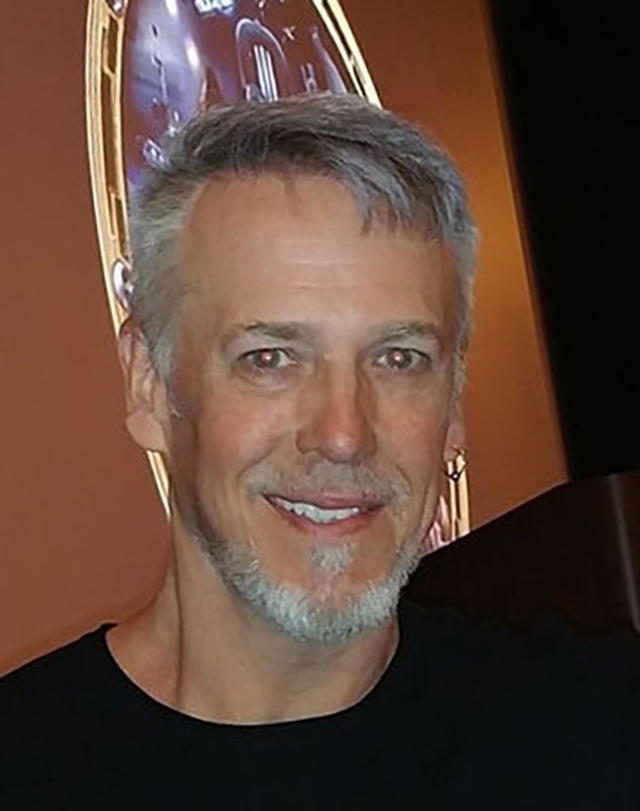
Today we’d like to introduce you to Steve Anderson.
Hi Steve, please kick things off for us with an introduction to yourself and your story.
I was born in California, but I really grew up in the Midwest, in Russell, Kansas, a small town right in the middle of the state.
I got my start professionally designing T-shirts for Artex, which at the time was part of Jostens, the company most people know for class rings and yearbooks. Artex/Jostens Custom Sportswear was ranked as the largest screen-printing company in the United States at the time. It was my first real job as an illustrator, and I’ve been fortunate enough to make my living that way ever since.
Not long after that I joined Hallmark Cards at its world headquarters in Kansas City, where I spent eleven years as an artist. Hallmark was a huge creative company, much more than the little Hallmark stores people remember from shopping malls. Russell had fewer than 5,000 people at the time, while Hallmark had roughly 6,000 people working at its headquarters. There were literally more people working at Hallmark than lived in the town where I grew up.
I started in Packaging Design, then moved to Calendars and Puzzles, and eventually into the Licensing Division. By the mid-1990s Hallmark had around 700 people on its creative staff, so I was surrounded by an incredible amount of talent. I learned a lot just by being around that many creative people, and I liked moving from one kind of work to another. That kind of variety suited me.
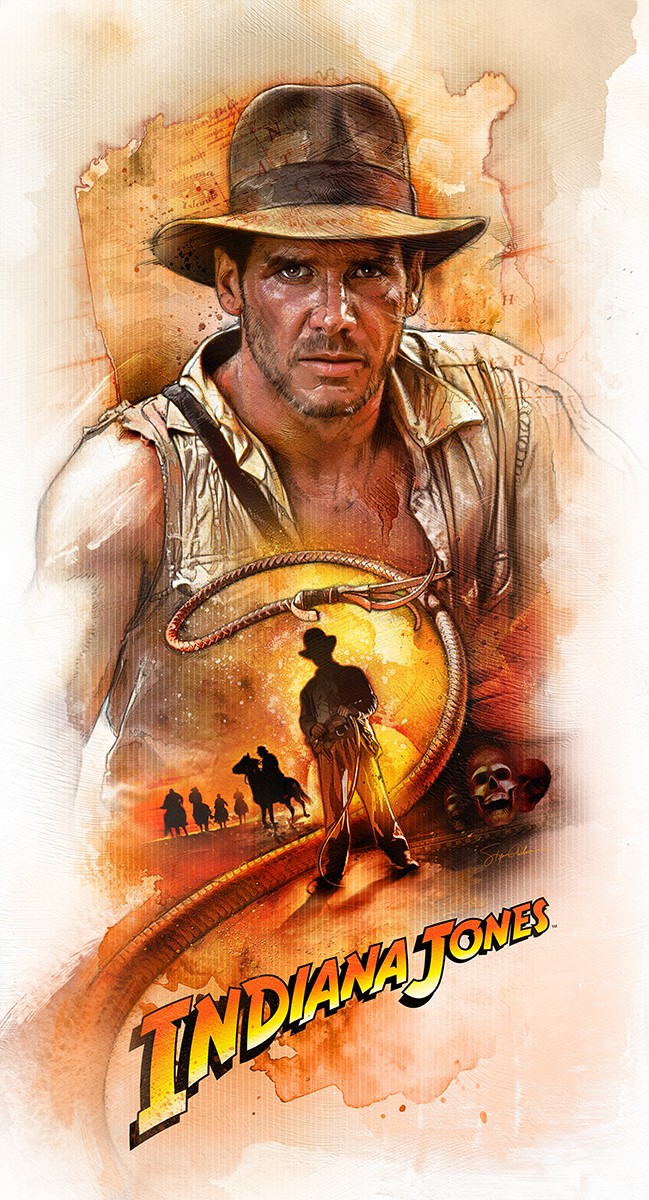
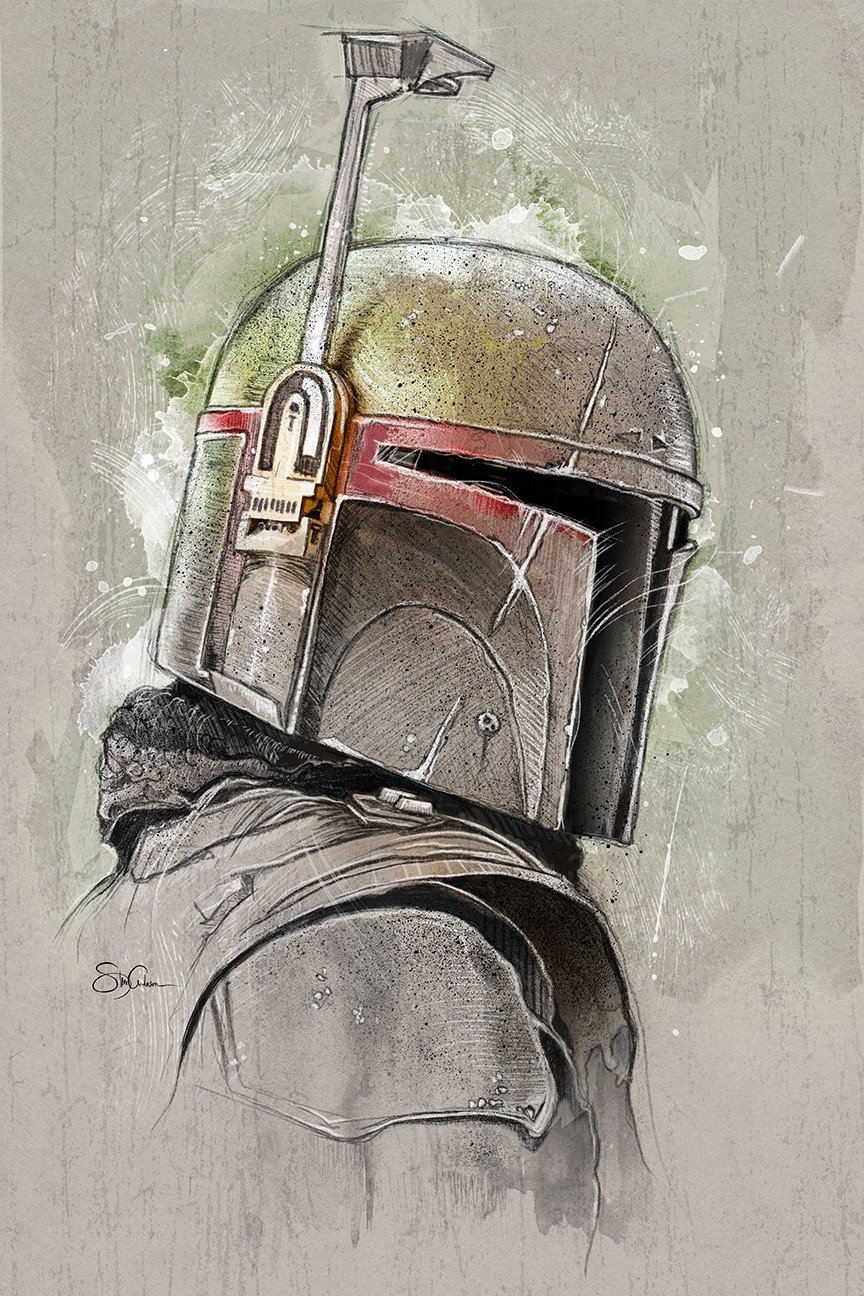
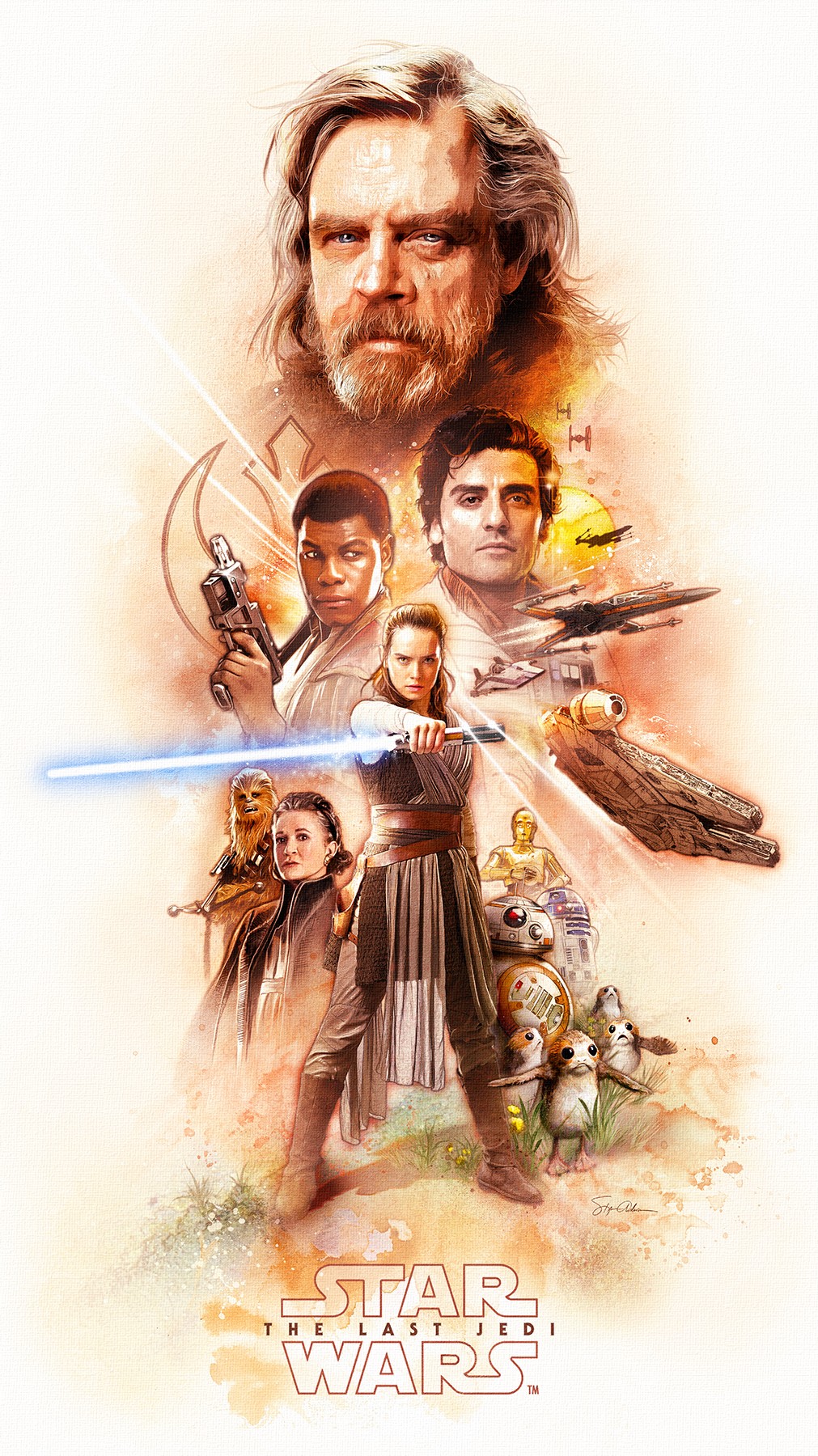
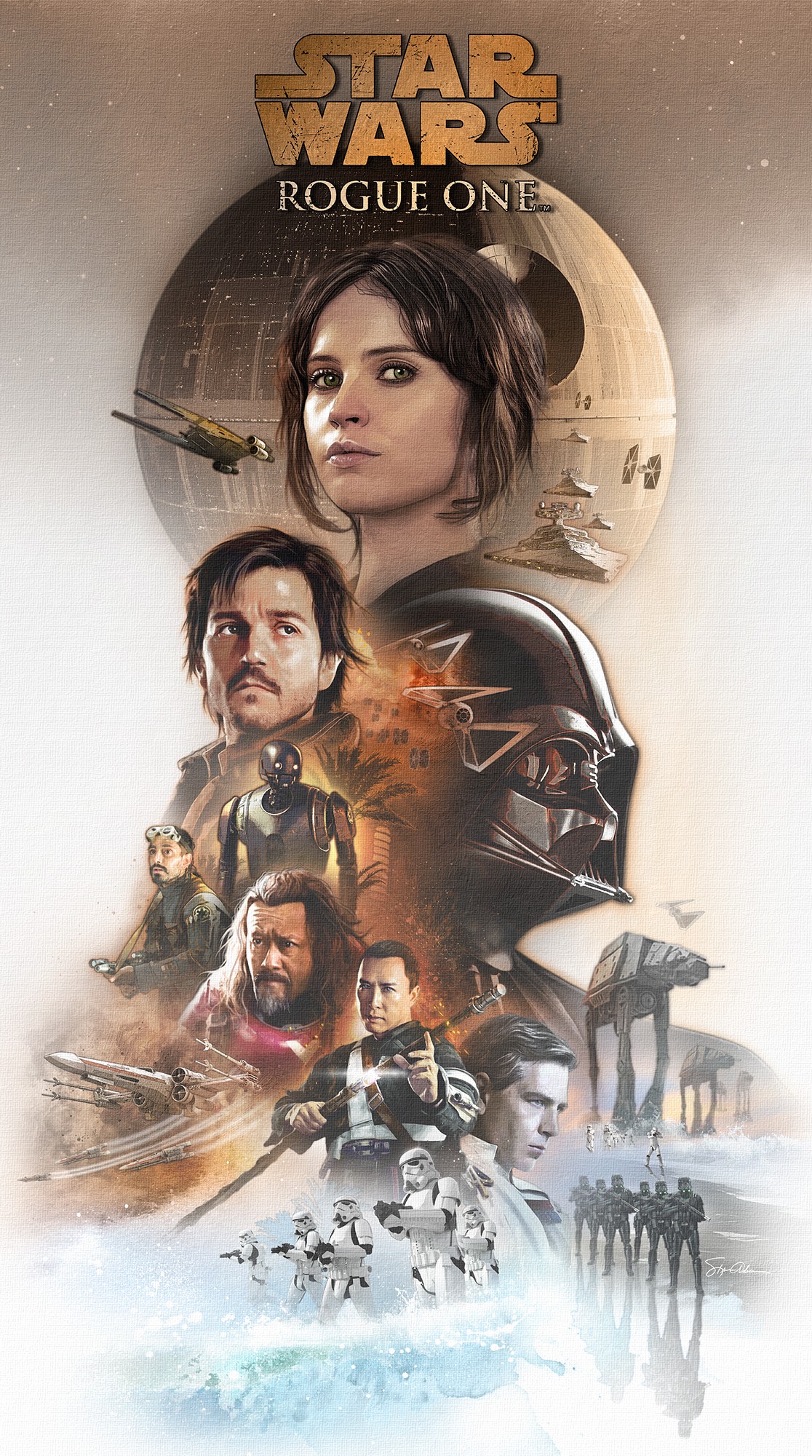
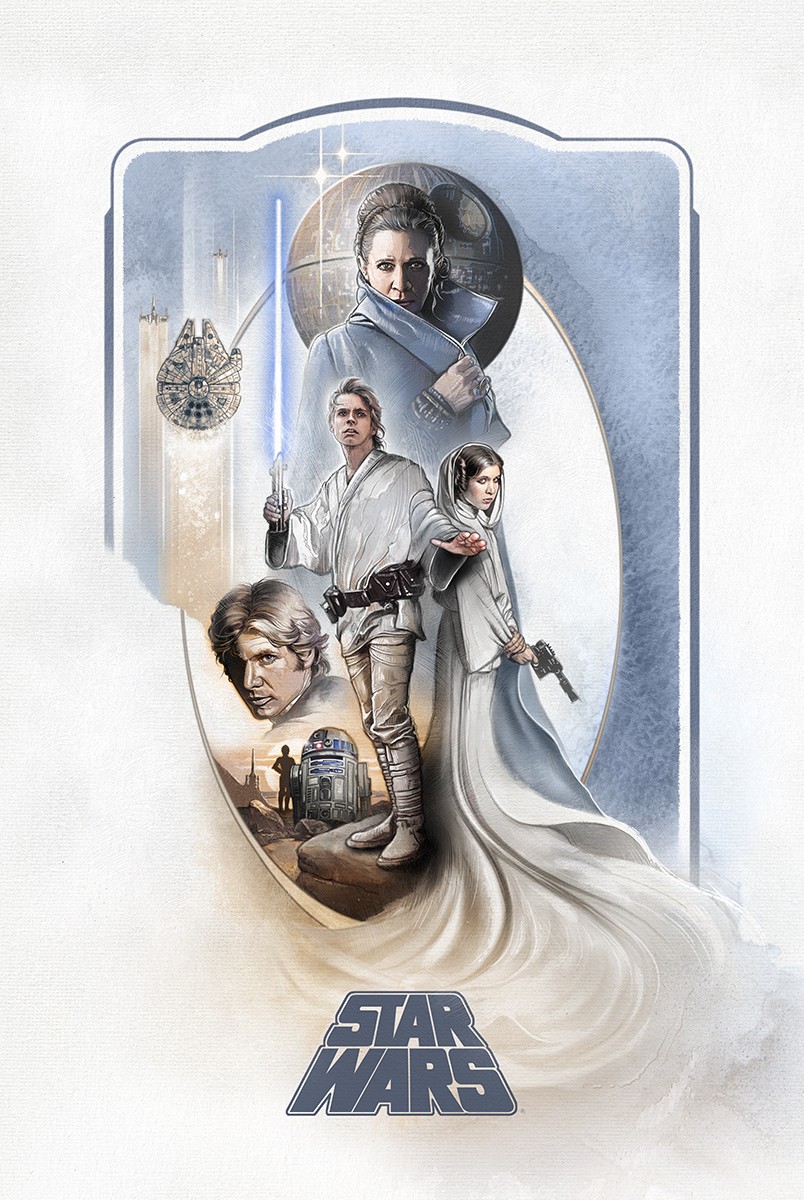
In 1997 I left Hallmark and started Steve Anderson Design. Around that same time I began working directly as an official artist for Lucasfilm, starting with artwork for Star Wars: Episode I – The Phantom Menace. That relationship grew into work on Lucasfilm’s style guides for all three prequel films and most of the sequels, with the artwork used across a wide range of licensed products. I also did official work for Lucasfilm on The Clone Wars and Rebels, and later on the Disney+ series The Book of Boba Fett and Ahsoka. I’ve also created a number of pieces based on The Mandalorian, some of which I continue to sell. My Lucasfilm work also expanded into Indiana Jones, including Kingdom of the Crystal Skull and The Dial of Destiny.
In the 1990s I also began a long relationship with Hasbro Games, starting with Star Wars and eventually working across many other licensed properties and products. I signed with a New York illustration agency as well and worked with them on some Hasbro and Random House assignments.
From 2000 through 2006, I illustrated more than 20 Star Wars book covers for Random House, including the novelizations of Attack of the Clones and Revenge of the Sith.
We moved to Portland in 2002. I had wanted to get back to the West Coast for years, mostly to be closer to the ocean and the mountains, but by then I also knew it was where I wanted to raise my kids. Portland ended up being the right place for both my family and my work.
More than 40 years after that first professional job, I’m still making art for a living, and I’m still excited about what comes next.
We all face challenges, but looking back would you describe it as a relatively smooth road?
No, it definitely hasn’t always been a smooth road. 1997 was probably one of the most intense years of my life. After eleven years at Hallmark, I left and started Steve Anderson Design. We already had a two-year-old daughter, our second daughter was born that May, and less than two weeks later my stepfather passed away. So there was a lot happening all at once.
Of course I had the normal concerns that come with leaving a secure job, especially with a young family, but I was also really excited about what was in front of me. Instead of creating Star Wars work through Hallmark’s licensed product line, I was getting the opportunity to work directly with Lucasfilm. That was exactly where I wanted to go creatively, so I dropped into it pretty quickly.
Freelancing has had plenty of ups and downs since then. Sometimes you have more work than you can handle, and other times the phone gets pretty quiet. That’s just part of it.
I’ve also watched the illustration business change enormously. I started out working traditionally and eventually moved into digital tools, so adapting has always been part of the job. But I’ve never thought the tools were the most important part. Whether you’re holding a paintbrush or sitting in front of a computer, you still need a good idea, strong composition and something that connects with people.
Alright, so let’s switch gears a bit and talk business. What should we know about your work?
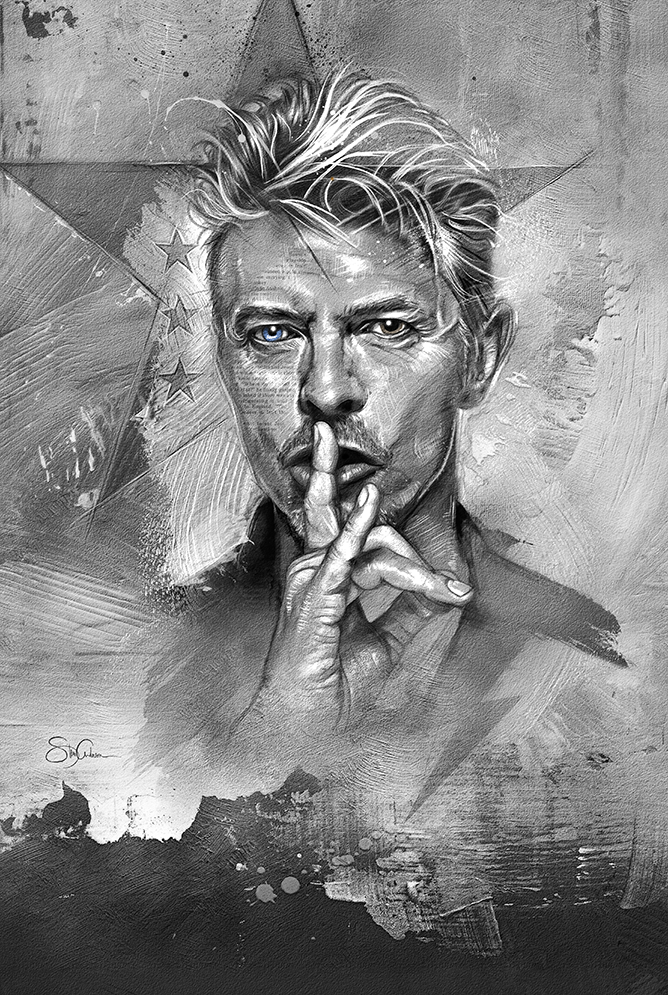
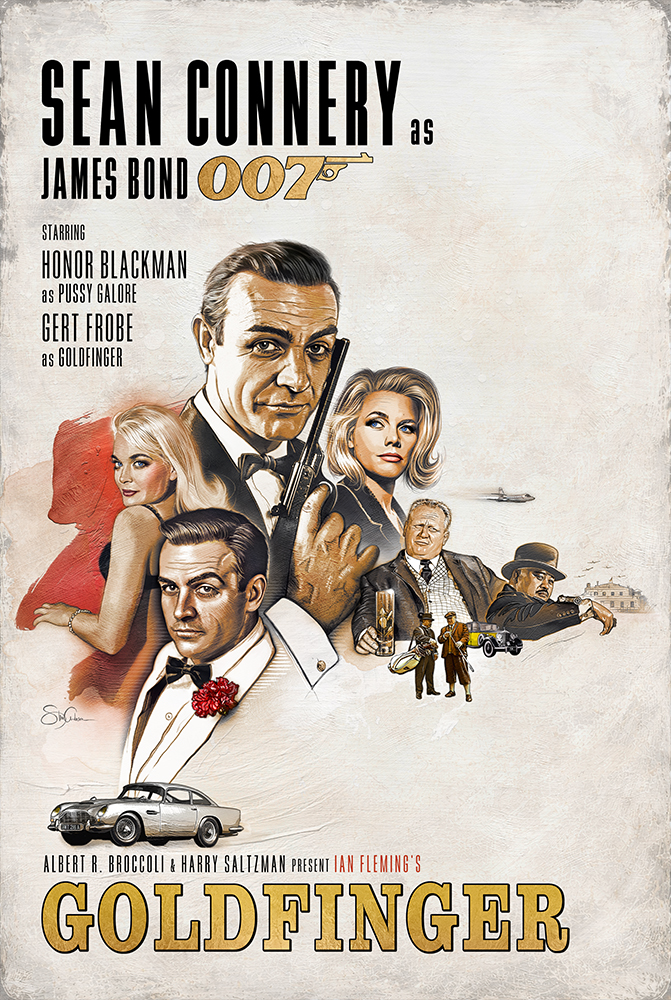
For most of my career, almost everything I’ve done has had some connection to movies or television. I’ve never really specialized in just one kind of subject or product, though. I’ve been lucky enough to bounce around quite a bit, working across film, publishing, games, packaging, posters, puzzles and licensed products, on subjects ranging from James Dean and David Bowie to James Bond, Dune, Harry Potter, Marvel, DC, Lord of the Rings, Firefly/Serenity, Star Wars and Indiana Jones.
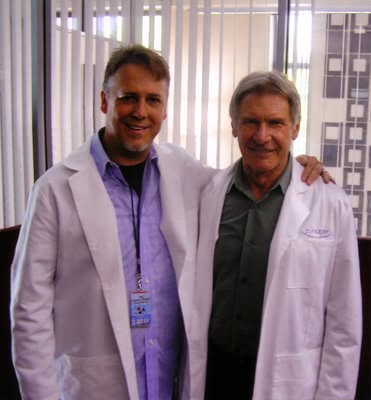
I’ve also had some experiences on the other side of the camera. I was Harrison Ford’s stand-in on the 2010 film Extraordinary Measures, and that was definitely surreal. His character was a doctor, but he wore Wrangler jeans and cowboy boots, and because we were filming on a concrete studio floor, you could hear those boots coming from a distance before Harrison even walked into view. On my first day, I watched Brendan Fraser film a scene and also met Keri Russell. Five minutes later Harrison and I went to the wardrobe trailer by ourselves to get into costume. I remember standing there thinking how strange the whole thing was.
Years earlier I had worked on a classic Star Wars style guide for Lucasfilm, and after that I had worked officially on Indiana Jones and the Kingdom of the Crystal Skull. Now I was standing in a wardrobe trailer with Harrison Ford. It’s probably one of the most surreal moments I’ve ever had in my career. I’d love to relive it now that I’m older, because I think I’d appreciate the moment even more.
Just last year I had another strange reminder of that film. I met some friends at a bar and had already been there for about an hour when I noticed posters from Extraordinary Measures hanging on the wall. My first thought was, “Why the hell do they have posters from that movie in here?” Then it suddenly dawned on me that I was sitting in the same bar where we had filmed one of the scenes. I hadn’t recognized it because it looked completely different. For the movie, the whole place had been dressed with Nebraska Cornhuskers memorabilia because Harrison’s character was from Nebraska. In the scene, Harrison was talking to Brendan Fraser. I had actually forgotten Dee Wallace Stone was in the movie, but I remember standing in for Harrison, looking over at the bar and thinking, “Wow, that’s Dee Wallace Stone playing the bartender.” Once I realized where I was, it was another one of those weird moments when a part of my past suddenly came back to me.
Later, I also did quite a bit of extra and stand-in work on Leverage and Grimm, two series filmed here in Portland that developed really loyal audiences.
One of the things I especially liked about working with Hasbro was that it exposed me to so many different kinds of products. A poster is basically a rectangle you compose within, but with Hasbro I might be designing artwork for a game box top, a game board, a puzzle, packaging or something completely different. Each one had its own shape, proportions and practical requirements, so every project gave me a different compositional problem to solve. You had to think about how the artwork fit the product, where everything else needed to go and how the finished piece was actually going to be used. That variety has always mattered to me. I think artists get bored pretty easily. I know I do if I’m solving the same problem over and over. Give me something different and my brain immediately starts working again.
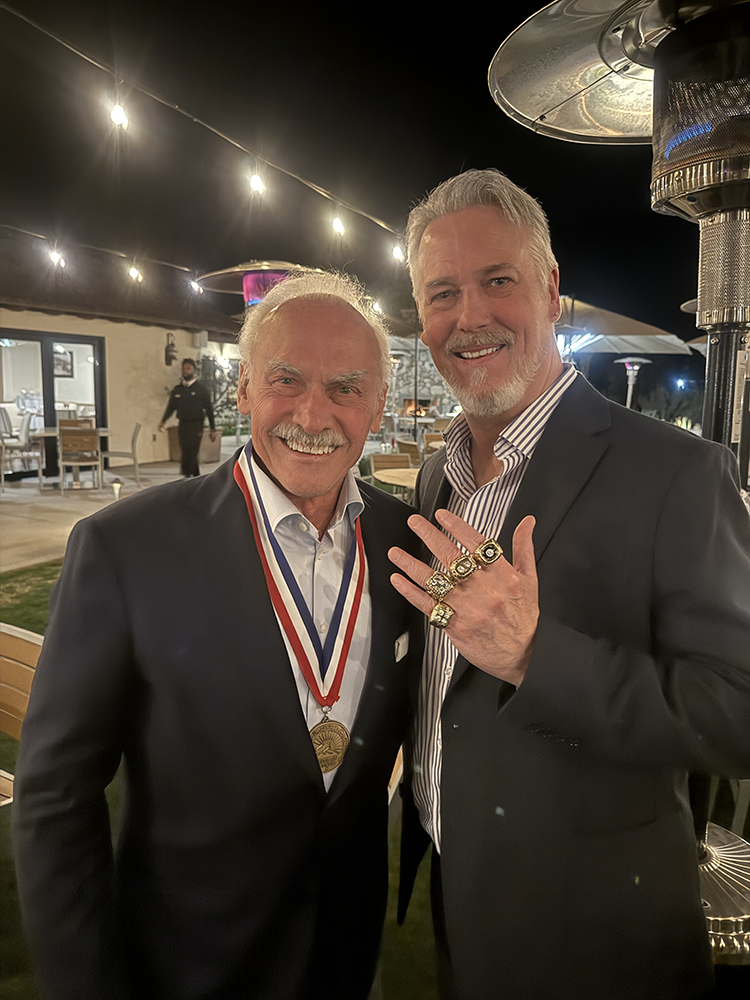
Today my work has gone in some very different directions. I’m the Official Artist for the Palm Springs Air Museum in Palm Springs, California, widely regarded as one of the top aviation museums in the United States. I currently have 27 pieces in the museum, with that number growing to 36 by February 2027.
One of the things I value most about the museum work is the team behind it. It really is a collaborative effort, involving the museum staff, the people conducting and filming the veteran interviews, the documentary team and the agency people I work with on the visual side. I create the portraits, but we’re all trying to do the same thing: tell these veterans’ stories and honor what they’ve done.
Then each February, at the museum’s annual Gala, I get the opportunity to meet many of the veterans I’ve spent months learning about and creating portraits of. There’s something pretty special about finally shaking hands with the person whose face you’ve been staring at for months. That has become one of the most meaningful parts of the work for me.
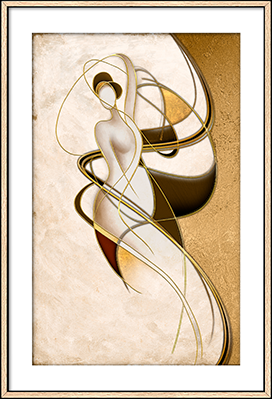
I’ve also added abstract fine art to what I do, specifically with homes and commercial interiors in mind, including offices, lobbies, salons, coffee shops, restaurants, wellness spaces and other places where people live, work and gather. That interest really started about five years ago, when I was looking at new-home builds and started noticing the abstract art used in the staged interiors. I liked how the right piece could pull a room together and change the feeling of a space without having to be the loudest thing in it.
Abstract work wasn’t completely foreign to me either. A lot of the backgrounds in my commercial illustration were already abstract, using shape, texture, color and atmosphere to support the subject. So when I started making abstract pieces on their own, they naturally came out with a fairly graphic quality. That’s probably my commercial illustration brain showing.
I’m still figuring out where that part of my work will go.
What I’m probably most proud of is that after more than 40 years, I still feel the same creative pull. As I turn 65, there are still nights when I’m lying in bed thinking about a piece I’m working on and eventually get back up and work on it for another couple of hours. I don’t think you do that unless you really love what you do.
If there’s something that sets me apart, it’s probably the range of the work and the fact that I’ve kept changing. I can go from a licensed entertainment piece to a veteran portrait to an abstract painting, and each one uses a different part of my brain. I think that variety is a big reason I’m still interested after all these years.
Any advice for finding a mentor or networking in general?
When I first started doing Star Wars work at Hallmark, I remember my boss holding up two assignments for me and another artist. One was a Star Wars calendar and the other was a Saturday Night Live calendar. He asked who wanted which one, and I answered first: Star Wars. I was a fan, but I wasn’t the guy memorizing every character, ship or bit of trivia. What I really loved was movies. By then I was becoming a serious cinephile. Going to the theater and getting completely pulled into a film was special to me. I was fascinated by how movies were written and directed, how they looked, how they made you feel and especially by the acting. If I don’t believe the performance, it’s hard for me to believe the world around it.
Lucasfilm sent us copies of a huge amount of reference material from the people who had created the look of Star Wars, including concept art, production designs, creature work and effects material. I also got the opportunity to visit Skywalker Ranch and go through the Lucasfilm archives. For an illustrator who was just getting into that world, it was pretty incredible.
Crown Center, the shopping complex connected to Hallmark, had a Barnes & Noble, and after lunch I would sometimes walk over there and look through whatever Star Wars books they had on the shelves. I wasn’t just looking at one artist. I was studying the covers, the illustrations and all the different ways artists approached the same universe.
Drew became the artist I studied most closely and the person I think of as my main artistic mentor, although he certainly wasn’t my only influence. What fascinated me most about his work was the storytelling. He could put so much into one image and somehow make it feel like you already knew something about the characters, the mood and the story before you ever saw the movie. I’ve always done that with artists I admire. I look at the work and ask myself, “Why does this work?” Sometimes it’s the composition. Sometimes it’s the lighting, the atmosphere, the simplicity or just the way someone sees the world. I’ve learned from illustrators, painters, photographers, filmmakers and plenty of people I’ve never actually met.
I was also fascinated by the entire generation of artists, designers, model makers, creature and effects people, cinematographers, filmmakers and performers who created those original Star Wars films. They were solving problems with miniatures, matte paintings, models, practical effects and techniques they were sometimes inventing as they went. They helped change the way movies could be made and imagined, and you can still see their influence today.
When I visited Skywalker Ranch, I also had the chance to see some of Drew’s original paintings in person. I had been used to seeing them reproduced in books, maybe five inches tall, and then suddenly I was standing in front of the real paintings at full size. That was mesmerizing. You could finally appreciate the scale, the surface, the detail and the actual hand of the artist in a completely different way.
A few years later, after leaving Hallmark, I began working directly with Lucasfilm Licensing. Eventually I found myself illustrating Star Wars book covers too. I sometimes think about those trips to Barnes & Noble after lunch, standing there studying those books, and how strange it is that a few years later I was making some of them myself.
My advice about mentors is not to wait for someone to formally become one. Sometimes a mentor is simply the person whose work makes you want to get better. Study what they do. Figure out why it works. Stay curious. And when you get a chance to meet people, see great work firsthand or learn something new, take it. I’m still learning and I’m 65.
Contact Info:
- Website: https://www.steveandersondesign.com/
- Instagram: https://www.instagram.com/steveandersondesign/
- Facebook: https://www.facebook.com/steveandersondesign/
- LinkedIn: https://www.linkedin.com/in/steveandersondesign/
- Twitter: https://x.com/SteveDAnderson
- Other: https://andersonabstractart.com/