


Today we’d like to introduce you to Alexander Blake | Barbara Blake.
Hi Alexander Blake | Barbara Blake, please kick things off for us with an introduction to yourself and your story.
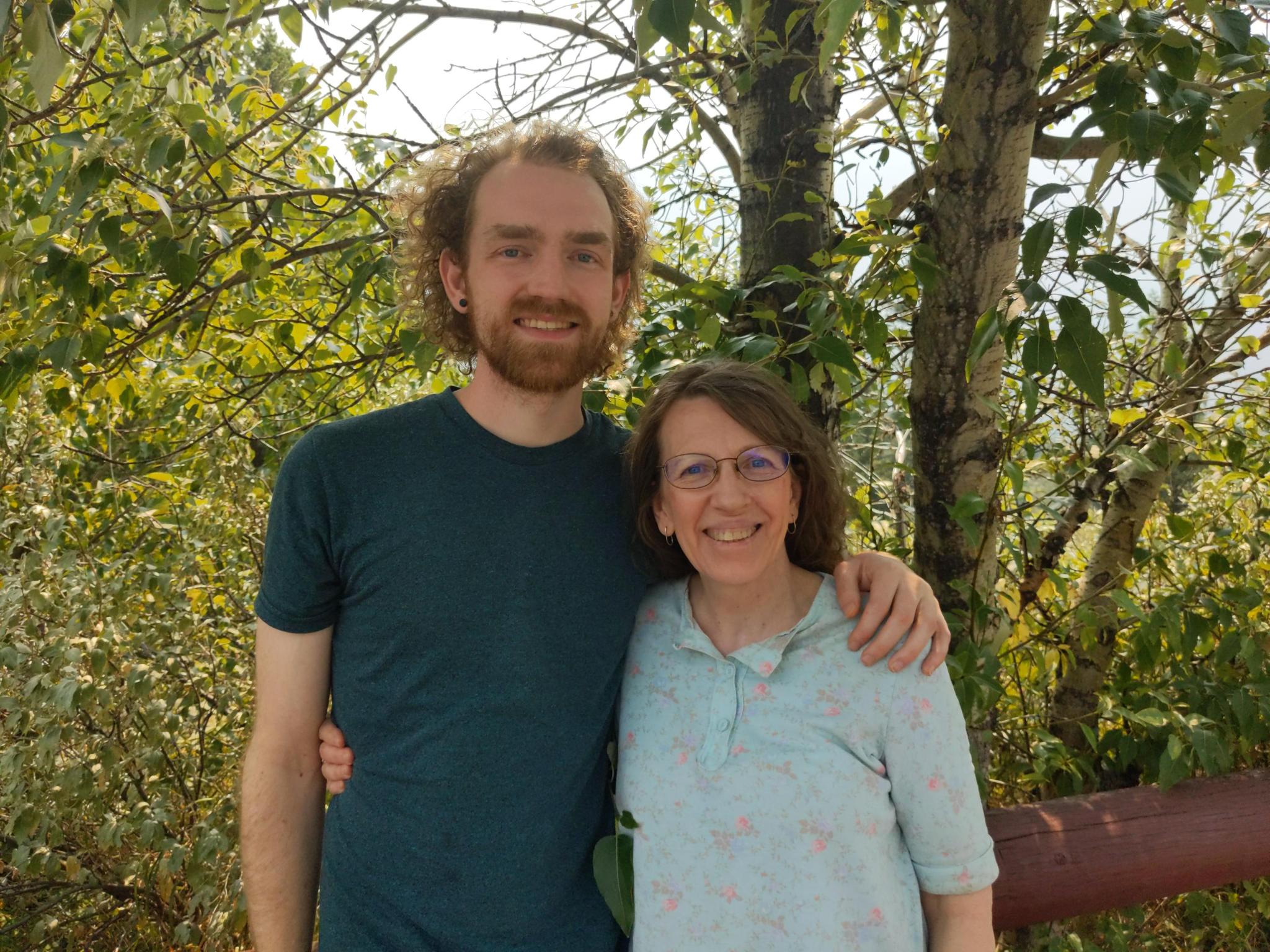
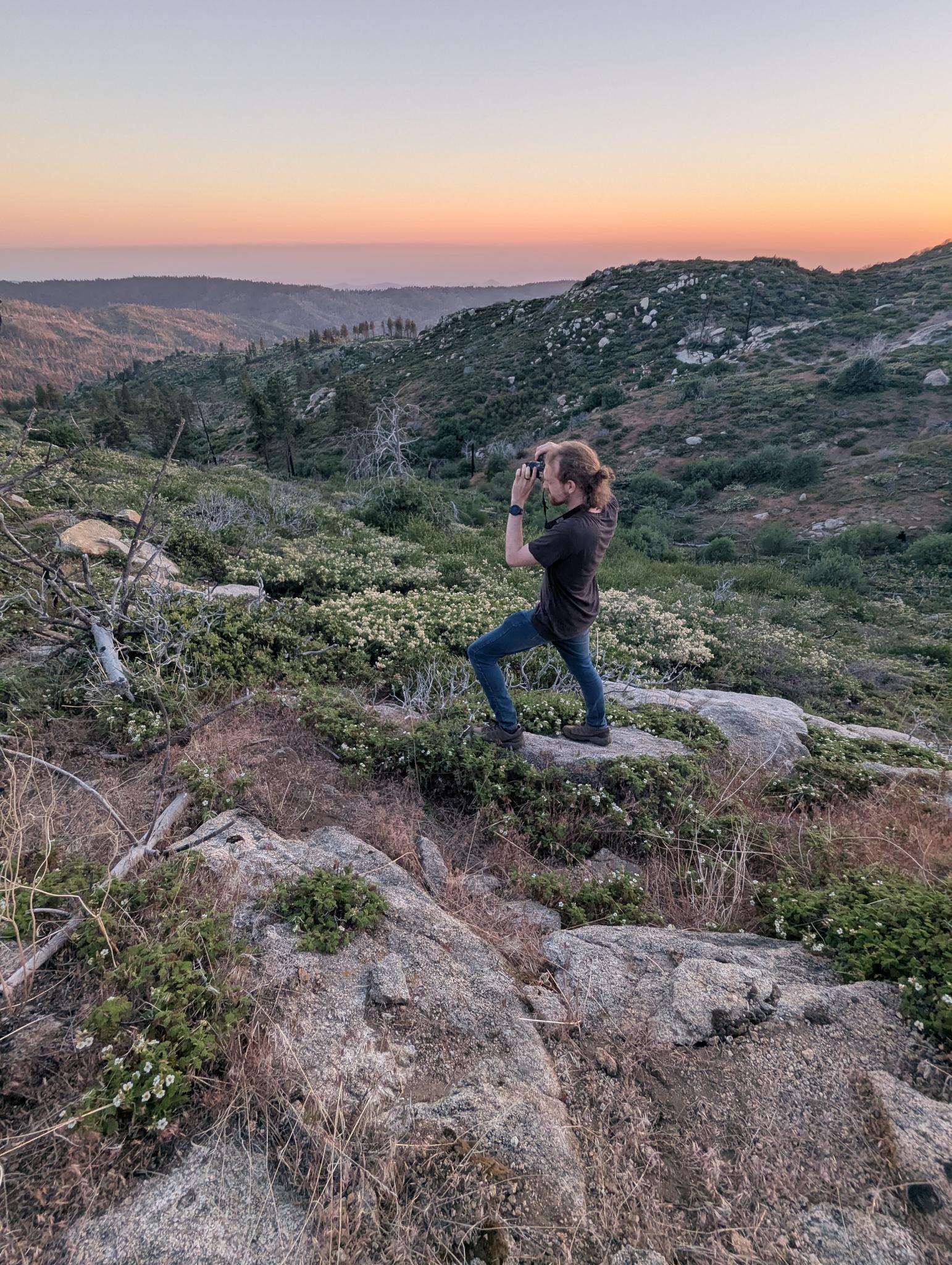
Thank you, and I’m grateful to be here. I co-own the boutique web development business Cba Sites with my son Alex Blake.
We leverage industry-leading frameworks like Astro to deliver custom, high-speed websites providing a human-centric experience designed purely to spotlight business strengths and drive conversion growth. But we didn’t start out there. Our story begins over 15 years ago.
Our Roots
Alex’s love for technology began at 10 years old when his IT tech uncle gave him a computer. A curious kid, he was soon taking it apart and tweaking it, along with every other computer he had access to. He gave a 4-H public presentation at the Puyallup County Fair on how to take your computer apart and put it back together! His uncle also introduced him to Linux, and Alex thrived in the open-source environment where he had almost complete control over his operating system and applications. Once he learned the terminal, a whole new world opened up. He also became a proponent for open-source software, Linux, and digital freedom.
I, on the other hand, grew up immersed in arts and crafts, and art was “what I wanted to do when I grew up.” I took summer school every year just so I could take the art classes. I studied design and Business English for a short while in college, but then life happened. Fast forward many years and I was a homeschool mom, something I adored as it allowed me to interact with my son in wonderful ways and to continue learning right alongside him as I taught. Because I’ve never felt that school prepared me well for real life, I searched the Internet for ways to educate Alex more thoroughly, and to include our faith perspective and his interests. I was totally open to incorporating real life into the classroom.
The Start of Cba Sites
In 2011 in high school, Alex began building a Wix website for our local church and asked me for assistance with the design. Building it was fun and seeing our work on the Internet was exciting, but we were frustrated by Wix’s limited design control. Alex found WordPress online and showed me that it offered more design freedom. I was sold. Our next site was to support a missionary headed to the Philippines. As people liked our work and requests grew, we saw an opportunity to help others with work we loved. After praying about the name, Cba Sites was born in April 2013.
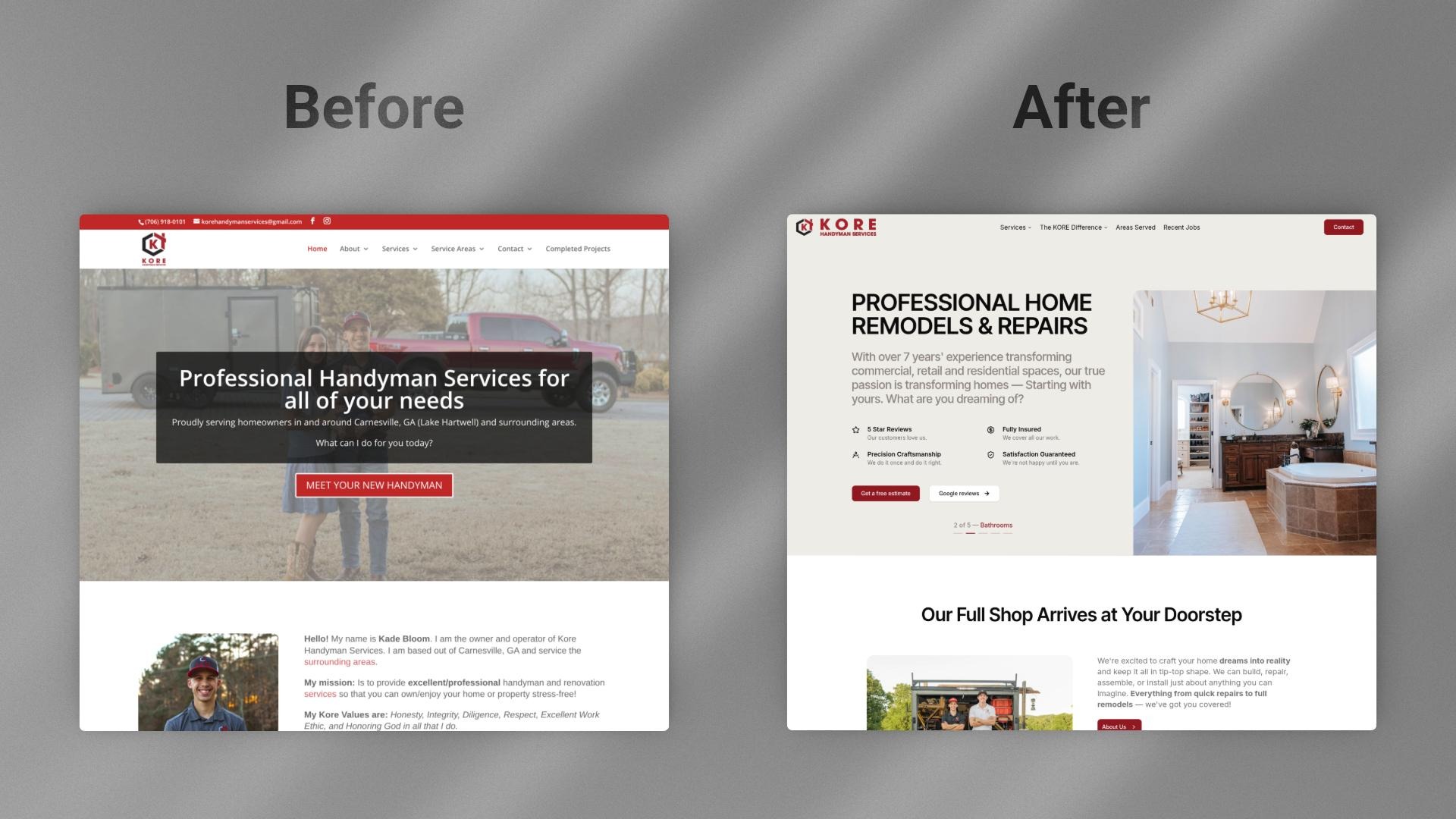
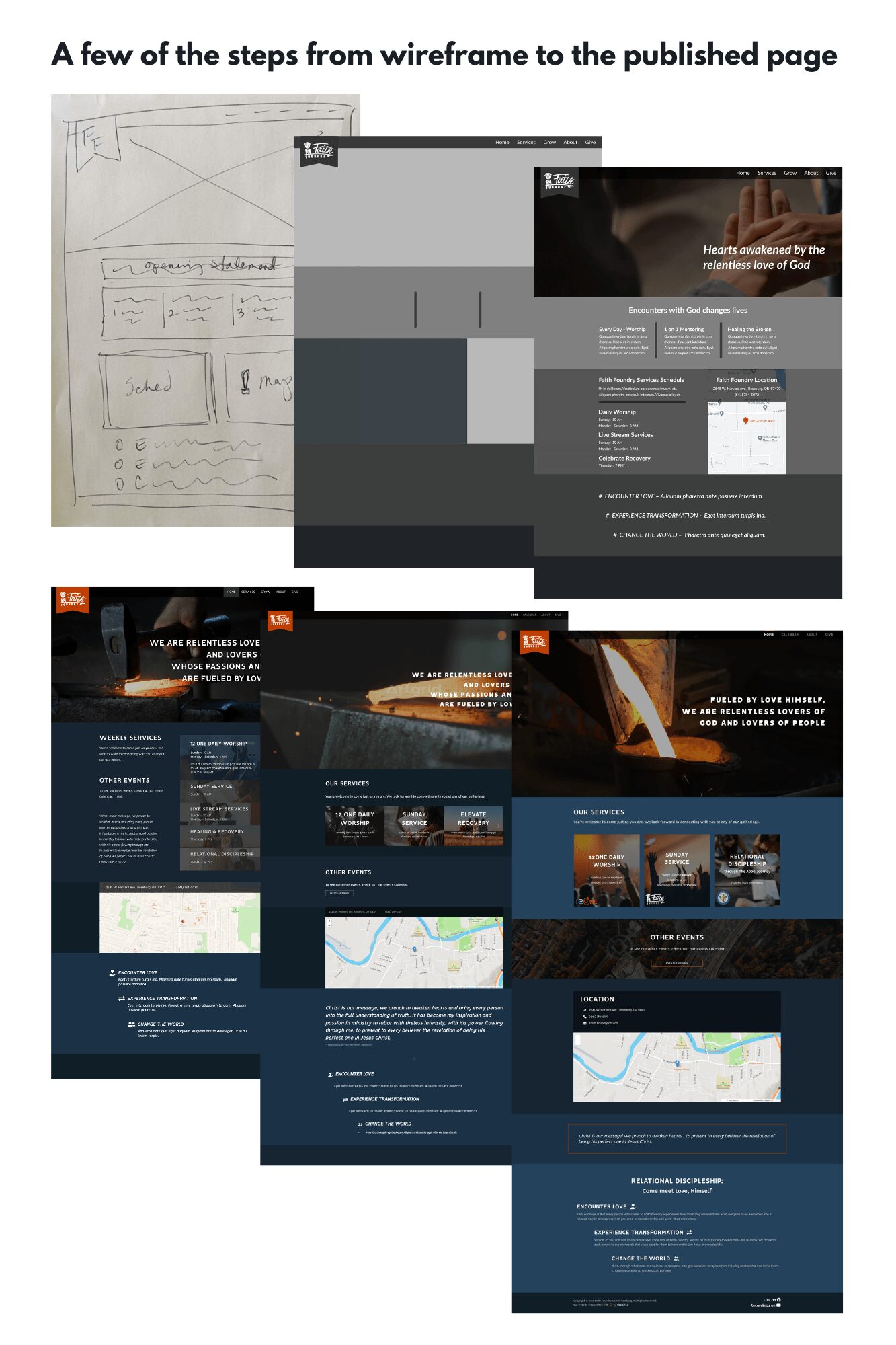
Frustrated by how many websites I struggled with and got lost in due to poor organization, I determined that we would create visitor-friendly sites with clear layouts. We then worked hard to creatively capture the unique feel and strengths of each organization into their site, which helped visitors enjoy using the site and promoted the organization’s growth. Our clients loved it.
Bots, Security, and Speed
In early 2015 a bot-attack blocked login access to our own WordPress site, sparking both fear and a realization: site security was a critical need. A few months later while on vacation, we received a call to rescue a business. They needed their website finished in time for a call with Adrian Grenier and the Lonely Whale Foundation…in just 3 days. Their developer had suddenly dropped the project, and it was built in WordPress.
Faced with a WordPress page refresh time of 5-10 seconds per edit, we knew we couldn’t meet the deadline with it. Alex researched and found Grav, a flat-file CMS that eliminates the need for a database setup and was far faster than any WordPress site we’d seen. Using borrowed computers, Alex coded the new site for 3 days straight while Barbara entered the content, and the business landed their new client. We never looked back.
In 2017, we took a leap and planned to move from Washington to somewhere south. After a road trip through 3 states, we fell in love with the people and community in the winsome town of Roseburg, Oregon. It’s been home ever since.
The Quest for a Better Website
Website technology keeps evolving, promising more security, stability, and speed. Grav proved to be significantly more secure than WordPress, but Alex wasn’t satisfied. He’s invested thousands of hours researching tech, and we’ve built sites using frameworks and static site generators such as Grav, Flask, Ruby on Rails, Middleman, Jekyll, SvelteKit, and Astro. Alex even began building his own custom UI library to deliver the fast, quality sites he envisioned. However, he’s recently learned that Astro offers best-in-class performance and the lightweight speed we’ve been craving, not to mention a growing set of developer tools. He’s chosen it as our primary framework.
Website design has also changed drastically since our early days, and we constantly watch and study the trends. Seeing that websites can become powerful tools that align with an organization’s growth goals more effectively than ever before, that logically became the next step. Alex started devouring business and marketing principles and sharing them with me.
Structure vs. Content
One surprising thing we learned through the years is that we both see websites completely differently. Not intentionally; it’s just how our brains works.
At first glance at a site, Alex sees the structure: the boxes, divs, columns, rows, margins and padding, alignment, spacing, and the white space or lack of it.
I, on the other hand, immediately see the content: the text, words, meanings, story, pictures, icons, the visitor path (or lack of it), the organization (or lack of it), and all the clutter that gets in the way of understanding and enjoying the site.
It’s a really big difference in websites; and to be honest, it caused quite a few discussions on the best “way” to build sites and what constitutes the “best result.” But our best work truly happened as we worked together on the site. Without realizing it, our combined perspectives worked perfectly to create beautiful results. In time we began to understand that our brains complement each other, allowing us to see sites holistically. It’s one of the reasons we’ve been so successful in creating sites that work effectively.
We all face challenges, but looking back would you describe it as a relatively smooth road?
No, becoming entrepreneurs hasn’t been a smooth road. Even though we love helping people, we both have introvert streaks and were challenged to grow past our comfort zones. It’s been a call to have courage, fortitude, and the ability to keep moving in the face of fear and the unknown. In addition, running a business was totally new to our family, and there are so many pieces to learn. Thankfully, we’re both process-improvement minded and love research and life-long learning, all of which have served us extremely well in overcoming many difficulties.
Great, so let’s talk business. Can you tell our readers more about what you do and what you think sets you apart from others?
Sure. For us, websites are all about shifting perspectives and solving problems, both on the front end where you see the site and on the back end where they’re built. Web technology today is inherently dynamic for many reasons, including:
• No single person or company controls the Internet, so every website must function across constantly changing global infrastructure.
• You can’t see the result of the code you build until a browser translates it into a structure called the DOM (Document Object Model), which is basically the blueprint the browser uses to render the page.
• Browsers, their settings, and individual user preferences can all change the web page’s display from what the designer expected.
• Phones, tablets, laptops, and desktops have different screen sizes that require specific layout breakpoints that make the page adapt.
The quantity of variables and potential issues is significant, and coordinating them into a layout that holds up smoothly across different devices and browsers takes specialized problem-solving skills, something Alex excels in.
Shifting Expectations
Beyond that, web technology keeps changing at an incredible pace. Tools and frameworks either grow and change, or are abandoned and die. Either way, extensive time for research and study is required. Web developers can’t expect to know the entirety of the industry, so the ability to ask the right questions and find the correct answers quickly is crucial.
Furthermore, the Internet itself has changed dramatically over the years. The goal of the “most beautiful, original website”—essentially a digital brochure—has given way as studies show people generally don’t read most content or care as much about aesthetics as once thought. Think of Amazon: you have a goal, you want scannable content and a predictable purchasing experience, and you want out fast.
As of July 1, 2026, Forbes (1) reported:
• The average visitor time spent on a page is just 54 seconds.
• 53% of users won’t wait longer than 3 seconds for a site to load.
• 88% of users won’t return to a site after a bad experience.
Solutions for faster speed and effortless efficiency must be foremost in both structure and design.
Solving the “Brochure Problem”
Another shift has occurred with business owners: revenue now sits at the top of most priorities. However, Forbes also reported that 70% of small business websites lack a call to action that impacts their ability to convert website visitors into customers; a lingering result of the “brochure-design” era.
We’ve always built our sites for growth, but to meet these new user and owner priorities, we’ve completely overhauled our build process with one over-arching objective: the entire site is now developed with a holistic, conversion-first structure tied directly to the business’ actual goals. This shifts the site from a static brochure to an active growth tool. We combine funnels, site speed, metrics, SEO, and friction reduction to grow business conversions while giving visitors the easiest, most satisfying path to what they came for. Everyone wins.
Ultimately, it takes thinking abstractly across 3 almost-invisible dimensions to bring all these needs together into a cohesive, hard-working website. Solving these problems in tandem is challenging, but incredibly rewarding.
Of course, there’s no shortage of online advice making it all look easy: ‘Pick a platform, drop in a template, add content, and you’ll have instant customers.’ Plenty of agencies charge premium prices for that, and folks end up frustrated at the lackluster results, wondering where things went wrong. We recently began offering free website audits to help folks understand what’s holding their website back.
Security: The Non-Negotiable Foundation
Beyond design and conversion, a website needs to stand stable against real security threats. WordPress security issues are well documented. For example, a March 2026 vulnerability rated 8.8 in severity hit a page-builder plugin used on 500,000 sites (2). The broader numbers confirm the risks, and not just for WordPress:
• WordPress accounted for 95.5% of the infected websites Sucuri cleaned in 2023 (3).
• 45% of AI-generated code introduced a known security vulnerability in testing per Veracode’s 2025 GenAI Code Security Report (4).
• 98% of AI “vibe-coded” apps in one 2026 study had at least one security flaw (5).
• 49.21% of compromised websites were found with at least one website backdoor (3).
• 43% of cyber attacks in 2025 targeted small businesses, and 51% of small businesses reported website downtime of 8-24 hours following an attack (6).
According to Forbes, 40% of users rate site security more important than speed. Because cyber hackers are relentless and keep improving their techniques, we keep our clients’ sites secure and fast through research, best practices, and extra protective measures. All our sites get an additional layer of security on top of the already-secure frameworks we use.
Looking Ahead: SaaS and Team Growth
We’re actively growing our business to specialize in websites for SaaS (Software as a Service) companies. Having used and loved so many of these tools over the years, we realized that serving them is a perfect fit for our experience. It’s also a way to give back to the community that has supported us, especially the open-source community.
As mentioned, we’re now leveraging the Astro framework and are excited to be part of its fast-growing development community. To support our own expansion, we are in the process of adding another designer and a back-end developer to our team.
Our Clients are Worth It
So yeah, we tend to be perfectionists and routinely put more time into a site than we bill for. We’ve never rushed a client through a “website mill” process; every project holds to the same standard regardless of budget. We staunchly refuse to sell sites built with inferior tools, so our process takes more work. We do it anyway, though, because our clients deserve the best.
Resources to Get Started
If you’re wondering where to begin, we offer:
• Free Consultations: A no-obligation discussion to understand your goals and how your website can reflect them more accurately.
• Free Website Audits: An assessment of your current site’s performance with no strings attached.
As a Better Business Bureau (BBB) accredited business, we stand behind our work with a commitment to transparency and quality. We’re here to help.
References if desired:
1. https://www.forbes.com/advisor/business/software/website-statistics/
2. https://www.searchenginejournal.com/page-builder-by-siteorigin-wordpress-vulnerability-affects-up-to-500k-sites/568720/
3. https://sucuri.net/reports/2023-hacked-website-report/
4. https://www.veracode.com/blog/genai-code-security-report/
5. https://www.symbioticsec.ai/blog/we-scanned-1-072-vibe-coded-apps-98-had-security-flaws
6. https://www.bdemerson.com/article/small-business-cybersecurity-statistics
Is there anyone you’d like to thank or give credit to?
Oh, definitely! Two of our earliest clients, B.I.L.Y. (Because I Love You) and Set Free Elma, played pivotal roles in our journey.
Initially, we didn’t think our work was good enough to charge for, so we offered our services for free. The B.I.L.Y. board members asked us to work on their website and insisted on paying us for it! Getting paid was both exciting and scary; but we knew if we were going to receive payment, it had to be done above board. They were the catalyst for creating Cba Sites, and we’ve been working with them ever since.
Set Free Elma was another early client. They’d performed work on our house, so we volunteered to build them a free website. We spent hours with Pastor Mike Tallman and his staff learning about their facility. We were just starting out and lacked confidence to charge for our sites. One day, Pastor Mike shared a scripture with us from 1 Timothy 5:18: “A workman is worth his wages.” He saw how hard we were working to help them grow and genuinely valued what we were doing. That lesson has stayed with us all these years.
On the business side, we knew we had room to grow. Zach Carter of Carter’s Coffee—one of the local Roseburg businesses we had the privilege of building a website for—has graciously mentored us. As his business has grown and gained recognition locally, he has shared the wisdom from his own experiences to help us navigate the complexities of running our own company.
Contact Info:
- Website: https://cbasites.com/
- Facebook: https://www.facebook.com/cbasitesweb/
- Other: https://cbasites.com/site-audit, https://www.bbb.org/us/or/roseburg/profile/web-design/cba-sites-1296-1000195136