


Today we’d like to introduce you to Sarah Woods.
Hi Sarah, so excited to have you with us today. What can you tell us about your story?
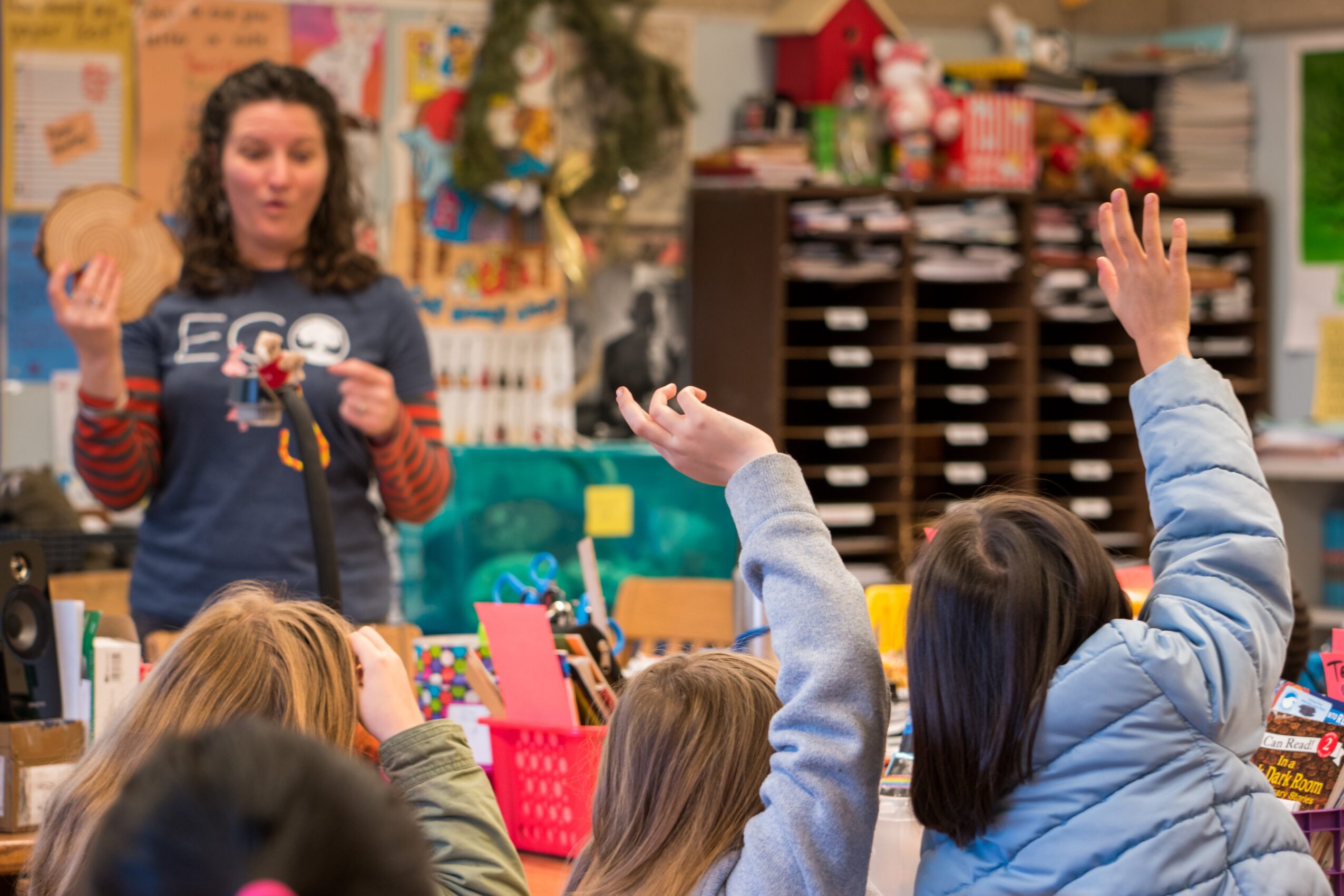
Twenty years ago, ECO’s co-founder, Bethany Thomas, and I were working as environmental educators with another organization, visiting classrooms to teach short science lessons a few times a year. Students were excited, curious, and engaged, but there was never enough time to really dive in.
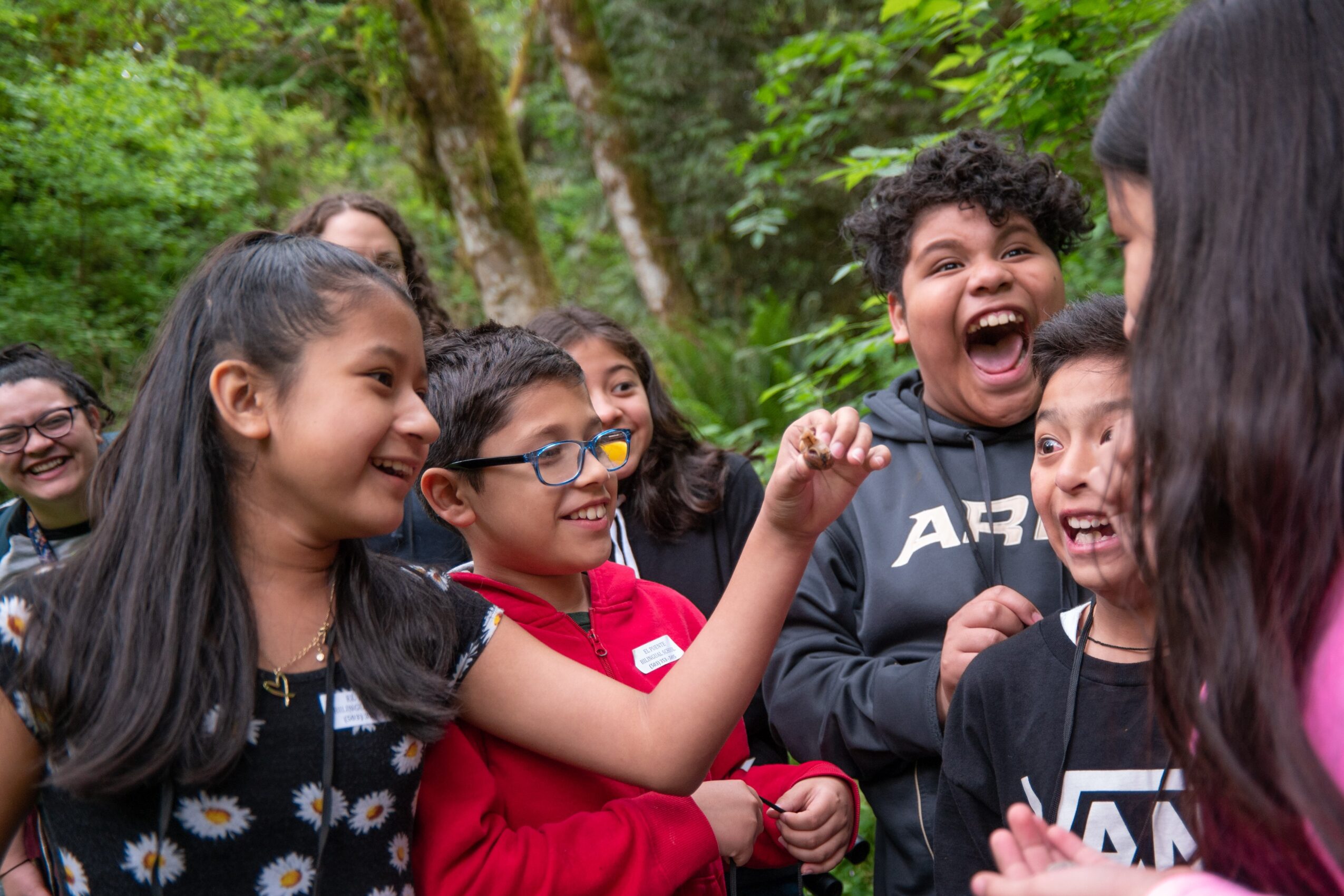
We saw the potential for something deeper and began asking ourselves, “What if we connected what students were learning indoors with hands-on learning outdoors?” We wanted students to know the wonders that lie just beyond their school walls. I wanted them to have access to what I experienced growing up exploring the woods and rivers of Maine: awe and an endless supply of curiosity. Bethany and I also saw the need for science to include what’s necessary to care for the land, to show how everything is connected, and beyond that, that you don’t have to go far to see it in action–or participate. Our questions eventually all came down to “How?”
The answer came in a very unexpected way – from a Craigslist post. A local PTA was looking for someone to lead environmental education at their school. We reached out, were hired on, and found the perfect proving ground for our ideas. It became the first of many schools we visited and the beginning of a different model for environmental education.
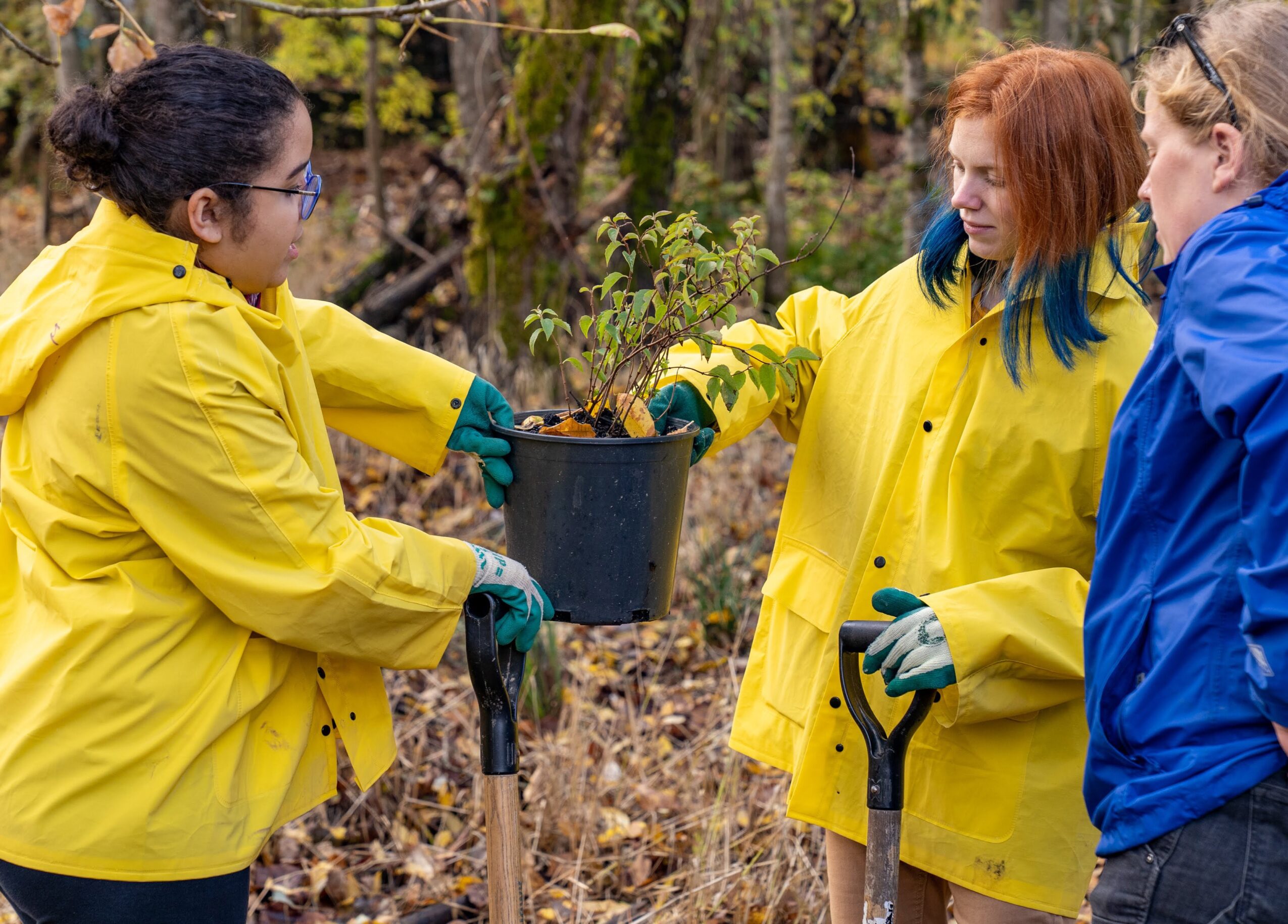
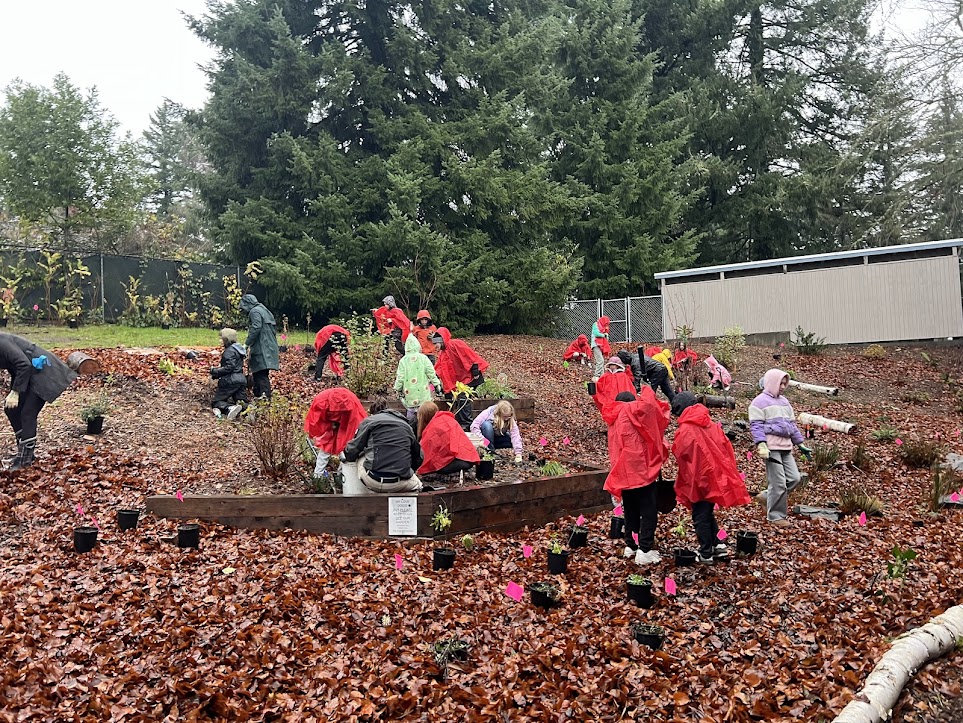
From the very start, what mattered most was ensuring that students felt like they could make a difference. We built lessons from scratch week by week, using handmade activities, and visited classrooms during the school day. Students didn’t just learn about ecosystems; they tested things out. They experimented with different ways to remove blackberries and restore habitat, using everything from hand tools to vinegar, and even goats.
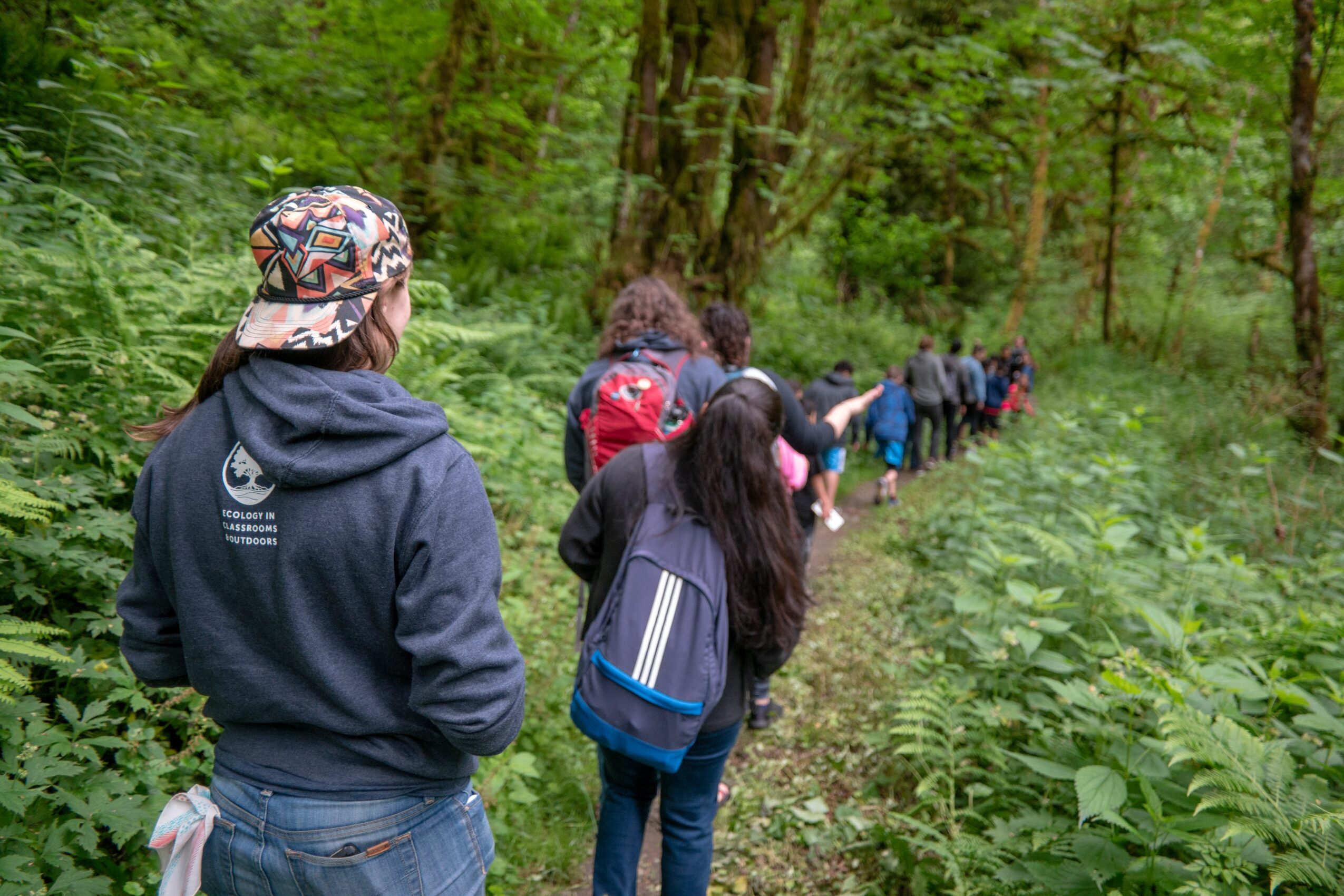
We soon needed a team of educators to deliver ongoing programming in elementary classrooms across the Portland metro area. We formed partnerships to engage students with their communities through stewardship projects and to take them on excursions to waterfalls and old-growth forests. Student enthusiasm was our fuel, and in those early days, we needed it! The demand for our programming grew faster than we could, and from schools that didn’t have the budget. Bethany and I persevered by working other jobs, from tutoring to painting houses, so the grant funds we received could go toward building ECO.
Now, we have programs at elementary, middle, and high schools, Spanish lessons, and others that connect students in different countries through migratory birds. We have a growing online library of free ecology lessons and curriculum kits called Place-Based Units that put experiential learning tools in the hands of educators across the Pacific Northwest.
20 years on, the power of this work is clear: when students develop an ongoing relationship with nature through deep inquiry and stewardship, the impact extends far beyond the classroom. It shapes how students see themselves, their communities, and their role in the future.
Can you talk to us a bit about the challenges and lessons you’ve learned along the way. Looking back would you say it’s been easy or smooth in retrospect?
The road has rarely been smooth. It has been an endless balancing act to find funding, meet demand, and keep innovating. The reality is, public education is a slow-moving behemoth that struggles to fund the basics, and this is especially true for the schools we visit – nearly all our programs happen in severely under-funded, Title 1 schools.
So here lies our longest-running challenge: We want our programs to be free, and we prioritize where the need is greatest, which puts us in a unique position—we have a “product” (several, in fact) in high demand and our capacity to meet it is limited by…money. Luckily, we don’t have to convince people of the value of the work, especially now, but we do have to constantly chase funding, most of which comes from grants. At times–this is one of them–grant funding has been as changeable as the weather. Uncertainty is a hard one to plan around, but we’ve done a lot with the backing of many dedicated, long-term partners.
We’ve adapted through so many major challenges: the 2009 recession, COVID, changing administration priorities, and student demands for climate action. Each time, we survived and emerged with new tools made from the need to meet these challenges—like pivoting to create online programming we could use for our students stuck at home.
Our hope for the next 20 years is to attract the consistent funding we need to continue what we’ve started and better position ourselves to provide students with consistent opportunities to connect with, learn from, and care for the natural world around them.
Thanks – so what else should our readers know about Ecology in Classrooms & Outdoors (ECO)?
Ecology in Classrooms & Outdoors–ECO in short–is known for helping students build relationships with the natural world and their communities through hands-on ecology lessons and stewardship. That’s our mission, and I am most proud of the many ways our team continues to put it into action.
I’d say our approach defines and sets us apart. We know ecology naturally connects everything, and we lean into that. Our ECO-educator-led outdoor lessons and stewardship projects build on what students learn in the classroom and also connect them to the larger community. Instead of treating the world outdoors as something abstract or distant, students have the opportunity to immerse themselves in the study of the soil, watersheds, plants, and wildlife found nearby.
ECO’s Aves Compartidas bilingual program takes a different approach, connecting students in Oregon with their peers in Mexico through the study of migratory birds. They learn about the habitats the birds rely on to make the round-trip journey and share cultural stories along the way.
I’m particularly excited about our Place-Based Units, or PBUs, as we call them. They have spent a number of years in development and are proving to be an asset not only to classroom teachers but also to our partners, such as soil and water conservation districts, who need curriculum materials to deepen learning on topics – like wetlands or beavers – that are important to their missions. PBUs are curriculum kits that weave core concepts through all subjects and teach students to think like ecologists. Our kits are built on what ECO educators do every day, but instead of just science, students explore ecology through English language arts, math, social science, and art. This gives teachers more time to explore topics, adds depth to the lesson, and provides access points for students with different ways of learning.
Where do you see things going in the next 5-10 years?
I expect to see deeper collaboration between nonprofits, schools, and local governments. Amidst the cultural and political shifts that challenge how this work is prioritized and funded, collaboration is crucial. I suspect this will give programs like ours built-in resilience and the ability to innovate through shared resources, goal alignment, and a collective commitment to community building.
Additionally, we see the necessity to integrate Diversity, Equity, Inclusion, and Justice into environmental education at large. DEIJ may currently be corrupted by the backlash to the “woke agenda,” but we’ve seen the good that comes from having more voices at the table. Over the past decade, we, like many other organizations, have made a deliberate effort to center DEIJ in our work because those with the fewest resources are often the most affected by ecosystem degradation and the effects of our changing climate.
Through a cycle of training and implementation, DEIJ deepens our mission, and we’ve found a framework that allows us to prioritize underfunded schools and deliver our programs free of charge so that students who face the greatest barriers can participate in top-notch, experiential learning. By bringing hands-on ecology investigations directly to classrooms and students into nearby nature, we will continue to expand access to environmental education and increase representation of diverse groups in science and stewardship.
The next 5-10 years are uncertain, but we know the need for environmental education–and access to it–is only growing. Young people today are inheriting a world they had no hand in creating. Schools and communities are increasingly looking for ways to help students understand those realities while also giving them tools to feel empowered rather than overwhelmed. As environmental educators, our role is to meet that need by creating opportunities for students to build ecological understanding alongside a strong sense of agency so they will carry this work into their everyday lives.
Contact Info:
- Website: https://www.ecologyoutdoors.org
- Instagram: https://www.instagram.com/ecology4kids/
- Facebook: https://www.facebook.com/Ecology4Kids/
- LinkedIn: https://www.linkedin.com/company/ecology-in-classrooms-&-outdoors