

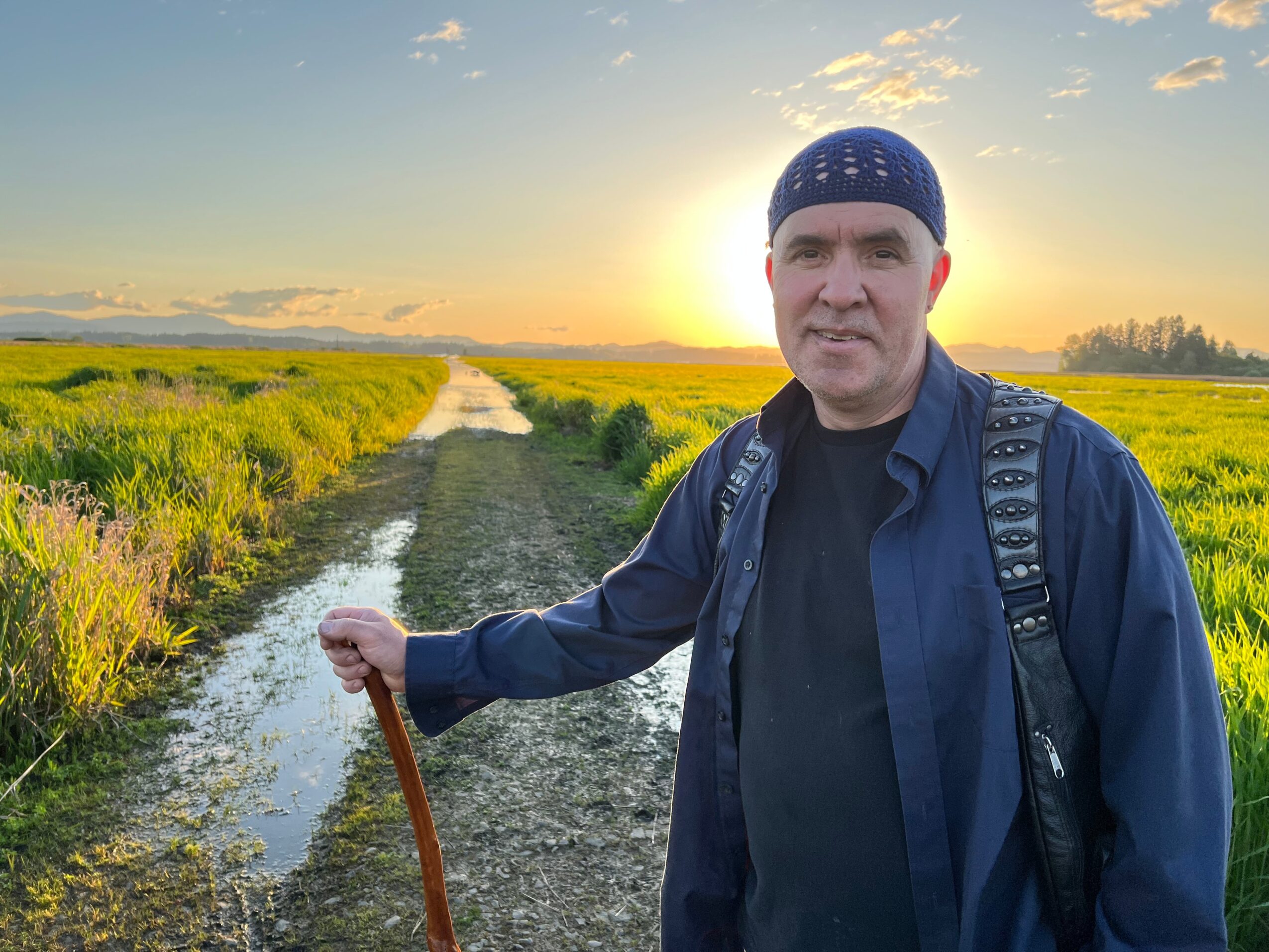
Today we’d like to introduce you to Jud Turner.
Hi Jud, can you start by introducing yourself? We’d love to learn more about how you got to where you are today?
I grew up in Eugene, Oregon, and I’ve been making things for as long as I can remember, but I didn’t start out with a clear plan to become a professional artist. I studied Sociology and Fine Art at the University of Oregon and worked in social services for a number of years. In 1995, I took a Welding for Artists class at Lane Community College, and that really changed the direction of my life. I made my first welded sculpture—a human head built out of gears and mechanical parts—and immediately felt like I had found a language that made sense to me. In the late 1990s, I set up my first metal studio with another sculptor in an industrial warehouse. I lived and worked there for about three years, learning fabrication through a combination of experimentation, mistakes, persistence, and some invaluable one-on-one training from an industrial millwright. Eventually I left my job in social services and took the leap into making art full time.
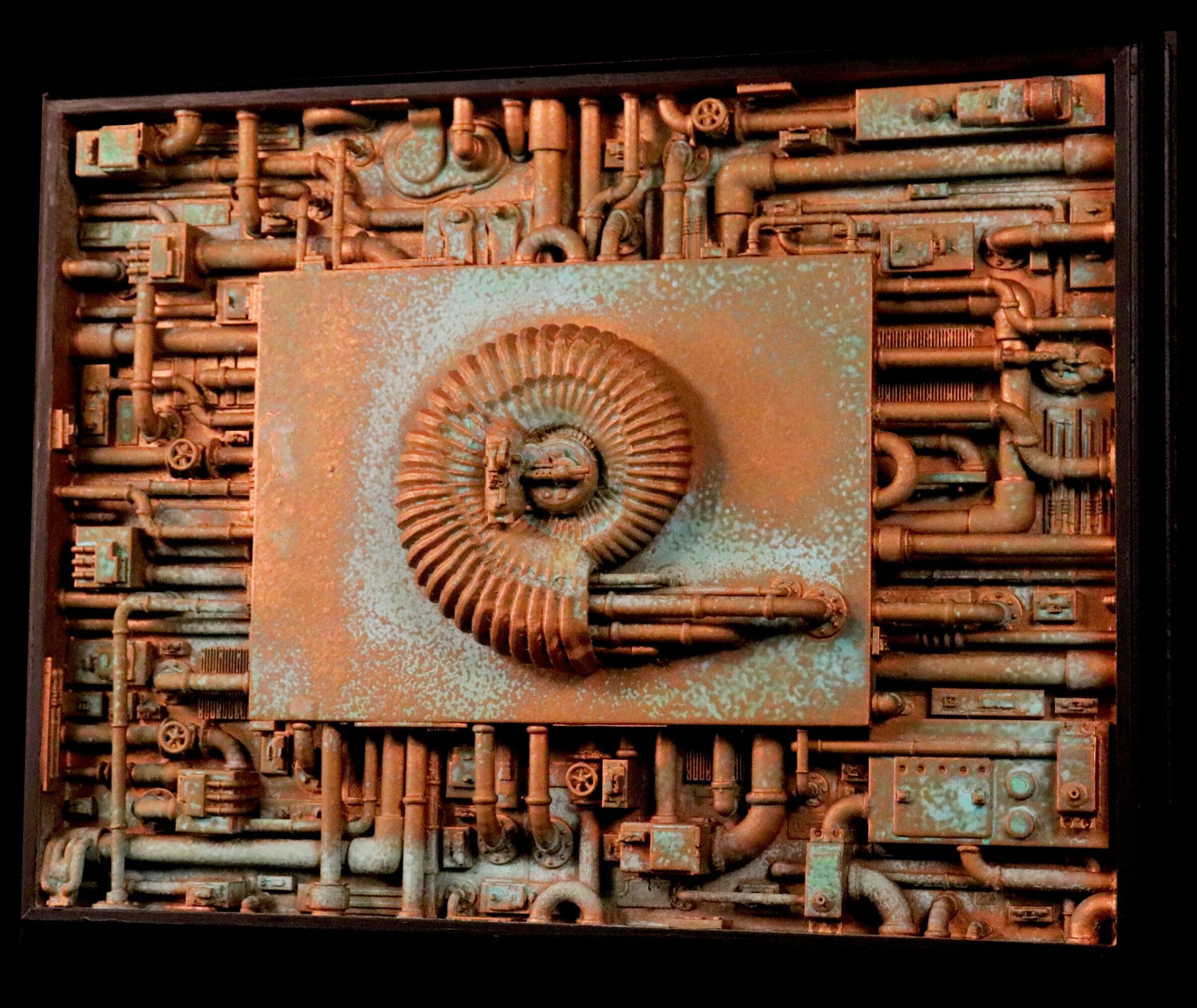
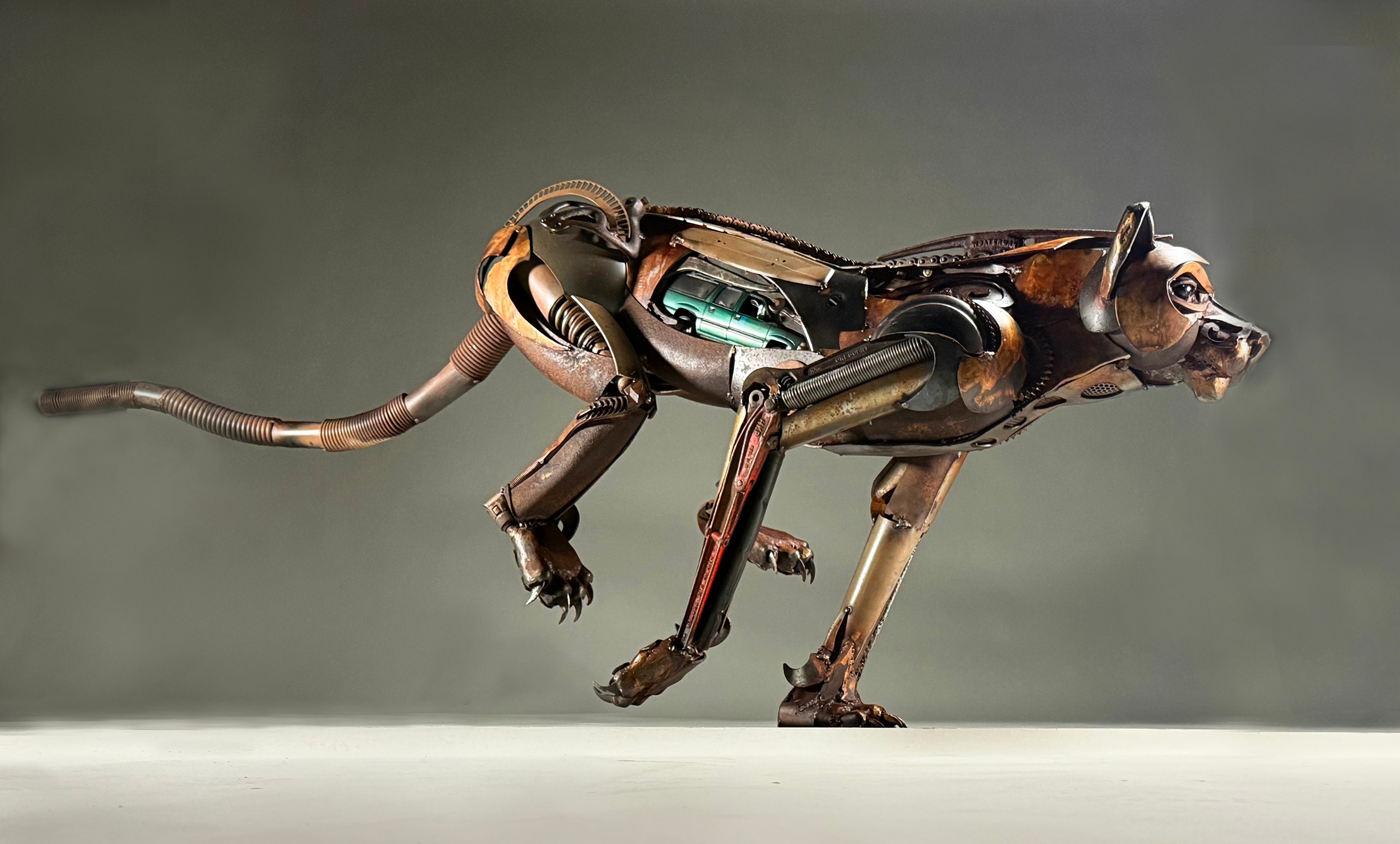
For the last 25-plus years, I’ve built my practice around welded steel, found objects, machinery parts, and other materials that already carry a history. Animals have always been central to my work. I’m fascinated by the contrast between something industrial and discarded—a gear, a wrench, a piece of old machinery—and the anatomy and movement of a living creature. There’s something very satisfying to me about taking objects that have finished one useful life and giving them another.
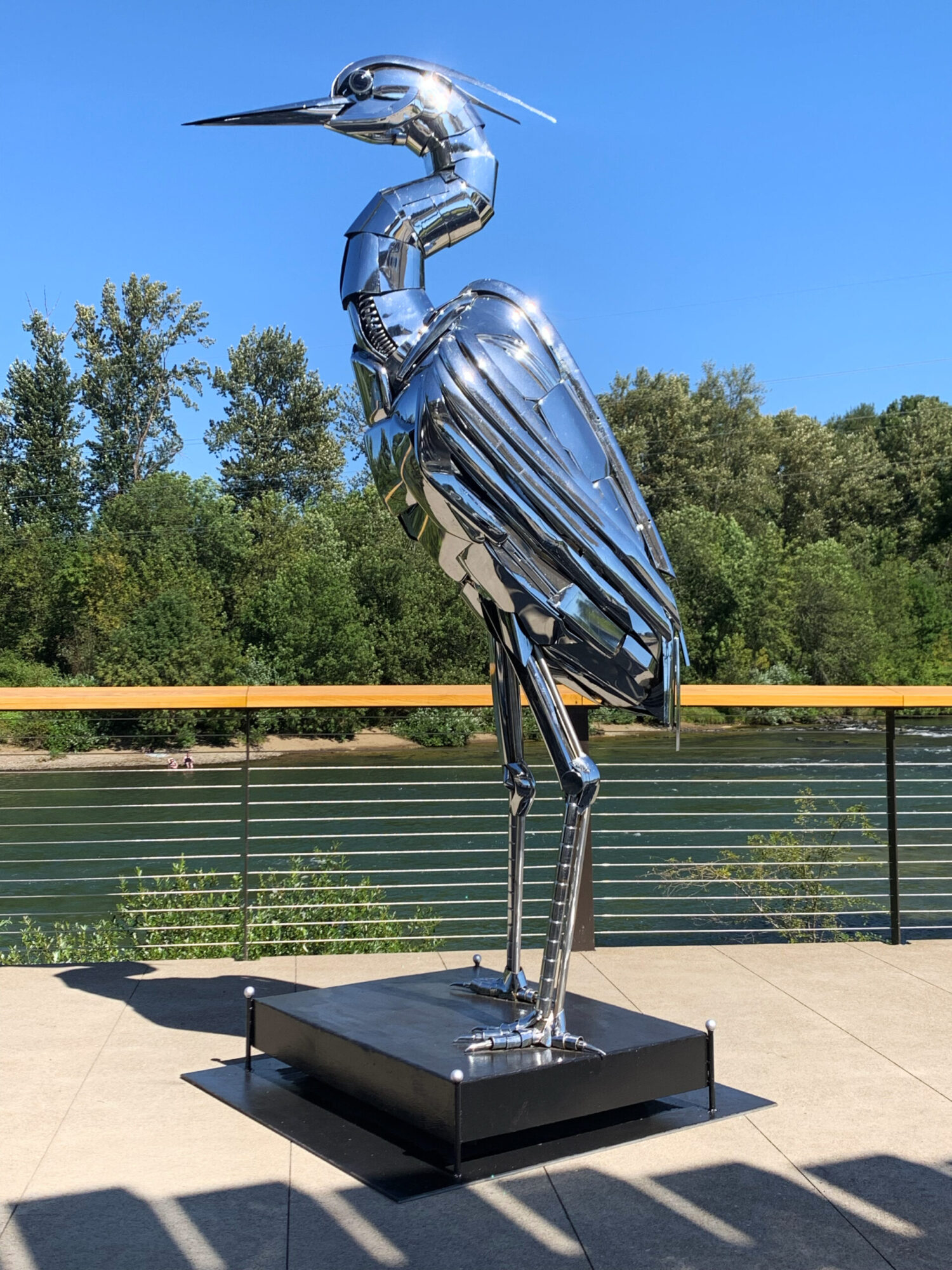
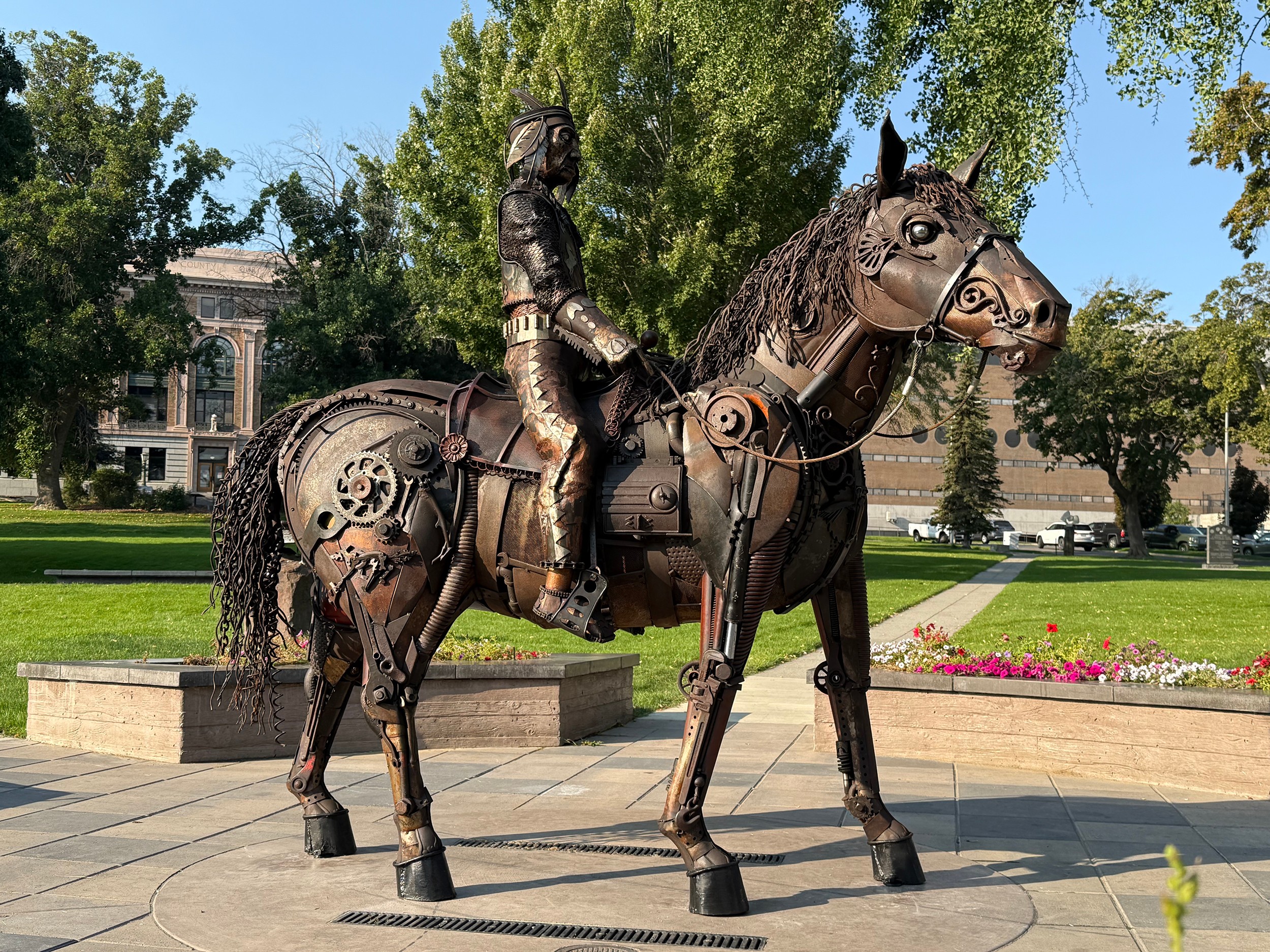
The career itself has grown slowly and organically. I’ve shown work in galleries, sold sculpture to collectors around the world, and gradually moved into larger architectural and public-art projects. Some important milestones have been my Great Blue Heron at the University of Oregon, the Viribus phoenix made from debris from the Holiday Farm Fire, and the P’Squosa Monument in Wenatchee, Washington. That project was especially meaningful because I worked closely with the P’Squosa Tribal Council to create a large horse-and-rider monument honoring Chief John Harmelt and the history of their people.
More recently, my work has expanded dramatically in scale. In 2025 I completed several major architectural commissions in Eugene, including a 25-foot wall installation at The Portal, and I’m currently working on my largest public commission to date for the City of Portland. It’s a 16-foot-long weathering-steel salmon for the CityFleet facility on Swan Island, incorporating Portland architecture, mechanical elements, and miniature CityFleet vehicles into the body of the fish.
What I like about where I am now is that the work has gotten bigger and more technically challenging, but the basic impulse behind it really hasn’t changed much since that first sculpture in 1995. I’m still in the studio cutting things apart, welding unlikely pieces together, solving problems, and trying to make something feel alive. I’ve just had the good fortune to keep doing it long enough that the projects, tools, skills, and opportunities have grown along with me.
Alright, so let’s dig a little deeper into the story – has it been an easy path overall and if not, what were the challenges you’ve had to overcome?
Definitely not a smooth road. I think one of the realities of choosing a creative life is that there really isn’t a roadmap. I’ve spent most of my adult life figuring it out as I went along. The financial uncertainty was probably the hardest part early on. When I left a stable career in social services to become a full-time artist, there was no guarantee that it was going to work. There were years when I was living very close to the edge financially, taking whatever fabrication work I could get, and learning how to run a business at the same time I was trying to develop as an artist. Being a professional artist means you’re not only making the work—you’re also the salesperson, photographer, bookkeeper, fabricator, installer, shipping department, grant writer, and marketing department.
There’s also a tremendous amount of rejection involved. Public art has become a major part of my career, but you have to become comfortable putting a huge amount of effort into an application or proposal and then not getting the project. Sometimes you can be one of three finalists out of hundreds of artists and still walk away with nothing. Learning not to interpret that as a judgment of the work—and simply getting back into the studio and continuing—is an important part of longevity.
The physical and technical challenges have grown along with the scale of the work. Every time I take on something larger than I’ve done before, there are problems I haven’t encountered yet. Engineering, structural loads, transportation, installation, new materials and fabrication processes all become part of the job. I actually enjoy that part. Being slightly outside of what I already know keeps the work interesting.
I’ve also had periods in my life when maintaining the discipline and stability necessary to keep making art was difficult. One of the biggest lessons I’ve learned is that inspiration is much less important than consistency. Careers are built by showing up in the studio over and over again, including the days when you don’t feel particularly inspired.
After more than 30 years of making sculpture, I think persistence has probably mattered as much as talent. There have been plenty of disappointments, mistakes, failed ideas, financial worries and projects that didn’t go the way I hoped. But each one taught me something. The career I have now wasn’t the result of one big break. It was thousands of small decisions to keep making the work and keep moving forward.
Thanks – so what else should our readers know about your work and what you’re currently focused on?
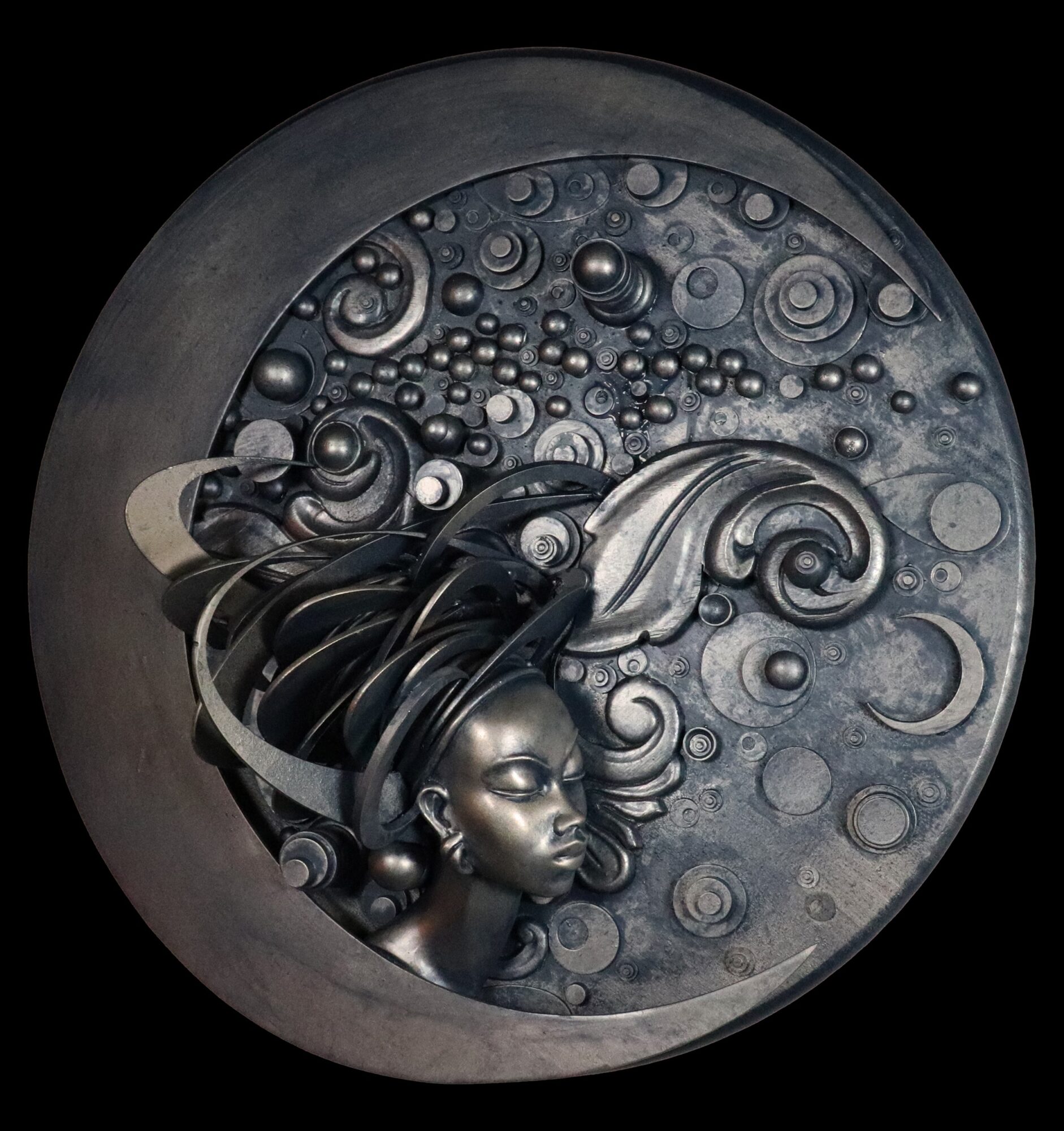
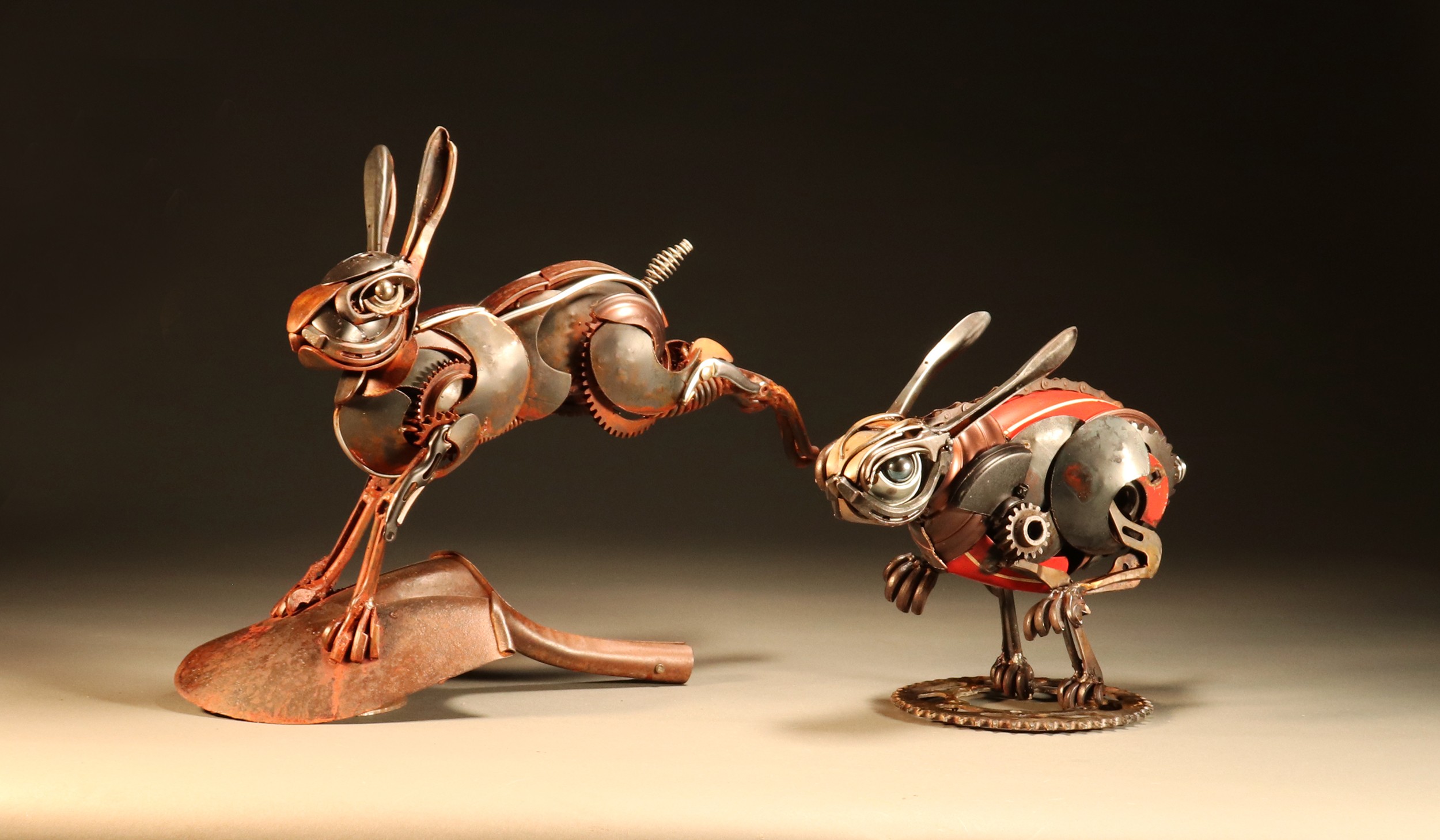
I’m primarily a sculptor and metal fabricator. I work with welded steel, stainless steel, weathering steel, found objects and salvaged mechanical parts. I’ve always been interested in taking materials that are hard, industrial and utilitarian and using them to create forms that feel organic and alive. I’m probably best known for my animal sculptures made from found mechanical objects. I’ve made everything from birds and rabbits to bears, horses, fish and other wildlife using gears, bicycle parts, tools, typewriter pieces and discarded machinery. I love the challenge of finding an object that was designed for a completely different purpose and suddenly seeing a shoulder blade, an eye, a feather or a section of muscle in it. I try not to disguise what the objects originally were. Part of the experience is being able to move back and forth between seeing the animal and discovering all of the individual parts that make it.
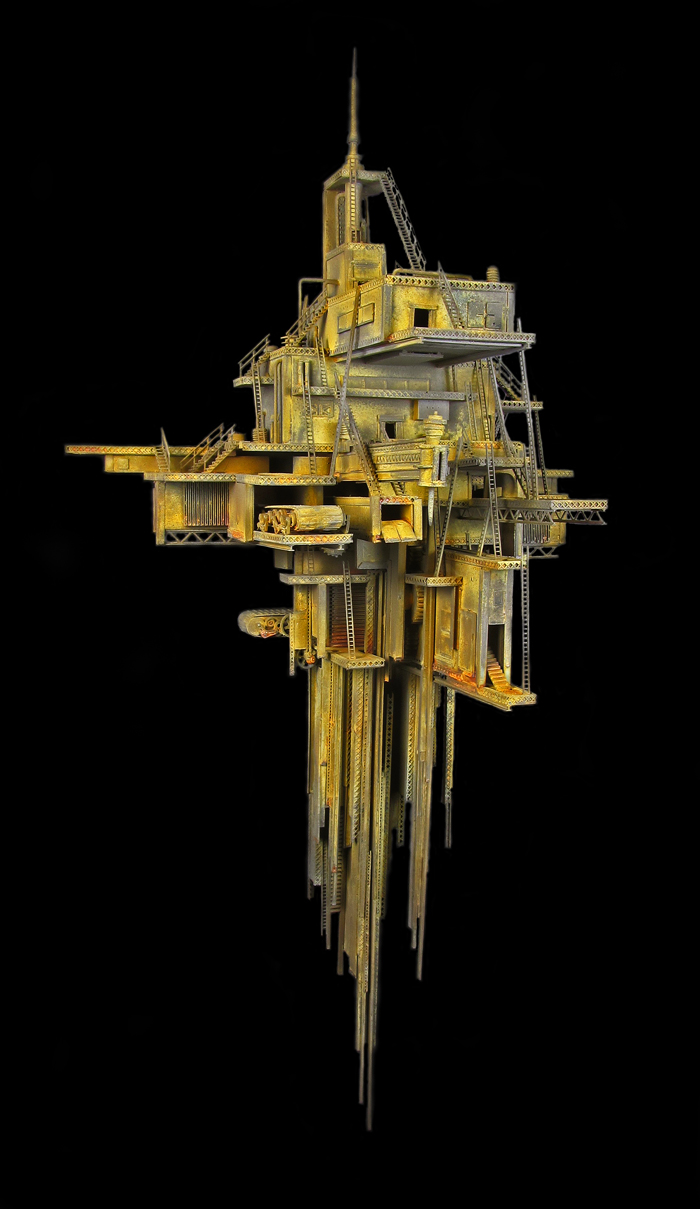
Over the years, that approach has expanded into much larger public and architectural work. I’m increasingly interested in combining sculpture, architecture, engineering and storytelling. Some projects involve hundreds of individual metal elements, miniature buildings, community-donated objects or imagery specific to the history of a place. I enjoy making work that reveals itself gradually rather than being understood completely from across the street.
I’m especially proud of the P’Squosa Monument in Wenatchee, Washington. I worked closely with the P’Squosa Tribal Council to create a life-size representation of Chief John Harmelt riding his horse, Quilmiakin, incorporating animals and imagery that were important to their history and culture. At the dedication, hearing tribal members talk about feeling represented and seen by the sculpture was incredibly meaningful to me. It reinforced my belief that public art can do something beyond simply decorating a space.
I’m also very proud of the direction my work is moving now. My current City of Portland commission is a 16-foot weathering-steel salmon containing a miniature Portland cityscape, CityFleet vehicles, mechanical objects and references to the history of Swan Island. It brings together a lot of things I’ve explored separately for decades—animals, machinery, architecture, found objects and storytelling—into one sculpture.
What probably sets my work apart is the combination of imagination and fabrication. I’m not someone who designs something on paper and then hands it off to a fabricator. I build my work. I weld it, cut it, grind it, solve the structural problems and figure out how the pieces physically go together. At the same time, I’m constantly looking for unexpected visual relationships between things.
After more than 30 years of doing this, I still get excited when I’m standing in front of a pile of scrap metal and suddenly recognize something in it that wasn’t there a moment before. That transformation—from discarded object to something that appears to have movement, personality and life—is still at the heart of what I do.
Let’s talk about our city – what do you love? What do you not love?
I was born and raised in Eugene, so my relationship with this city goes back a long way. What I like best is probably the combination of creativity, community and access to nature. Eugene is big enough to have a strong arts and music culture, the University, interesting people and ideas, but small enough that you can actually know the people who make up those communities. I’ve been fortunate to spend most of my life here and build my career as an artist here. I also love how quickly you can get out of town and into the natural world. Rivers, forests, mountains and the coast are all part of the larger landscape of living here. Since animals and natural forms are such a big part of my work, I think growing up in Oregon has influenced me more than I probably realize.
I’ve also watched Eugene change enormously during my lifetime. Some of that change has been exciting, particularly seeing more public art, murals, interesting architecture and investment in downtown and other parts of the city. I like living somewhere that generally values creativity and understands that art contributes to the identity of a place.
What I like least is probably connected to that same growth. Eugene has become significantly more expensive, and I worry about whether young artists, musicians, craftspeople and other creative people will be able to afford the kind of studio and living space that allowed people like me to establish ourselves here. When I was younger, I could rent rough industrial space, build a welding studio and take some chances. Those spaces are increasingly difficult to find.
I think cities benefit enormously from artists, small businesses and slightly weird, experimental places that aren’t necessarily economically efficient. I’d hate to see Eugene become so expensive and polished that we lose some of the eccentricity and creative freedom that made it an interesting place in the first place. I hope that as Eugene continues to grow, we can make room for that part of our identity too.
Pricing:
- My work ranges from $500 to $250,000
Contact Info:
- Website: https://judturner.com
- Instagram: https://www.instagram.com/judturner/
- Facebook: https://www.facebook.com/judturner
- Youtube: https://www.youtube.com/@Theoblivionfactory