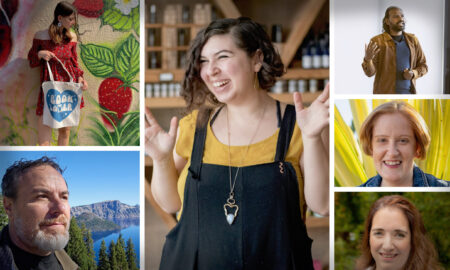



Today we’d like to introduce you to Tess Gunderson.
Hi Tess, please kick things off for us with an introduction to yourself and your story.
I stumbled into partner dancing when I was around 13 or 14 years old at Glen Echo Park in Maryland. At the time, I was very interested in traditional Celtic music and dance and had been performing at the Glen Echo Park Folk Festival. Glen Echo is a historic former amusement park, and one of its most incredible features is the enormous Art Deco-era Spanish Ballroom. Every weekend, it was filled with live music and everything from contra dancing to big-band swing. That’s really where I fell in love with partner dancing.
A few years later, during my senior year at Montgomery Blair High School in Silver Spring, Maryland, a friend and I performed a swing dance routine with our school jazz band for an annual event called Spring Fling. The school brought in instructors from a nearby ballroom studio to teach at the event, and afterward they asked if I would be interested in training to become an instructor. I had never really considered dance instruction as a career before that. A few months after graduating, I decided to check it out—and that decision ended up shaping most of my adult life.
I taught at that local Arthur Murray studio for about nine and a half years before moving to Austin, Texas, where I worked for another well-known studio called Go Dance. By the time I eventually moved to Southern Oregon in 2016, I had spent years working in large, fully staffed studios and had experience with social dancing, competitive dancing, performances, private instruction and group classes across many different partner dance styles.
Once I arrived in Oregon, I taught in a variety of places around Bend and the Rogue Valley, including the Evergreen Ballroom, Candela Dance Studio, The Firehouse Dancehall, local dance conventions and other community spaces. I also began teaching independently and eventually from a small home studio.
Around 2019, I started thinking seriously about what my own version of a dance studio might look like. Many independent instructors understandably specialize in one or two dance styles, but I had spent my career falling in love with a lot of them. Swing, ballroom, Latin, blues, country, tango, fusion—I loved the different cultures, music and communities surrounding all of them. I began imagining a hybrid studio where people could explore several styles under one roof and, more importantly, learn how to dance socially to music they actually loved.
That year, I converted much of my house and patio in Medford into a little studio called House of Art. I moved out most of my living room furniture and taught private lessons, small group classes and even hosted miniature social dances from my home.
At almost exactly the same time, I had a very serendipitous meeting with one of the developers of the historic Elks Lodge in downtown Medford. The building had been vacant for more than a decade, and I was shown the enormous ballroom on the top floor, complete with a wood floor, high ceilings and a stage. It immediately reminded me of the Spanish Ballroom at Glen Echo where I had first discovered dancing as a teenager. I started dreaming about opening a studio there.
Then March 2020 happened.
With the uncertainty of the pandemic, opening a large dance studio obviously wasn’t the right move, so I essentially let that idea go. I continued building my home studio, teaching, and working on my music career with my now-husband and bandmate, Rob Gunderson. But every so often, I would still imagine the kind of dance studio I would love to create someday—a community hub centered around music, partner dancing and connection. I wanted it to feel a little magical and whimsical, somewhere people could walk into and escape the outside world for a while.
Then, in September 2023, the owners of The Copper Plank—a local pub and pizza kitchen where I had hosted some larger dance events—called me. They told me they were planning to move their business into the historic Elks Lodge and were launching a Kickstarter to help make it happen. They asked whether I would put together a dance event to help bring people into the building and build awareness around the project.
When owner Cory Maukonen invited me down for a tour, I was excited just to see the building again. I hadn’t been inside since 2019.
At the end of the tour, he showed me one last room.
It completely stopped me in my tracks.
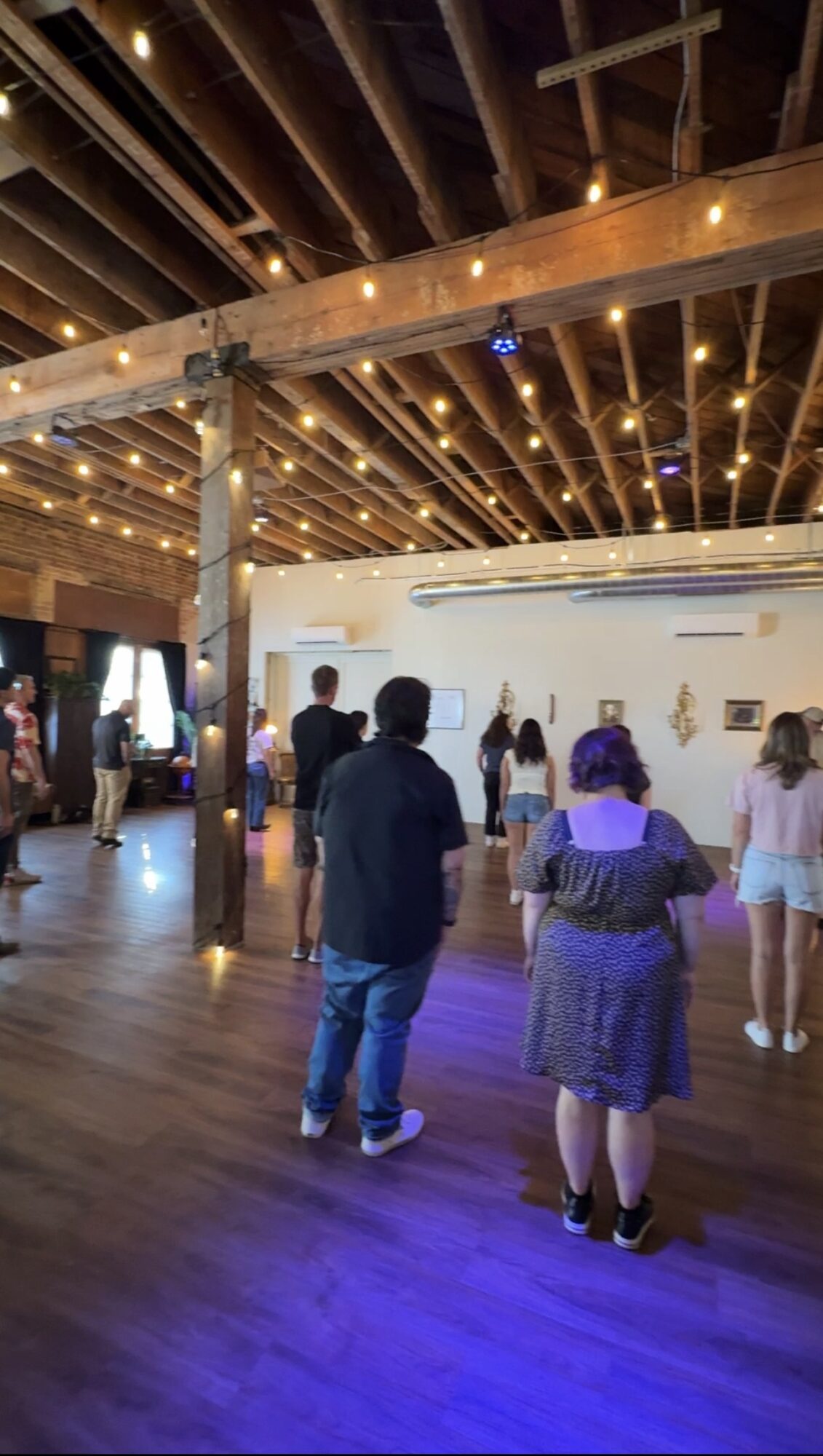
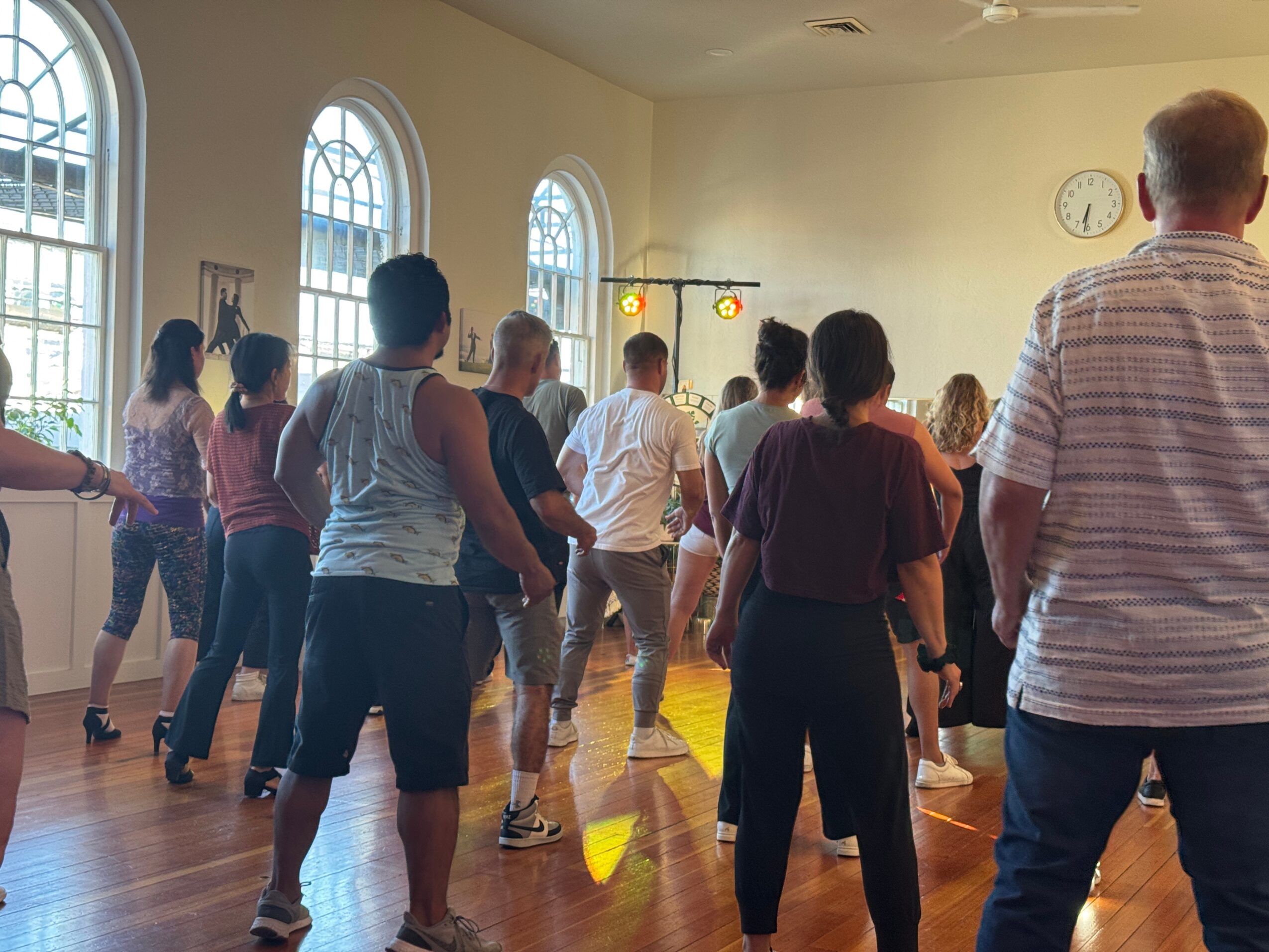
It was an empty dance hall with tall arched windows, high ceilings and an incredible old wood floor that had been discovered underneath decades-old carpet. It was almost exactly the room I had been imagining for years.
I remember blurting out something along the lines of, “Oh my goodness—I have been dreaming about this room. You have to rent this to me!”
Cory’s response was essentially, “Of course we will. If we get in, you get in.”
I don’t think I slept much for the next several weeks.
I immediately started planning events, building a preliminary schedule and slowly collecting furniture and equipment. I called the studio The Annex, because it quite literally was an annex within this much larger historic building. Everything about it felt familiar and new at the same time. It felt like a culmination of every studio, ballroom, venue and community I had experienced throughout my career.
One of the first events I organized was a “Free Day of Dance,” inspired by a citywide event I had seen years earlier in Austin. I scheduled free classes from 11 a.m. until 7 p.m. and decided I would teach a different dance style every hour—all by myself. I also completely forgot to schedule myself a break. I’ve gotten better at that since!
At the time, I didn’t even have a studio Facebook page or much of a social media presence. I made flyers, drove them around town and hoped maybe 50 people would come through during the entire day.
Instead, many of the classes had 40 or 50 people in them, and more than 150 people walked through the doors that day.
That was the moment I thought, “Oh wow. People really want this.”
The Copper Plank successfully funded its Kickstarter and began building out its space, while I continued preparing the studio. The Annex officially opened in April 2024.
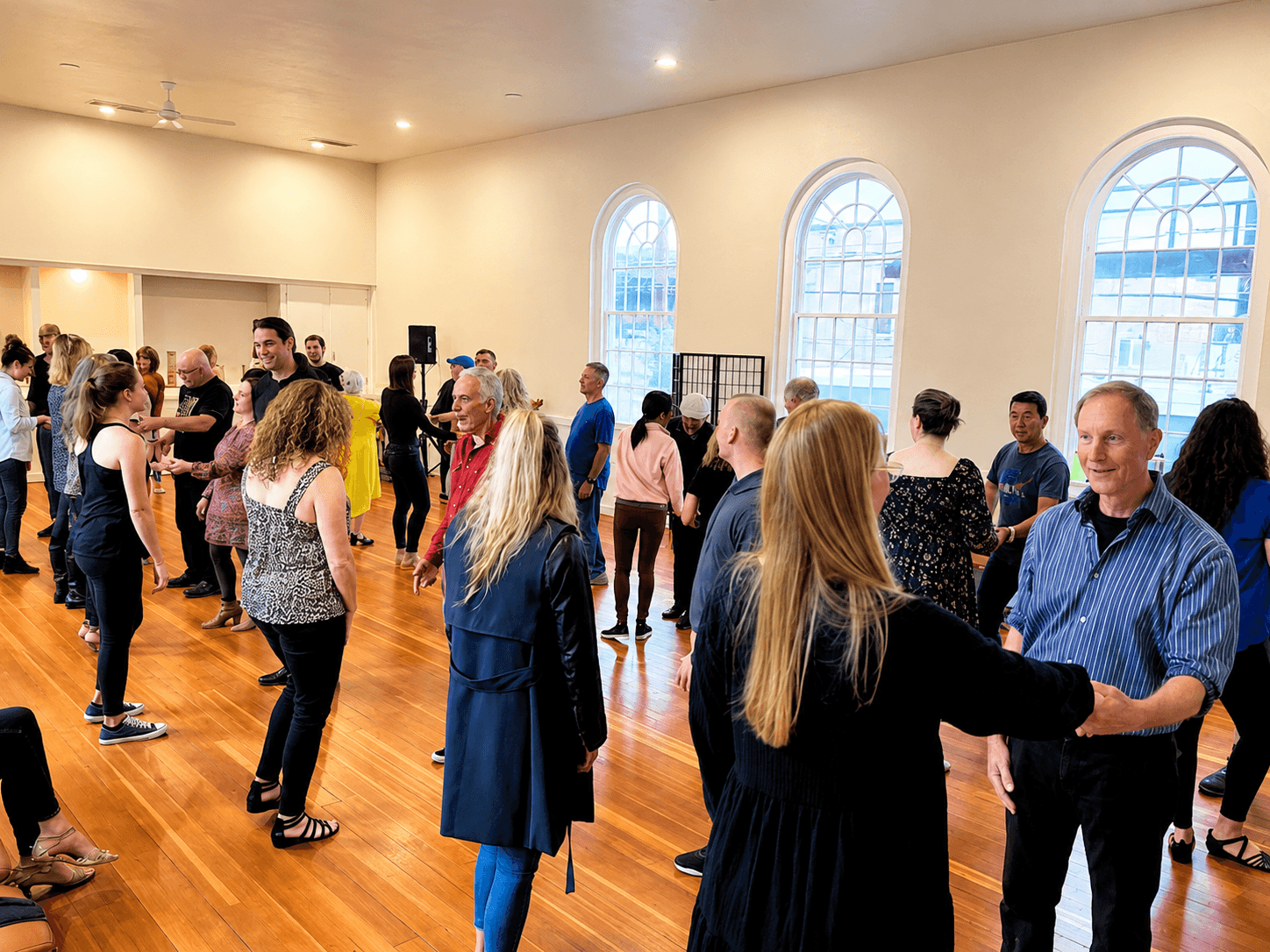
In the beginning, I taught nearly everything myself, with the exception of having a teaching partner for Salsa and Bachata during many of those early months. We offered ballroom, blues, swing, Latin, country, tango and fusion classes, along with private lessons and social dances. Some classes had six or eight people, while others grew into the twenties. As the studio grew organically, so did the number of volunteers helping me, and eventually the beginnings of an actual staff.
Music has also been a constant throughout all of this. My husband Rob and I perform together as an original music duo, and over the years a really wonderful crossover has developed between the dance and music communities. Many people who first met me through dance started coming to our shows at wineries and local venues—and, naturally, dancing to our music.
Today, The Annex has grown beyond that first dance hall. We’ve opened a second space within the building and are continuing to work toward the dream of eventually restoring and bringing dance back to the original ballroom on the top floor of the historic Elks Lodge—the very ballroom that first captured my imagination back in 2019.
In the meantime, we just keep growing. We’re expanding our classes and events, welcoming more instructors, and, of course, adding more and more whimsical décor along the way. It has been incredibly exciting to watch The Annex grow alongside the blossoming Copper Plank and what feels like a budding new chapter for downtown Medford itself.
When I look at everything that has happened, I’m probably most proud of being part of creating a space that feels welcoming, creative and just a little bit magical—a place centered around music, dance and art that gives people a reason to come together.
Especially after a period of history marked by so much isolation and uncertainty, creating a place where people can walk in, take someone’s hand, hear music playing and immediately connect with another person feels incredibly meaningful to me.
And we’re nowhere near finished. Every day, we’re excited that we get to share the magic of partner dancing with the Rogue Valley and who knows? Maybe someday, beyond.
I’m sure it wasn’t obstacle-free, but would you say the journey has been fairly smooth so far?
I don’t know that opening any small business is ever a completely smooth road! For me, one of the biggest challenges was simply learning to have faith in investing in systems, equipment and infrastructure that I had never really needed when I was teaching out of my house.
At House of Art, things could be wonderfully simple. I could use paper punch cards, teach a small group in my living room, turn on some music and go. Moving into a commercial space was an entirely different animal. Suddenly I needed a virtual booking and check-in system, computers for the front desk and DJing, sound equipment, lighting, furniture, chairs and tables and all of the little things you don’t necessarily think about until you need them.
And all of that required spending money before I necessarily knew what the return would be. There was definitely a learning curve in trusting that sometimes you have to invest in the infrastructure for the business you’re trying to become, rather than only buying what the business needs at that exact moment.
Months before I was even able to open, I had actually started hoarding furniture in my house for the future studio. I was thrifting and antiquing like crazy. Chairs, tables, lamps, décor—if I thought The Annex might need it someday, it started accumulating at home.
Then there were challenges that came from something I hadn’t necessarily anticipated: rapid growth.
In the beginning, I could teach the class, greet everyone, answer questions and check people in myself. Eventually, some of the classes became too large for that to be realistic. That’s when volunteers organically started making their way into the process. People from the community began stepping forward to help with check-in, events and all of the little jobs that go into making a place like this function. Over time, that evolved into building an actual staff and bringing more instructors into the studio.
That transition has probably been one of my biggest learning experiences as a business owner. I had spent many years knowing how to be a dance instructor, but owning a growing dance studio required me to learn an entirely different set of skills at the same time—technology, systems, scheduling, purchasing, event production, marketing, managing people and, perhaps hardest of all, learning that I couldn’t personally do everything forever.
There have certainly been expensive lessons, experiments that needed adjusting, and plenty of figuring things out as we went. But I think that has also been part of the fun of building The Annex. We didn’t start with some enormous corporate blueprint for what the studio had to become. In many ways, the community has helped shape it right alongside us.
The road hasn’t always been smooth, but every new challenge has usually meant that we’ve reached a point where something needs to grow, change or evolve and I’ve learned to see that as a pretty wonderful problem to have.
Alright, so let’s switch gears a bit and talk business. What should we know about your work?
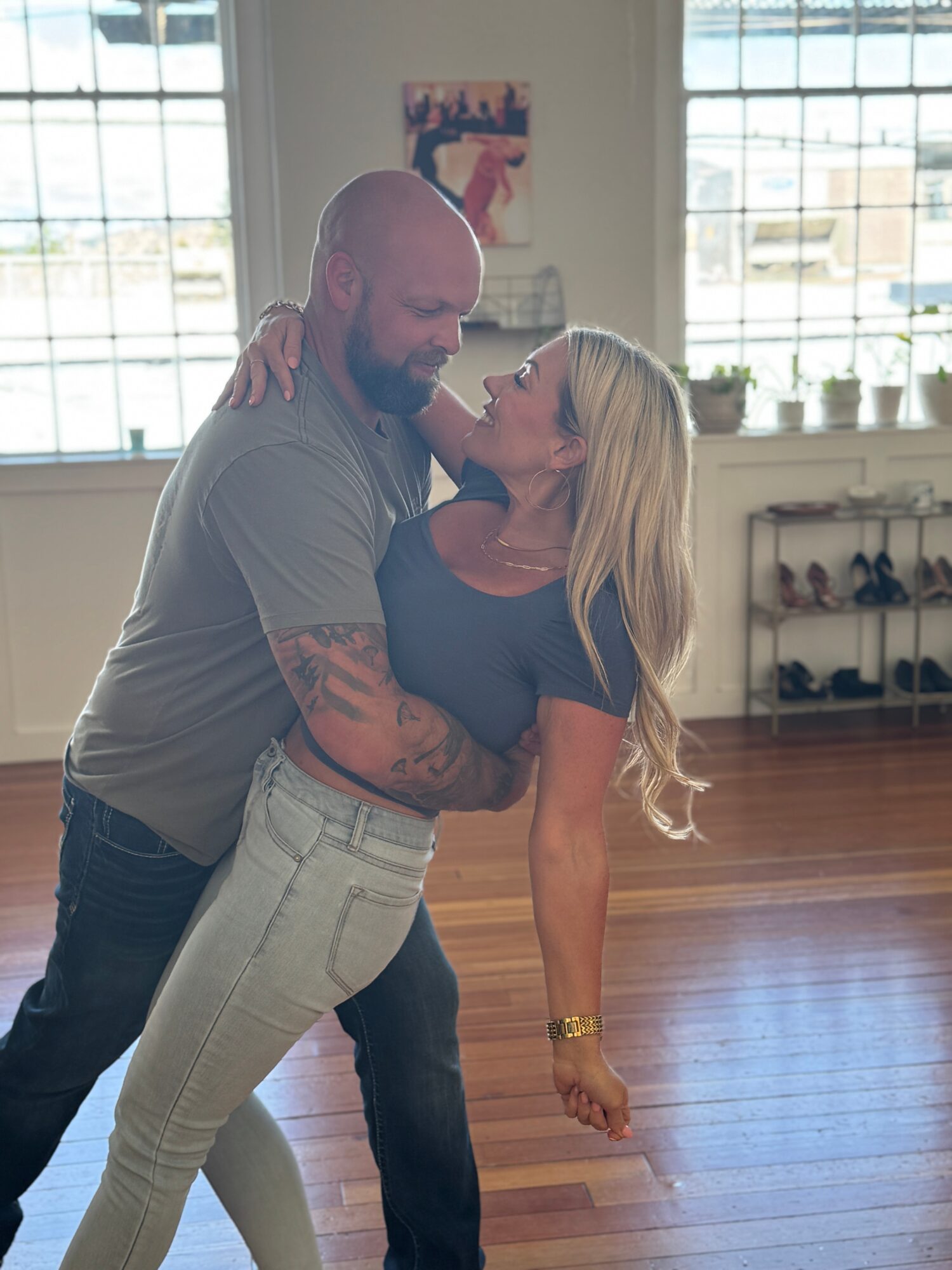
At The Annex, we specialize in social partner dancing—everything from Swing, Salsa and Bachata to Ballroom, Blues, Country, Latin dances and Fusion. One of the things that sets us apart is that we don’t necessarily identify ourselves as a “Swing studio,” a “Ballroom studio” or a “Salsa studio.” We love all of it!
My goal has always been to develop well-rounded social dancers and give people a variety of tools they can use to connect with a partner and, most importantly, with music.
That philosophy is probably best represented by our approach to Fusion dancing. I generally define Fusion in three ways: dancing two or more individual styles within the same piece of music; dancing an established style to music that isn’t traditionally associated with it; and borrowing or adapting movements and patterns from one dance style and incorporating them into another.
In some ways, I think of the individual dance styles almost like learning different languages. The more vocabulary you have, the more possibilities you have for expression. You might learn the structure and connection of West Coast Swing, the rhythms and body movement of Latin dancing, the playfulness of Lindy Hop, or the elegance of Ballroom—and eventually those skills begin informing one another. The goal isn’t necessarily to blur all of those beautiful traditions together, but to understand them well enough that you have more choices when you step onto a social dance floor.
Something else that is very personal to my teaching style is that I love finding different ways to explain the same idea. People don’t all learn movement in the same way. Some students need to physically feel something, some need to hear the counts or understand the music, some need an analogy, and others need to actually *see* the concept laid out in front of them.
Over the years, I’ve created my own visual teaching aids, including maps, charts and diagrams that help students understand things like direction, patterns, timing and how different dances relate to one another. I also love breaking down musicality—helping students actually hear the structure, phrasing, rhythm and instrumentation within a song rather than simply memorizing which foot moves on which count. For me, the most exciting moment as an instructor is when you find the explanation that suddenly makes something click for a student.
High-quality instruction is extremely important to us, but so is creating an environment where people actually want to use what they’re learning. It’s exercise without necessarily feeling like exercise. It gives adults an opportunity to meet people, make friends, listen to music, laugh, learn something challenging, be creative and connect with another human being.
I was very fortunate to “grow up” dancing in some extraordinary spaces—from art galleries around Washington, D.C. to the Spanish Ballroom at Glen Echo Park. Those places taught me that the environment surrounding a dance can completely change the experience.
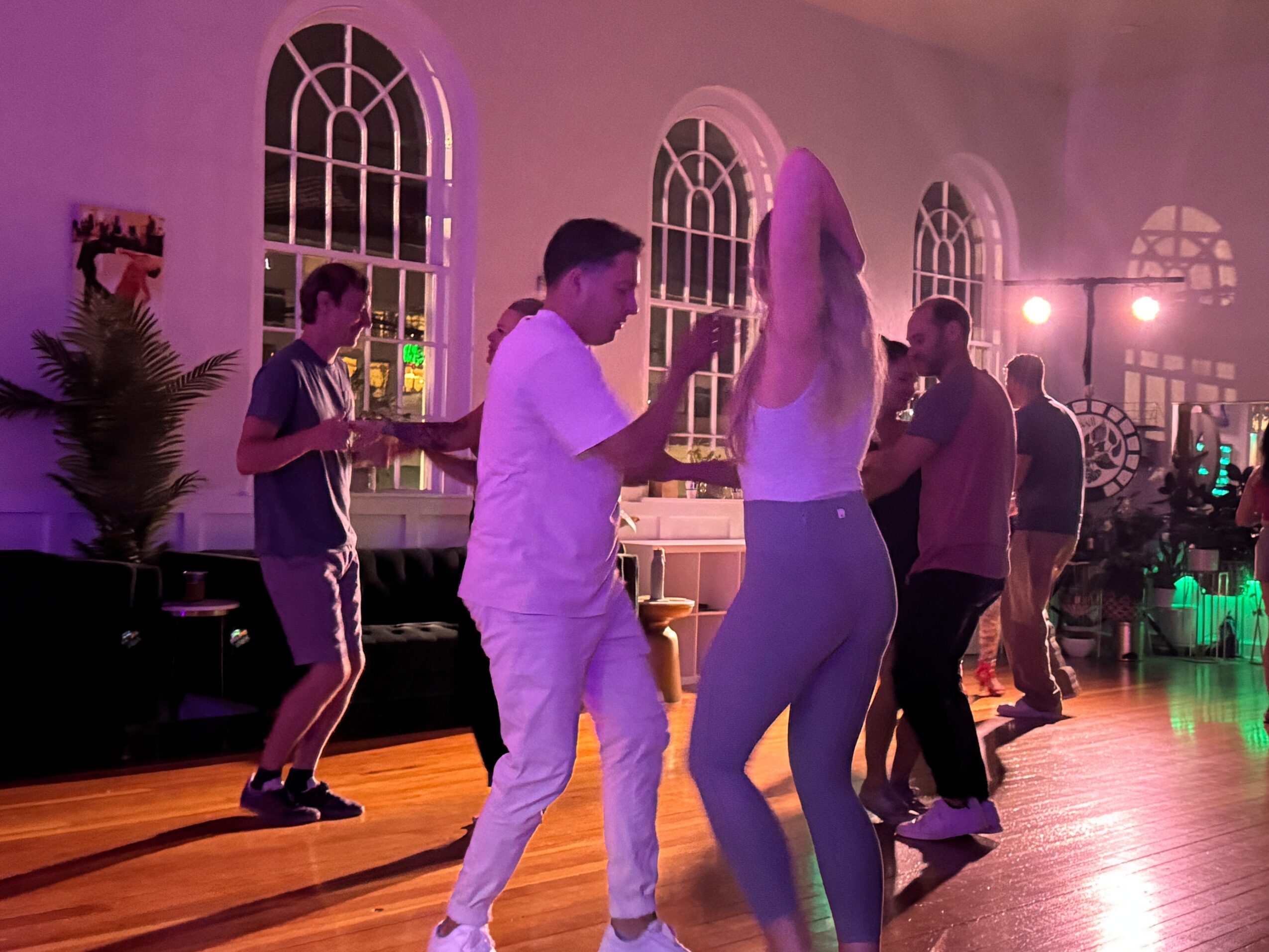
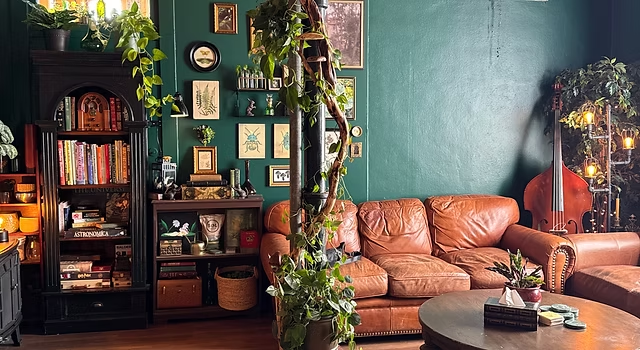
That idea has heavily influenced The Annex. I don’t want someone to feel like they’ve simply walked into an empty room where a dance class happens to be taking place. The whimsical décor, vintage furniture, lighting, music and character of the historic building are intentional. I want people to feel immersed in the experience from the moment they walk through the door. There is something special about learning to dance in a space that makes you *want* to dance.
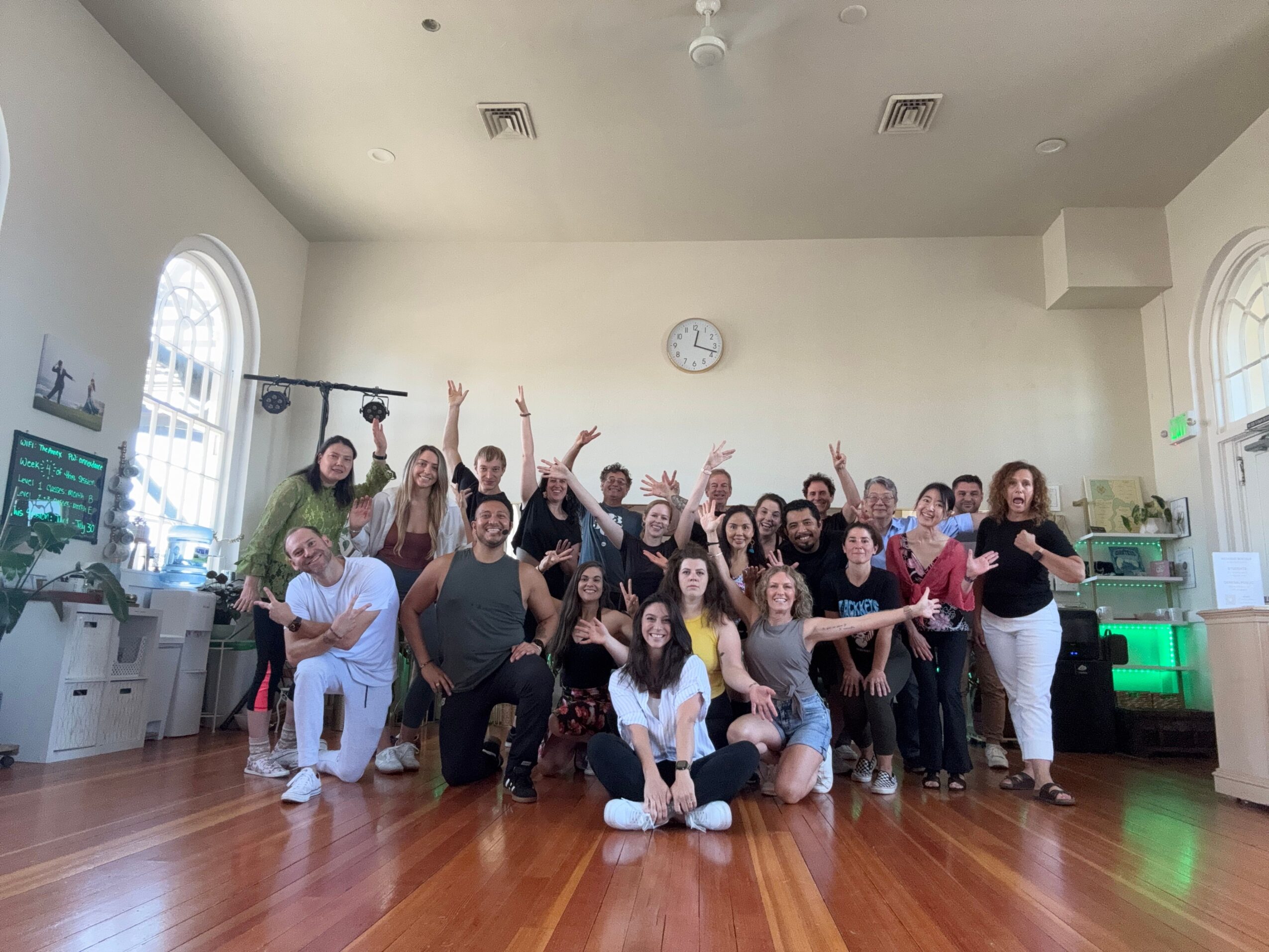
What I’m most proud of, though, is the community that has developed around it. Students often describe The Annex as welcoming, fun, a great place to exercise and a place where they can genuinely meet people. I’m proud that we’ve been able to combine that atmosphere with high-quality instruction and continue raising the level of dancing in our community without losing the warmth and accessibility that brought people through the doors in the first place.
Ultimately, I think what sets us apart is that we aren’t only interested in teaching people dance steps. We want to give people the skills, confidence, environment and community to make dancing an actual part of their lives.
Because to me, social dancing isn’t something that exists only during a lesson. The lesson is just where it begins.
What were you like growing up?
I was definitely not a shy or particularly organized child! I was extremely artsy, silly, imaginative, independent and, looking back, surprisingly entrepreneurial.
I was the kid who would sit in class drawing elaborate Sharpie tattoos all over my arms. Eventually my teachers mostly made peace with it, and a few even started asking me to give them a tattoo or two. By high school, I had turned it into a tiny lunchtime Sharpie tattoo business—which, in retrospect, probably should have been an early warning sign that I was going to end up working for myself someday.
My interests were completely all over the map. I was obsessed at various times with music, history, pirates, fantasy books, art, theater, costumes, movies, video games and animals. I loved decorating and constantly reinventing my bedroom. I wrote songs, drew characters, made up stories and movie scripts, designed T-shirts, formed bands and joined creative clubs. I also loved disappearing by myself on my bike to explore creeks and rivers and spend hours playing make-believe.
My parents had very eclectic musical tastes, and I think that gave me permission early on to like whatever I liked rather than worrying too much about whether things belonged together. I listened to Celtic music, blues, rock, Renaissance music, punk and plenty of other things in between. I sang in an a cappella group in high school and loved performing from a very young age. That eclecticism definitely followed me into adulthood.
My ideas about what I wanted to be when I grew up were equally varied. At different points I was absolutely certain I was going to be a Broadway musical theater actress, a tattoo artist, an astronaut, an archaeologist or cultural anthropologist, an author or a musician. Interestingly, “dance instructor and studio owner” wasn’t really on the list!
Socially, I usually had small groups of close friends from very different circles. I might have friends who were fantasy nerds and others who were athletes or musicians. I think being artistically inclined sometimes gives you a funny ability to float between worlds because different kinds of people find something they connect with in you. I’ve always really enjoyed that.
Looking back, though, one characteristic probably makes the path I eventually took less surprising: I’ve always had a magnetic attraction to leadership. I was usually the bandleader, the ringleader of the friend group, or the person enthusiastically ready to lead the troops into some imaginary battle. I was fascinated by great leaders throughout history and by what made people want to follow someone or rally around an idea.
So when I look at the kid drawing tattoos on her classmates, forming bands, designing things, exploring creeks, obsessing over history and music, bringing completely different groups of people together and dreaming up the next adventure, I suppose The Annex makes a surprising amount of sense.
I just eventually found a way to put all of those things into one building.
Contact Info:
- Website: https://www.annexdance.com
- Instagram: https://www.instagram.com/theannexdance/
- Facebook: https://www.facebook.com/TheAnnexDance/
- Other: https://www.thesmokingundersons.com