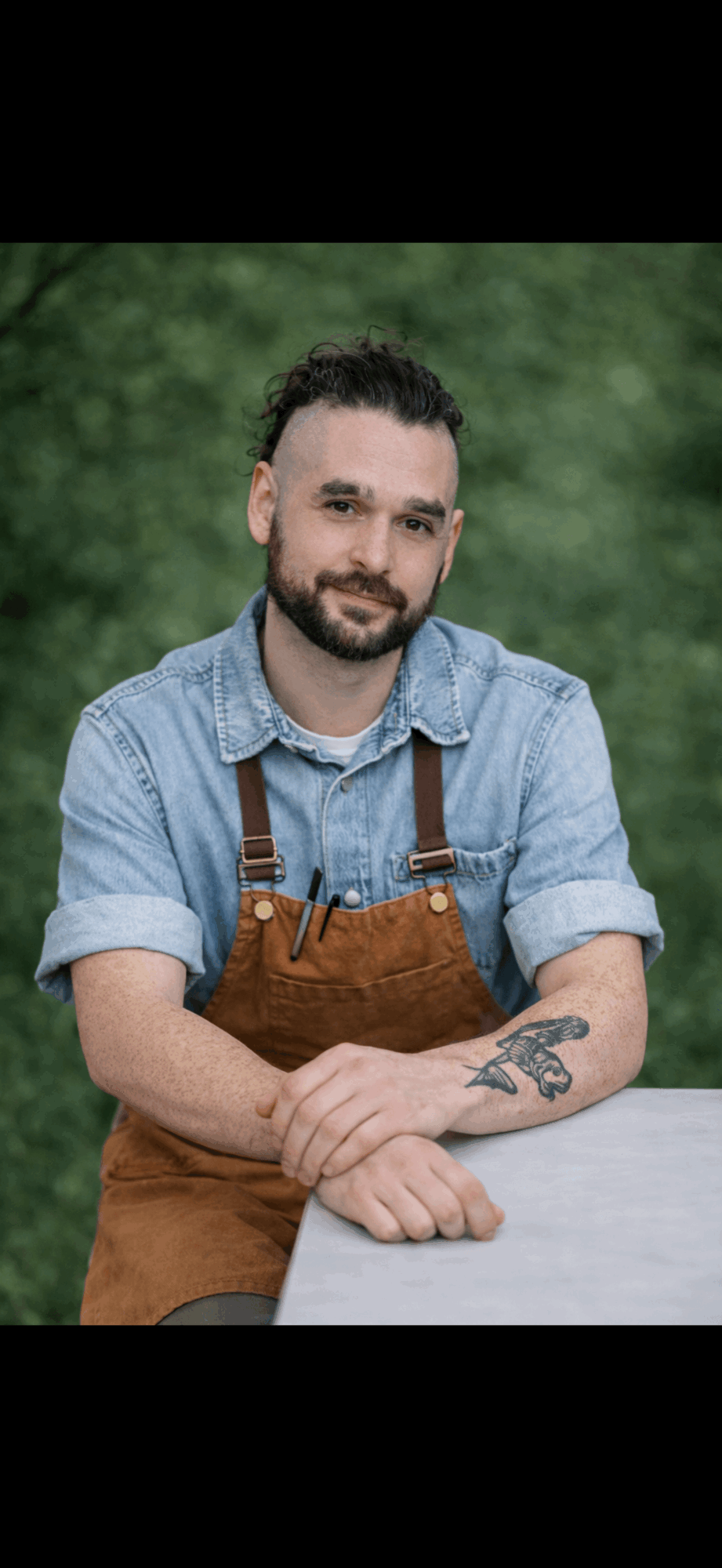



Today we’d like to introduce you to Evan Bolling.
Hi Evan, we’re thrilled to have a chance to learn your story today. So, before we get into specifics, maybe you can briefly walk us through how you got to where you are today?
Started in a chowder shack in Ketchikan, Alaska. Not exactly Le Cordon Bleu, but it taught me the only lesson that matters: don’t fall apart when it gets busy.
From there I built The Bubbly Mermaid, a seafood bar, with a mentor who knew things, then landed at Fire Island, a bakery that was the real deal, a James Beard finalist. Austin gave me Lutie’s and Olamaie, a one-star Michelin kitchen, and Seattle gave me JuneBaby and Standard. Seventeen years of saying yes to the next kitchen, gathering everything I could until I had enough to build something of my own.
Josh Dorcak brought me down to southern Oregon to run his kitchen at Mas as CDC, and that relationship never really ended. It just followed us both to Cowhorn.
Now I’m Chef at Cowhorn Kitchen and Wine, out in Jacksonville, Oregon, cooking off a vineyard where the menu starts in the dirt, instead of the walk-in.
We all face challenges, but looking back would you describe it as a relatively smooth road?
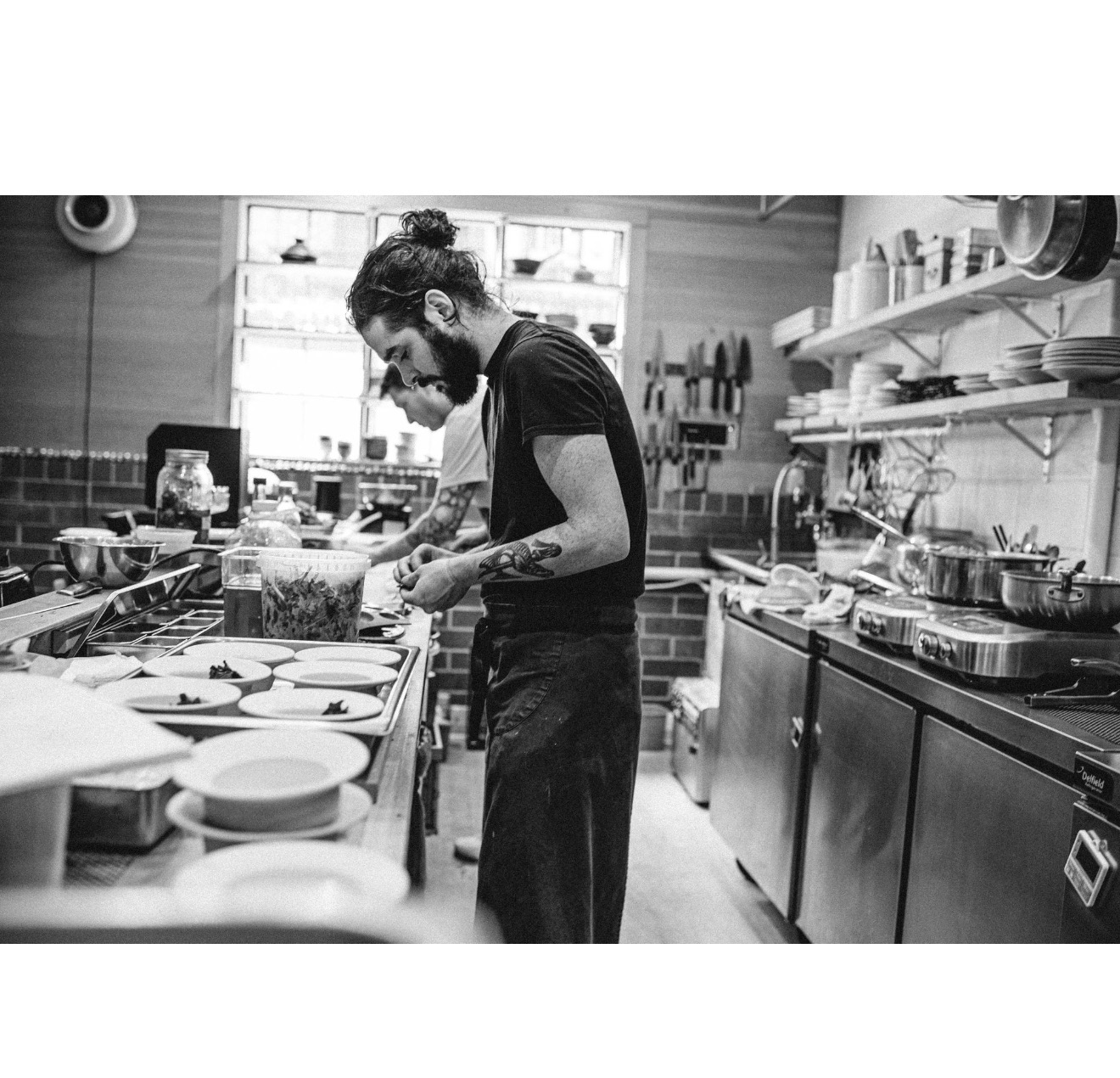
here’s the thing nobody warns you about: you get addicted to the chaos. There’s a rhythm to a slammed Friday night that doesn’t exist anywhere else, controlled panic, everyone moving like they share one nervous system. You start needing it.
And then there’s the other side of that chaos, the quiet part. Standing in a garden at Cowhorn or foraging around Jacksonville with dirt still on my hands, talking to the farmers about what’s actually ready this week instead of what a recipe book wants to be ready. Building a menu around that conversation instead of around some idea I had in my head. That relationship to place changes how you cook. It stops being about technique and starts being about listening.
And at the end of all that chaos and dirt and listening, there’s a table. Two people who drove an hour for this, celebrating something or trying to remember why they still like each other or just hungry. You send out a plate and for a few minutes you get to be the reason someone’s night was good. That’s the whole trade. All the wrecked sleep and kitchen politics for that one small transaction. Worth it every time.
Appreciate you sharing that. What else should we know about what you do?
What I do doesn’t stop at the kitchen door. Cowhorn is a vineyard and a garden first, and I’m just the person translating what the land grows into what lands on the table. But the vineyard and garden are only part of the story. This valley is full of small farms and people practicing permaculture, working the soil in ways that think generations ahead instead of one season out, and the menu leans on them constantly. A cheesemaker down the road, a forager who knows where the mushrooms actually are, a rancher who raises something worth building a whole dish around. Every one of them is a co-author of the menu, whether their name ever makes it onto the page or not.
That’s what sets the food apart, honestly. It’s not one chef’s vision stamped onto a plate. It’s a whole valley’s worth of hands, sun, and dirt, filtered through mine. When someone sits down at CKW, they’re not just eating dinner. They’re eating a season, a place, and everyone in it who chose to farm it right.
If we knew you growing up, how would we have described you?
Ketchikan, Alaska. Rural, remote, the kind of place where everything on the shelf came flown in and canned. If you wanted anything fresh, you didn’t buy it, you went and got it yourself. My whole love affair with food started with huckleberries and salmon berries, picked, not purchased. That’s probably the first lesson I ever learned about cooking, before I knew it was a lesson: good food takes effort, and effort is worth it.
I started working kitchens in college just to make extra money, no grand plan behind it. Like every liberal arts grad eventually figures out, there’s no job waiting for you with that degree in hand. Turns out the thing paying my bar tab was the thing I actually wanted to do. I just wasn’t smart enough to notice for a few more years.
Personality-wise, I was always creative, and always stubborn as hell. Obstinate to a fault. Looking back, that’s probably the exact combination you need to survive a kitchen. Creative enough to see what a dish could be, stubborn enough to not let anyone talk you out of it.
Contact Info:
- Website: https://cowhorn.kitchen/
- Instagram: @cowhorn.kitchen