


Today we’d like to introduce you to Joshua Johnson.
Alright, so thank you so much for sharing your story and insight with our readers. To kick things off, can you tell us a bit about how you got started?
Ravenmark Customs started pretty simply. I’ve always enjoyed making things and figuring out how things work, and eventually that turned into experimenting with custom apparel and engraving. What initially started as something I was doing for myself, friends, and family slowly grew as more people started asking me to make things for them.
I work a full-time career outside of Ravenmark, so the business has always been something I’ve built during the hours most people would probably consider their free time. I started with relatively basic equipment and learned largely through trial and error. As I became more comfortable with the process, I kept adding capabilities and equipment that allowed me to take on different types of projects.
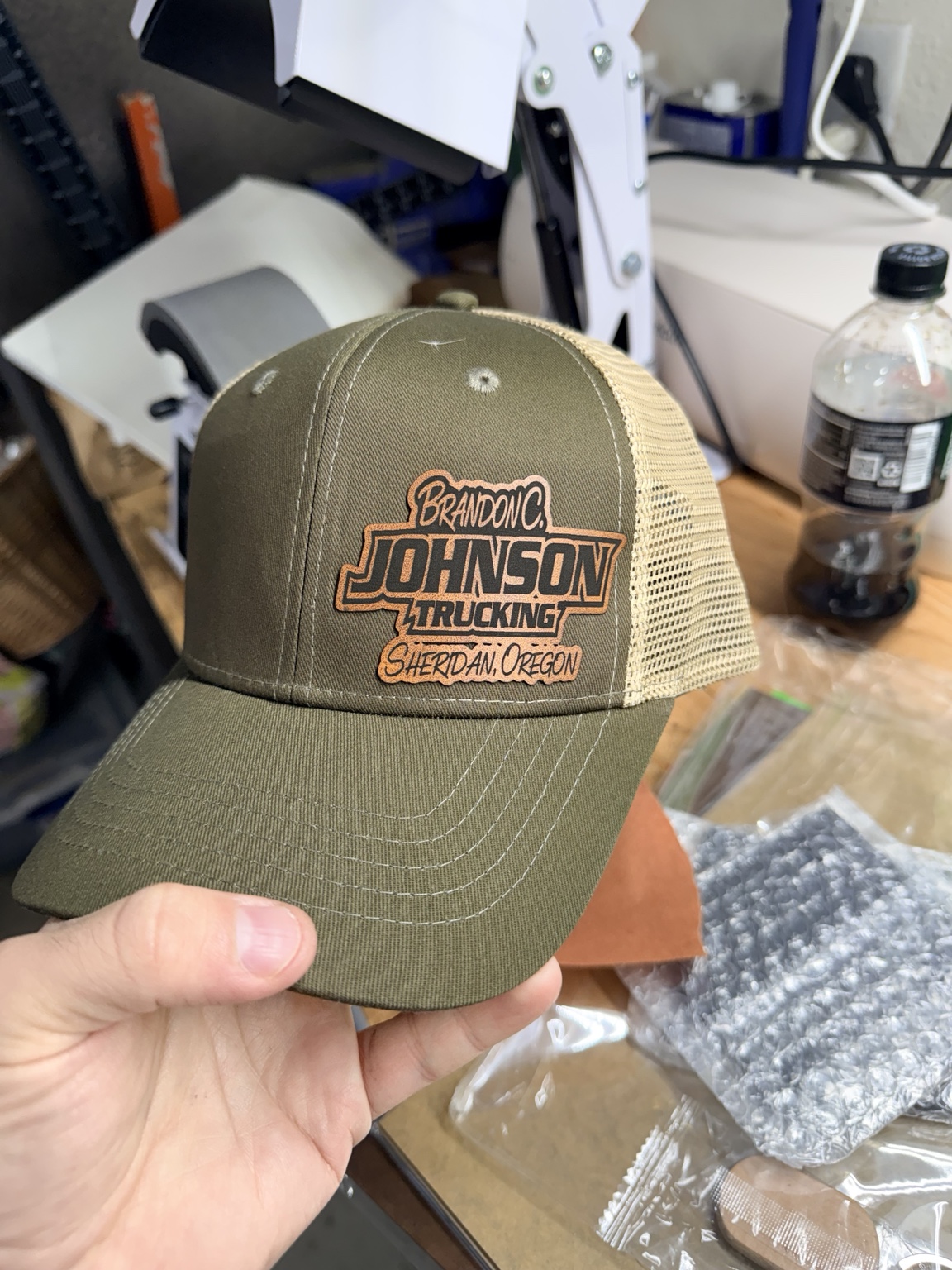
Today, Ravenmark Customs has grown into a small custom apparel and engraving business where I can produce everything from shirts and hoodies to custom hats, leather patches, tumblers, signs, and other engraved products. I’ve also expanded into screen printing, which has opened up another side of the apparel business.
One of the things I enjoy most is that there really isn’t a standard project. Someone might come to me with an established business logo that they want put on hats or apparel, while someone else might only have a rough idea of what they want. I enjoy taking that idea, working through the design and production process, and eventually handing them something tangible that started as little more than a conversation.
I’ve never really approached Ravenmark with the idea that I needed to grow it as quickly or as large as possible. My full-time career supports my family, which gives me the freedom to be selective and to focus on making things I’m proud of rather than chasing every possible sale. Most of the growth has happened organically through word of mouth, repeat customers, and people seeing something I made for somebody else and asking, “Who made that?”
I’m still learning and experimenting constantly. A lot of where Ravenmark is today came from trying something I hadn’t done before, occasionally getting it wrong, figuring out why, and trying again. Every new piece of equipment or process has created another opportunity to make something I couldn’t make before. Ravenmark is considerably more capable today than when I started, but I still look at it as something I’m building rather than something that is finished.
Can you talk to us a bit about the challenges and lessons you’ve learned along the way. Looking back would you say it’s been easy or smooth in retrospect?
It definitely hasn’t been a completely smooth road. One of the biggest challenges has simply been time. Ravenmark Customs is something I run alongside a full-time career and a family, so most of the work happens during evenings, weekends, and whatever free time I can find. Learning how to balance those priorities while still giving customers quality work has probably been the biggest ongoing challenge.
There has also been a significant learning curve. I’m largely self-taught, and every new process or piece of equipment comes with its own challenges. Laser engraving, apparel, screen printing, rotary engraving, and working with different materials all require different techniques. I’ve ruined materials, made things that didn’t turn out the way I pictured them, and spent hours troubleshooting something that eventually had a very simple solution. Those failures can be frustrating, but they’ve also been some of the best learning experiences I’ve had.
Another challenge has been figuring out what Ravenmark should actually be. When you have the ability to make a lot of different things, it’s easy to want to offer everything. Over time, I’ve learned that being capable of making something doesn’t necessarily mean it needs to become a product I actively sell. I’ve become more focused on the areas I enjoy and where I feel I can provide something genuinely worthwhile.
Growth itself has been an interesting challenge as well. I haven’t relied heavily on advertising, so much of the business has grown through word of mouth and referrals. That can make growth slower and somewhat unpredictable, but I actually appreciate that aspect of it. I would rather build a reputation one good project and one satisfied customer at a time than grow faster than I can comfortably manage.
Ultimately, most of the obstacles have made Ravenmark better. Every mistake has taught me something, and every project that pushed me outside of what I already knew has expanded what I’m capable of doing now. I don’t expect that learning process to ever really stop.
As you know, we’re big fans of you and your work. For our readers who might not be as familiar what can you tell them about what you do?
Ravenmark Customs is a small custom apparel and engraving business focused on turning ideas into finished products. I work with shirts, hoodies, hats, leather patches, tumblers, signs, and other custom items, and I also do screen printing and laser engraving. A lot of the work involves taking an existing logo or a rough concept and figuring out how to make it actually work on a physical product.
I would say one of my biggest strengths is versatility. I’m not limited to one production method, so I can approach a project based on what will produce the best result rather than trying to force everything into the same process. Depending on the job, that might mean screen printing, heat transfer vinyl, laser engraving, engraving a leather patch for a hat, or using a rotary setup for a tumbler.
I also spend a lot of time on the problem-solving side of the work. A design that looks great on a computer screen does not always translate well to leather, apparel, acrylic, or an engraved surface. Line thickness, material, contrast, size, and the production method all matter. Part of what I enjoy is figuring out how to adapt a design so it still has the same character while also being something I can realistically produce well.
What I’m probably most proud of is seeing Ravenmark grow from experimentation into something that other people trust with their own businesses, organizations, and personal projects. There is a different level of responsibility when someone gives you their company logo or asks you to make dozens of items representing their business. I take a lot of pride in knowing that what I make is going to be worn, displayed, or handed to their customers.
I think what sets Ravenmark apart is that it is still very hands-on and personal. I’m the person communicating with the customer, working on the design, setting up the equipment, producing the item, and checking the finished product. There isn’t a handoff through several departments. If something doesn’t look right to me, I’m the one who has to fix it before it goes out the door.
I also don’t want Ravenmark to become a business where every project looks the same. I like being able to take on something different, experiment with a new process, or find a way to produce something I haven’t made before. That constant learning and problem-solving is a big part of why I continue to enjoy doing it.
We’d love to hear about how you think about risk taking?
I wouldn’t necessarily describe myself as a traditional risk-taker. I tend to be pretty calculated. I’m willing to take a risk, but I want to understand what I’m risking, what I stand to gain, and whether I can live with the outcome if it doesn’t work.
Ravenmark Customs has been a good example of that. Starting and continuing to invest in a small business is inherently a risk. Equipment, materials, and supplies cost money, and there is never a guarantee that buying a new piece of equipment will generate enough business to justify it. I’ve made those investments gradually, though. Rather than going heavily into debt or betting my family’s financial security on the business, I’ve expanded as the business and my abilities have grown.
Some of those decisions have meant spending money on equipment or learning a new process before I had customers specifically asking for it. That is a risk, but it is one I’m comfortable with because even when something doesn’t immediately produce revenue, I’ve usually gained another skill or capability from it.
I think there is also risk in saying yes to something you haven’t done before. I’ve had projects where my first thought was, “I’ve never made that,” followed pretty quickly by, “but I think I can figure out how.” I’m willing to experiment, ruin some practice material, adjust the process, and keep working until I can produce something I’m comfortable putting the Ravenmark name behind.
At the same time, knowing when not to take a risk is just as important. Ravenmark isn’t my family’s primary source of income, and I don’t want it to become something that requires me to sacrifice the parts of my life that matter more. I could probably pursue growth much more aggressively, but bigger isn’t automatically better to me.
My approach to risk is ultimately pretty simple: I don’t need certainty before I act, but I do need to understand the consequences if I’m wrong. If the downside is something I can absorb and the upside gives me an opportunity to learn, improve, or build something worthwhile, I’m usually willing to take the chance.
Contact Info:
- Website: https://ravenmarkcustoms.com
- Facebook: https://facebook.com/ravenmarkcustomsllc