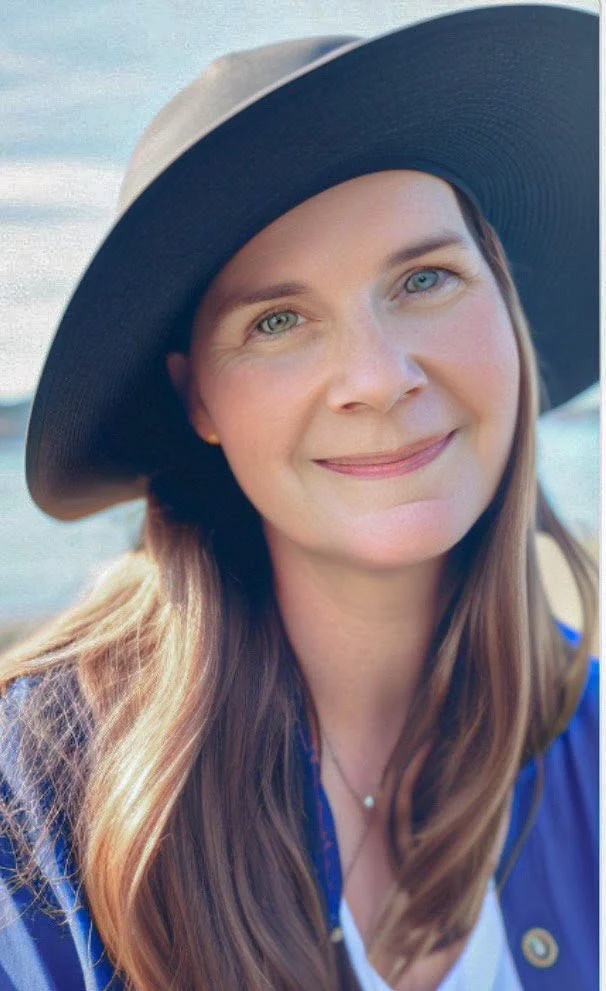



Today we’d like to introduce you to Robin Bergeron.
Hi Robin, thanks for sharing your story with us. To start, maybe you can tell our readers some of your backstory.
My journey into this work began as a parent looking for help.
I grew up in the Pacific Northwest, but in late 2013, our family moved to Houston, Texas. At the time, two of my children were struggling with high-risk behaviors and substance use. Like many parents, I hoped that a change of scenery might change everything—that maybe a fresh start in a new place would somehow make things better. It didn’t. I quickly learned that recovery isn’t something you can find by changing your address. It requires connection, community, and a willingness to heal.
That search led us to an Alternative Peer Group (APG), a family-focused community built on the philosophy of enthusiastic recovery—the belief that recovery is best accomplished with a group of peers learning to have fun without substances. While my children found a place to belong, I became deeply involved in the parent support community. It was the first time I met families who truly understood what we were experiencing, and it changed the course of my life.
After more than a year in family support, I made the decision to pursue my own recovery. In 2015, I committed to a life of sobriety. That decision gave me far more than freedom from alcohol—it gave me purpose.
I began working for the APG in Houston, where I had the opportunity to learn from one of the longest-standing Alternative Peer Groups in the country. APGs have been helping young people and families build lives in recovery for more than fifty years, and I was fortunate to learn from leaders who had spent decades developing this model. I wasn’t just learning how to facilitate groups; I was learning how to build recovery communities from the ground up.
Eventually, life brought me back home to Oregon. Wanting to make this model available to families here, I founded Collective Roots APG in Portland. Like so many grassroots recovery organizations before us, we started in the basement of a church with a small group of families who believed young people deserved a community where they could support each other and have fun doing it.
Today, I serve as the Program Manager for Madrona Recovery’s Adolescent Intensive Outpatient Program. One of the things that excites me most is that we’ve integrated the Alternative Peer Group model directly into outpatient treatment. Families receive both clinical care and an enthusiastic recovery community working together as one team. That coordination creates continuity of care that simply isn’t possible when treatment and community exist separately, and I believe it represents one of the most effective ways to support young people and their families.
When I look back, I never could have imagined that my family’s greatest challenge would become my life’s work. Every step—from being a frightened parent, to finding my own recovery, to helping build recovery communities—has reinforced one belief: people heal best when they don’t have to do it alone.
I’m sure it wasn’t obstacle-free, but would you say the journey has been fairly smooth so far?
It definitely hasn’t been a smooth road, but I don’t think meaningful work ever is.
The most obvious challenge was watching my children struggle. As a parent, you want to fix things. I thought if I could just find the right program, move to the right city, or make the right decisions, everything would be okay. Recovery taught me that I couldn’t control someone else’s journey—I could only take responsibility for my own. That was both one of the hardest and most liberating lessons of my life.
Choosing sobriety myself wasn’t easy, either. Recovery asks you to examine your own patterns, your relationships, and the stories you’ve told yourself for years. It’s deeply rewarding, but it also requires humility and a willingness to keep growing. More than a decade later, I still see recovery as an ongoing process rather than a destination.
Professionally, building recovery communities comes with its own challenges. Starting Collective Roots APG in Portland meant beginning with very little—a hopeful board of directors, a handful of families, and a big vision. Community doesn’t appear overnight. It takes countless conversations, partnerships, volunteer hours, fundraising, and the trust of families who are often walking through one of the hardest seasons of their lives.
One of the biggest obstacles has been helping people understand that recovery is about much more than stopping substance use. Young people need healthy friendships, adventure, purpose, supportive trusted adults, and opportunities to have fun in recovery. Families need support, too. Changing that mindset can take time because it’s a different way of thinking about treatment and long-term recovery.
Today, at Madrona Recovery, we’re continuing to build that vision by integrating the Alternative Peer Group model into outpatient treatment. It’s incredibly rewarding, but innovation always comes with challenges. Bringing together clinical care and a thriving recovery community requires collaboration, creativity, and people who are willing to think differently about what’s possible.
If there’s one thing I’ve learned through both my personal and professional journey, it’s that obstacles often become our greatest teachers. The experiences I would never have chosen are the very ones that prepared me to walk alongside other families with empathy, hope, and the confidence that healing is possible.
Alright, so let’s switch gears a bit and talk business. What should we know about your work?
Today, I serve as the Program Manager for Madrona Recovery’s Adolescent Intensive Outpatient Program, where we’re building something I deeply believe in: a model that integrates high-quality clinical care with the community and connection of an Alternative Peer Group (APG). I believe this is one of the most effective ways to support young people because treatment shouldn’t end when group is over. Recovery happens in relationships, families, and communities.
While that’s my day-to-day work, my larger passion extends far beyond one program.
I’m currently the Board Chair of the Association of Alternative Peer Groups (AAPG), and I see my role as helping strengthen and expand youth recovery communities across the country. Over the years I’ve had the privilege of facilitating family support groups in Houston and online, helping launch Bridges APG in Seattle, founding Collective Roots APG in Portland, and mentoring people who want to create recovery communities in their own cities. I regularly connect with parents, clinicians, educators, nonprofit leaders, and community members who are asking, “How do we build this where we live?” Those conversations are some of the most meaningful parts of my work.
I also see Alternative Peer Groups as part of a much larger recovery ecosystem. There is a powerful connection between APGs, recovery high schools, collegiate recovery programs, and family support. When those pieces work together, young people have the opportunity to grow up in recovery instead of simply surviving treatment. Early intervention doesn’t just change the trajectory of one young person’s life—it can change the future of an entire family.
If there’s something I’m known for, I hope it’s being someone people can call when they’re trying to solve a difficult problem. Whether it’s helping a parent set healthy boundaries, brainstorming funding opportunities, designing memorable experiences that make recovery fun for teens, or talking through how to build a sustainable APG, I love bringing people together and helping ideas become reality.
More than anything, I’m proud of the communities that have grown from this work. Watching a teenager discover genuine belonging, seeing parents realize they aren’t alone, or helping another community launch an APG that will serve families for years to come—that’s what motivates me every day.
For me, recovery isn’t just my profession. It’s the lens through which I see the world. The values that guide my personal life—integrity, connection, curiosity, and hope—are the same values that guide my work. There’s no separation between who I am and what I do, and I think that’s why this work has never felt like just a job. It feels like the contribution I’m meant to make.
Are there any apps, books, podcasts, blogs or other resources you think our readers should check out?
This question is almost impossible because I collect ideas the way some people collect souvenirs!
One of the resources I recommend most often to parents is the NeuroWhereAbouts Guide, created by my friend, Dr. Crystal Collier. It takes complex neuroscience and turns it into practical conversations families can actually have. The guide covers everything from substance use and vaping to technology, social media, self-harm, and healthy relationships. I love that it doesn’t rely on fear—it empowers parents, educators, and counselors to understand adolescent brain development and set healthy boundaries with confidence.
Anything by Brene’ Brown! I also recommend The Mountain Is You by Brianna Wiest and Set Boundaries, Find Peace by Nedra Glover Tawwab to just about everyone. Both books remind us that personal growth requires honesty, accountability, and the courage to change. Those lessons have shaped both my recovery and my leadership.
For anyone interested in the work of Alternative Peer Groups, I always recommend Recovering Our Children by John Cates and From Monsters to Miracles by Dr. Annette Edens. They capture the philosophy of enthusiastic recovery and the incredible impact that community can have on young people and families.
When parents are looking for ongoing encouragement, I often point them to Brenda Zane’s HopeStream podcast. She has a wonderful way of helping parents feel informed, supported, and less alone.
As for apps, I probably use AllTrails and Eventbrite and the Worldwide Labyrinth Locator website more than anything. I love discovering hidden hikes, local music, community events, sound baths, and labyrinths wherever I travel. Walking a labyrinth has become a personal practice for me. It reminds me that life isn’t a straight path—sometimes we feel like we’re moving away from where we want to be, only to discover we’re exactly where we need to be and that we are never alone on the journey.
I also have an appreciation for technology that surprises people: I genuinely enjoy social media. It allows me to share the beauty I encounter, celebrate recovery, and stay connected with people across the country. My life is pretty transparent, and I love that someone can send me a message on Facebook or Instagram to ask about recovery, family support, or starting an Alternative Peer Group. Some of the most meaningful connections I’ve had started with a simple direct message.
Music is another essential part of my life. I have eclectic playlists for almost everything—long drives, forest hikes, quiet reflection, dancing in the kitchen, or celebrating with friends. Music reminds me not to take life too seriously and keeps me grounded in joy.
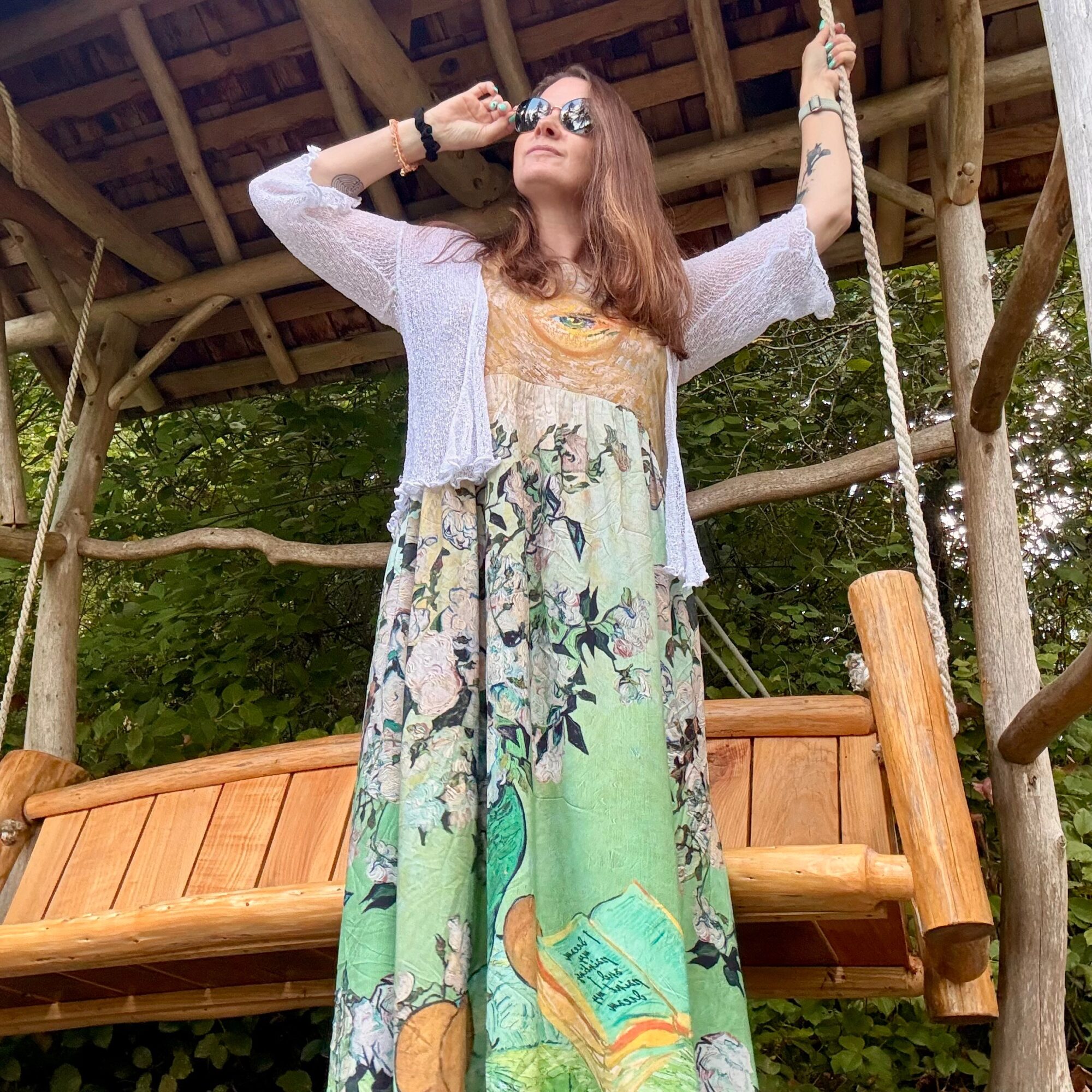
That same spirit is reflected in my tattoos. One says, Trust Your Wings, a reminder to have faith in my own resilience, even when I can’t see the path ahead. Another is a silhouette of Mary Poppins, because I believe healing should always leave room for whimsy. Recovery is serious work, but it should also include laughter, adventure, curiosity, and wonder. I also have a labyrinth tattoo that reminds me to enjoy the journey.
If there’s one thread connecting all of these resources, it’s this: they help me stay curious. Whether I’m learning something new, exploring a trail, walking a labyrinth, listening to music, or connecting with someone online, I’m reminded that growth happens when we remain open to the world and to each other.
Contact Info:
- Website: https://www.collectiverootsapg.org/
- Instagram: https://www.instagram.com/collectiverootsapg/
- Facebook: https://www.facebook.com/CollectiveRootsAPG
- Other: https://www.aapg-recovery.org