

Today we’d like to introduce you to Susan Bladholm.
Susan, we appreciate you taking the time to share your story with us today. Where does your story begin?
I’m a native Portlander who loves, loves, loves her city and state. I raised my kids here (both graduated from Lincoln High School), and I’ve watched Portland and Oregon both thrive and struggle.
My first job out of college was with the agency now called Business Oregon. I remember when we boasted that Oregon ranked number one for SAT scores, was a top state for affordability and value-friendly vacations, and was celebrated for its clean air and water and forward-thinking policies like the Bottle Bill. In 1987, my official role was with Oregon Tourism, but I often organized tours for delegations from around the world who came to Portland to learn about its leading-edge transit and transportation planning.
From there, I led marketing for the Port of Portland, where I learned what makes river cities unique. I project-managed an exhibit at PDX called “The Mighty Columbia, River of Trade.” That project taught me about Celilo Falls as one of the great trading centers of North America. It also taught me how fundamental waterfronts are: people gather and settle along rivers for transportation and nourishment, and that access is what makes trade possible.
While at the Port, I also led art selection for the new Port of Portland headquarters. Through that work, I met Tony Johnson, Chairman of the Chinook Indian Nation, and Adam McIsaac, the tribe’s resident artist, who together created a gorgeous carved installation for the Port’s Commission Room. I read Tony’s book, learned about the Chinook people’s efforts to gain federal recognition, and learned a little about Chinook stories. In appreciation for our work together, Tony and Adam gave me a lithograph of Frog. They explained that Frog is credited with teaching First Peoples how to fish, by gathering nettles from the waterfront and weaving them into nets.
Next, I joined Erickson Inc., a global helicopter company specializing in wildland firefighting, large aerial construction projects (bridges, dams, aqueducts, powerlines), and Department of Defense repair and mobilization. My love of aviation, which grew at the Port and at Erickson, led me to become a student pilot, flying out of Aurora Airport and up and down the West Coast. From the air, you gain a real appreciation for topography and how communities are laid out. It was obvious that Portland’s highways and bridges were often congested while its rivers were wide open.
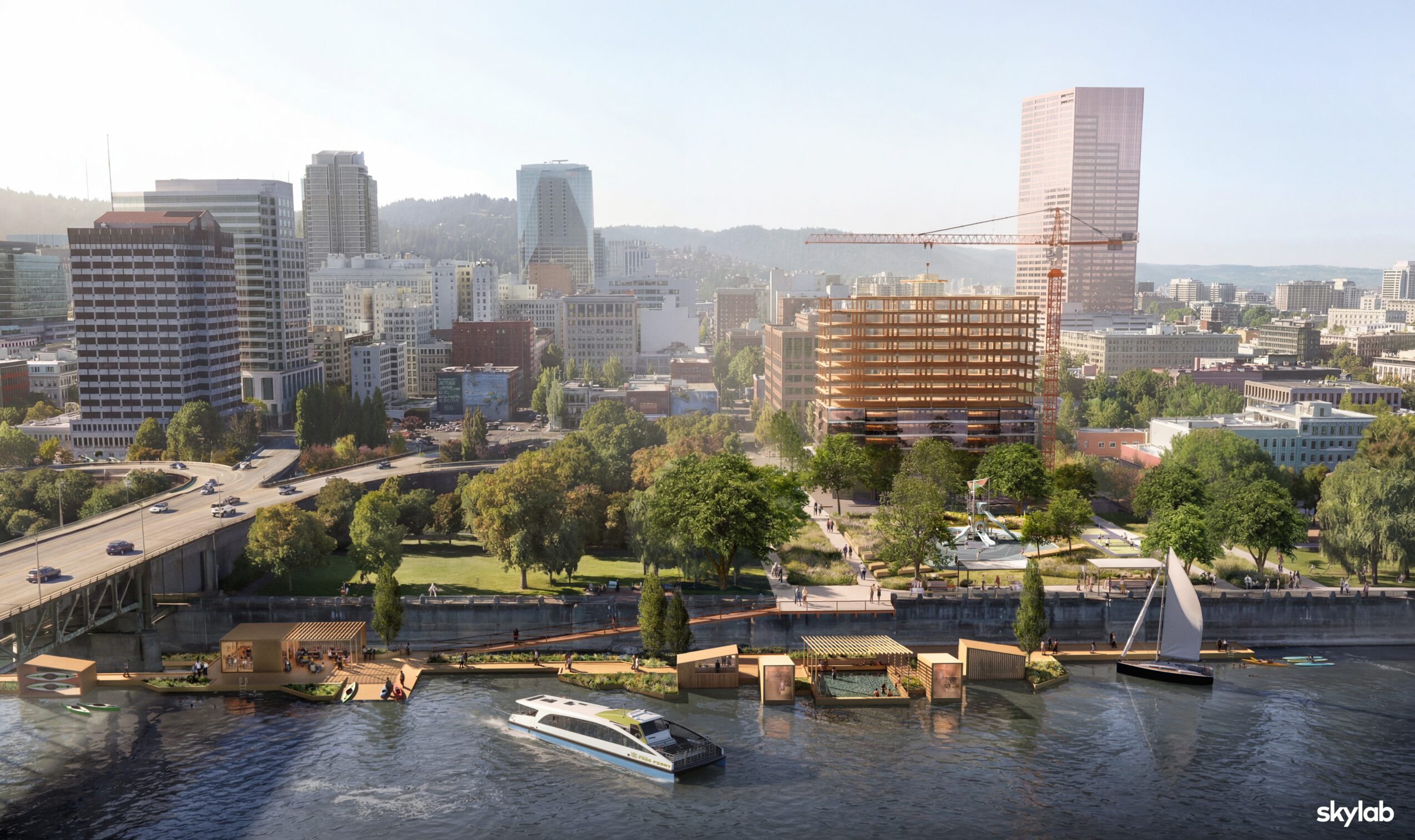
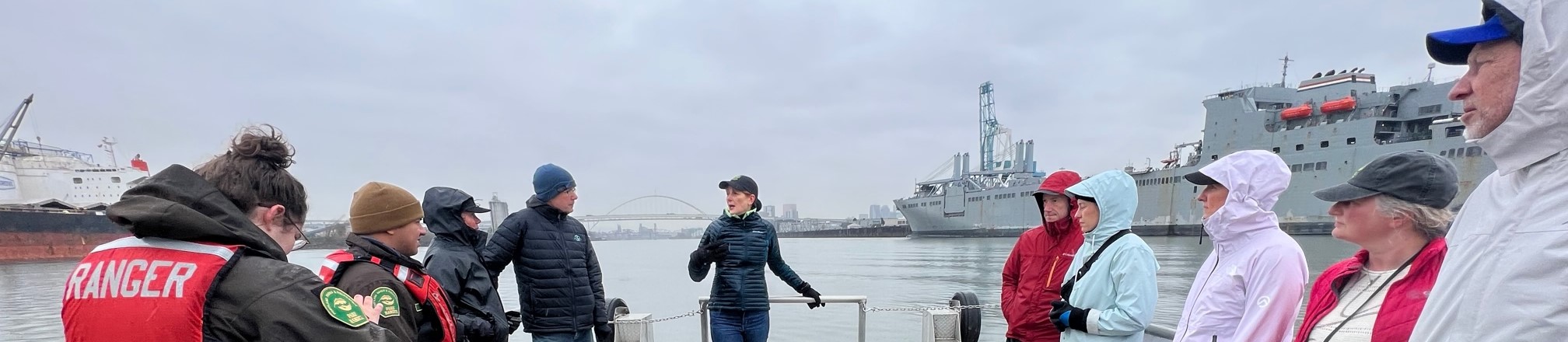
I didn’t grow up saying, “Someday I hope to run a ferry service.” But I’ve always had an entrepreneurial spirit. I feel called to build community, and I believe we’re all responsible for leaving the world better than we found it. My background, my values, and Portland’s need to rebuild all led me to research a passenger ferry service. After nearly 40 years in economic development, transportation infrastructure, community resilience, and building our city and state brands, a passenger “foot” ferry seemed like a no-brainer.
When it came time to name the project, I looked at Frog, still framed on my office wall. I asked Tony and Adam if I could name our ferry feasibility research in Frog’s honor, and they said yes. And so, Frog Ferry was born.
I’m sure it wasn’t obstacle-free, but would you say the journey has been fairly smooth so far?
Not at all. First, Oregon lacks a ferry culture and ferry expertise. Water-based transportation is specialized, much like aviation, and Oregon has long focused on surface-based transportation. It has been challenging to find leaders interested in considering a new mode, especially amid severe budget shortfalls, COVID, and political jockeying at every level of government.
Our original intention was to help fund and complete the research and feasibility studies, assemble a ferry technical team, and then hand the project to a public agency, giving it a head start and reducing its risk. Given these continued pressures, no agency has been in a position to take on a new project, let alone learn a new mode.
Second, a scarcity mindset has set in, creating a culture that avoids innovation, even when a project advances many key goals for a reasonable cost: climate action, community resilience, transit ridership, foot traffic, waterfront vitality, lower greenhouse gas emissions, and reconnecting people with their rivers. When agencies are fighting to protect their own budgets, it becomes “us vs. them,” even though foot ferries are low cost to build, operate, and maintain, and even though dedicated federal funding exists for them. There’s little dispute that ferries are a best practice for river cities. The objection we hear most is, “We can’t take on anything new when we can’t afford the systems we already have.”
Meanwhile, the need for more and better green transit has grown, and so has our base of support. We keep building confidence with transportation and elected leaders, showing them the funding is available and that a “4P” approach, combining public, private, nonprofit, and philanthropic partners, means many hands make light work. But a public agency must submit the federal funding request; as a nonprofit, we’re ineligible to apply directly.
That leads to our final challenge: we’ve muddled forward in a kind of no man’s land. Foundations tend to fund education, climate, and health. Tax dollars typically fund transportation and other social services. So where do we fit? Cities like Seattle and San Francisco have an established ferry culture, so they can add or expand service most easily. Here, sometimes it feels like we’re trying to launch a rocket ship.
Can you tell our readers more about what you do and what you think sets you apart from others?
Looking back on my career, I’ve had the benefit of working for leaders who were willing to tackle difficult challenges and take calculated risks. As a member of their teams, I got to see what true leadership looks like.
Debby Kennedy became Oregon’s Tourism Director in 1987. She asked me to create the state’s first earned media program and to launch a statewide bike ride. Oregon’s tourism budget ranked 49th in the nation, and she was willing to take risks to put Oregon on the map. She recruited advertising giant Wieden+Kennedy, which contributed considerable pro bono creative work. I introduced Oregon to journalists across the country and around the world, treating them to Oregon’s bounty, from pears, smoked salmon, and cheeses to culinary events led by Portland chefs. Each year, we toured dozens of journalists around the state, earning glowing stories about Oregon. That bike ride became Cycle Oregon, which launched in 1988 and continues today.
At the Port of Portland, Executive Director Bill Wyatt called on a small team of us after 9/11, when air service had been severely cut, to recruit new flights. We succeeded in bringing many new services to Portland and the region, and we partnered with the airlines on campaigns to support those routes, building Portland’s brand awareness in Tokyo, Frankfurt, Munich, and beyond.
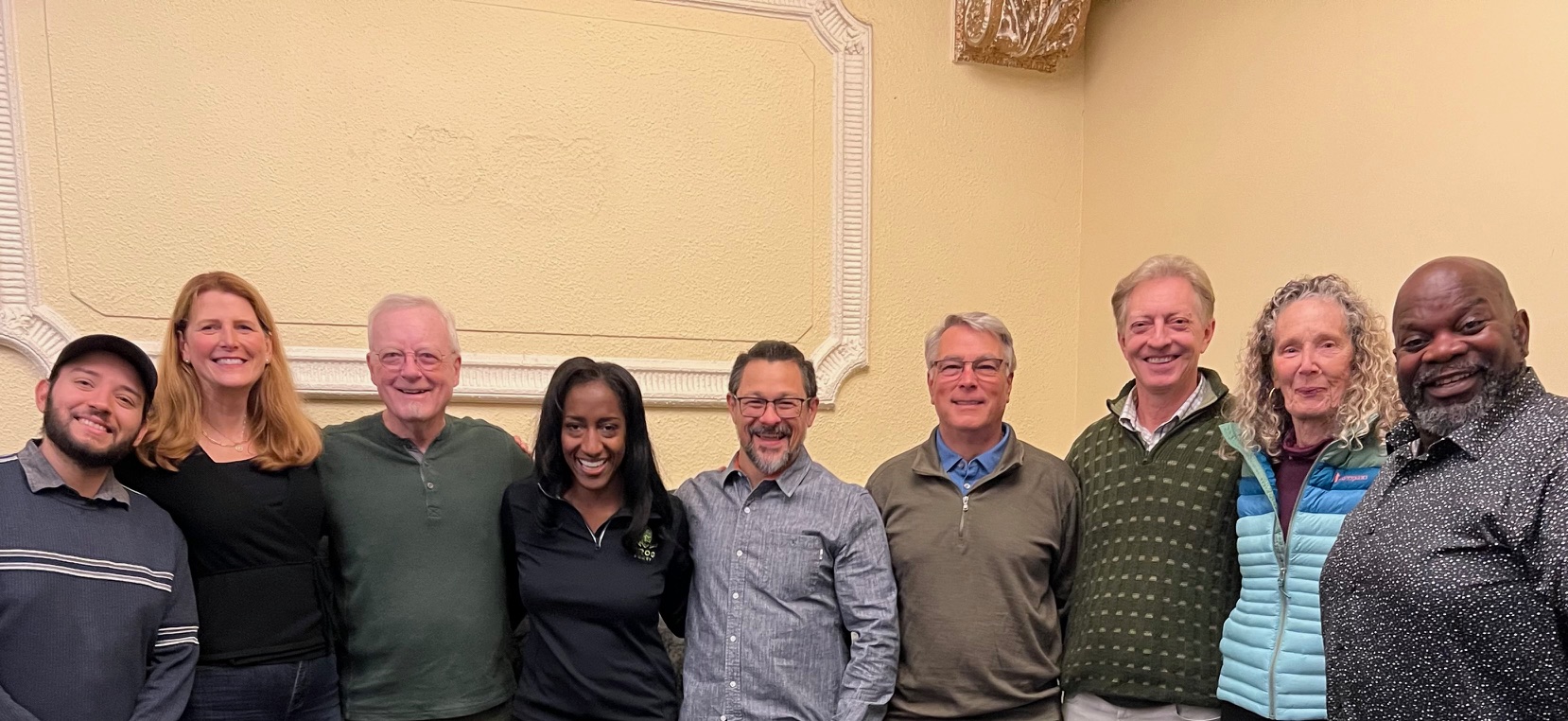
I’ve served on about a dozen boards, and I’m always working to raise the bar: for the organization, the customer experience, the funds raised, and the final result. All of it is in service of building a stronger, more equitable, and kinder community that will better serve future generations. I try to be brave and do and say hard things that are needed. Today I bring that same willingness to take calculated risks to Frog Ferry, building a new mode of transit to help build a better future Portland.
Let’s talk about our city – what do you love? What do you not love?
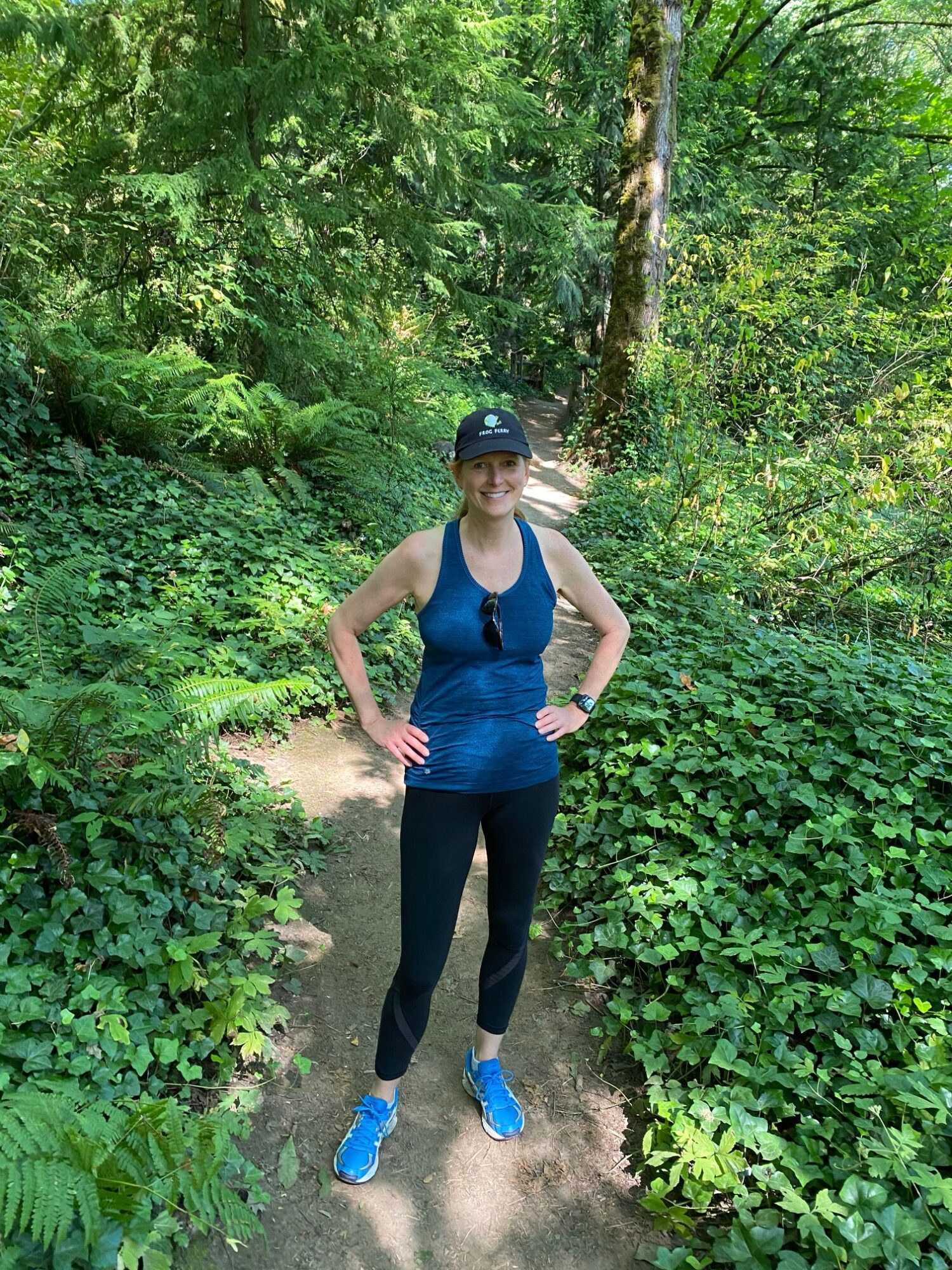
My favorite Oregon Tourism ad headline was, “When it’s Man vs. Nature, who says both sides can’t win?” I love that sentiment because it captures how much Oregonians revere the natural environment and want to live in harmony with it. I hike the Wildwood Trail or walk our waterfront five times a week. I’m an outdoor girl, and I’ll choose a muddy trail over a gym workout any day. It’s one reason I want more Portlanders to experience our rivers, not just look at them from a bridge, but to get out to experience the river ecosystem. People protect what they know and love.
We’ve had leaders and policies that protected our air, land, and waterways. What I like least is that, in general, we’ve lowered our standards from excellence to “good enough.” We must care for our natural environment, and we must also care for our residents, so that the benefits reach everyone rather than a select few. Education, health care, transportation infrastructure, and public safety have all suffered, and it saddens me to see how politics has eroded the quality of our city and state. We must do better. Wonder Woman and Superman aren’t coming to save us; we must step up.
I think people are drawn to Portland because they believe their voices will be heard and that they can make a difference. That’s what gives me hope: we have the people and the passion to raise the bar again.
Pricing:
- $3.50 one-way ticket for Pilot Project
Contact Info:
- Website: https://frogferry.com/
- Instagram: https://www.instagram.com/frog_ferry/
- Facebook: https://www.facebook.com/FrogFerry#
- LinkedIn: https://www.linkedin.com/company/friends-of-frog-ferry/posts/?viewAsMember=true